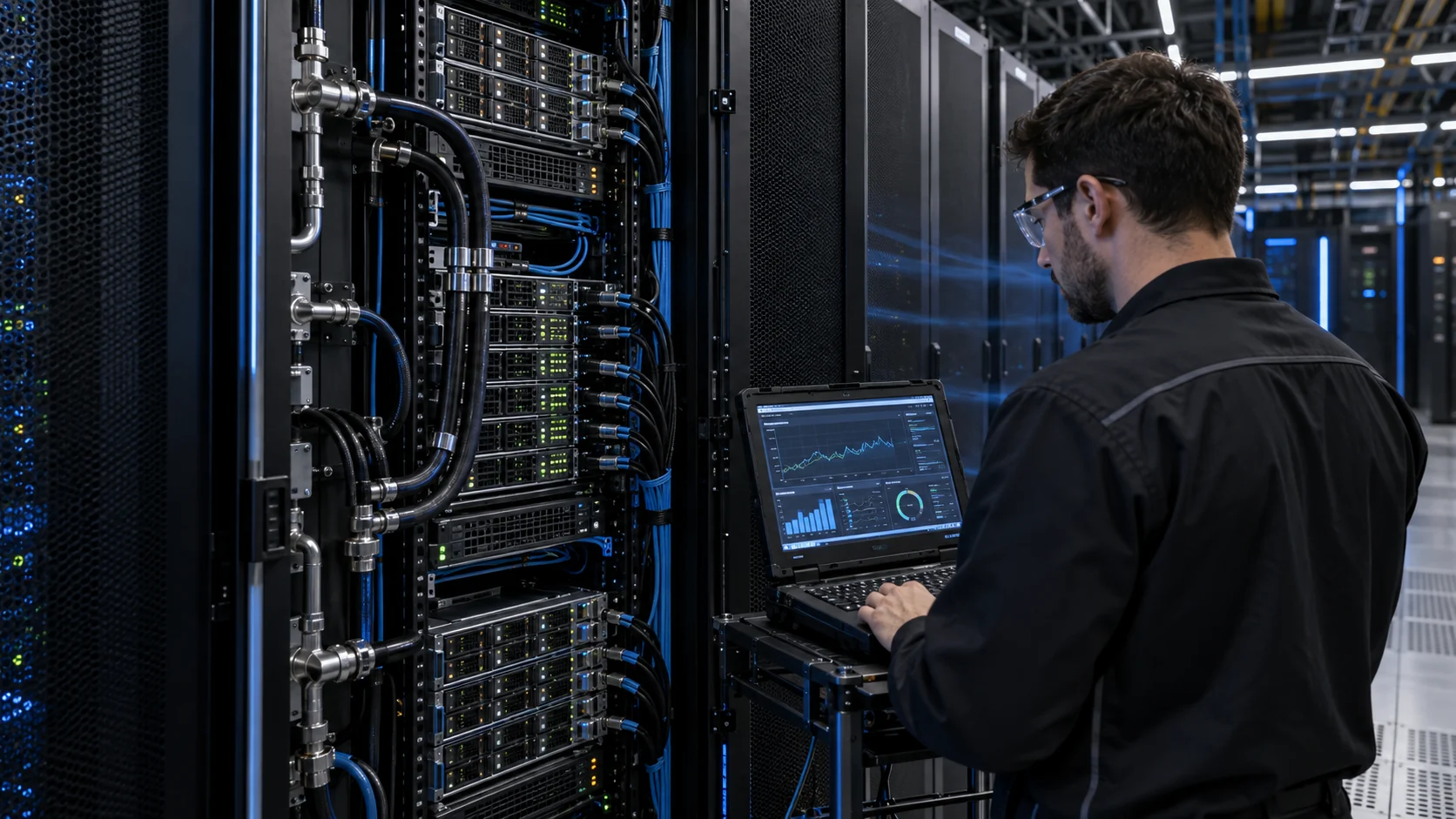
AI Cooling Commissioning
How to commission AI rack cooling by recording workload power steps, fan control, airflow, liquid flow and degraded operating states.
Read article → TECHCustom Cooling Fans
Engineering articles from a fan manufacturer
Practical guidance for turning thermal constraints into a fan choice, a testable sample and a reliable production path.
AI Data Center
Practical guidance for engineers turning dense compute heat loads into fan selection, airflow validation and production-ready cooling decisions.
How to commission AI rack cooling by recording workload power steps, fan control, airflow, liquid flow and degraded operating states.
Read article →
How AI server teams should diagnose fan-module faults, verify replacement behaviour and specify a reliable custom cooling-fan sample for 24/7 duty.
Read article →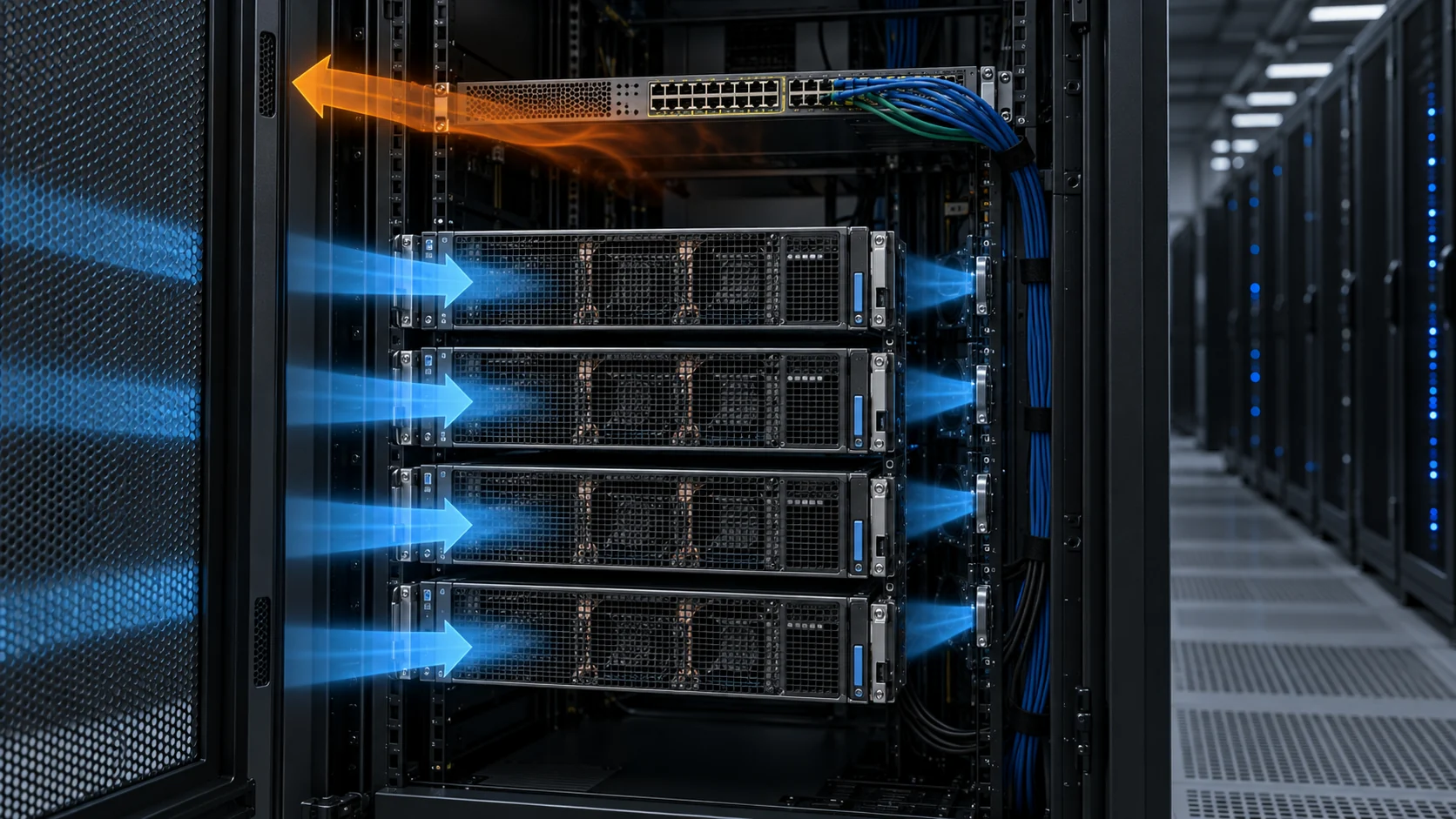
How to validate server, switch and PSU airflow direction in an AI rack before an orientation mismatch becomes a local thermal fault.
Read article →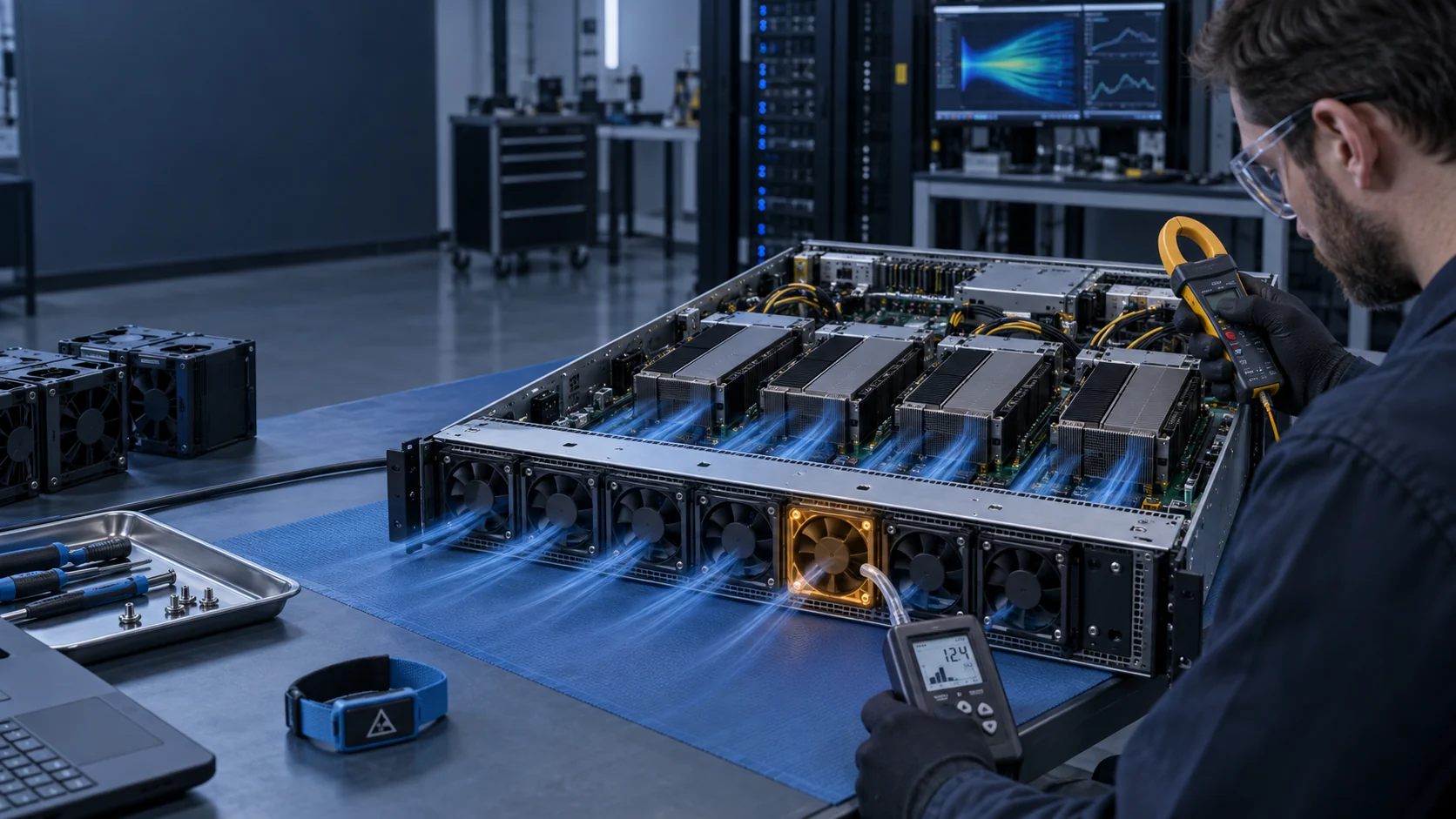
Validate a GPU server fan tray under normal, fan-failure and replacement states: measure the installed working point, thermal map and control response.
Read article →Compare 48 V DC fans for AI servers by rail range, harness loss, PWM control and airflow at the installed operating point.
Read article →Select compact DC fans for AI and GPU servers: size by heat load, system pressure, redundancy and chassis airflow, then validate a production-ready sample.
Read article →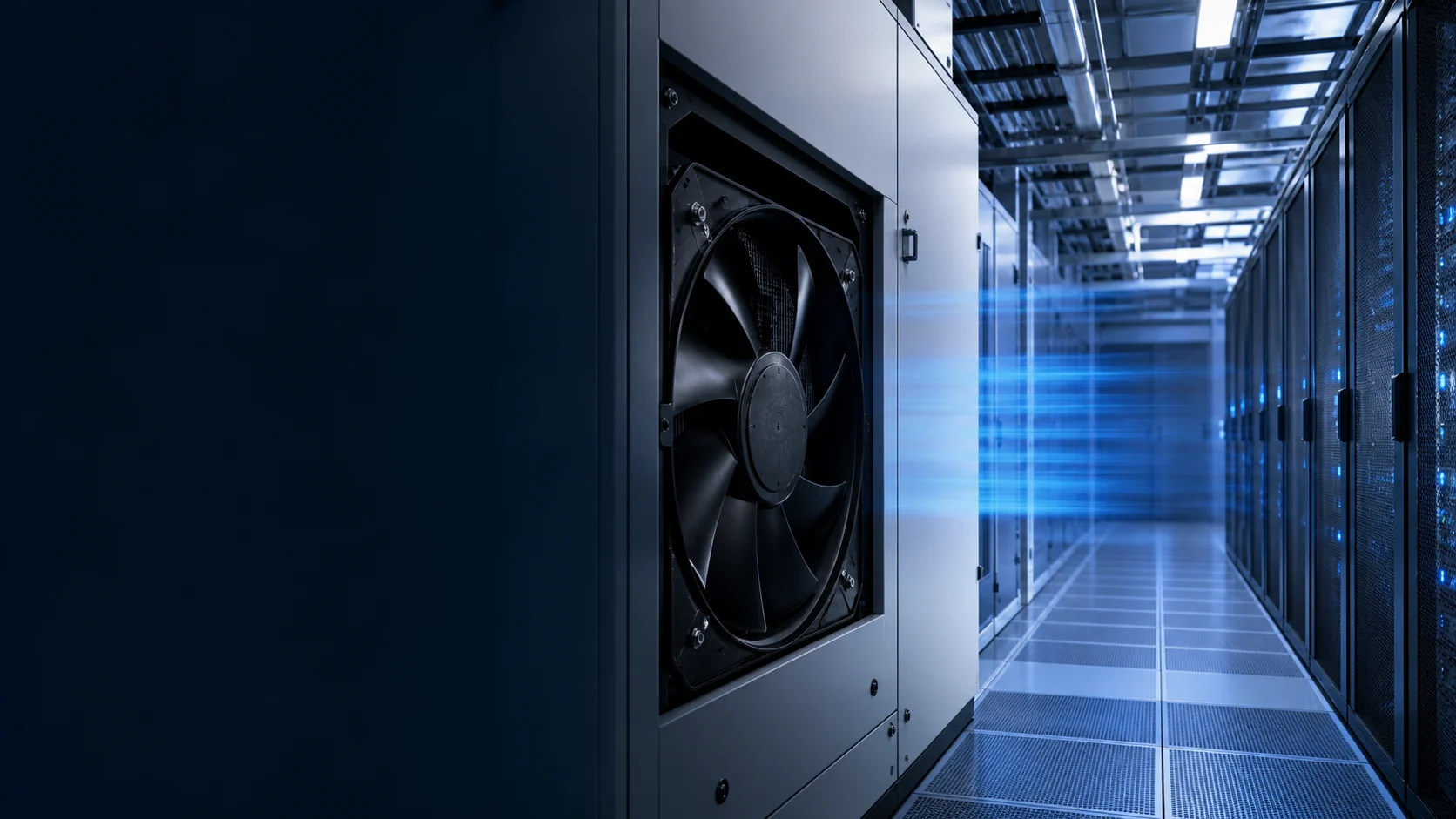
Where EC fans belong at the facility level, how they differ from compact DC fans, and how a server fan requirement becomes a tested custom sample.
Read article →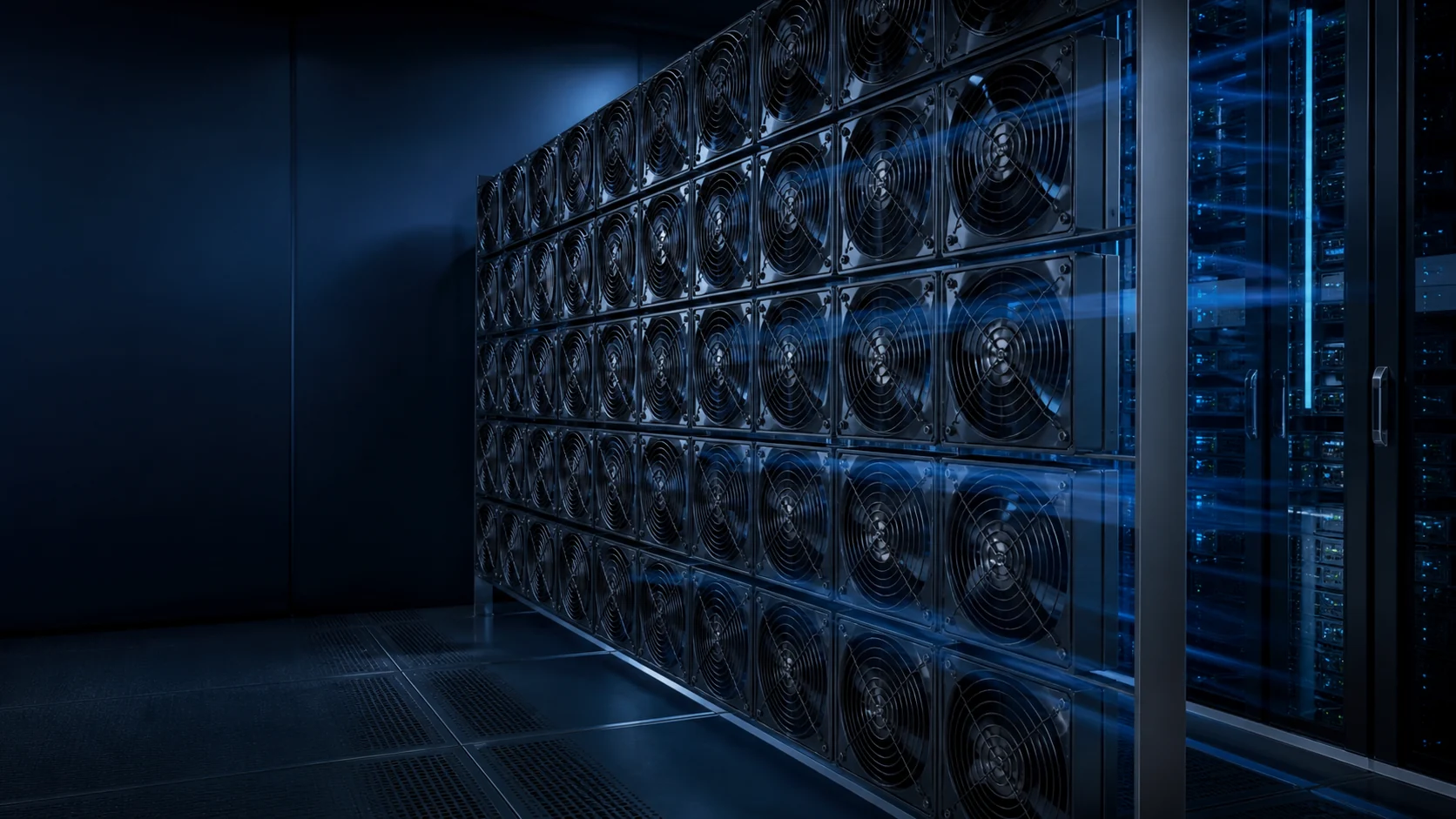
Validate data center fan wall N+1 airflow with pressure, dampers, loaded filters, controls and one-module-out testing.
Read article →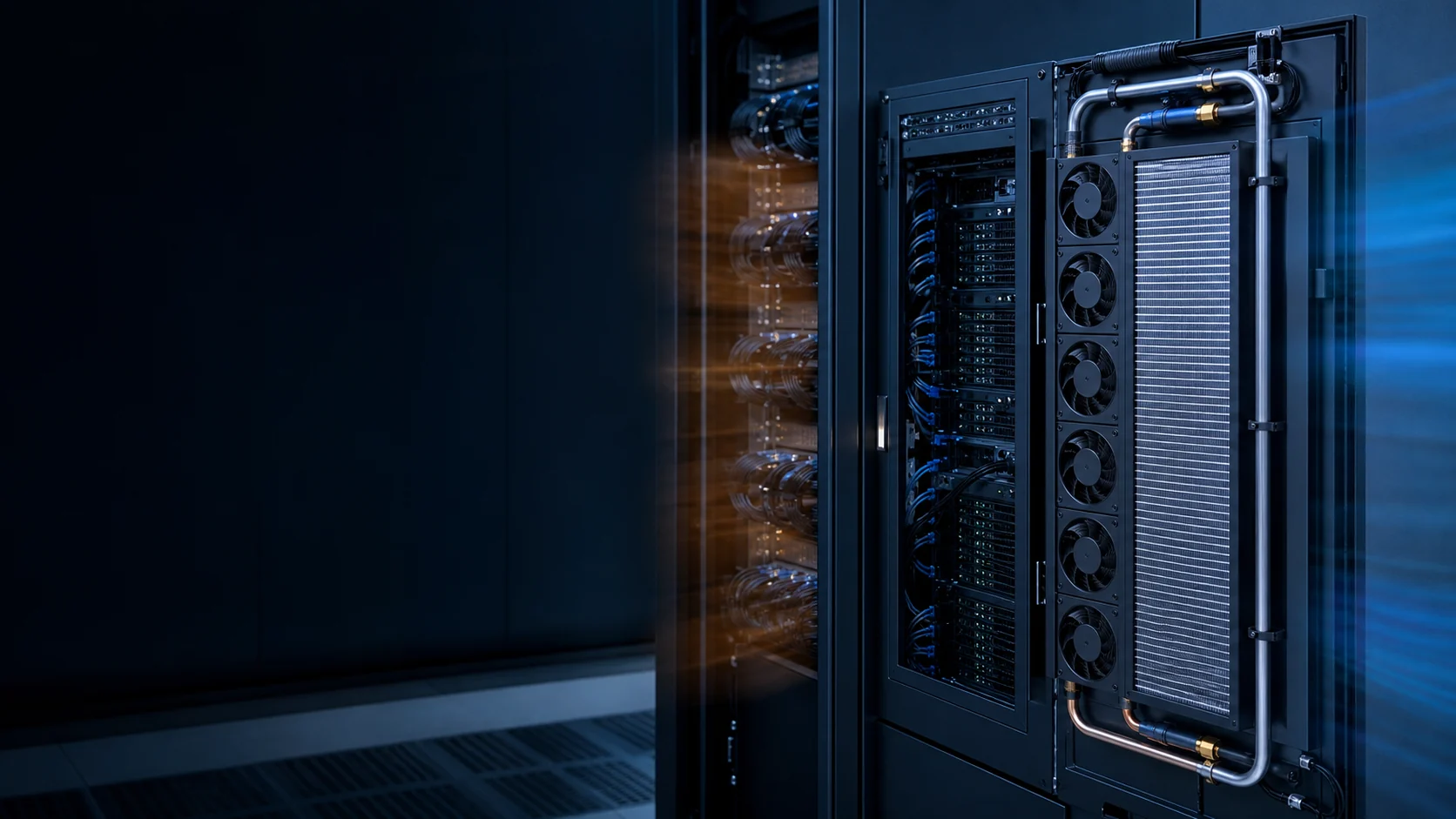
How to compare passive and active rear-door heat exchangers by coil pressure drop, server-fan headroom, water conditions, controls and commissioning evidence.
Read article →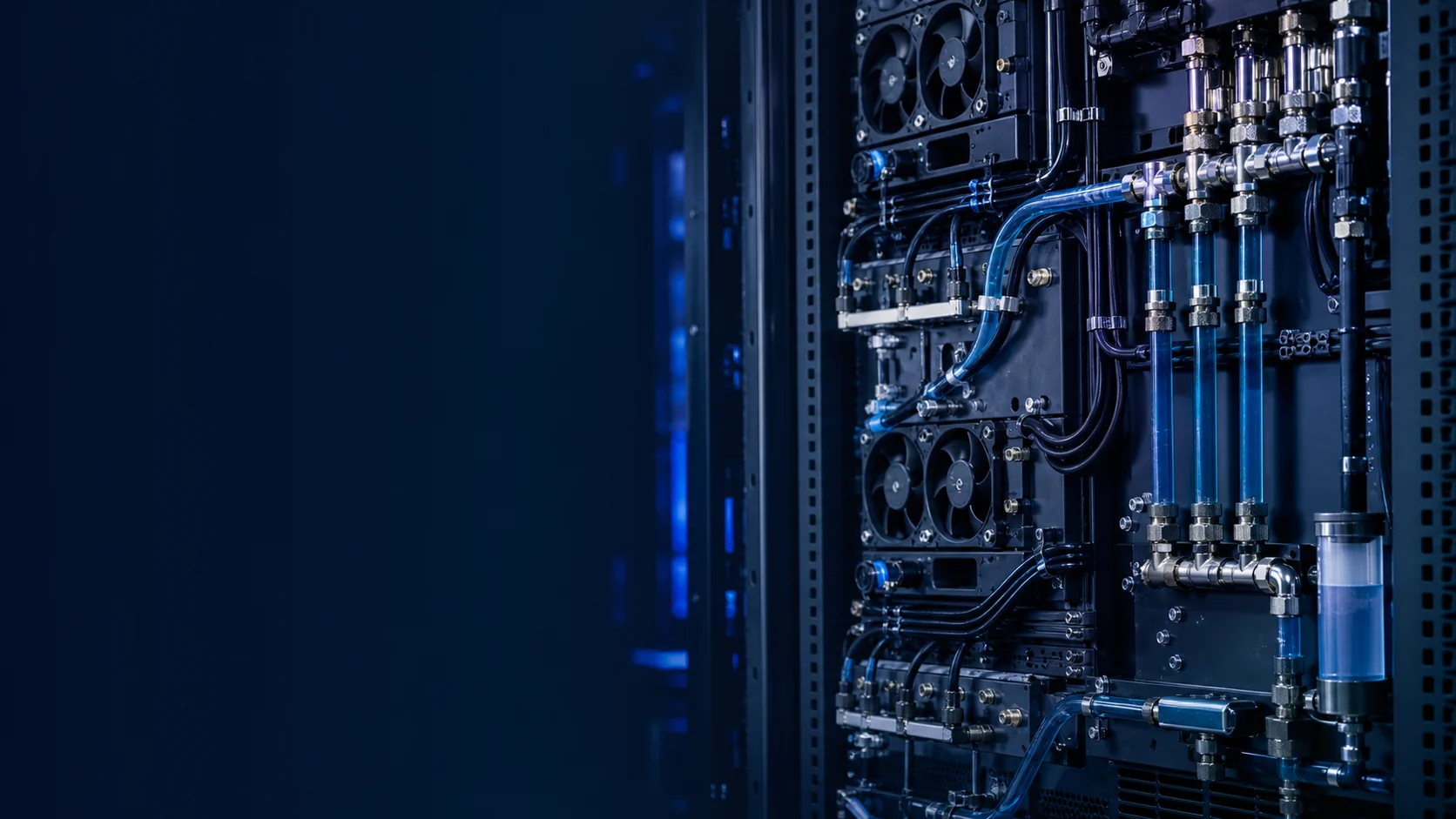
How direct-to-chip liquid and air cooling share the load, and how a customized air-side fan moves from hybrid-rack testing to production.
Read article →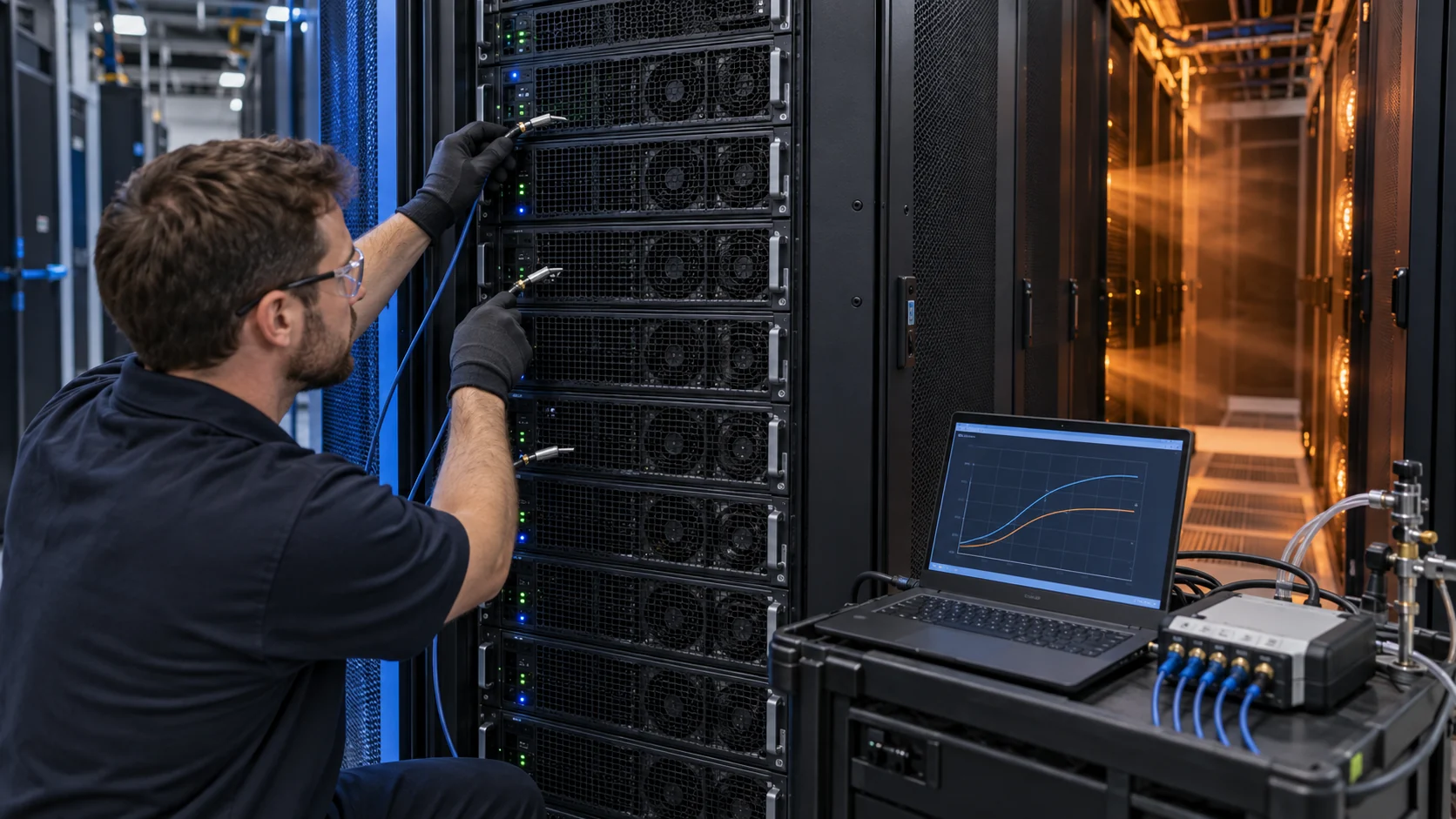
How rack-inlet sensors, hotspot feedback, workload steps and installed fan pressure should be combined before freezing an AI server fan curve.
Read article →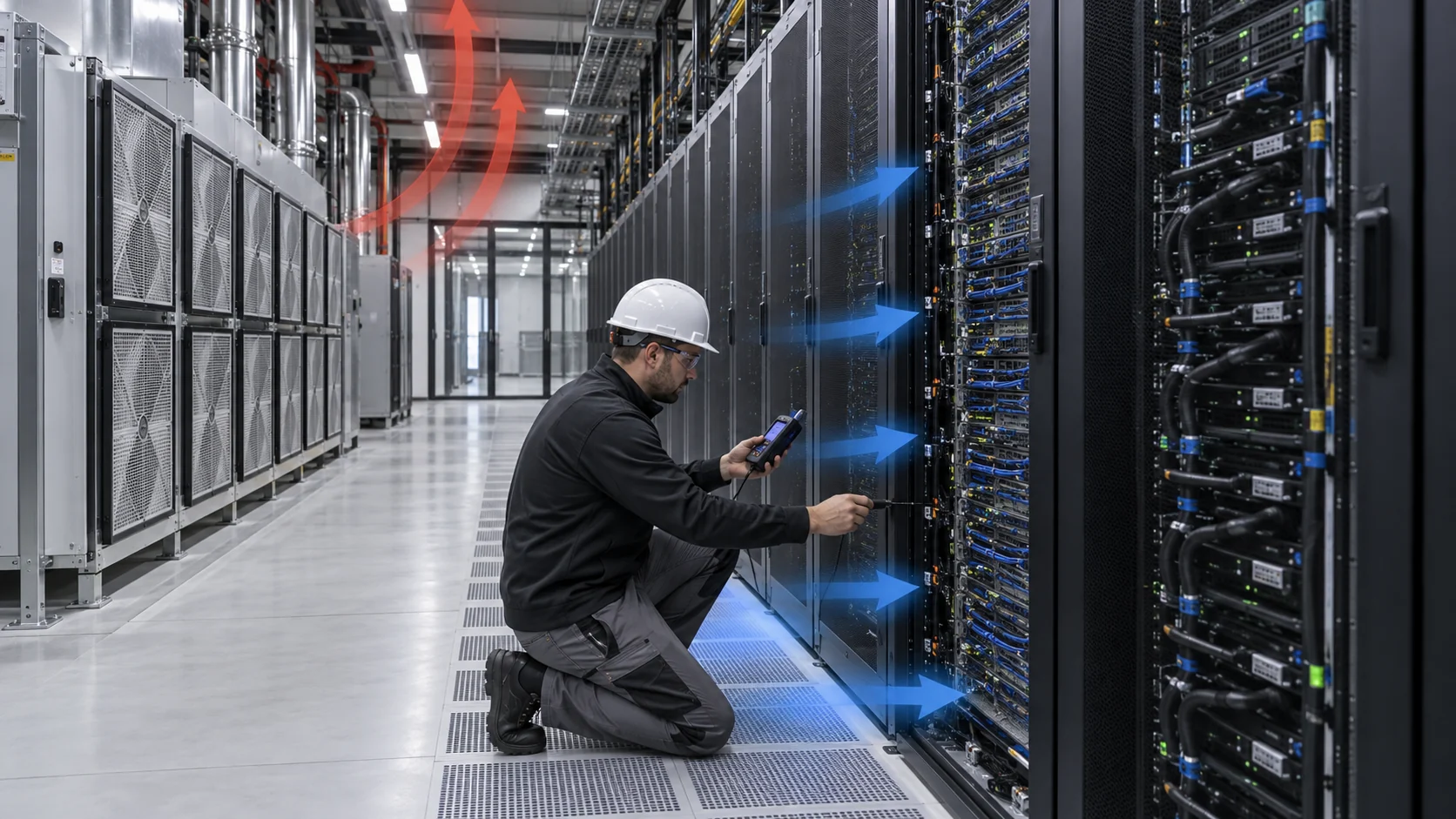
Rack-inlet sensor placement and fan-wall control for AI data centers: validate airflow, pressure, N+1 recovery and thermal stability under changing GPU load.
Read article →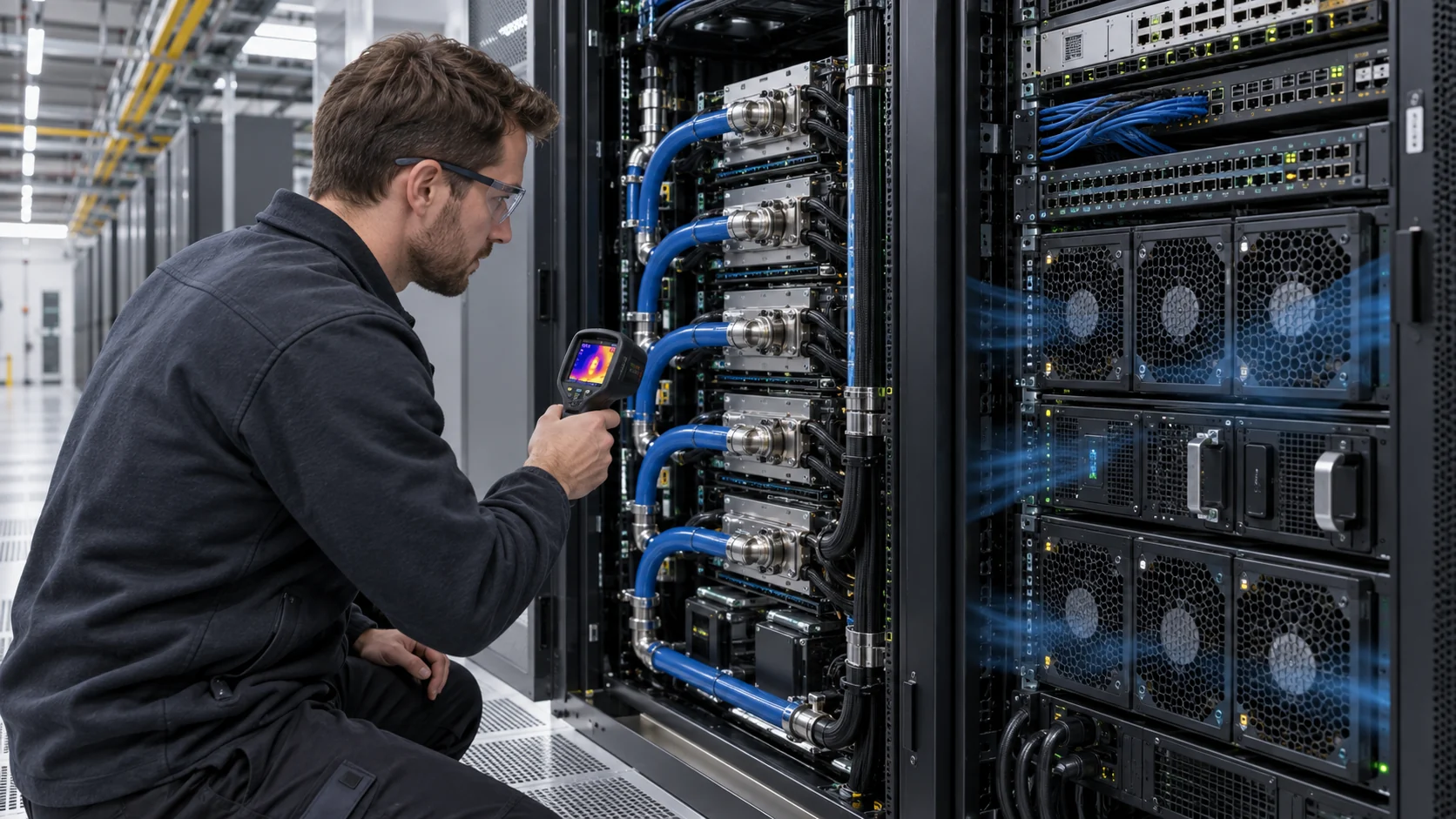
Why liquid-cooled AI racks still need auxiliary air cooling: select and validate fans for networking, memory, storage, power electronics and residual heat.
Read article →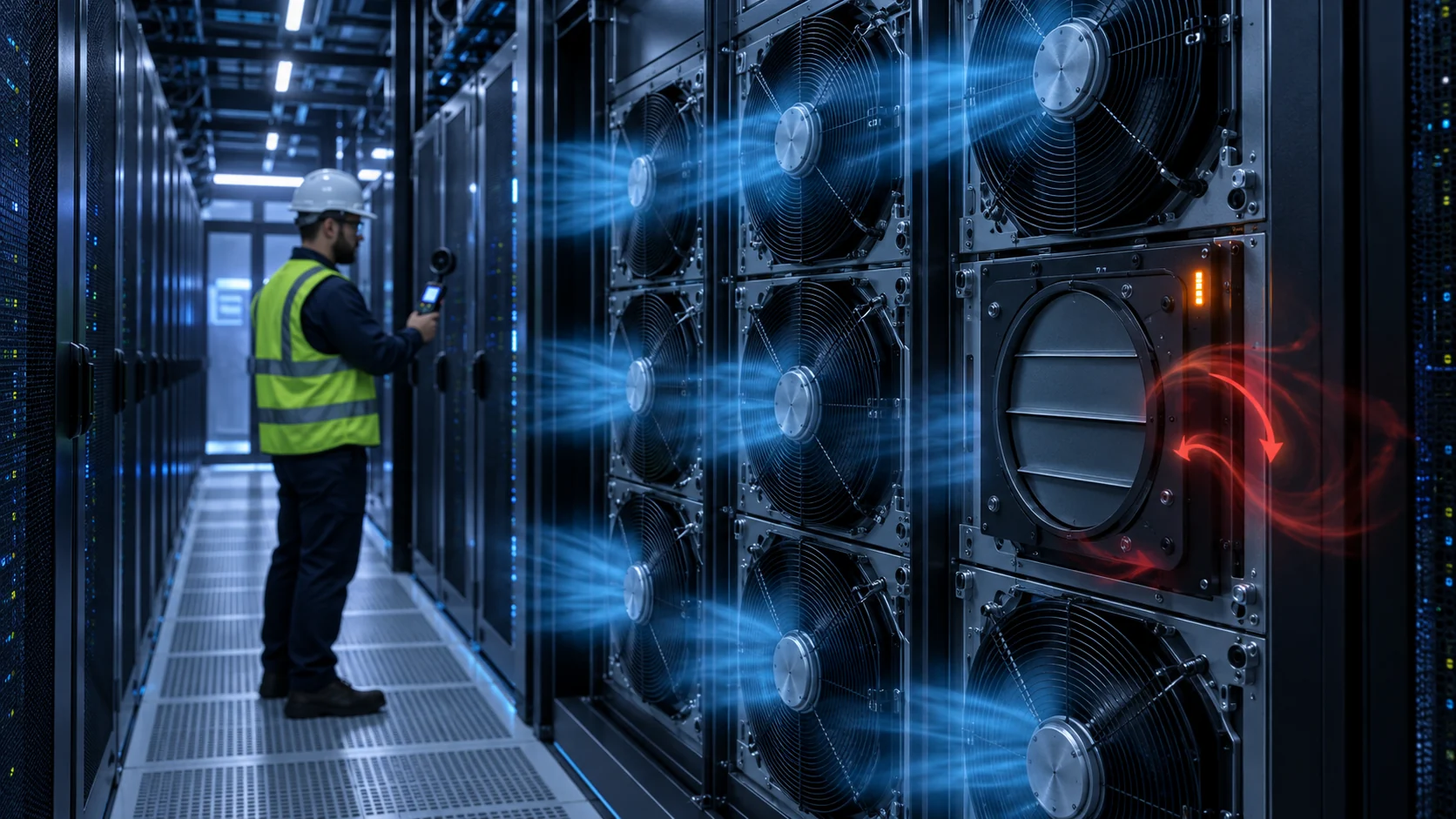
Test an AI data-center fan wall with one module failed: reverse airflow, backdraft control, operating-point shift, inlet temperature and blade-pass noise.
Read article →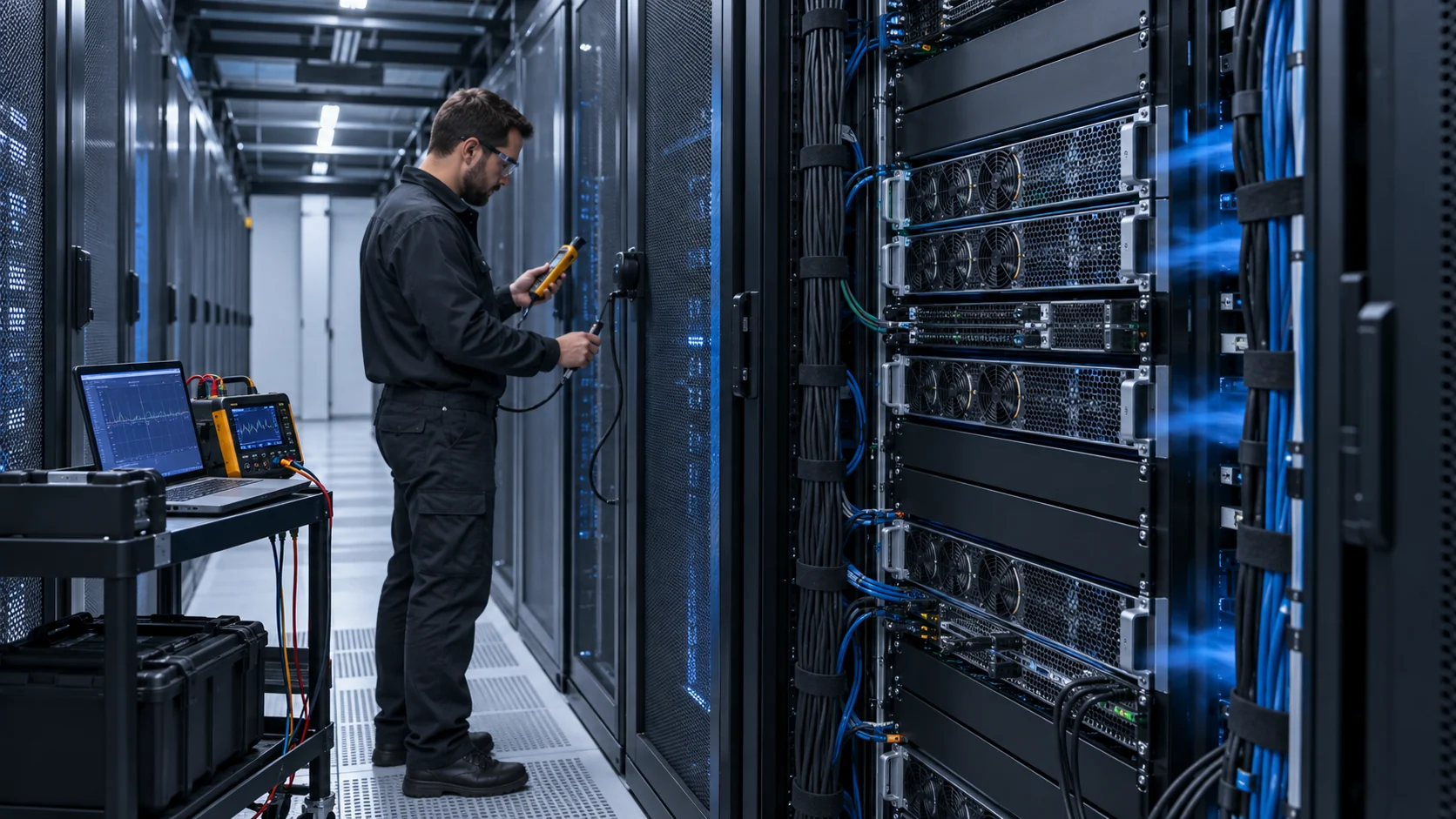
Fan power and part-load control for AI data-center cooling: measure rack pressure, airflow, acoustic limits and PUE trade-offs in air-cooled and hybrid systems.
Read article →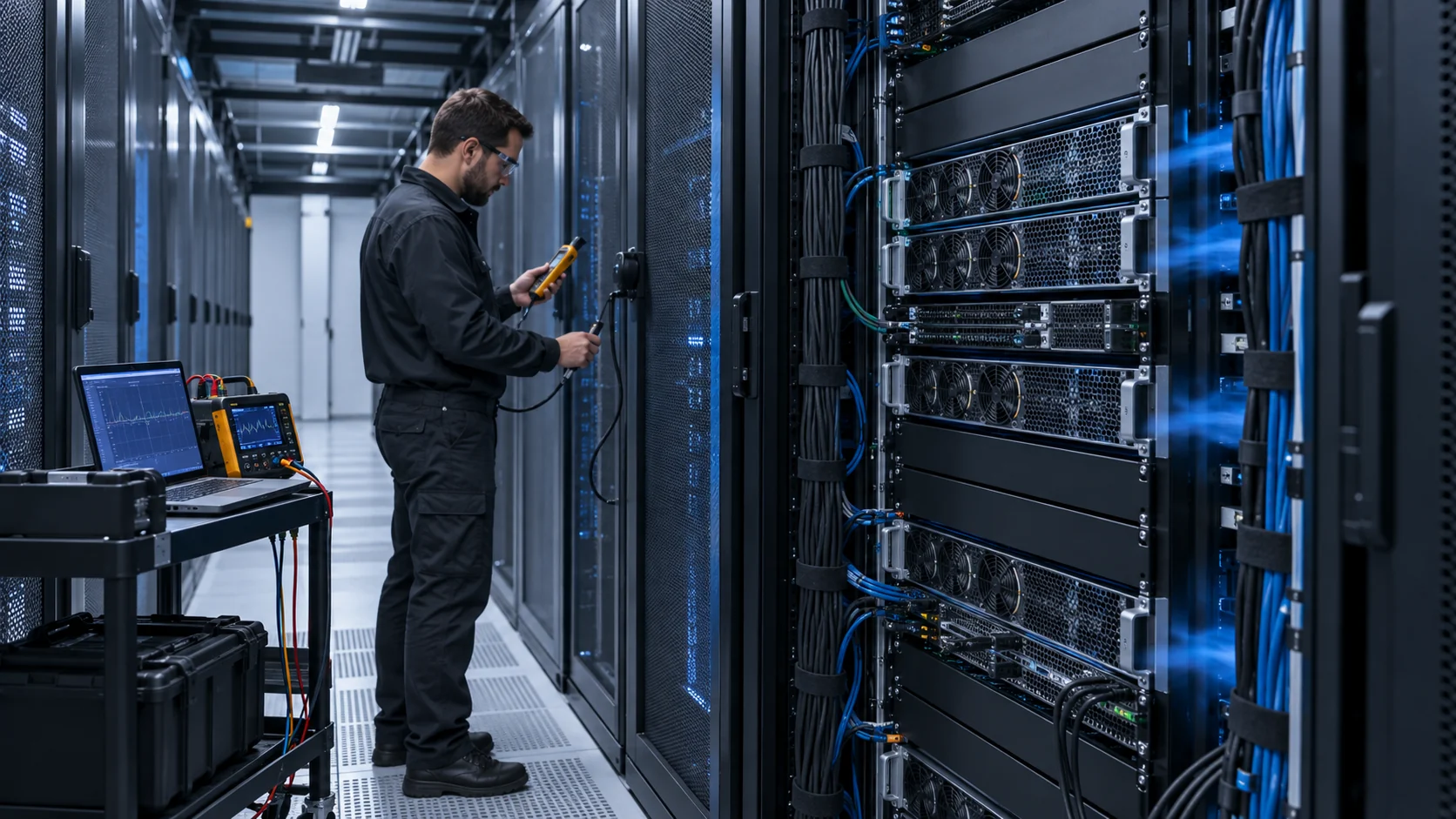
AI data-center containment (cold- and hot-aisle): measure rack pressure, bypass leakage, recirculation, fan operating points and farthest-rack thermal margin.
Read article →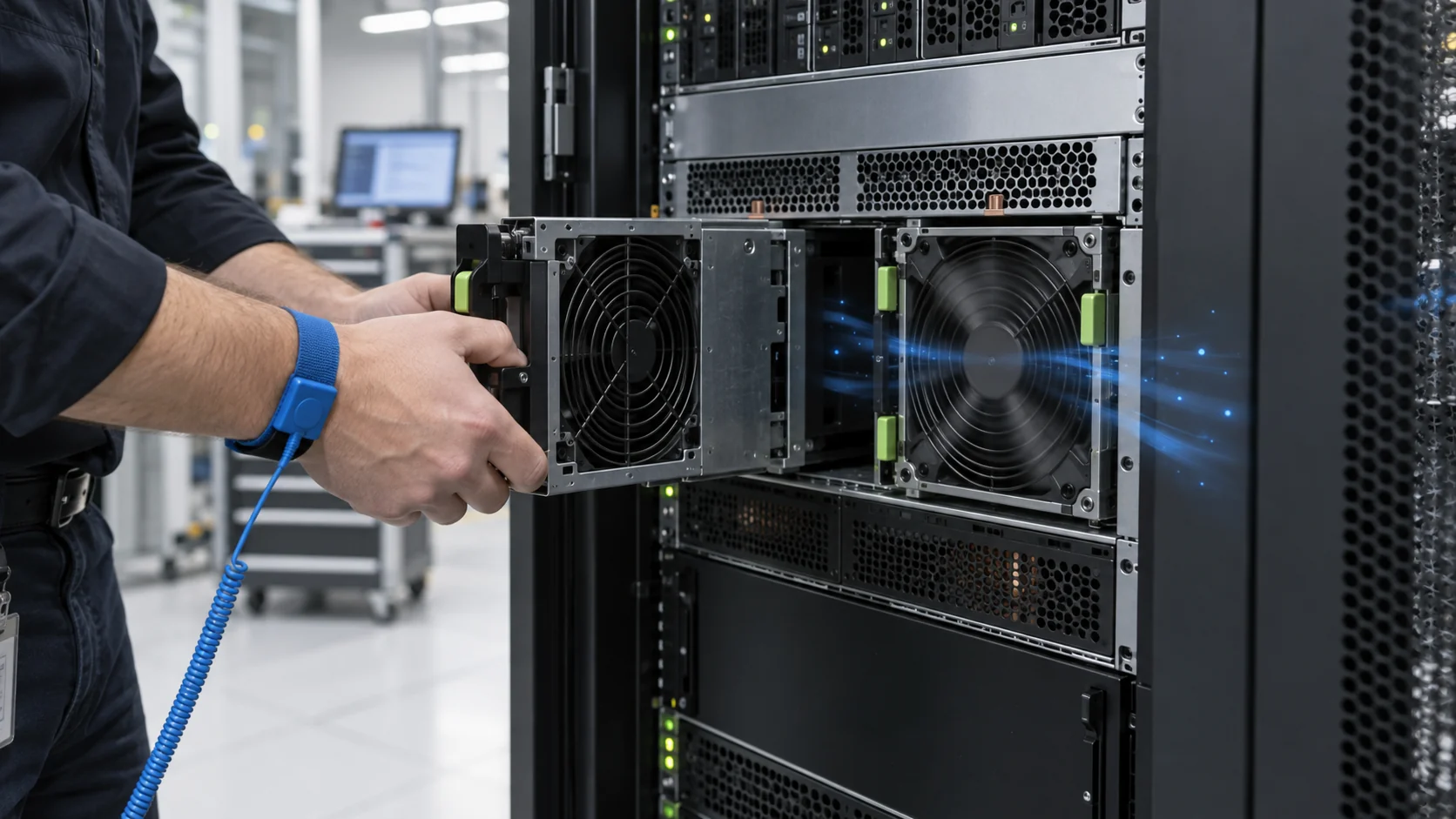
AI server fan hot-swap validation: measure airflow interruption, reverse leakage, control transients, rack pressure and the service thermal window.
Read article →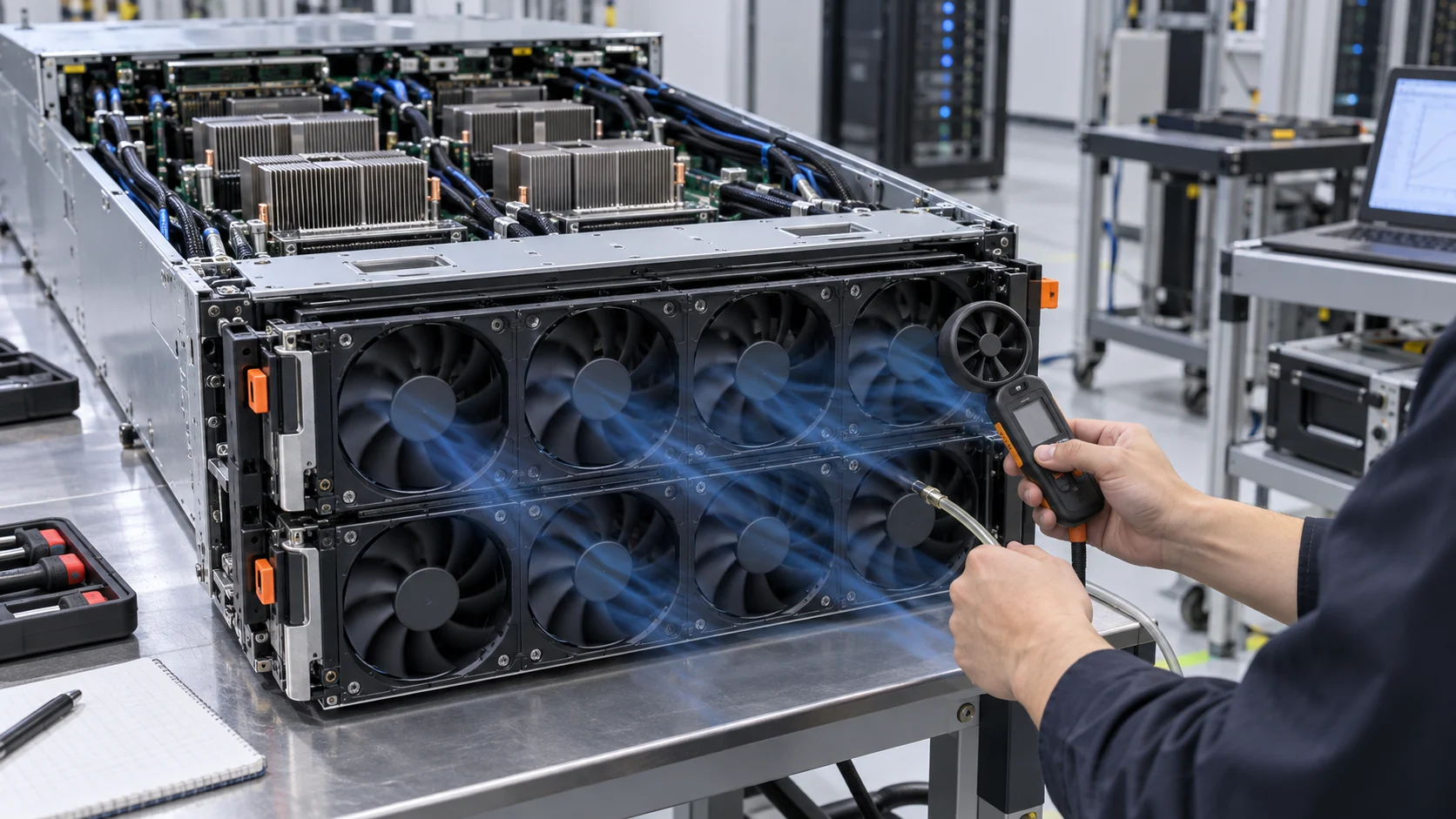
AI server fan tray airflow uniformity: measure fan-to-fan mismatch, local pressure loss and heat-sink flow distribution before approving a custom fan design.
Read article →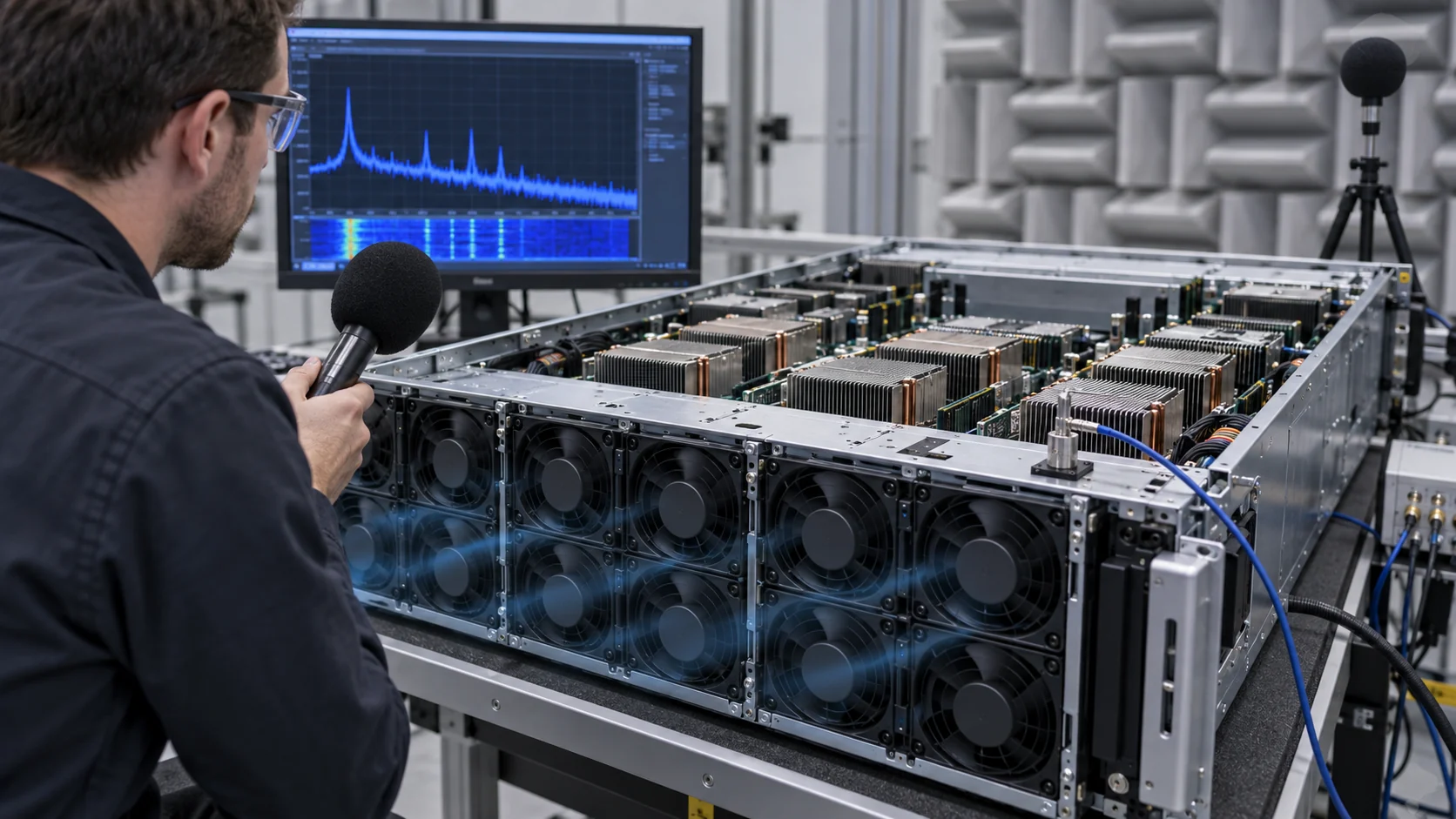
AI server fan tray acoustic validation: link blade-pass frequency to RPM, inlet distortion, PWM ramps, tray resonance, vibration and installed working point.
Read article →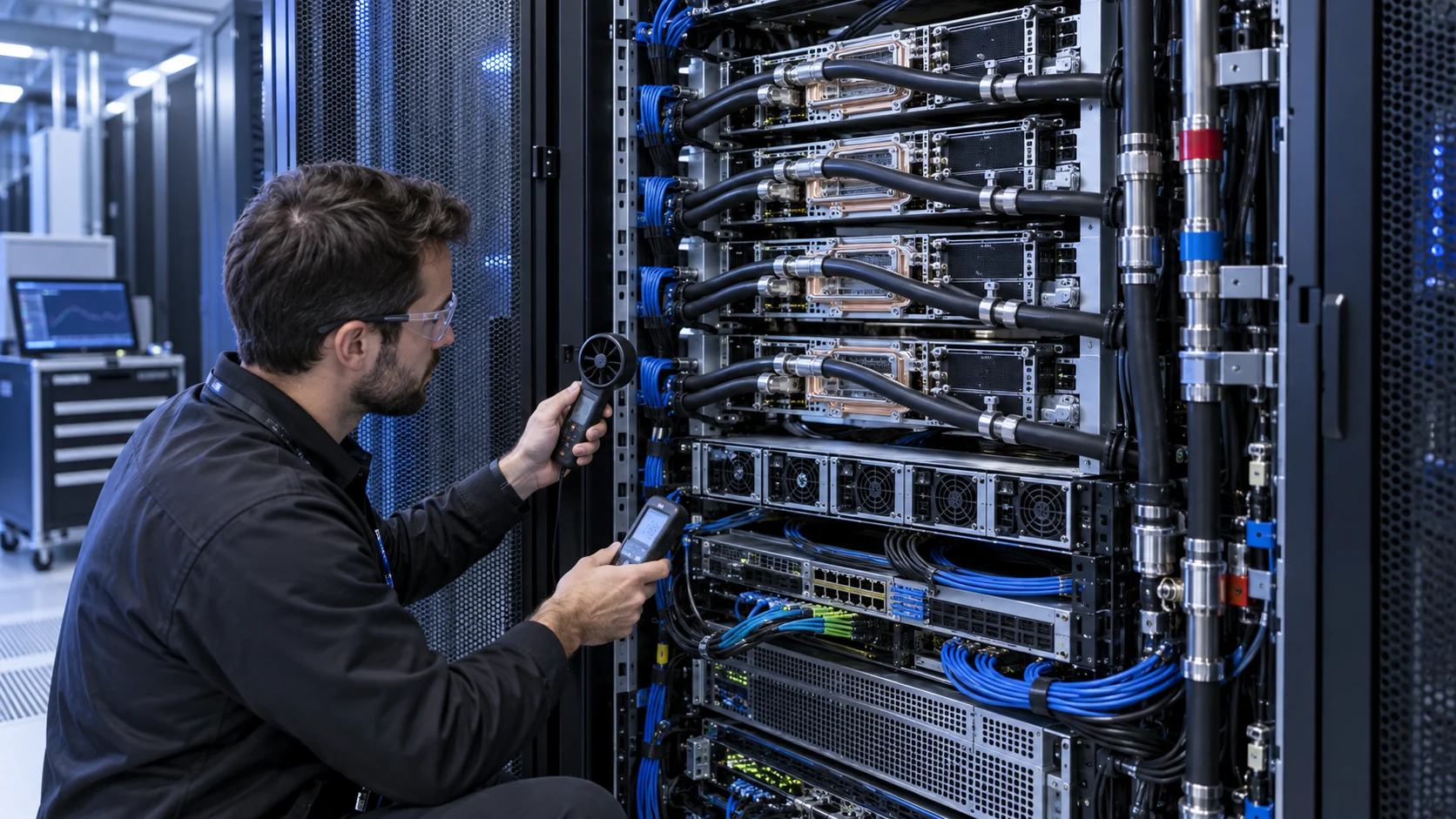
Auxiliary air cooling for liquid-cooled AI racks: power shelves, memory, networking, CDU heat rejection, bypass flow, pressure and fan control validation.
Read article →Energy Storage
Thermal design for battery energy-storage systems, from cell uniformity and airflow paths to sample validation and reliable fan integration.
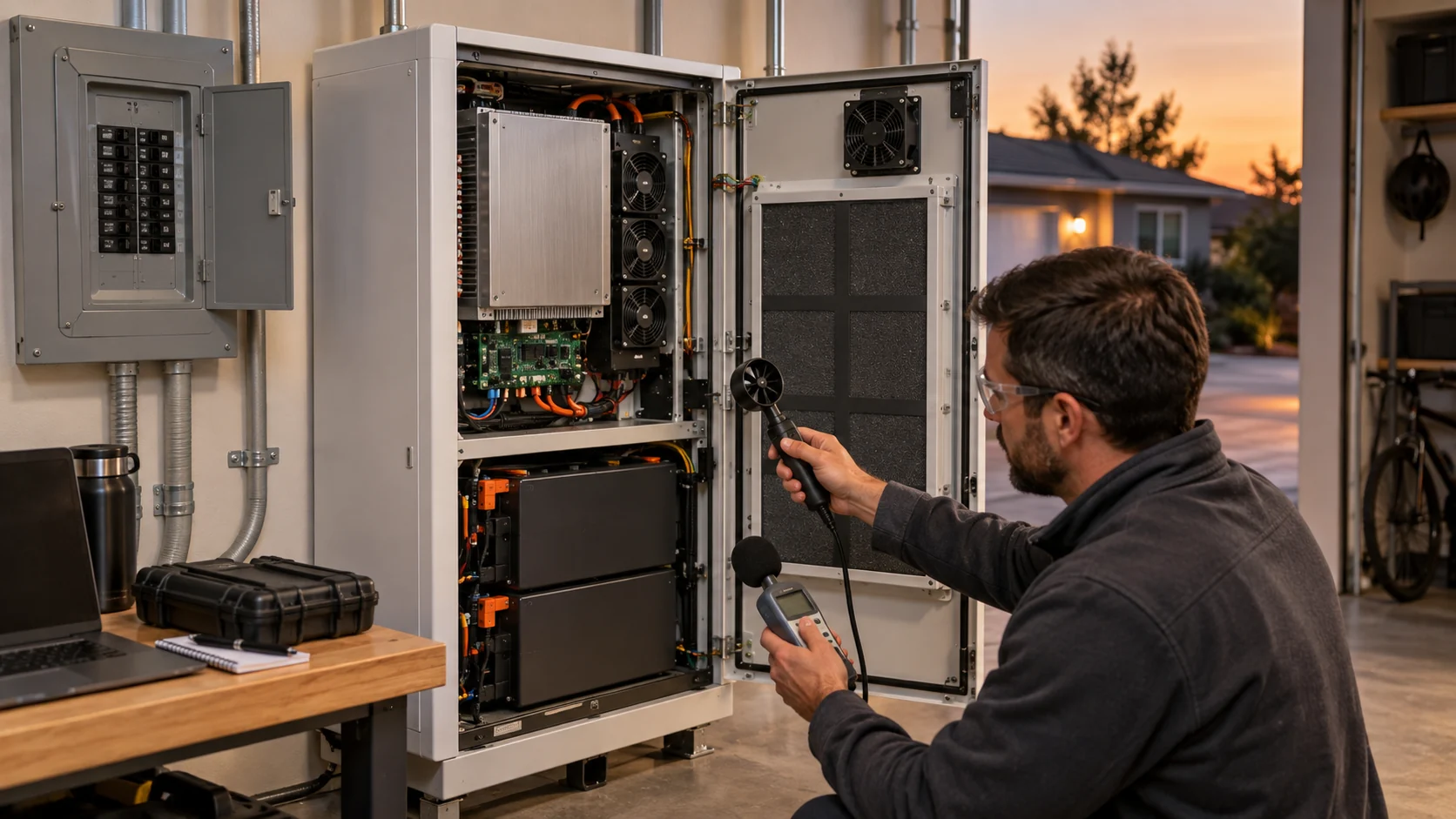
Validate residential ESS inverter fans for night noise, high-ambient margin, loaded filters, acoustic limits and service access.
Read article →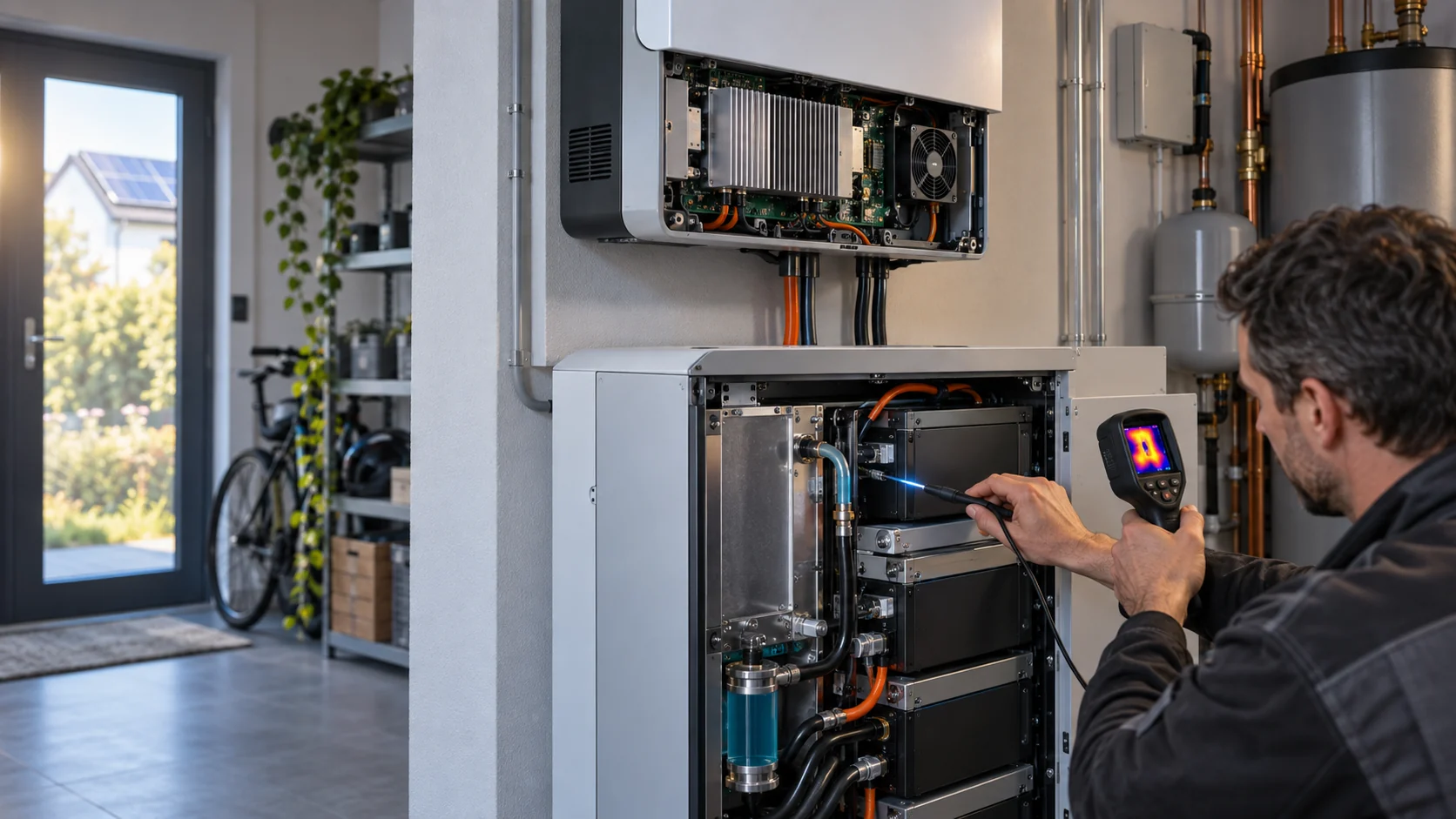
Choose residential ESS thermal management by comparing passive, liquid, heat-pipe and fan-assisted cooling against real duty.
Read article →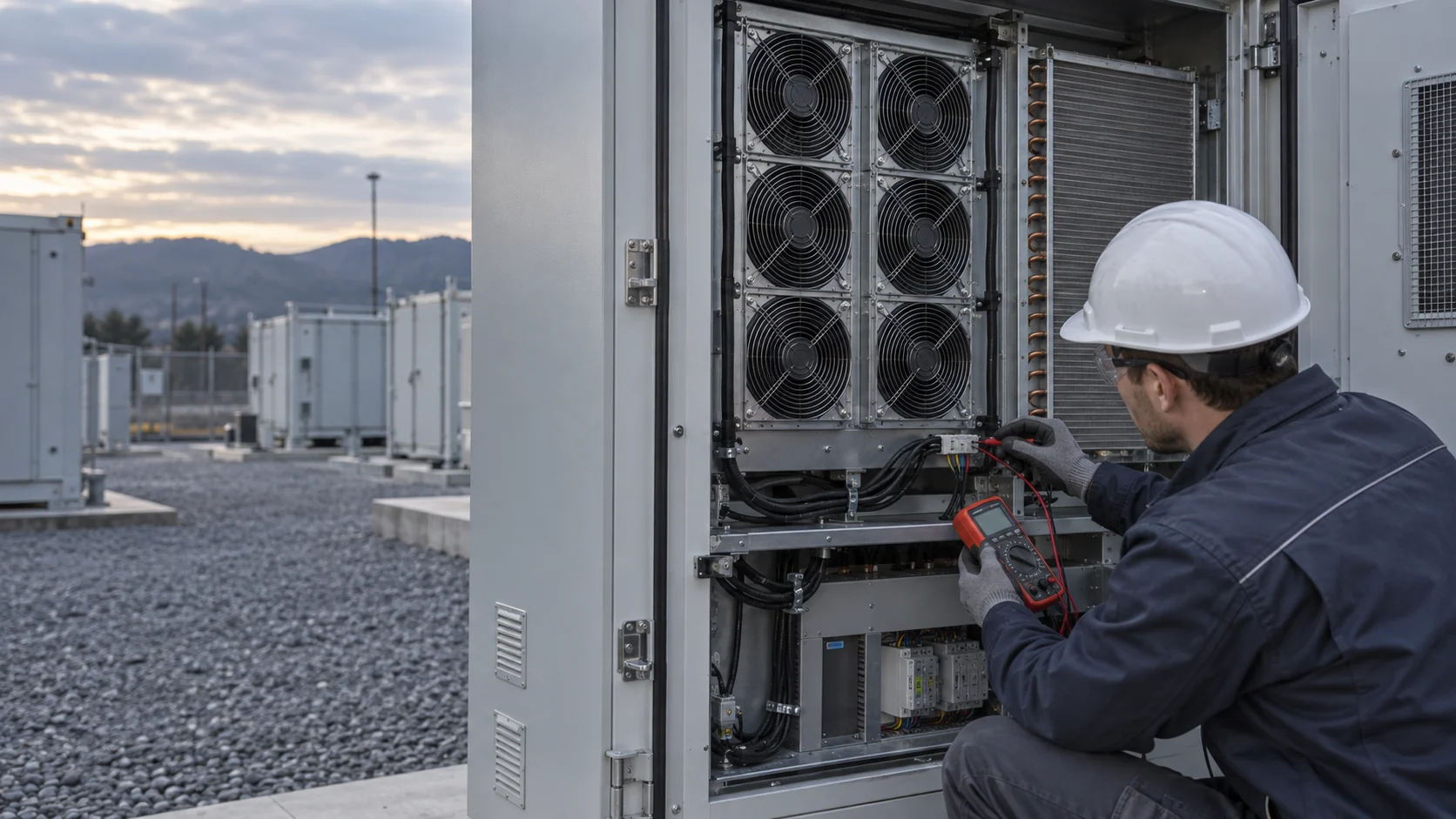
BESS cooling-fan diagnostics: verify supply voltage, cable drop, PWM control and tach feedback under load before classifying a fan as failed.
Read article →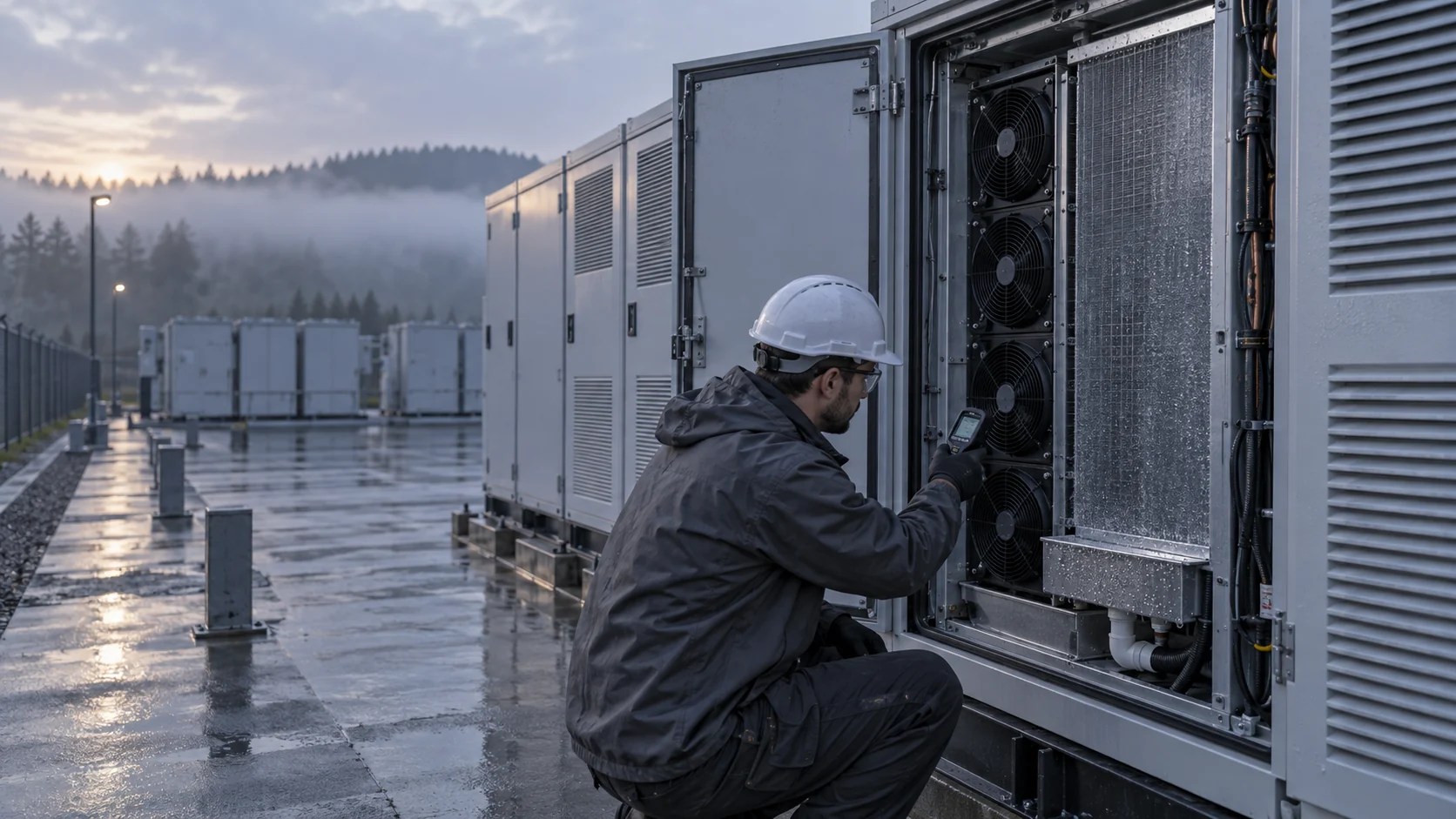
BESS condensation control: compare inlet-air dew point with cold surfaces, then validate drainage, sealing, fan control and the installed air path.
Read article →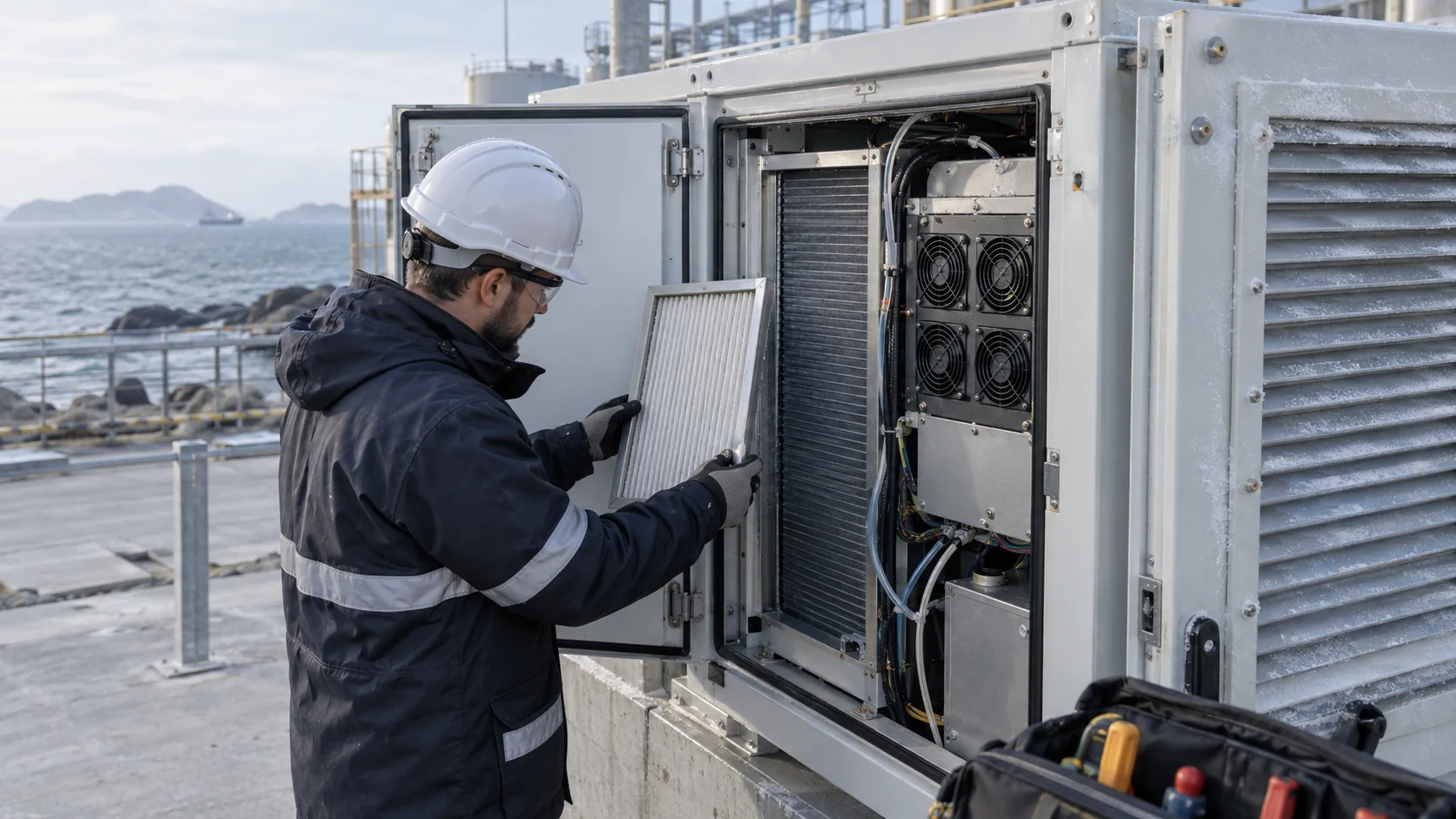
BESS cooling for dusty, coastal and humid sites: separate fan-level requirements from enclosure protection, then validate corrosion, ingress and thermal duty.
Read article →
Combine PWM command, tach feedback, current, pressure and temperature to catch fan and filter faults early.
Read article →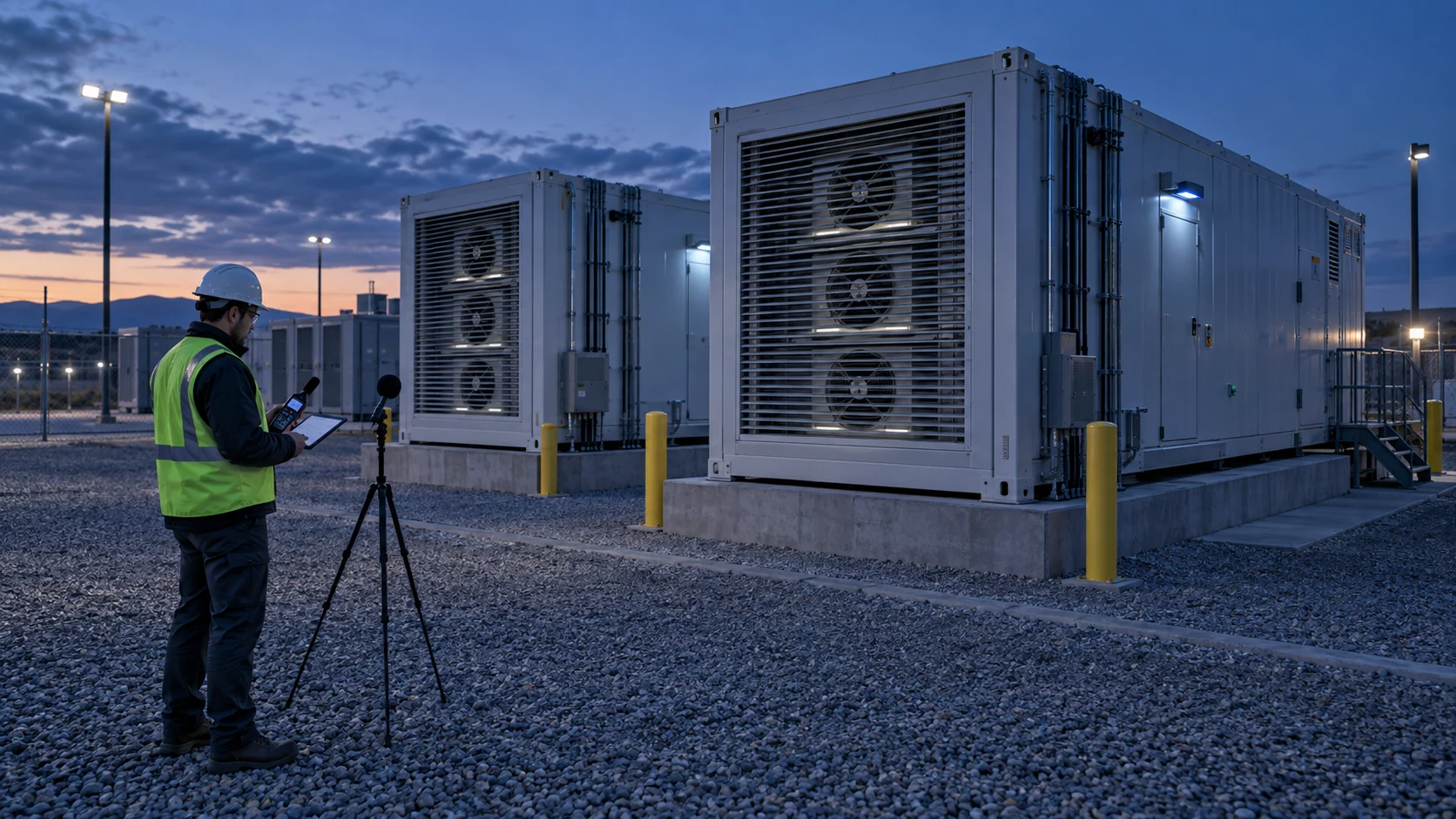
Reduce outdoor BESS fan noise without hiding thermal risk: define modes, measure installed sound path, avoid resonance bands, validate PWM at the working point.
Read article →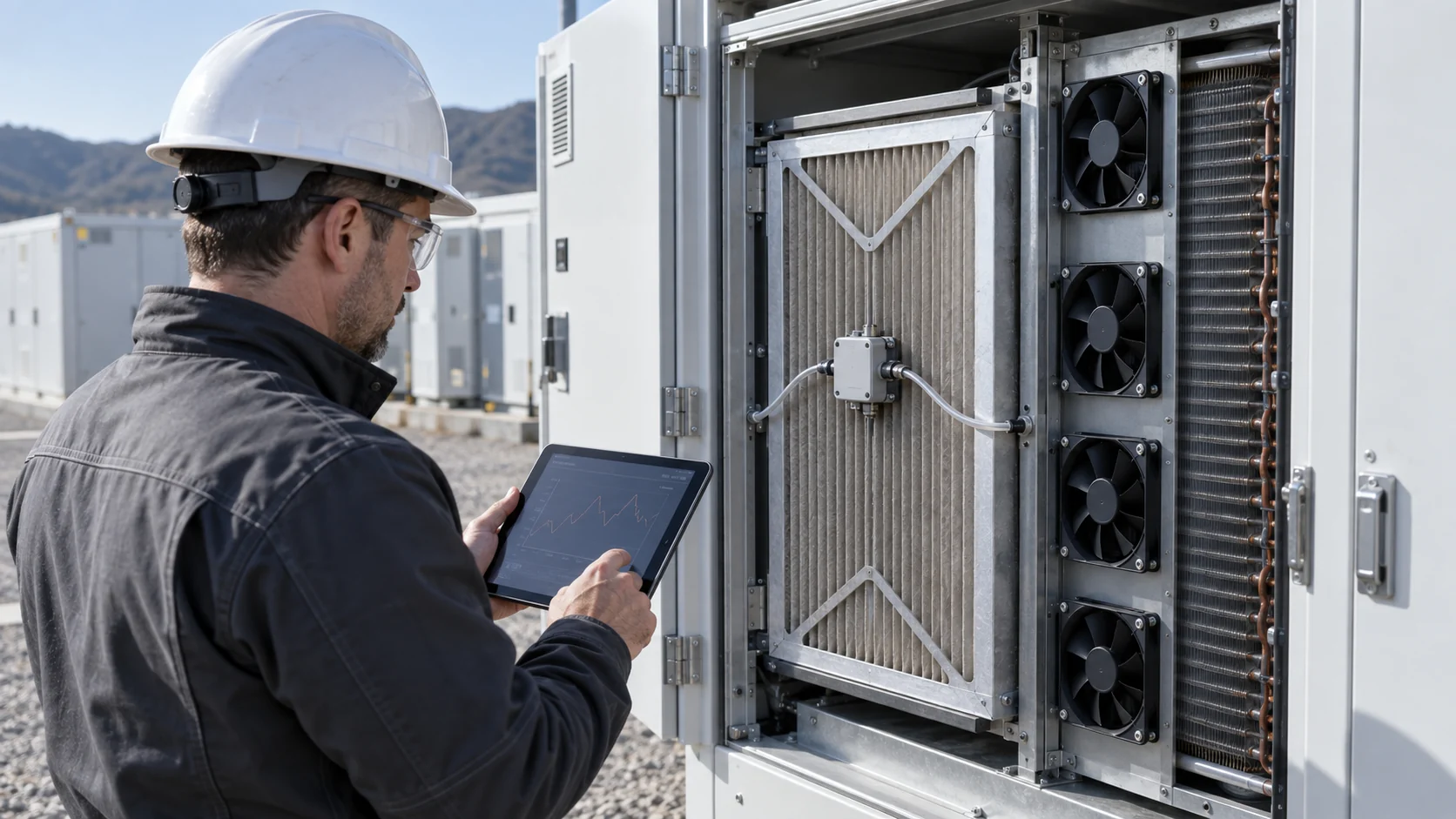
Set filter alarms from a clean baseline, the approved final pressure and speed-normalized logic, not one fixed Pa value.
Read article →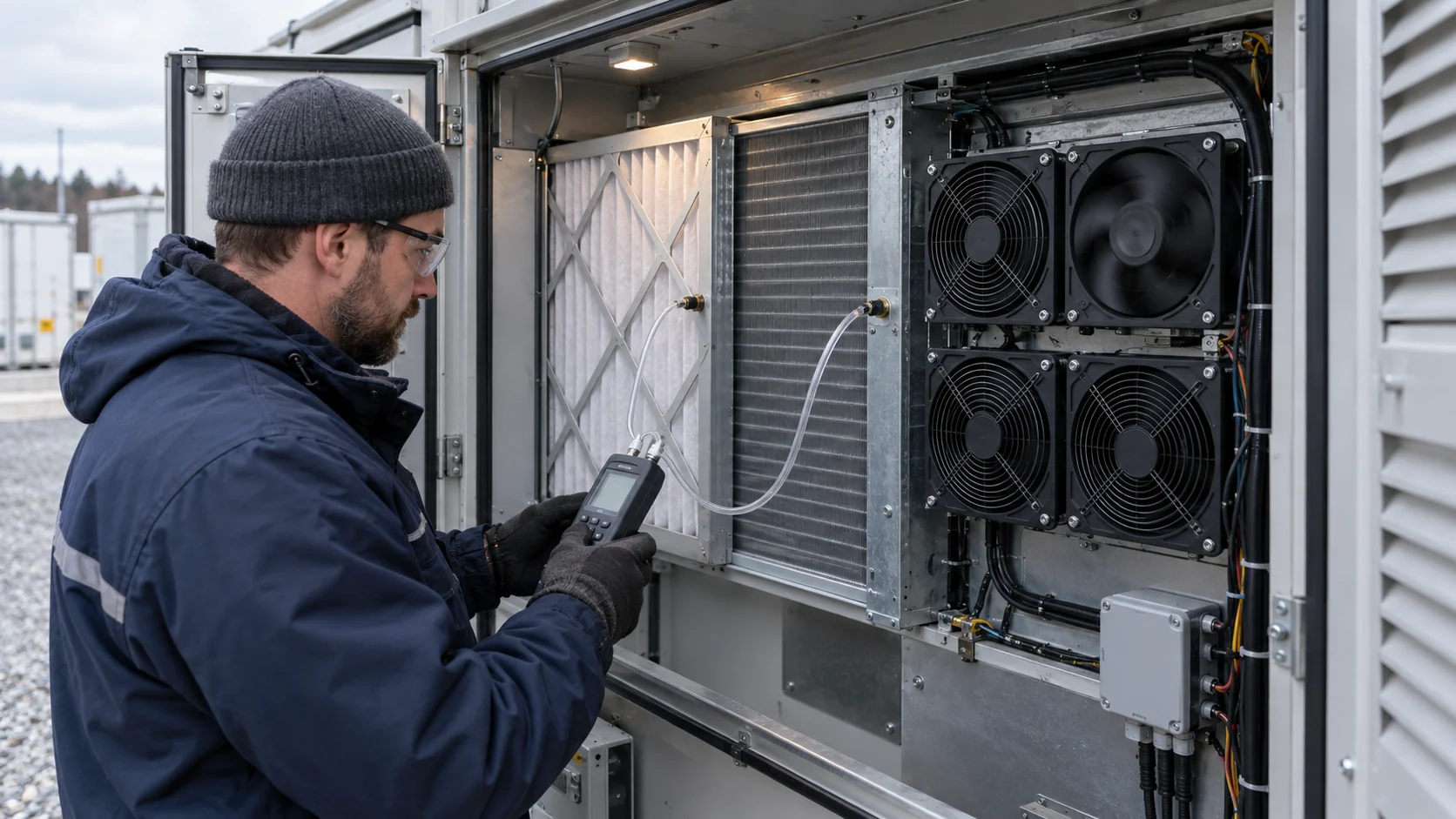
Tach feedback normal but BESS airflow low: read pressure, restriction, bypass and the operating point before replacing any fan.
Read article →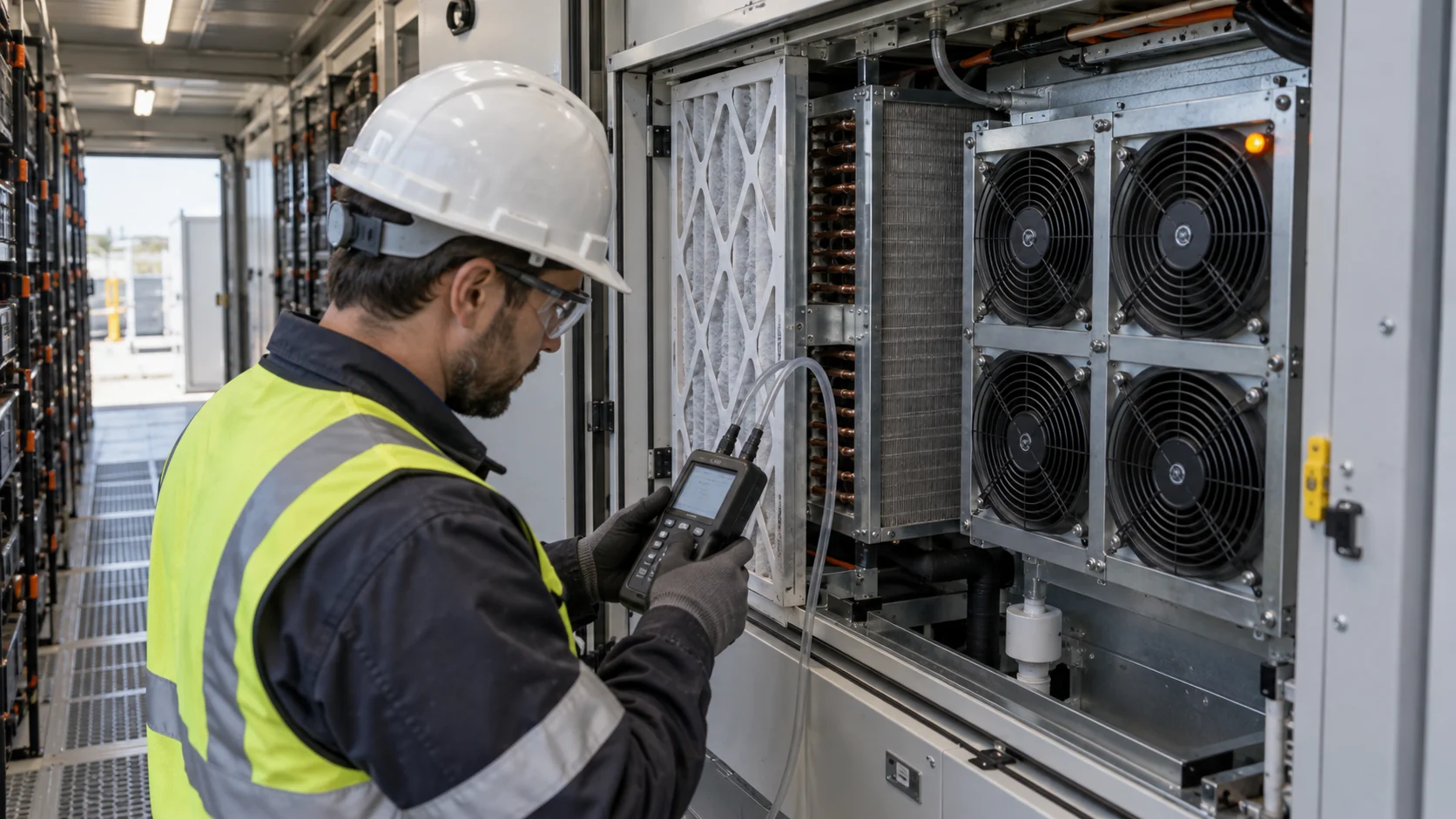
Validate BESS fan arrays after one fan stops: installed pressure, reverse-flow path and thermal response before approving an N+1 claim.
Read article →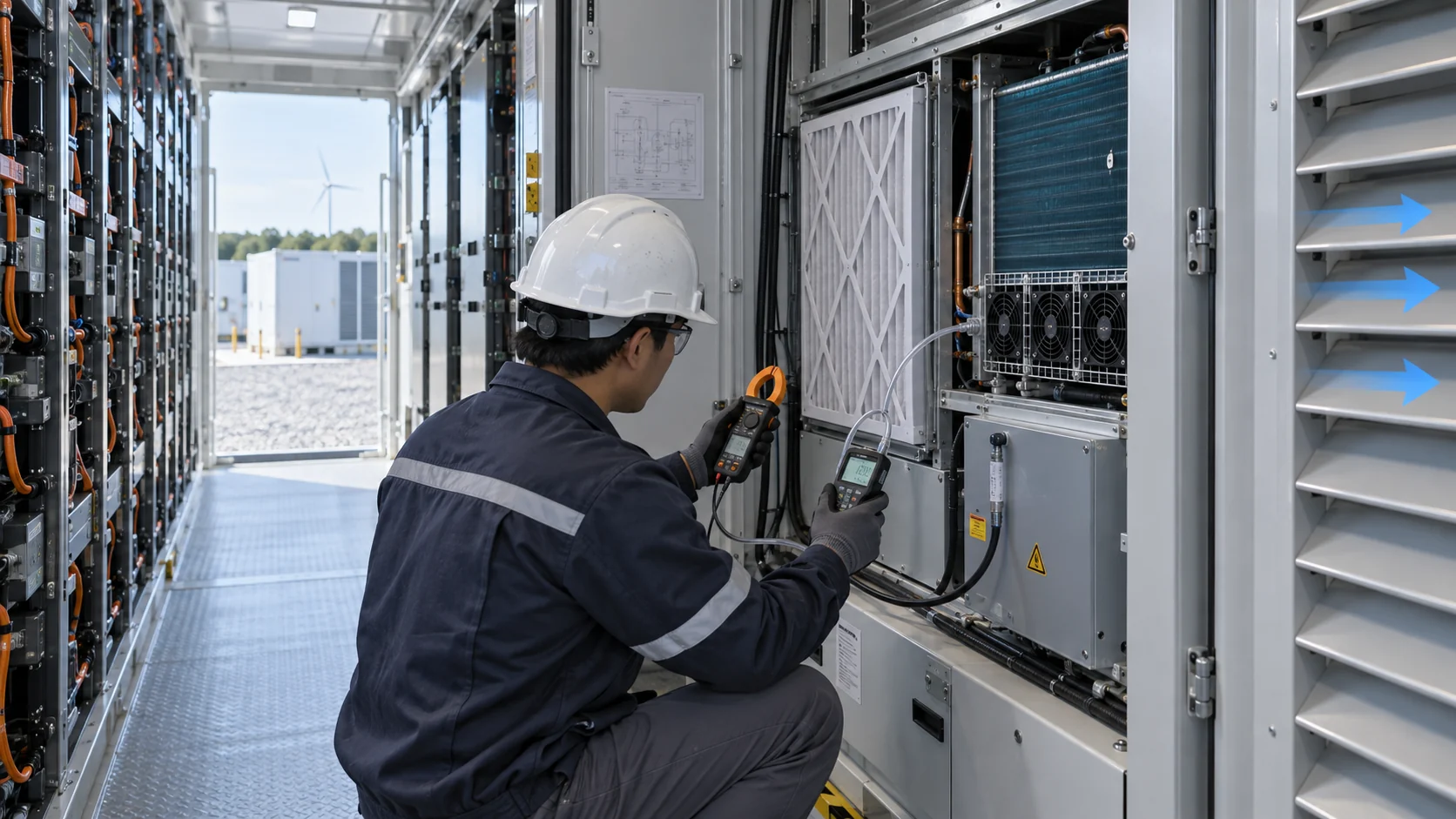
Reduce BESS cooling-fan energy: define the auxiliary-power meter boundary, validate the duty point and prove PWM control across load and ambient states.
Read article →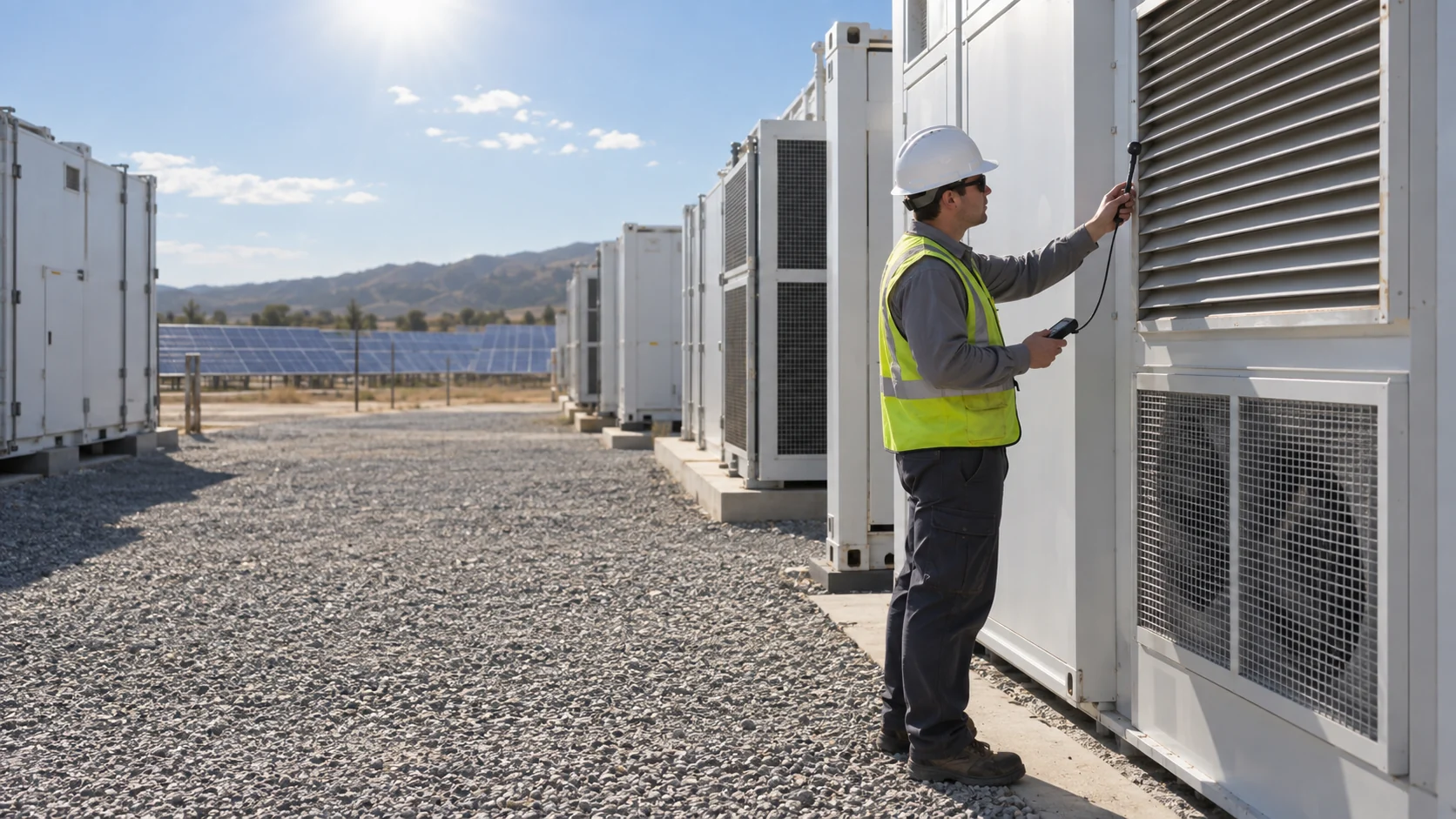
Validate BESS cooling fans at high ambient: attach density, recirculation and temperature ratings to every margin.
Read article →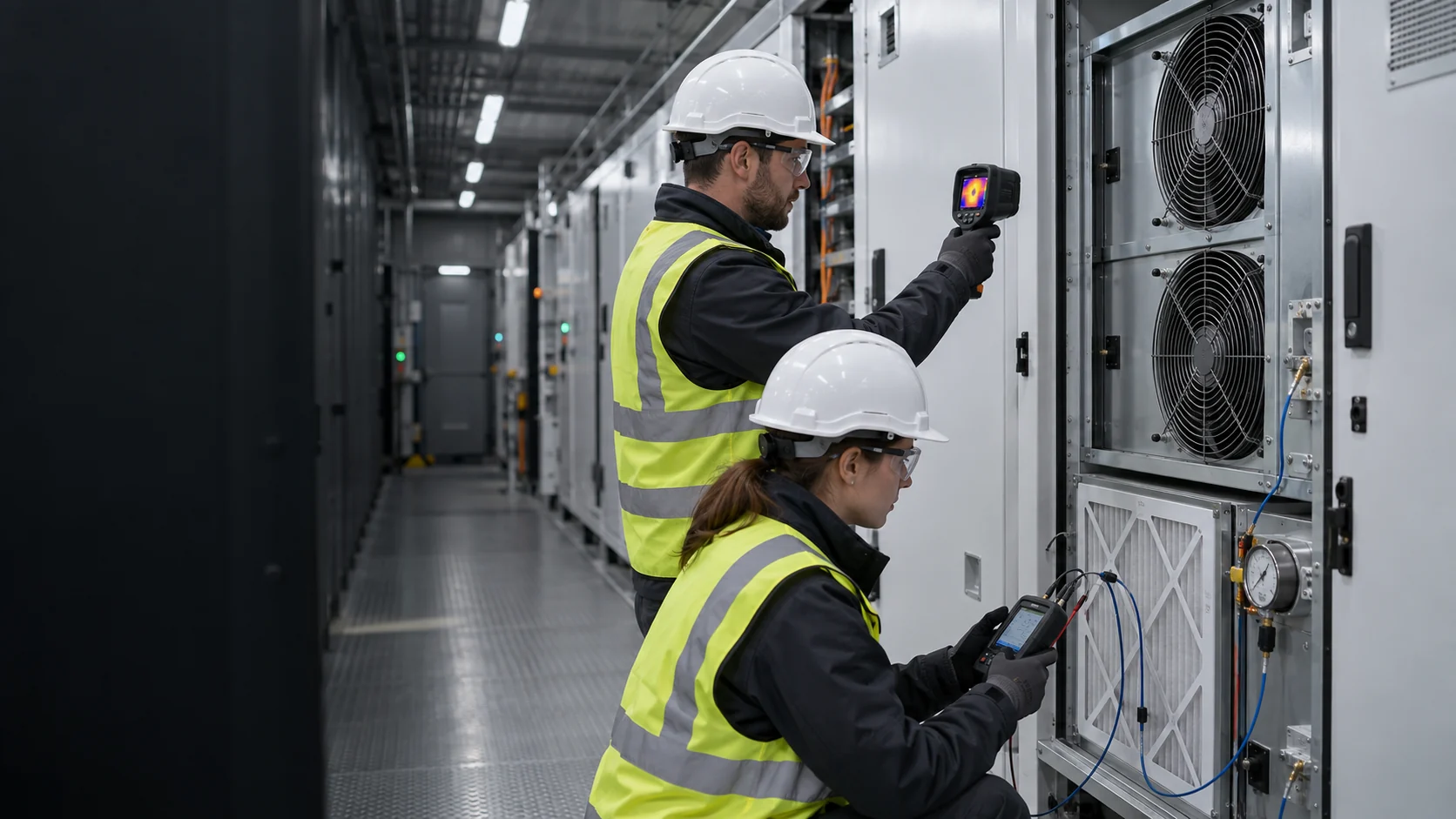
BESS HVAC commissioning test: verify temperature, airflow, pressure, fan control and alarms through a representative power step, not one stable reading.
Read article →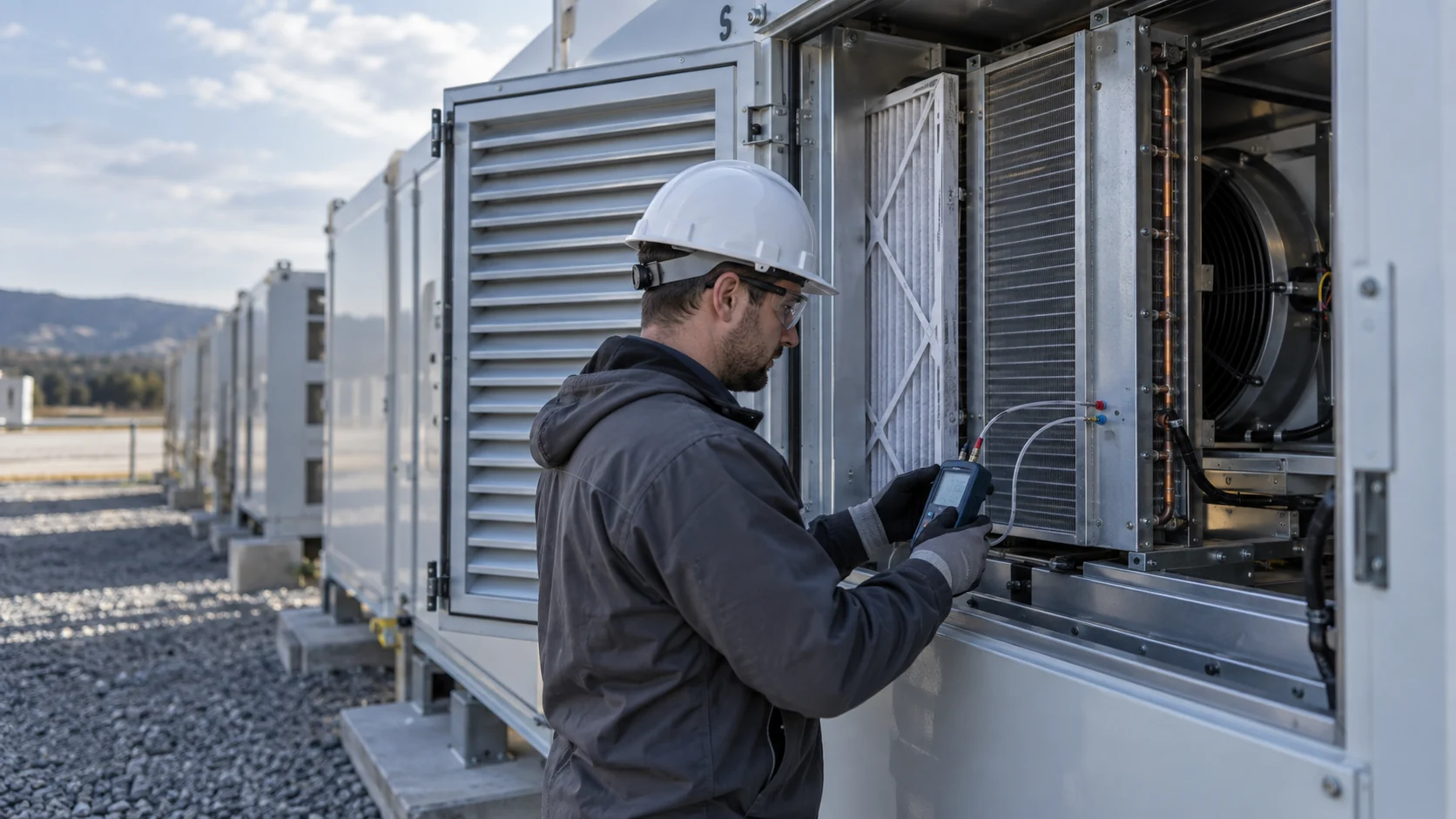
How to select a BESS liquid-to-air heat exchanger fan for installed coil pressure, and validate airflow, face velocity and controls.
Read article →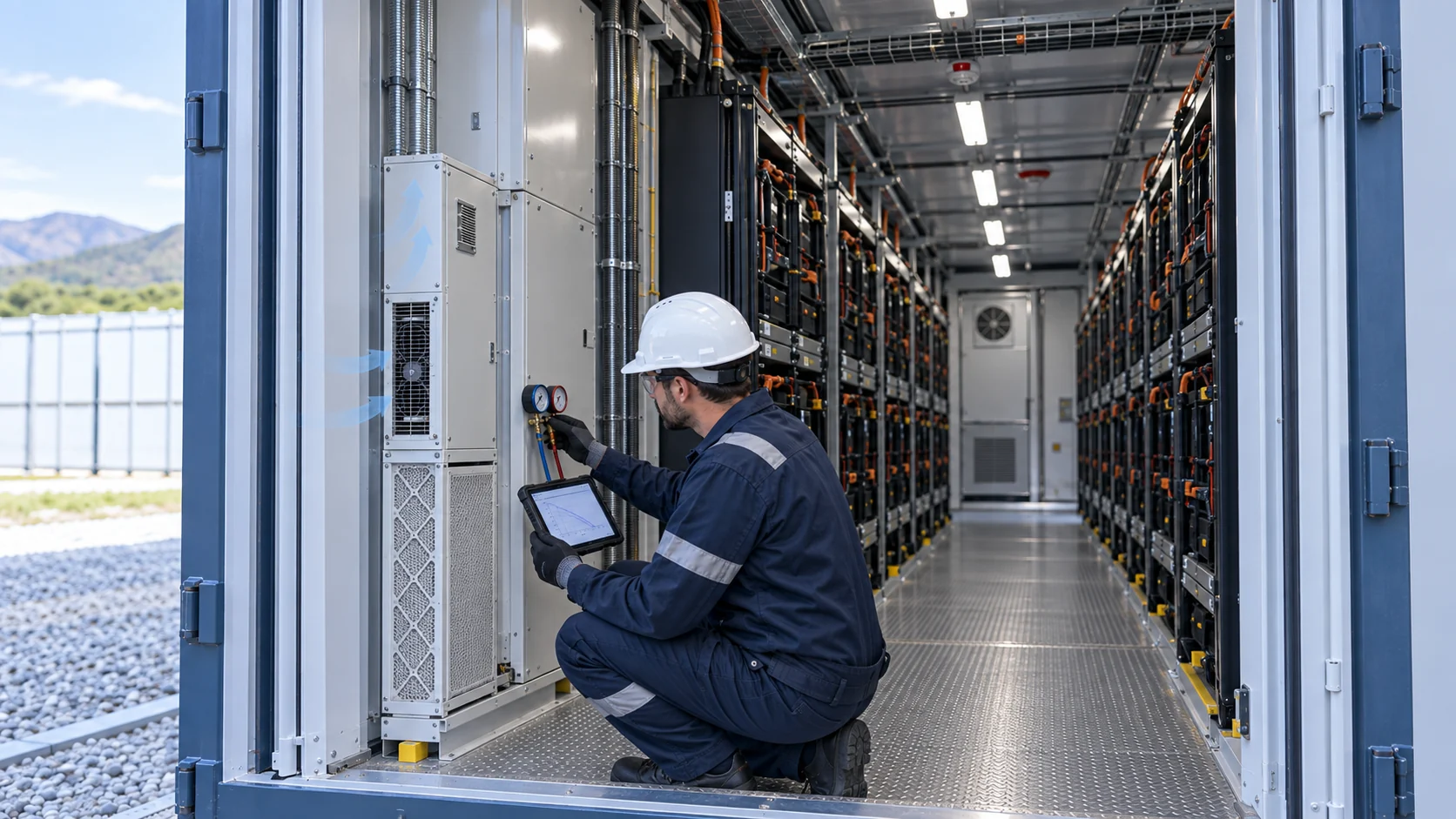
Qualify a BESS fan replacement at the measured duty point: frame match is not thermal match.
Read article →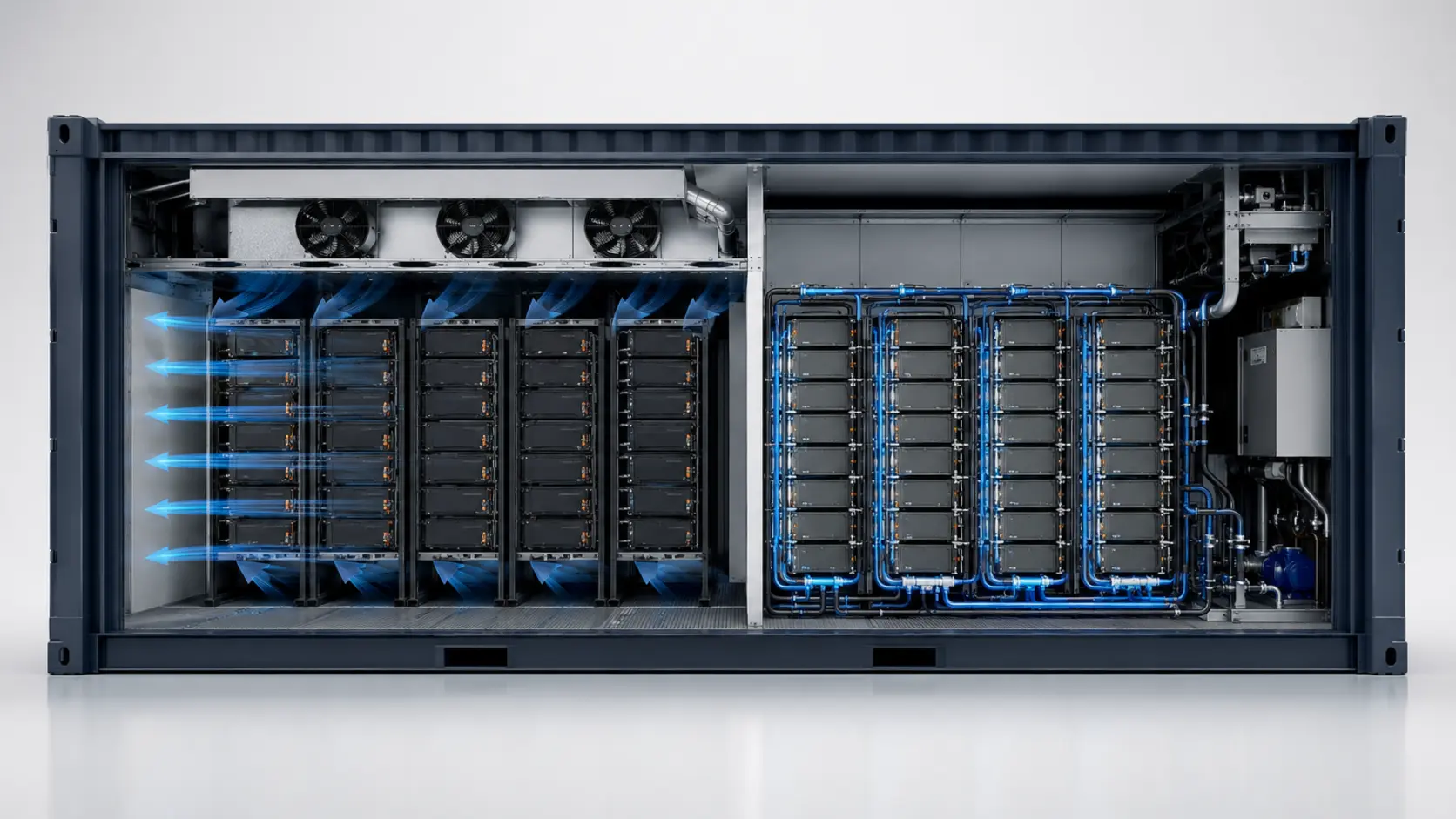
Where the air-vs-liquid line sits, why cell temperature uniformity beats raw cooling, and how a custom fan sample can make the air side work.
Read article →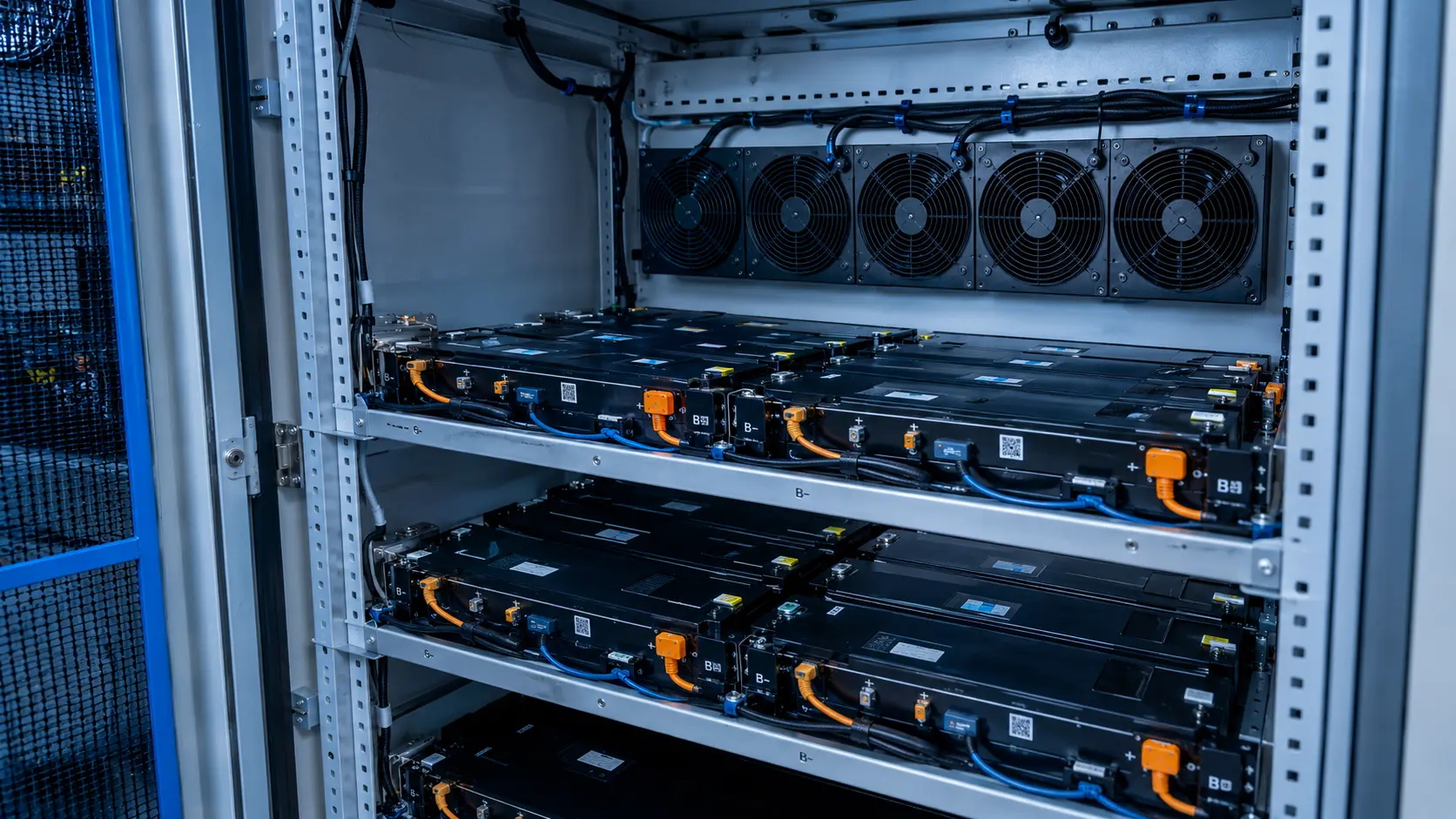
Pick the static pressure that beats casing bypass, then validate a customized fan and airflow path so air-cooled cells stay balanced over the design life.
Read article →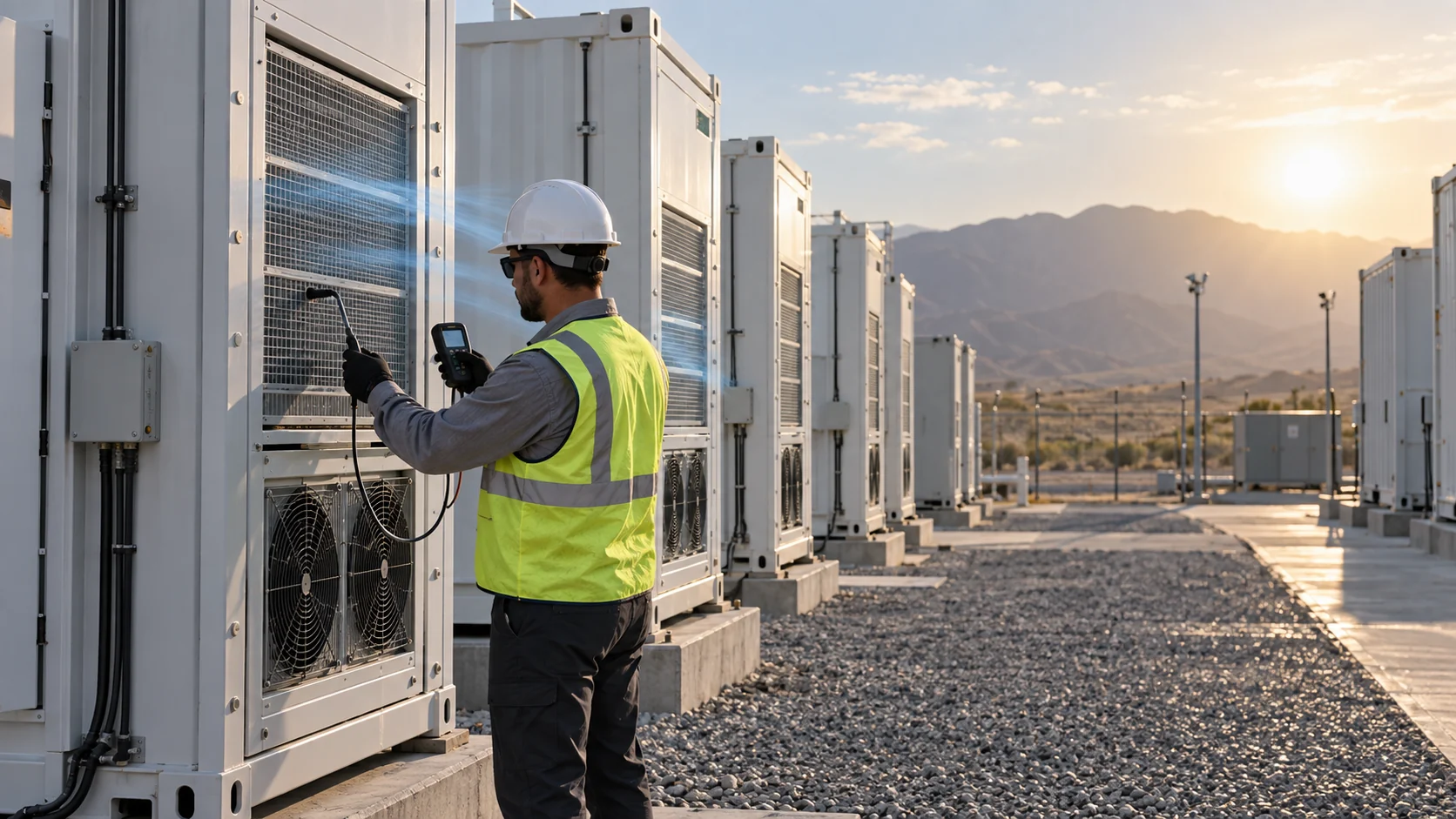
BESS site heat-island effects: validate fan intake, filter pressure, recirculation and high-ambient cooling margin in multi-container installations.
Read article →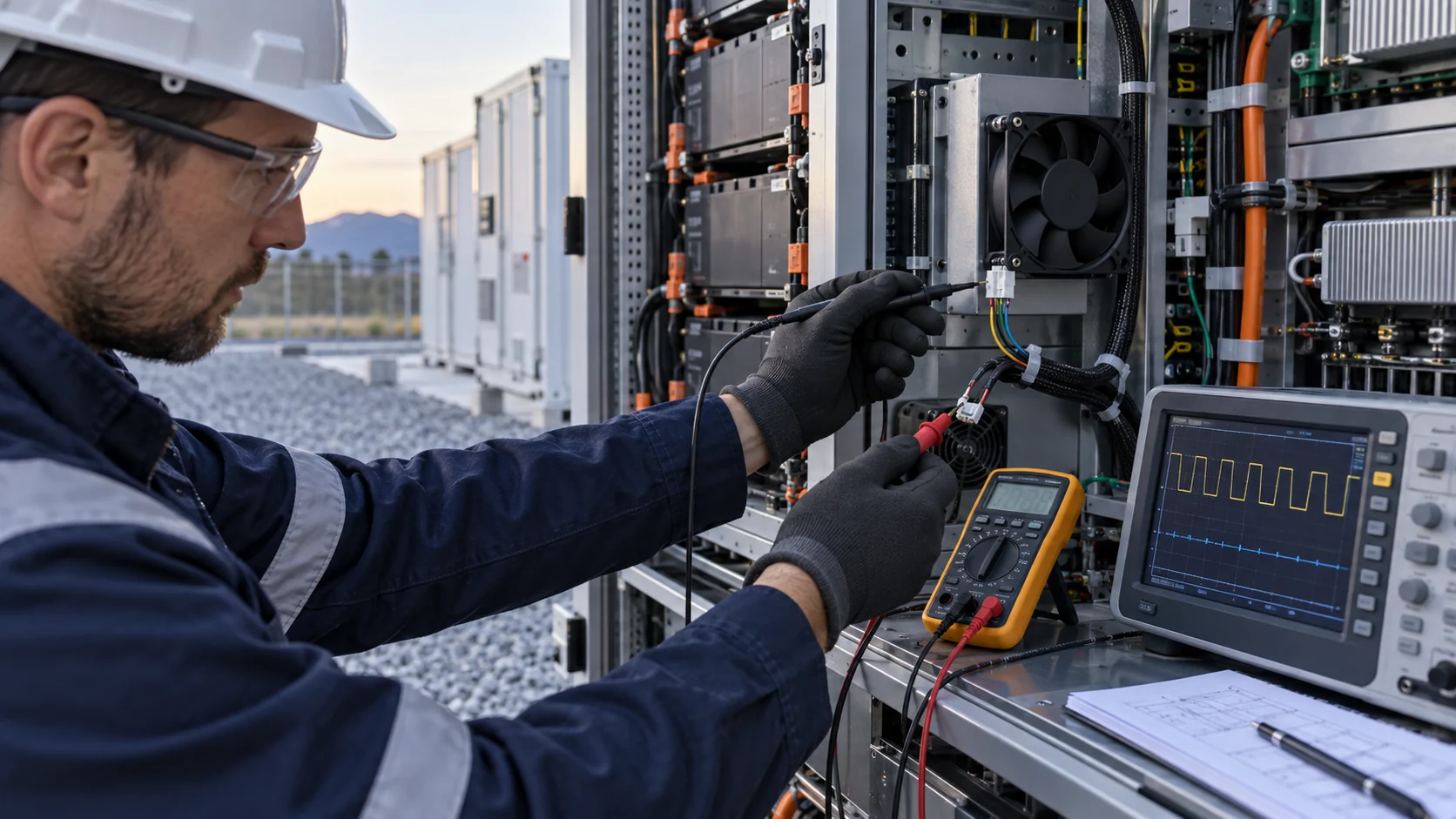
BESS cooling-fan control validation: PWM frequency, minimum duty, FG pulse interpretation, RD alarms, grounding, EMC and installed airflow validation.
Read article →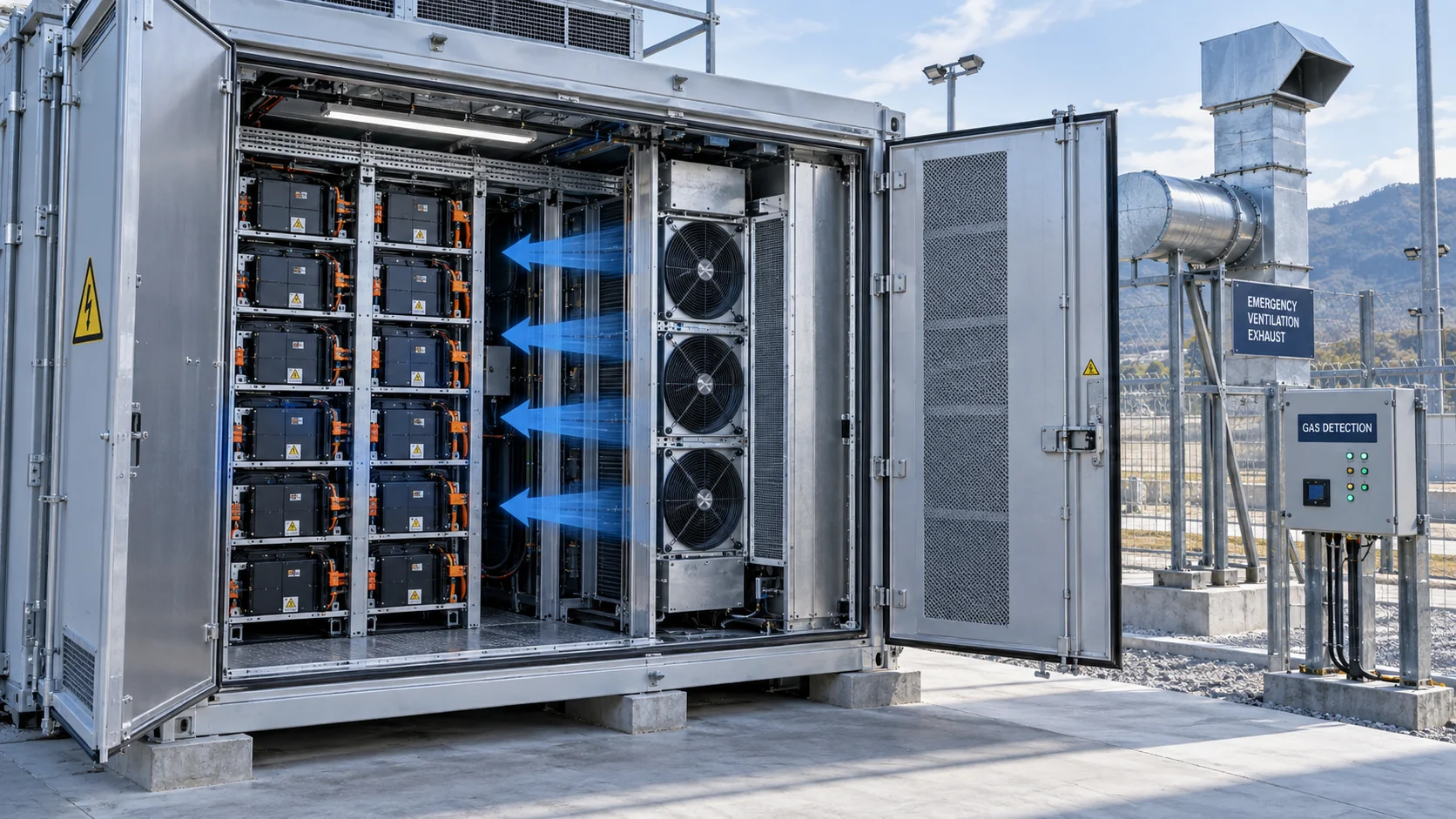
Separate BESS normal heat rejection, HVAC airflow and emergency ventilation duties before selecting a cooling fan or approving a cabinet design.
Read article →Select BESS cabinet cooling fans by heat load, airflow, filter pressure drop and real enclosure validation.
Read article →EV & Automotive
Thermal engineering for EV charging and automotive electronics, from module heat and dust exposure to application-matched fan selection.
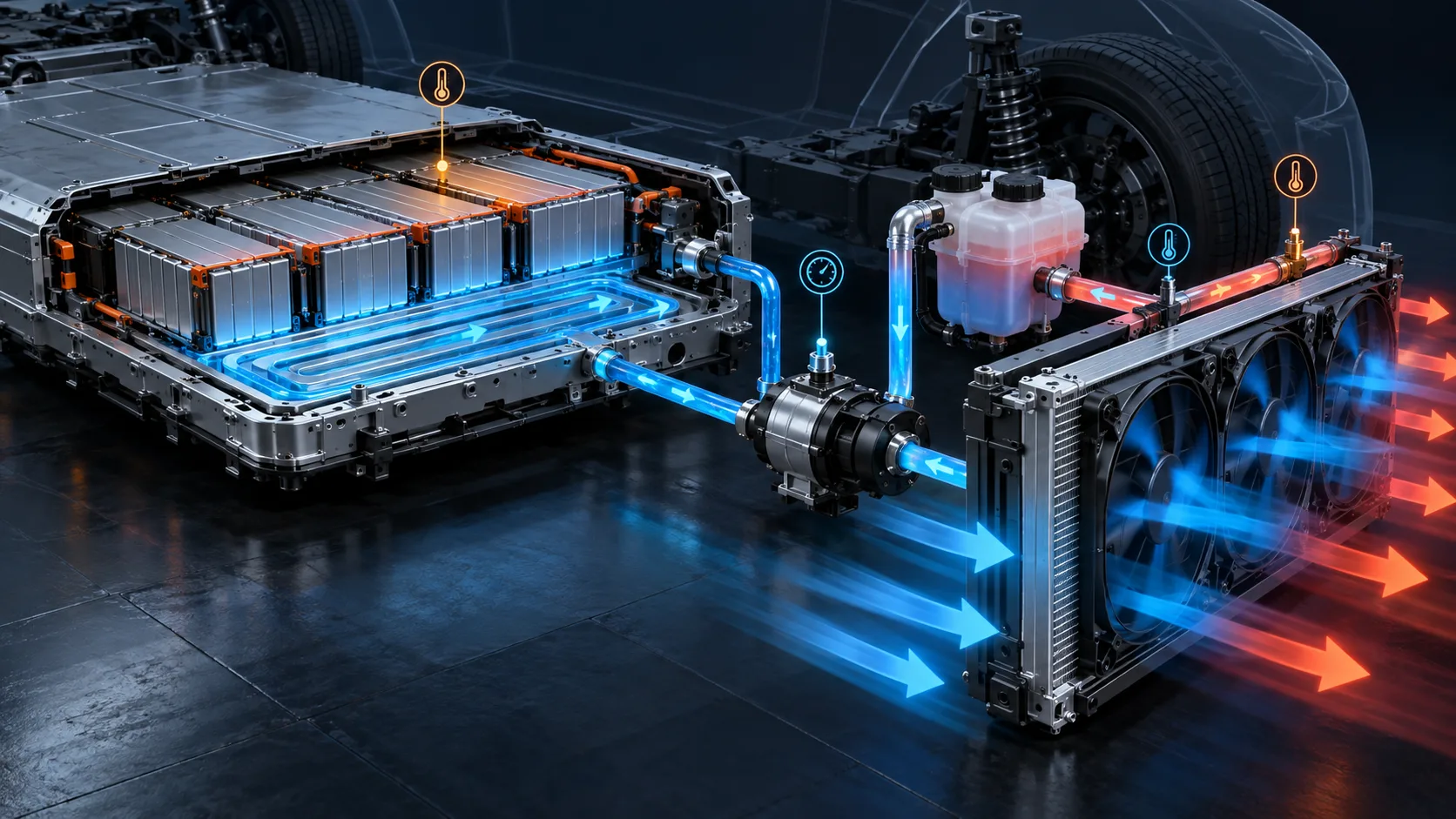
Select the battery-loop radiator fan from heat rejection and air-side pressure drop, with duty tables, environment limits and a reusable validation plan.
Read article →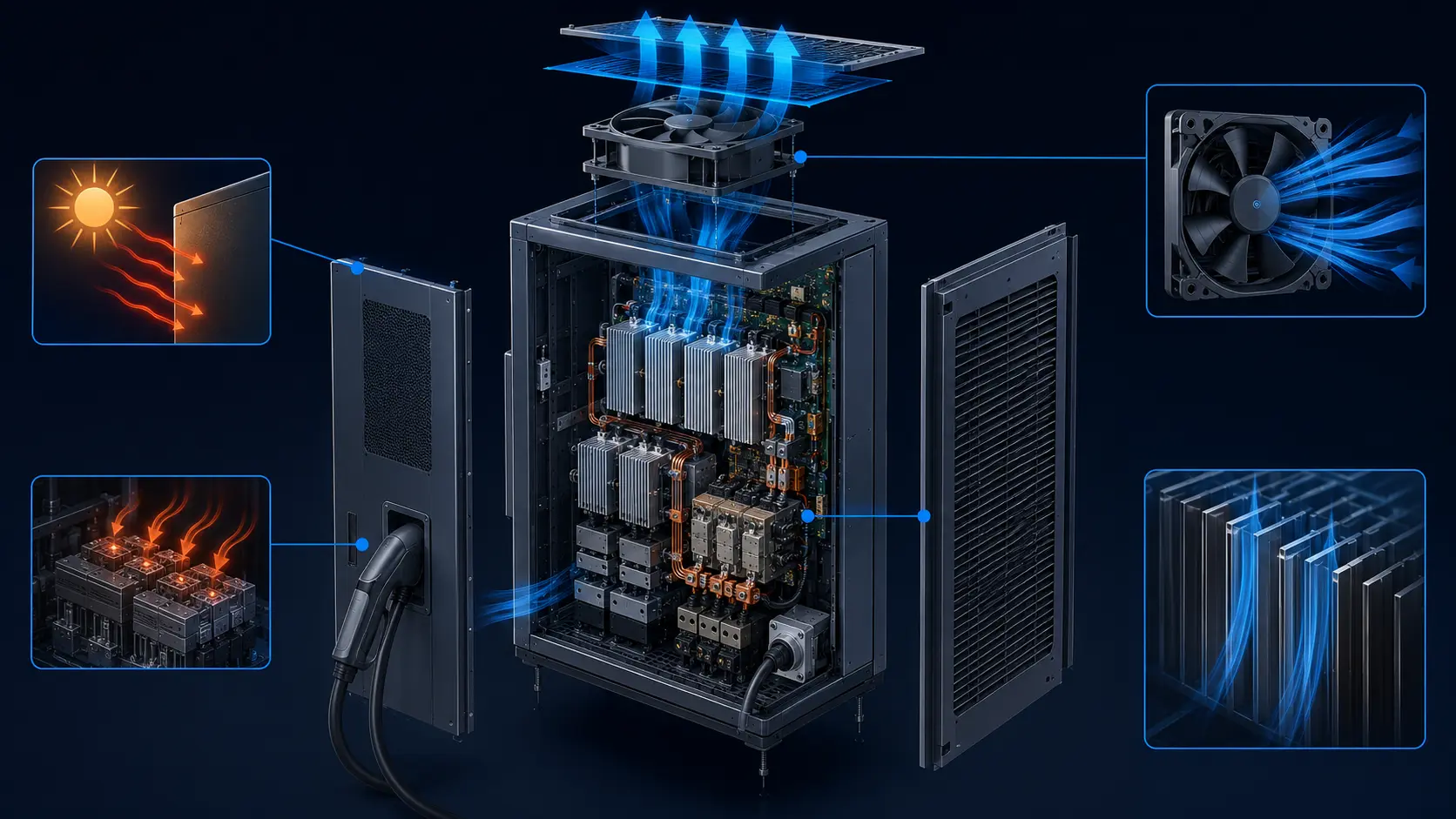
An illustrative 150 kW charger calculation shows why 7.5 kW of heat needs a tested path out of the cabinet, and how to turn it into a customized fan module.
Read article →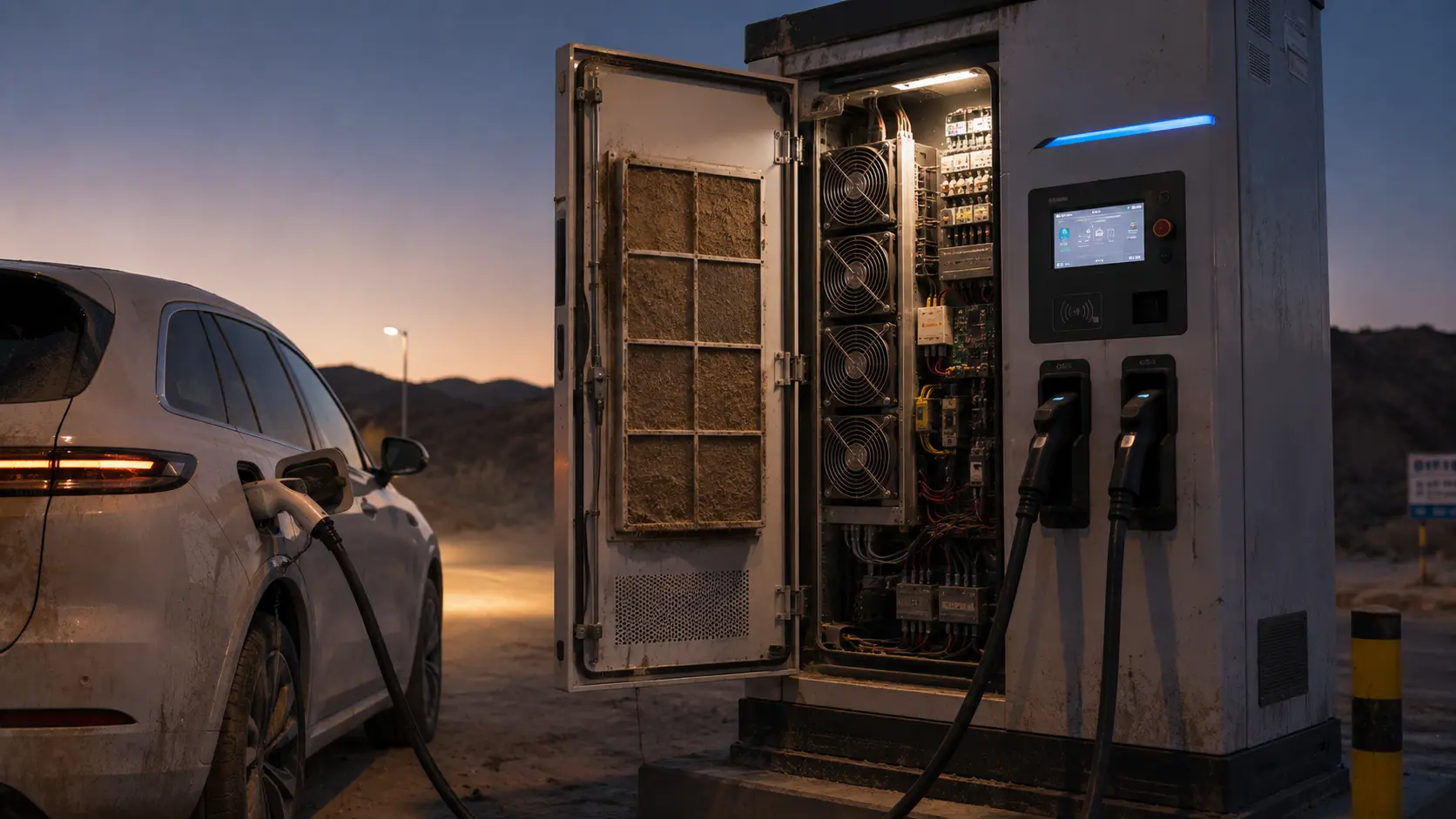
Charger fans die from dust and heat, not rated hours — learn how site-specific fan customization, pressure headroom and sample validation protect useful life.
Read article →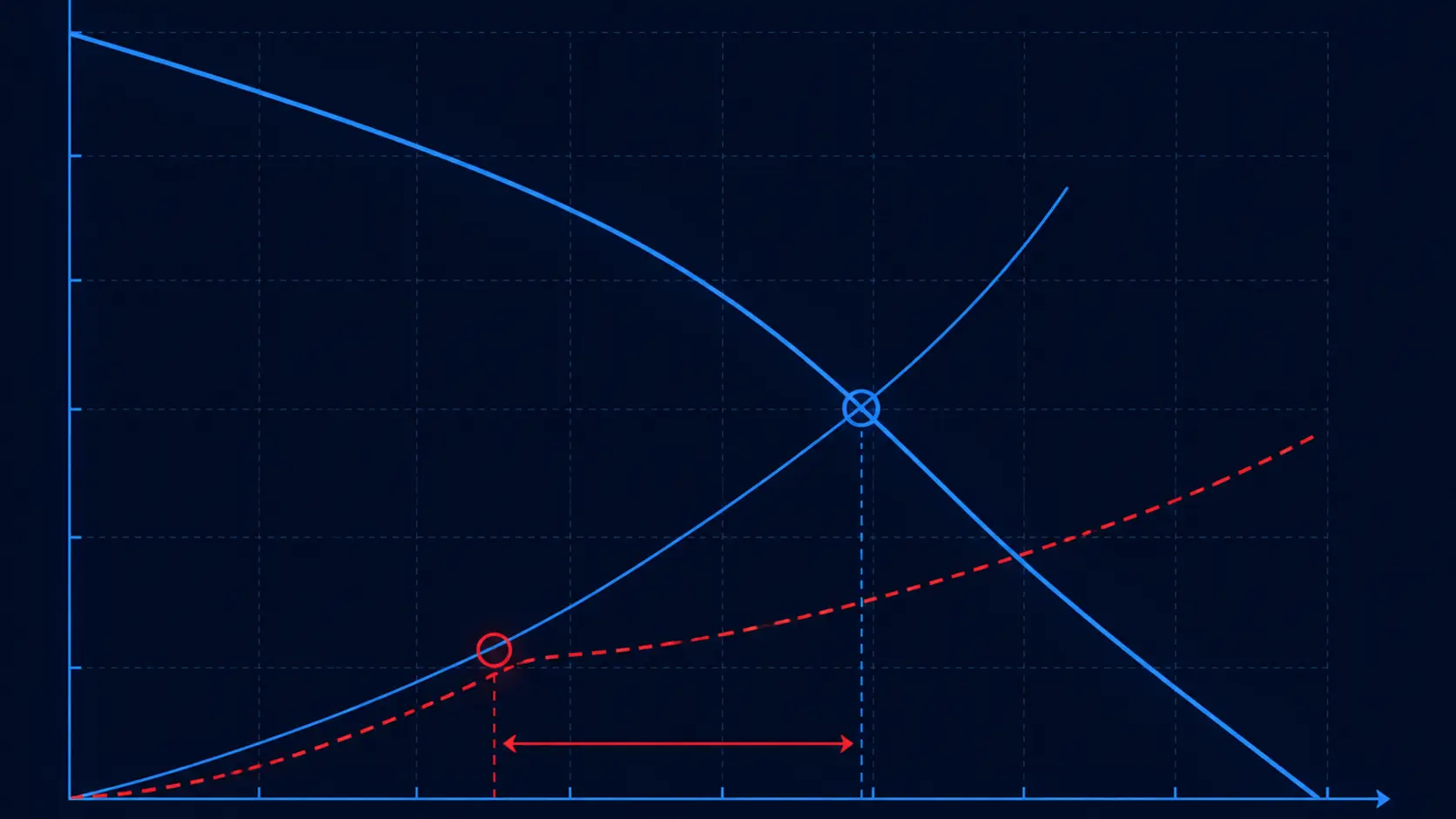
EV fast-charger cooling diagnostics: separate PWM command and RPM from actual pressure, heatsink airflow and thermal evidence.
Read article →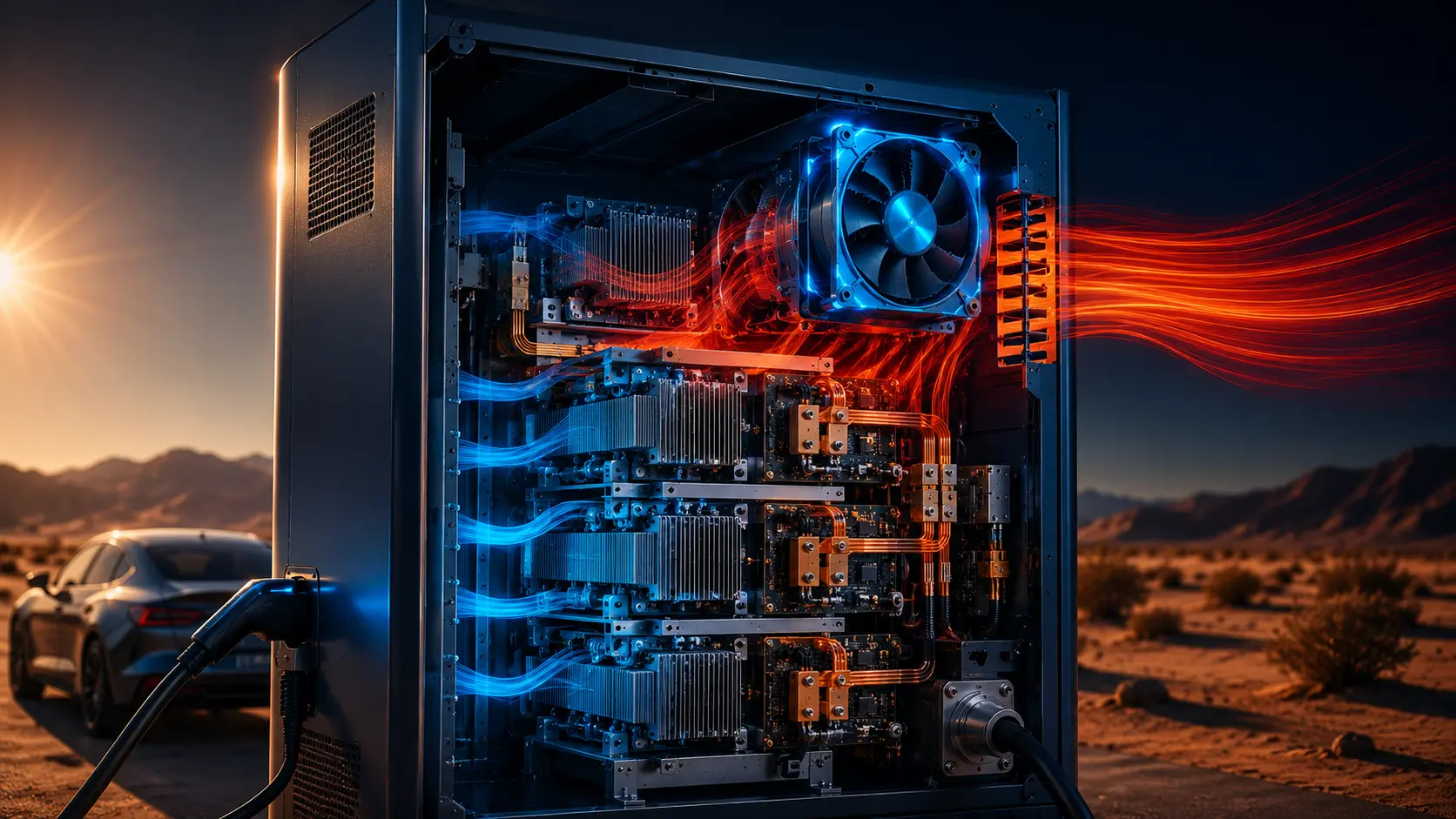
Why N+1 fan count is not automatically N+1 cooling: test reverse flow, pressure sharing, fault-state airflow and thermal margin in EV fast-charger cabinets.
Read article →How bypass, uneven branch resistance and poor heat-sink airflow can hide local EV charger hotspots behind a normal average exhaust temperature.
Read article →How altitude, high ambient temperature and air density change EV fast-charger fan pressure, mass flow and thermal derating decisions.
Read article →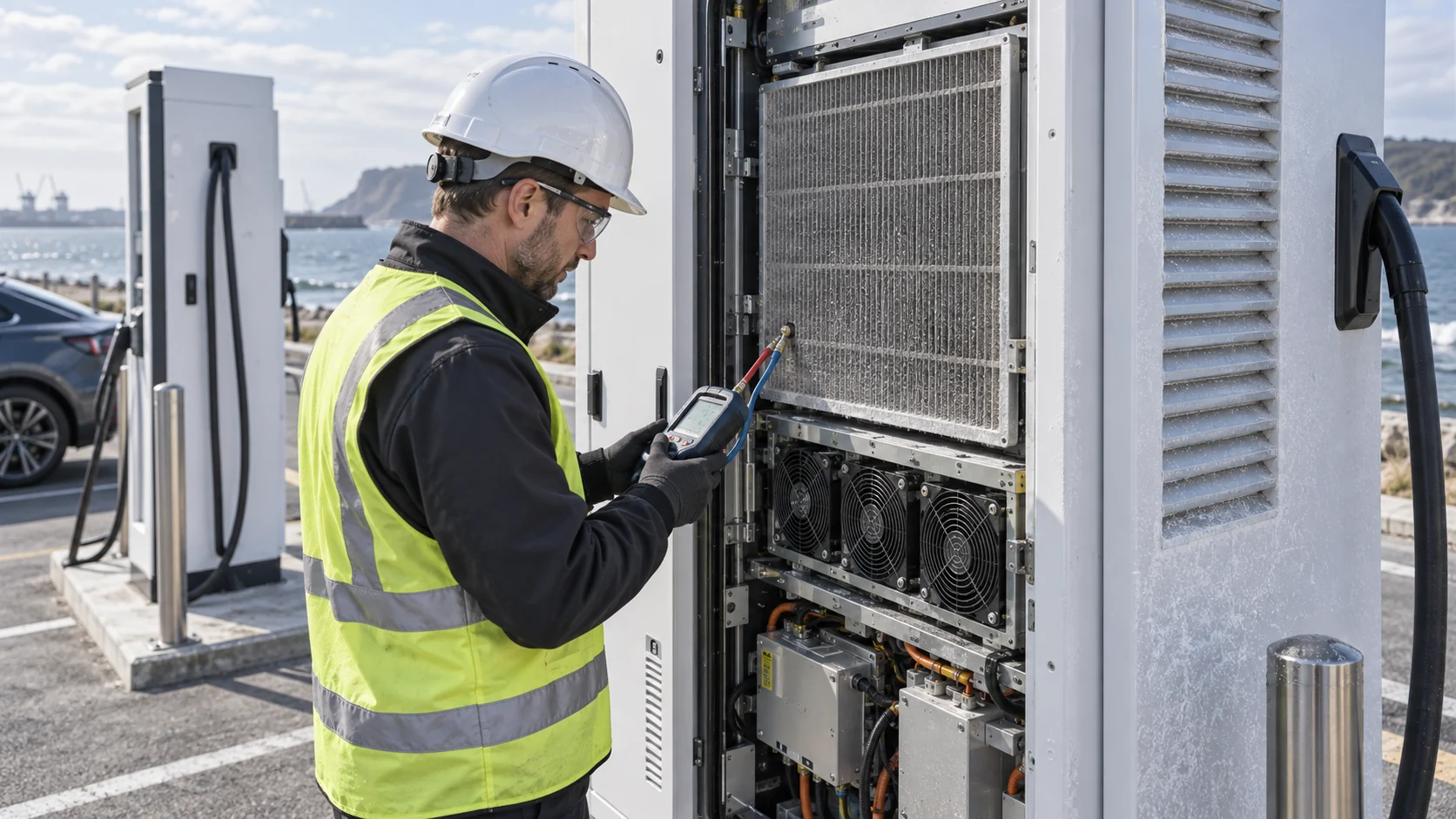
Validate EV fast-charger cooling fans and filters for dust, salt mist, pressure drop, corrosion, noise and power derating in outdoor installations.
Read article →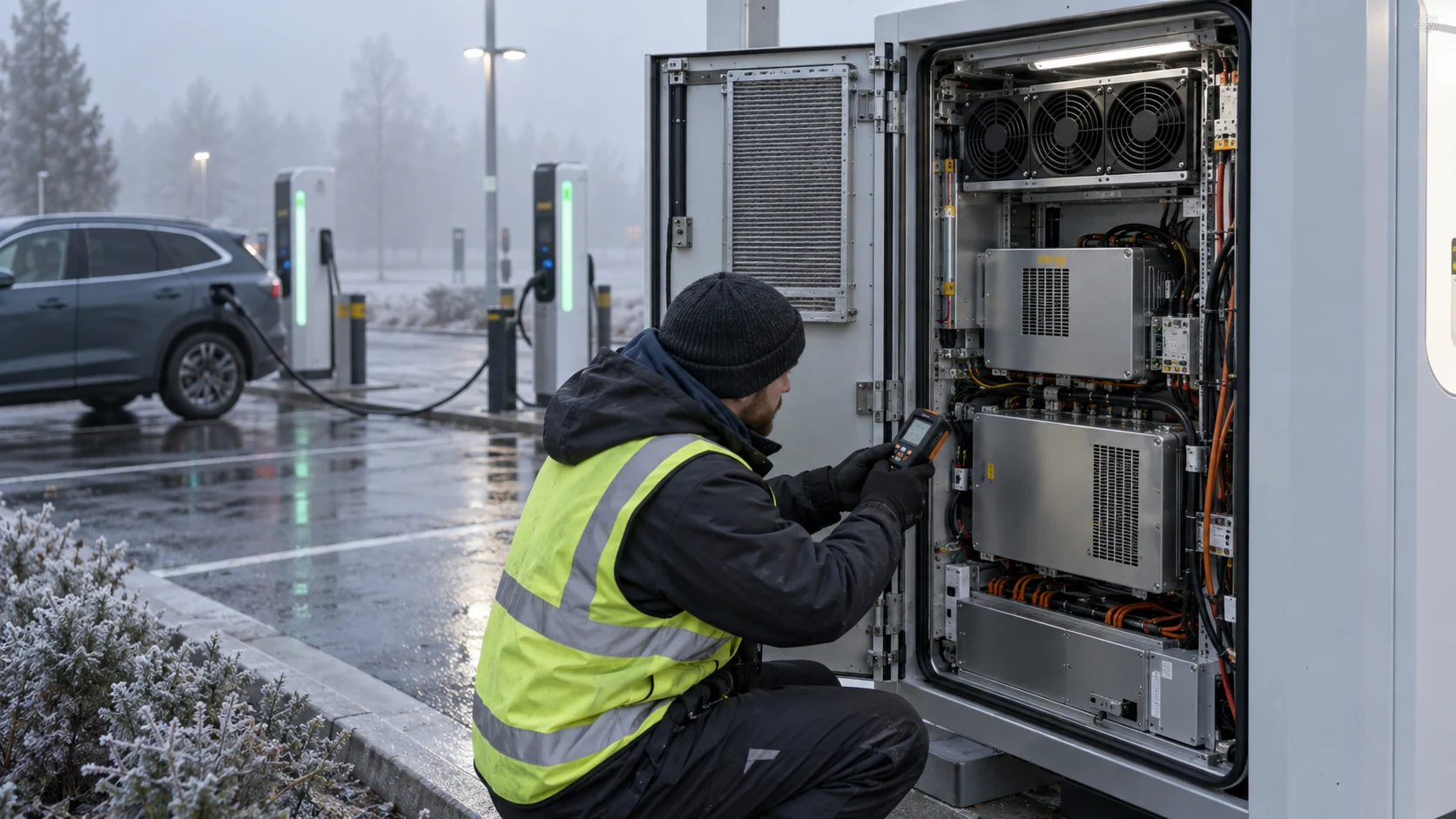
Outdoor EV fast-charger fan selection for cold starts: account for condensation, salt fog, filter pressure and power derating in the real cooling requirement.
Read article →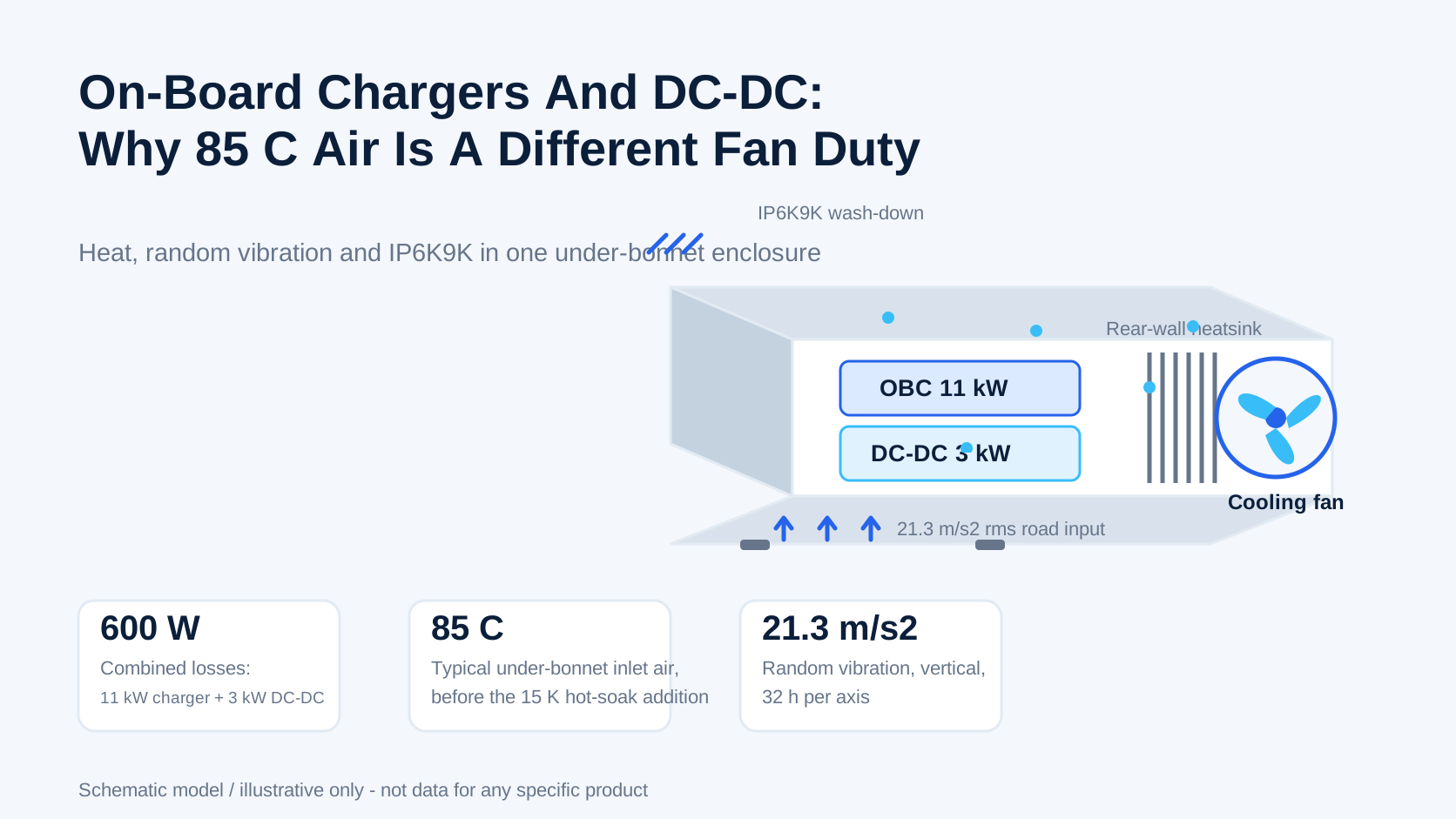
Why 600 watts of converter loss, hot inlet air and road vibration make under-bonnet fan selection a different problem from enclosure fan selection.
Read article →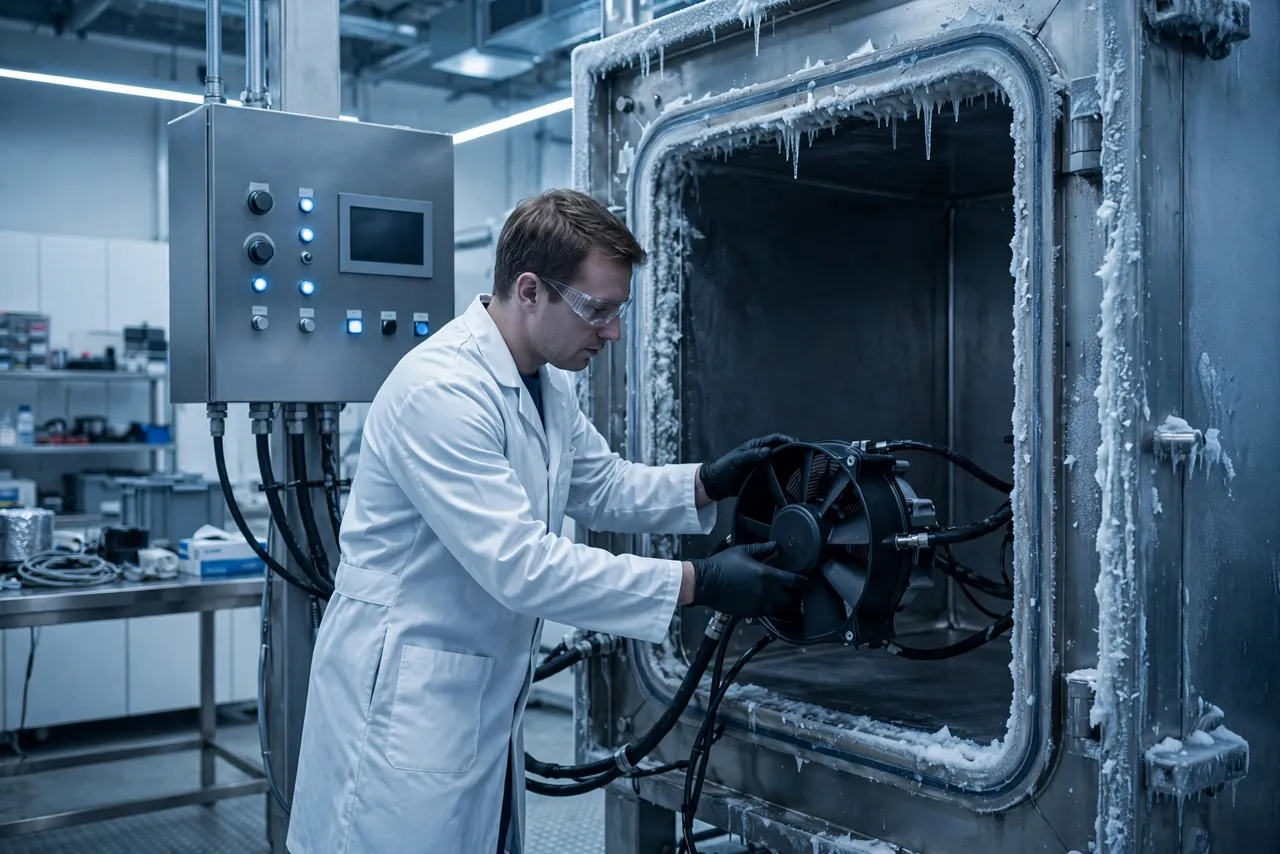
Validate vehicle cooling fans across temperature, vibration, connectors and airflow before approving an automotive sample for production release.
Read article →Medical Equipment
Low-noise, high-reliability cooling for medical systems, from acoustic targets and airflow design to bearing life and verification.
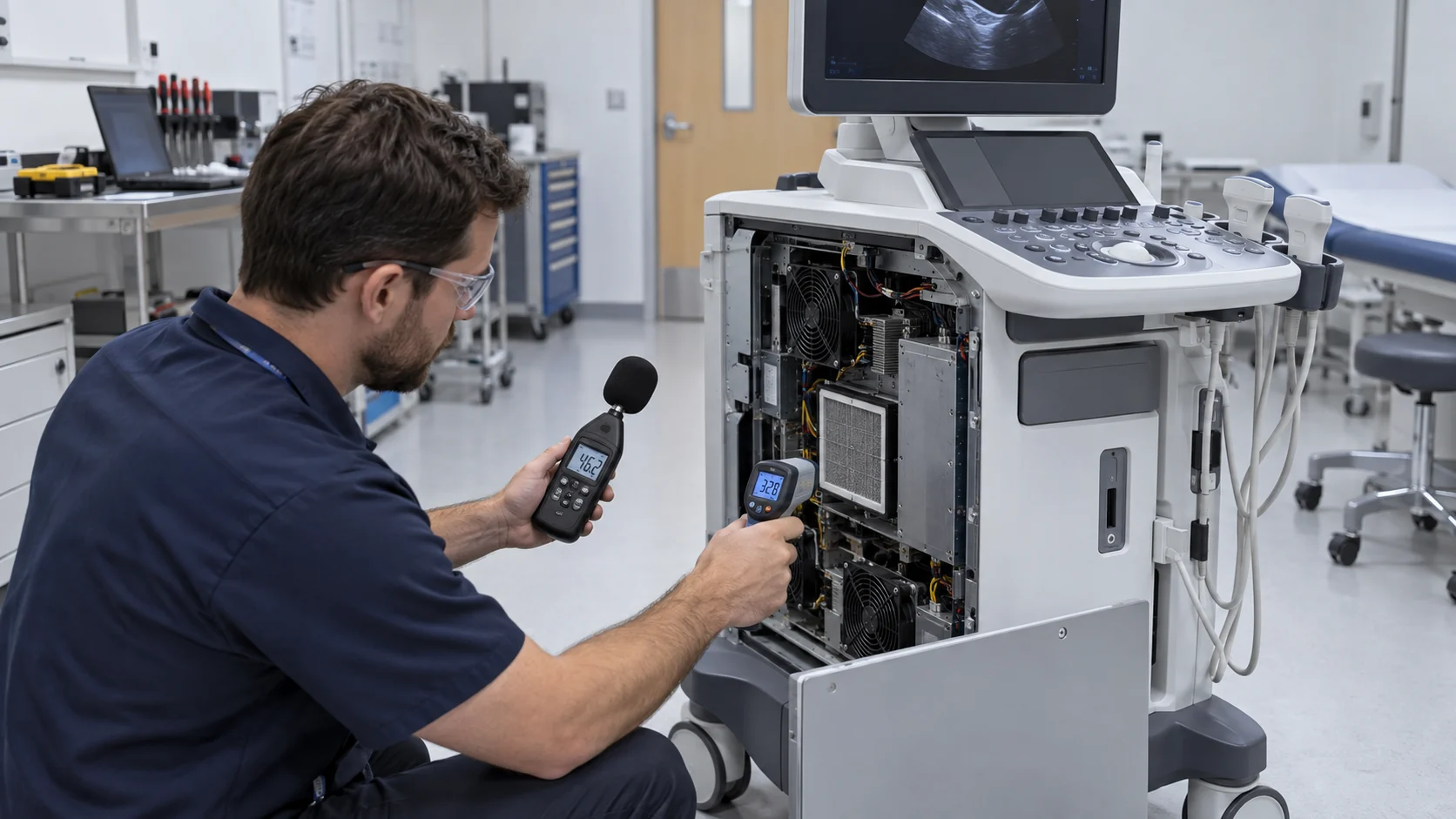
Select and validate medical imaging console fans for acoustic comfort, cleanability, filter pressure, EMC and thermal margin.
Read article →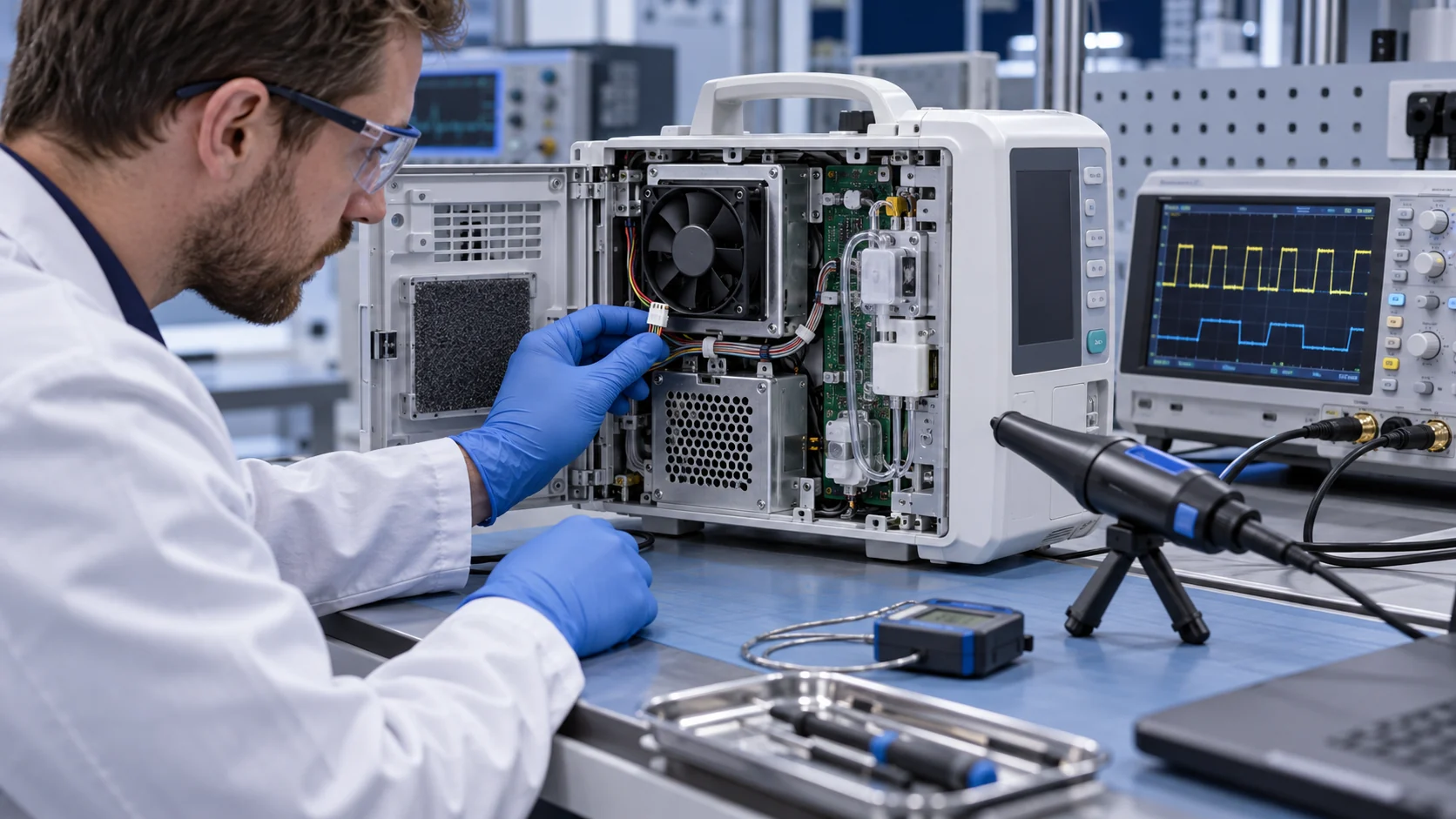
How medical-device engineers should validate cooling-fan feedback, alarm response, EMC-sensitive states, thermal margin and maintenance boundaries.
Read article →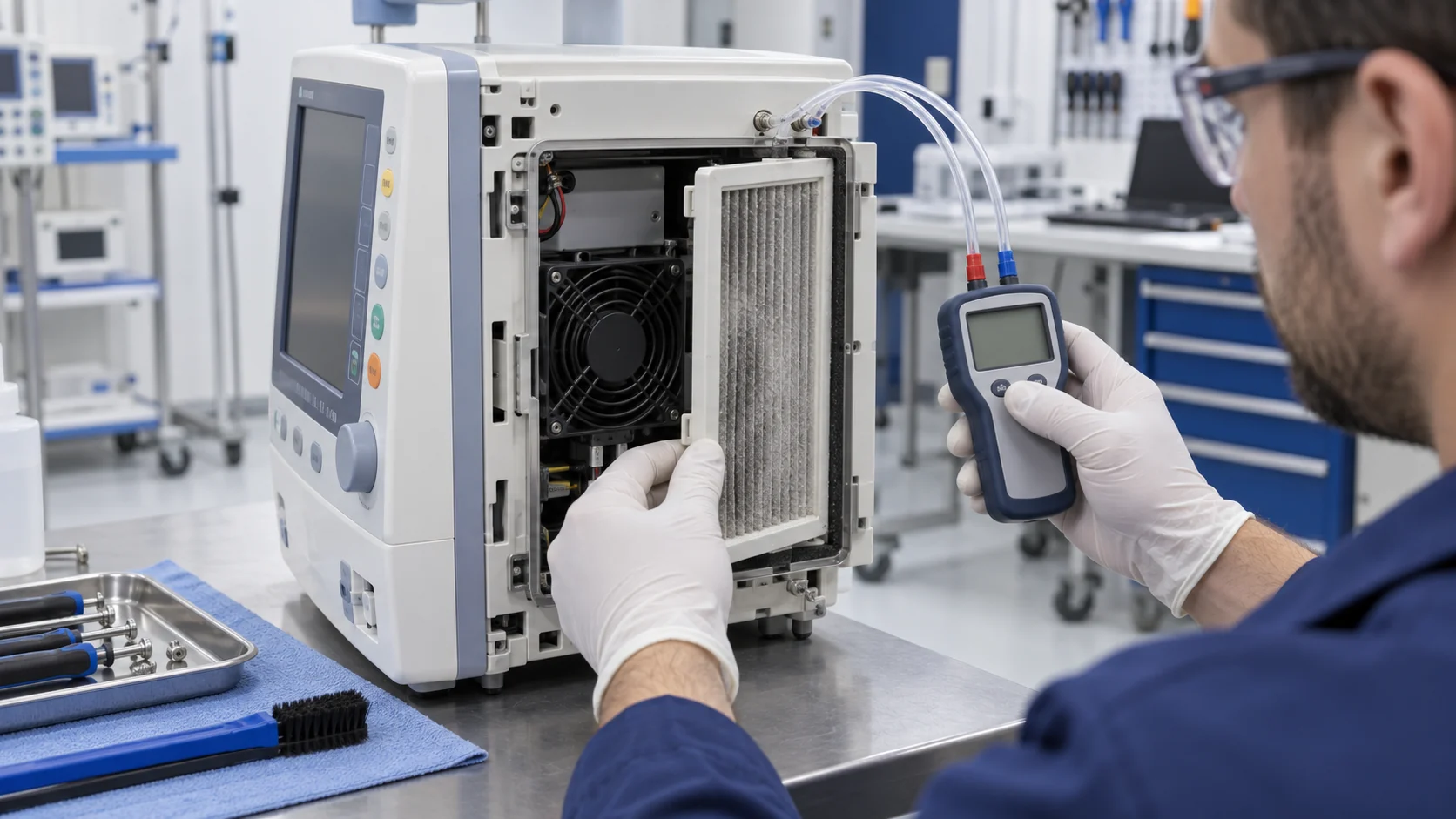
How medical-equipment engineers should validate clean, loaded and post-service filter states before fan and maintenance decisions are released.
Read article →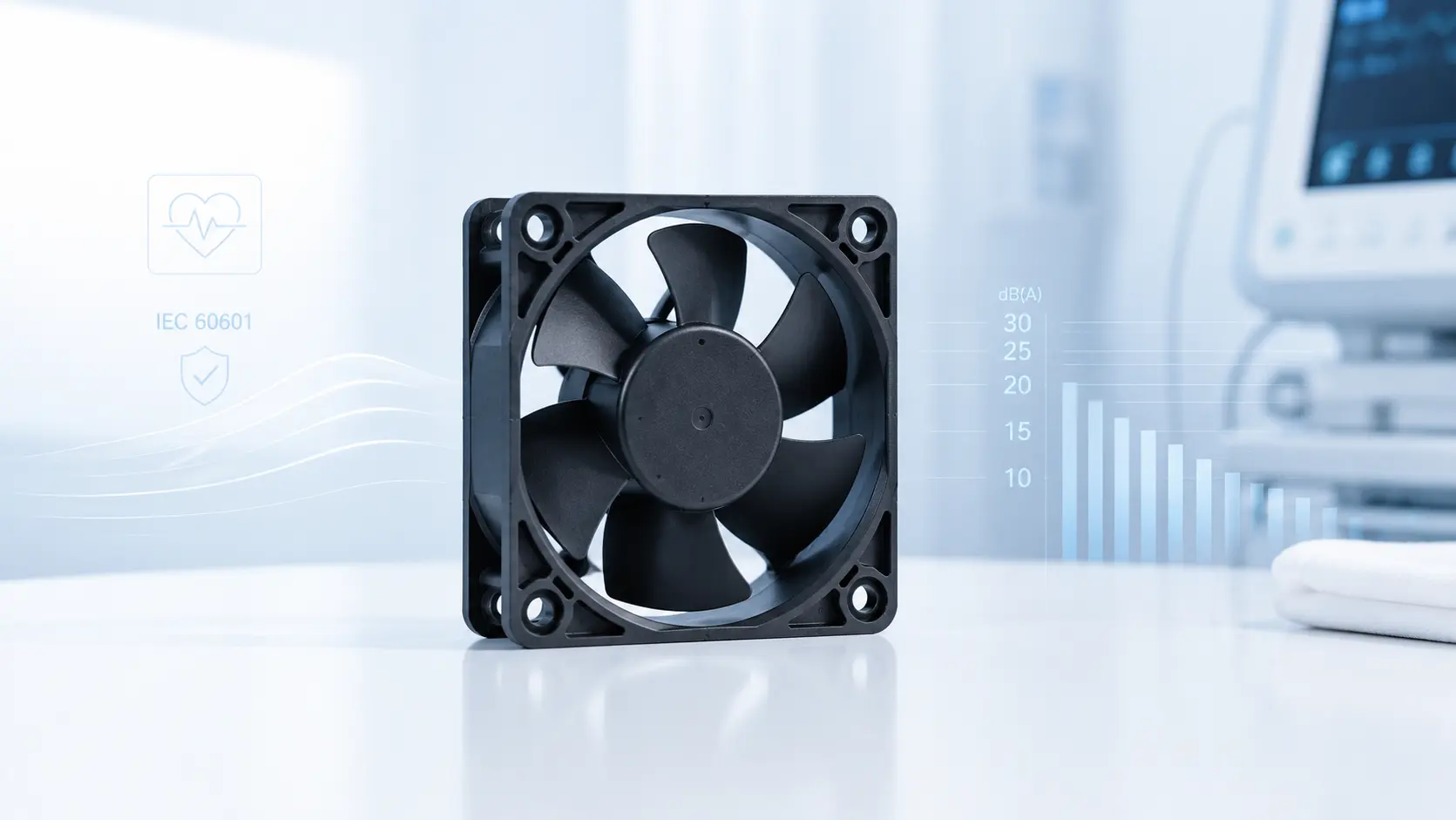
How medical fans meet acoustic and thermal targets through low-noise customization, sample testing and reliable production support.
Read article →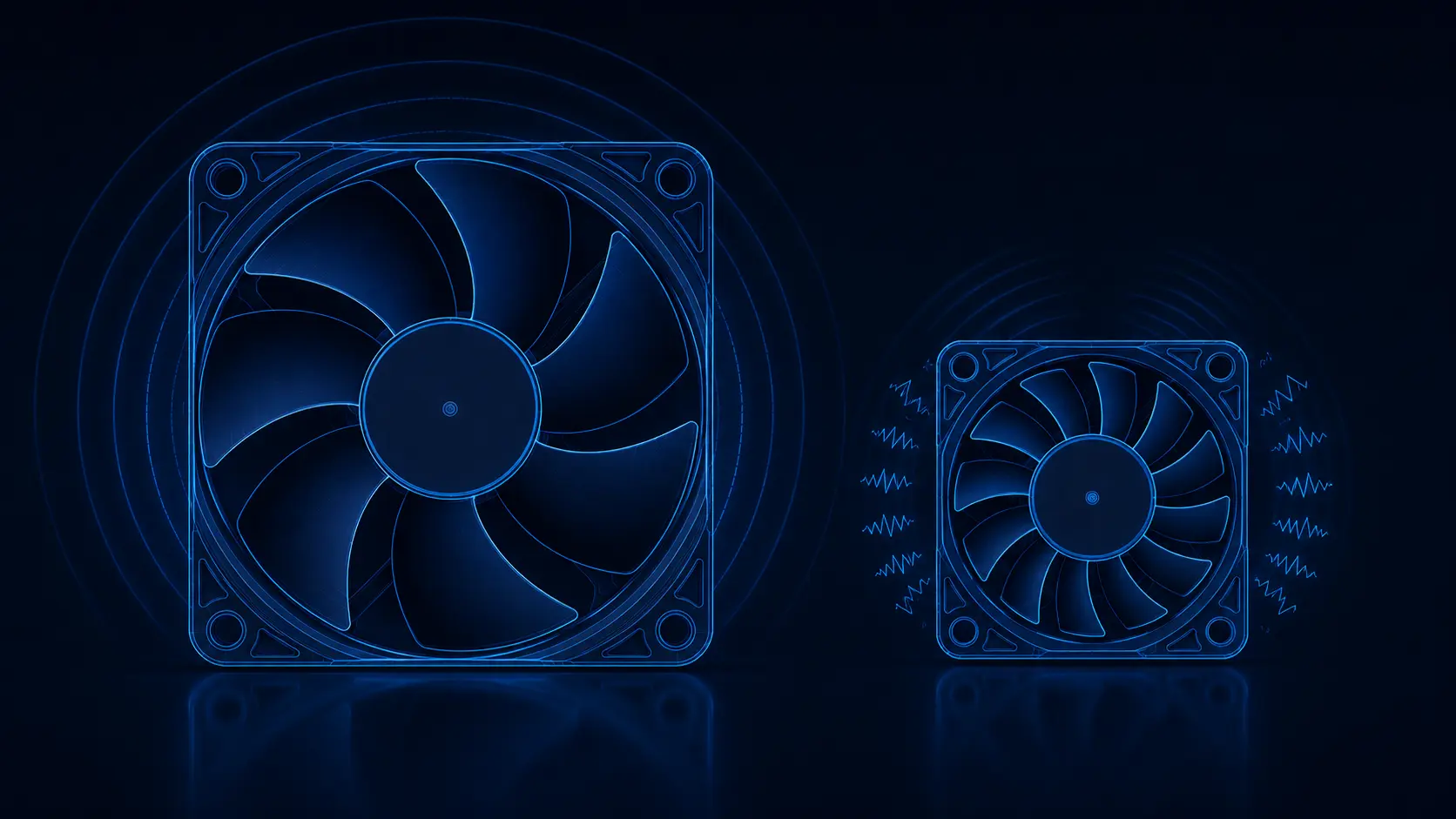
A bench-passing pump failed on a real ward — what quiet, reliable and sample-validated cooling means for medical equipment.
Read article →
The same fan is 25 dB at one tap and 46 dB at another: develop a customized, sample-validated medical fan around the real device air path.
Read article →
A hospital fan lives or dies by its bearing: how customized, sample-validated design turns L10 life and fail-safe signals into reliable production.
Read article →
How medical-equipment engineers should validate dew point, airflow, fan placement, moisture ingress and warm restart before approving a cooling design.
Read article →
A practical validation method for fan feedback, restricted airflow, alarm latency, derating and single-fault response in medical equipment.
Read article →
Medical equipment cooling-fan validation: verify cooling airflow, acoustic behavior, fan feedback, EMC robustness and thermal response as one system.
Read article →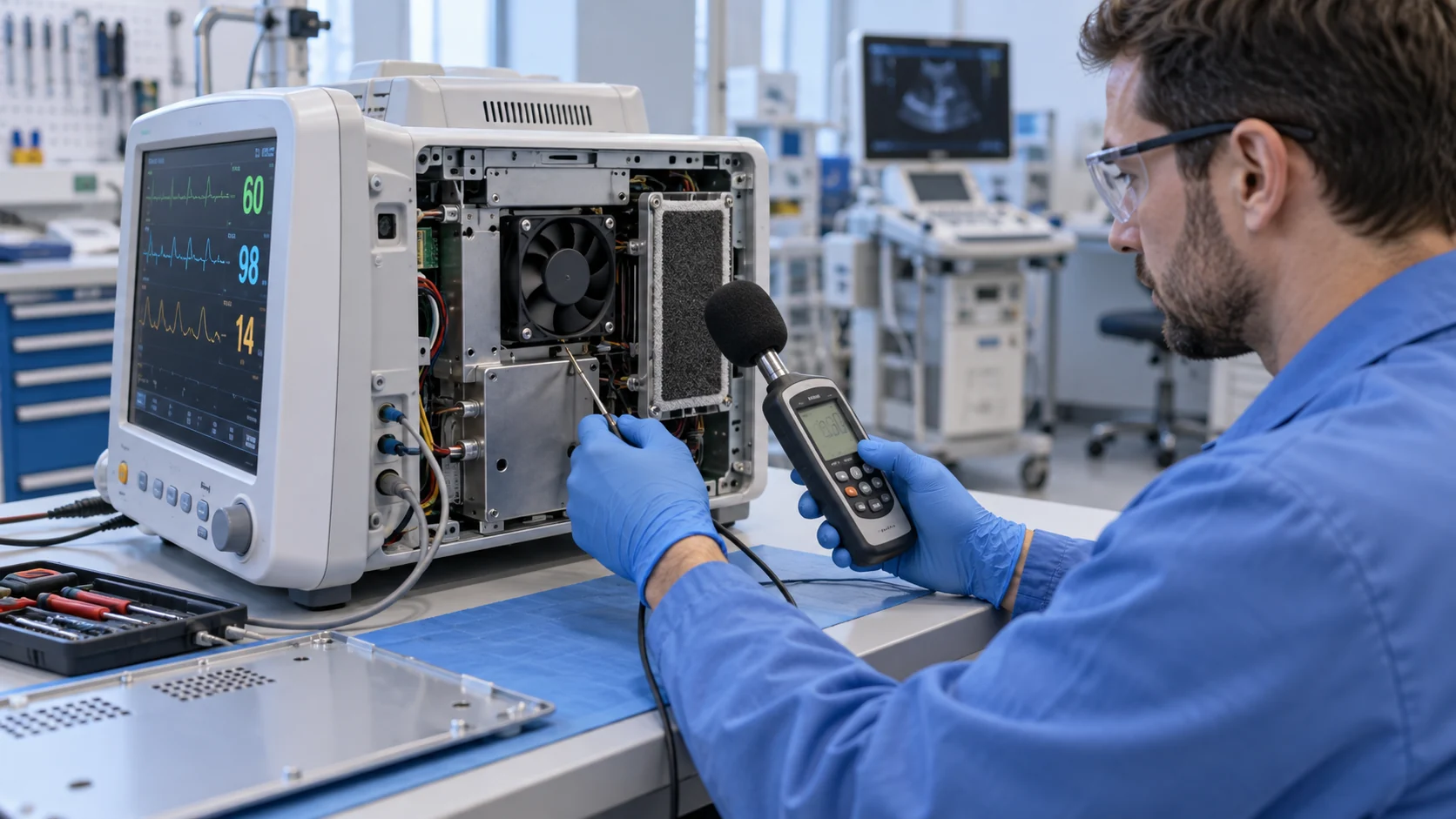
Cooling fans for medical monitors, ultrasound and lab equipment: validate noise, filter pressure, EMC, cleanability and single-fault response together.
Read article →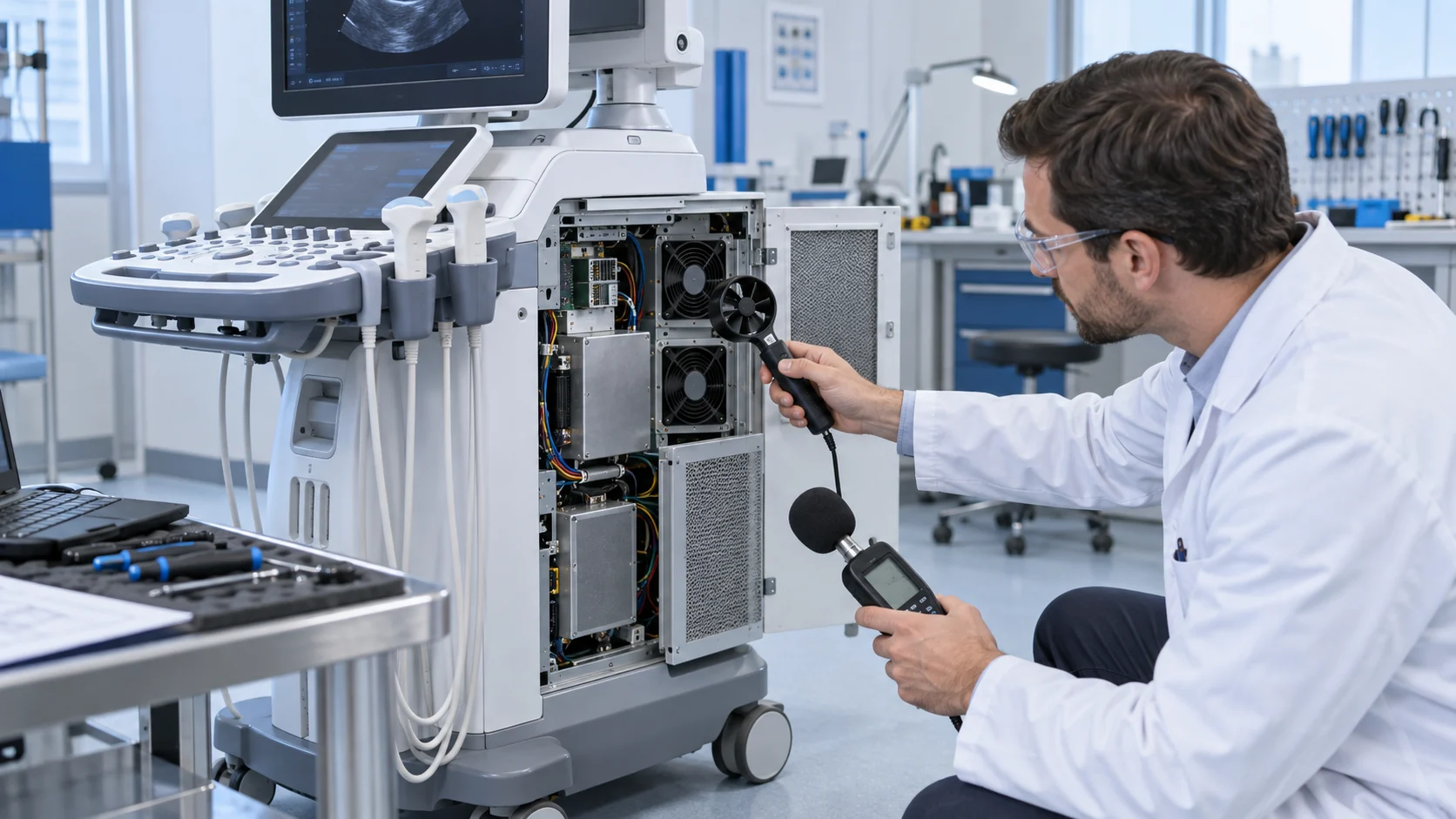
Cooling ultrasound and diagnostic consoles: validate acoustic limits, cleanable air paths, filter loading, fan faults and service access together.
Read article →
What IEC 60601-1 really requires of cooling fans, five medical selection checkpoints, and a sample-validation checklist for quiet reliable designs.
Read article →Industrial Electronics
Durable cooling for drives and control electronics, where static pressure, dust, vibration and 24/7 reliability shape the fan design.
Calculate field-failure cost, separate MTBF from service life, compare preventive replacement with run-to-failure and plan validated spares.
Read article →An engineer's checklist for CE, UL, UKCA, supplier documents, technical files, replacement fans and market-specific release decisions.
Read article →A practical education guide to fan EMI sources, PWM and commutation, cable paths, PCB layout, filtering and system-level EMC checks.
Read article →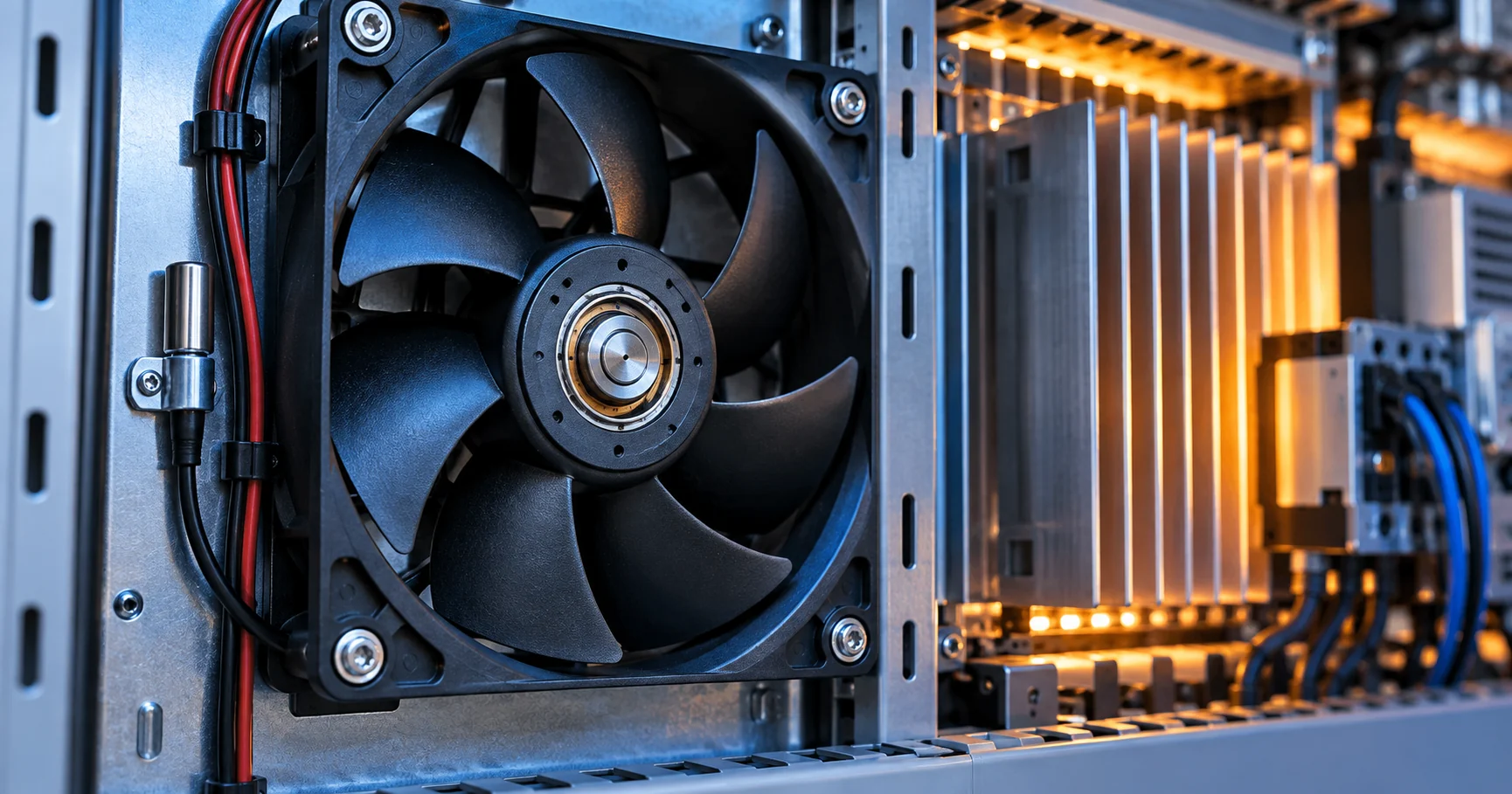
Compare sleeve, ball and magnetic fan bearings by life, noise, temperature, orientation and planned replacement requirements.
Read article →
A practical lifecycle plan for cooling-fan EOL signals, candidate validation, old-new transition control and traceable release decisions.
Read article →A practical receiving plan for cooling-fan identity, packaging, sampling, electrical checks, traceability and supplier feedback.
Read article →A practical change-control plan for fan revisions, supplier changes, re-validation, inventory transition and production release evidence.
Read article →A practical plan for first articles, lot sampling, process trends, airflow audits and traceable cooling-fan production release decisions.
Read article →A practical production test plan for speed, current, noise, airflow, pressure, control signals and traceable cooling-fan release decisions.
Read article →Troubleshoot fan start, noise, speed and airflow faults by checking power, control, mounting and operating conditions.
Read article →A practical sample-validation checklist for cooling fan identity, electrical input, airflow, pressure, noise, fit, environment and production readiness.
Read article →
Validate outdoor AC cooling fans against high ambient temperature, filter loading, humidity, condensation, voltage, noise and the installed operating point.
Read article →
Diagnose AC fan startup failures by measuring terminal voltage, current, frequency, switching behavior, pressure load and installed airflow.
Read article →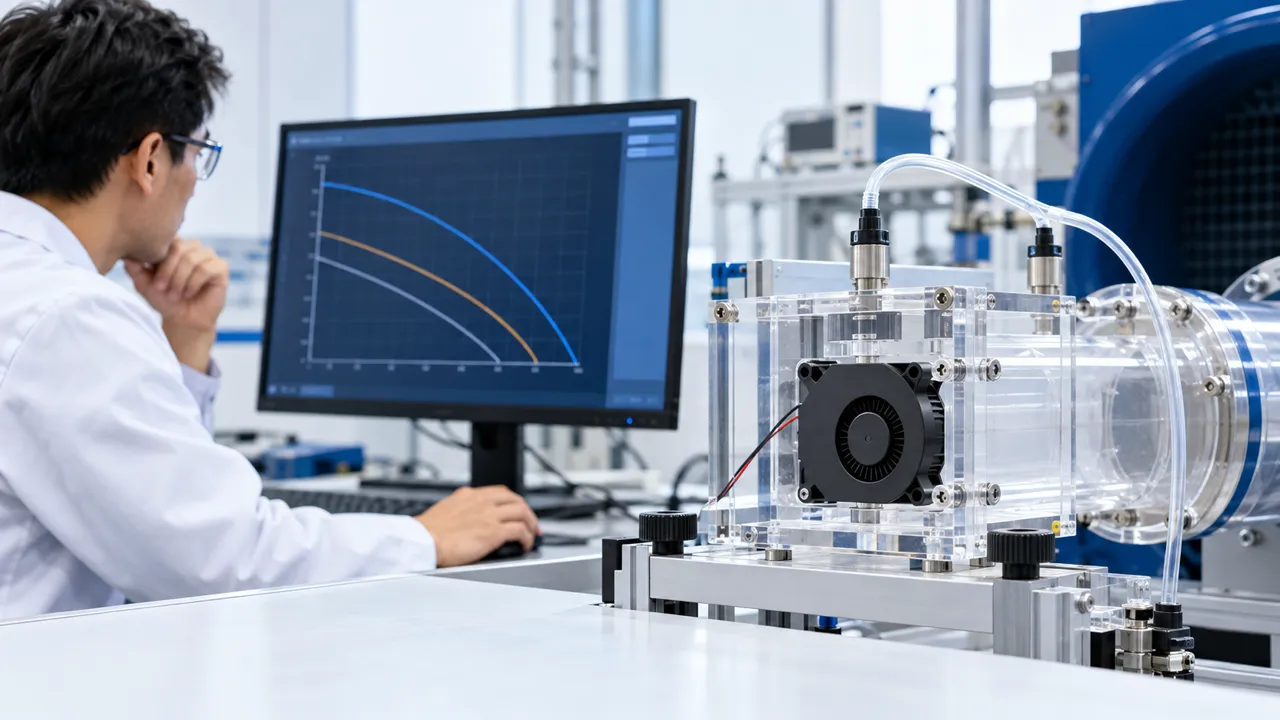
A measured 35×35×10 mm DC blower example: read the P-Q curve, find the operating point and validate a compact electronics air path.
Read article →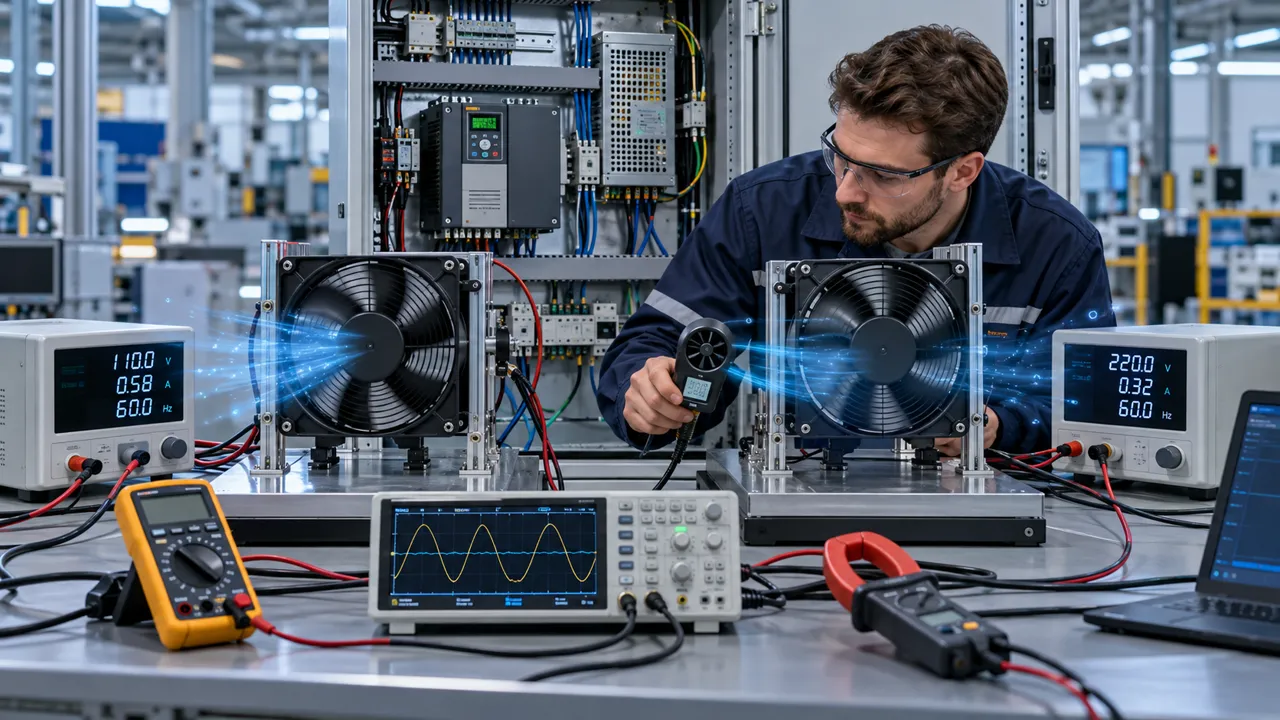
Compare 110V and 220V AC cooling fans by frequency, current, power, airflow, static pressure and installed validation.
Read article →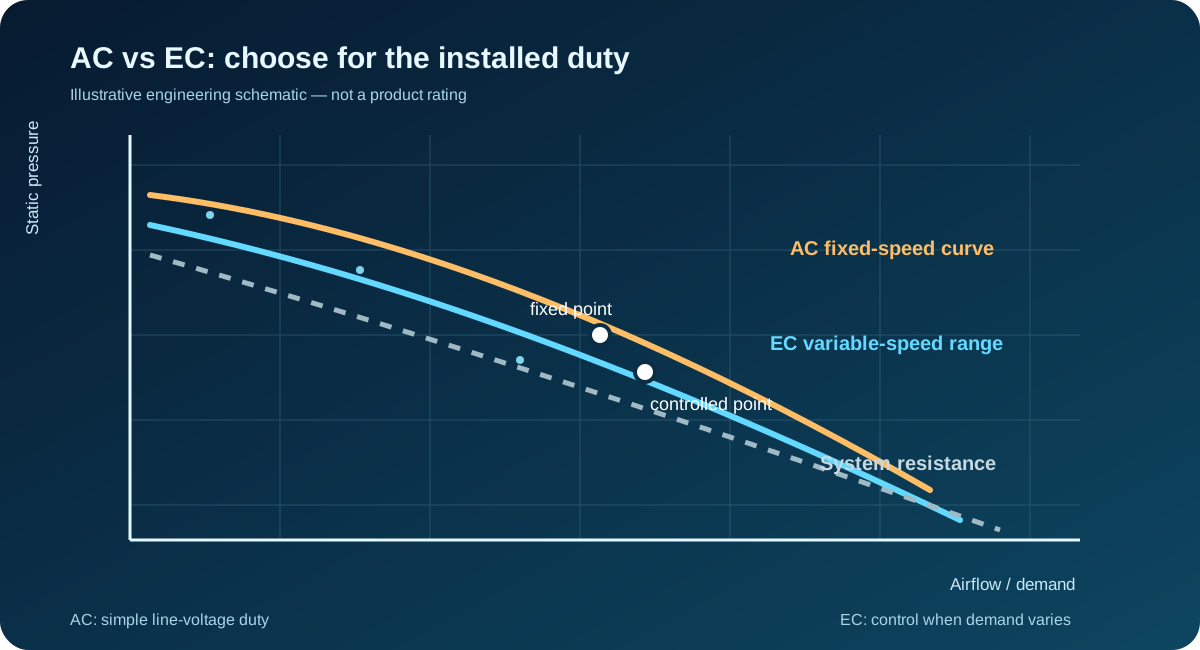
Compare AC and EC cooling fans by heat load, pressure, part-load efficiency, control, noise, service conditions and installed validation.
Read article →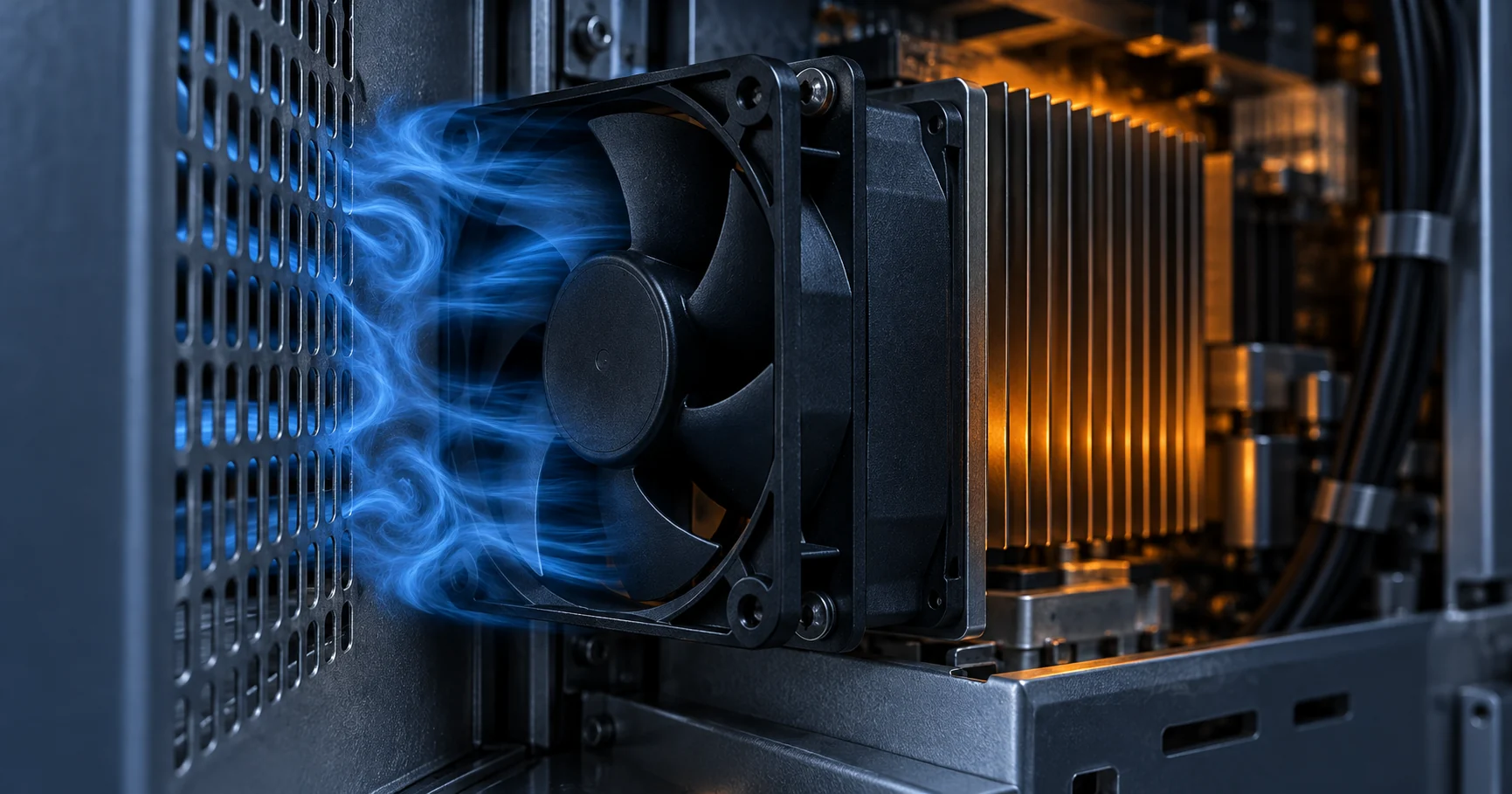
Separate bearing, airflow, PWM and resonance noise with a field fault tree that protects cooling performance and sample validation.
Read article →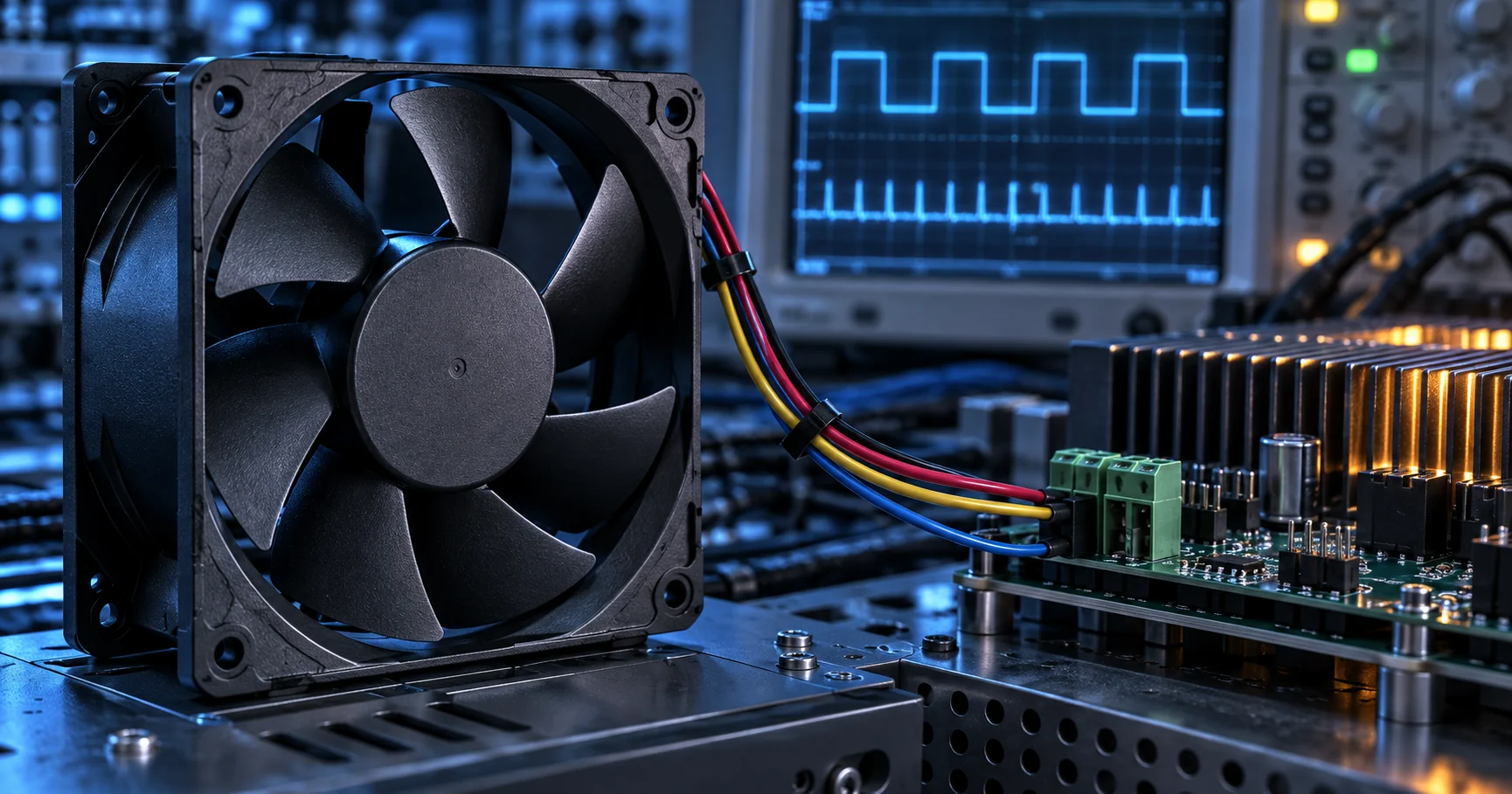
Diagnose cooling fan startup failures by checking current, voltage sag, PWM command, pressure load and multi-fan sequencing.
Read article →Diagnose PWM fan whine and EMI by separating power, control and structure, then validate the fan at the real airflow and static-pressure operating point.
Read article →Select and validate PSU cooling fans against derating curves, hot spots, dense air paths, control laws and endurance evidence.
Read article →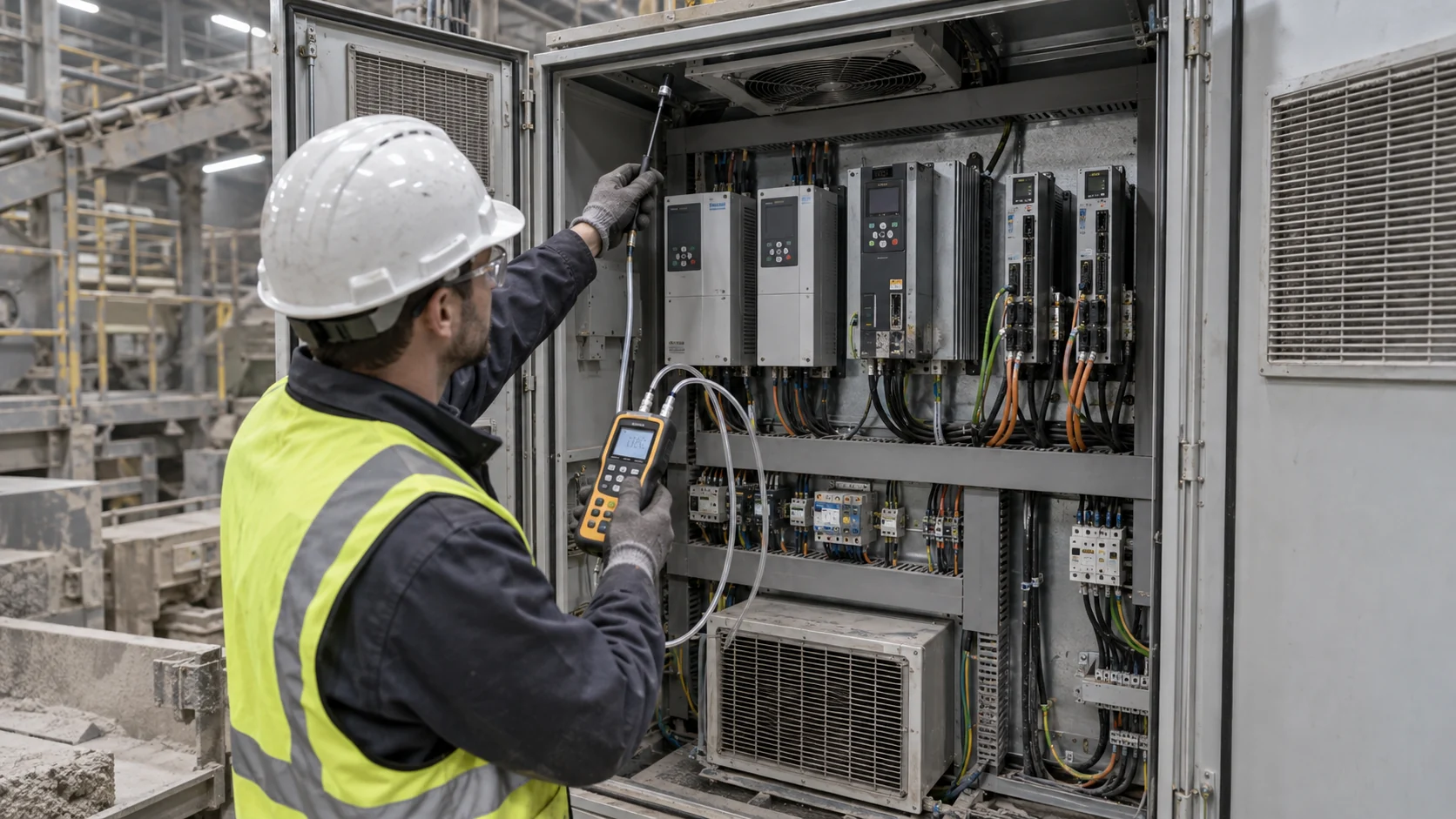
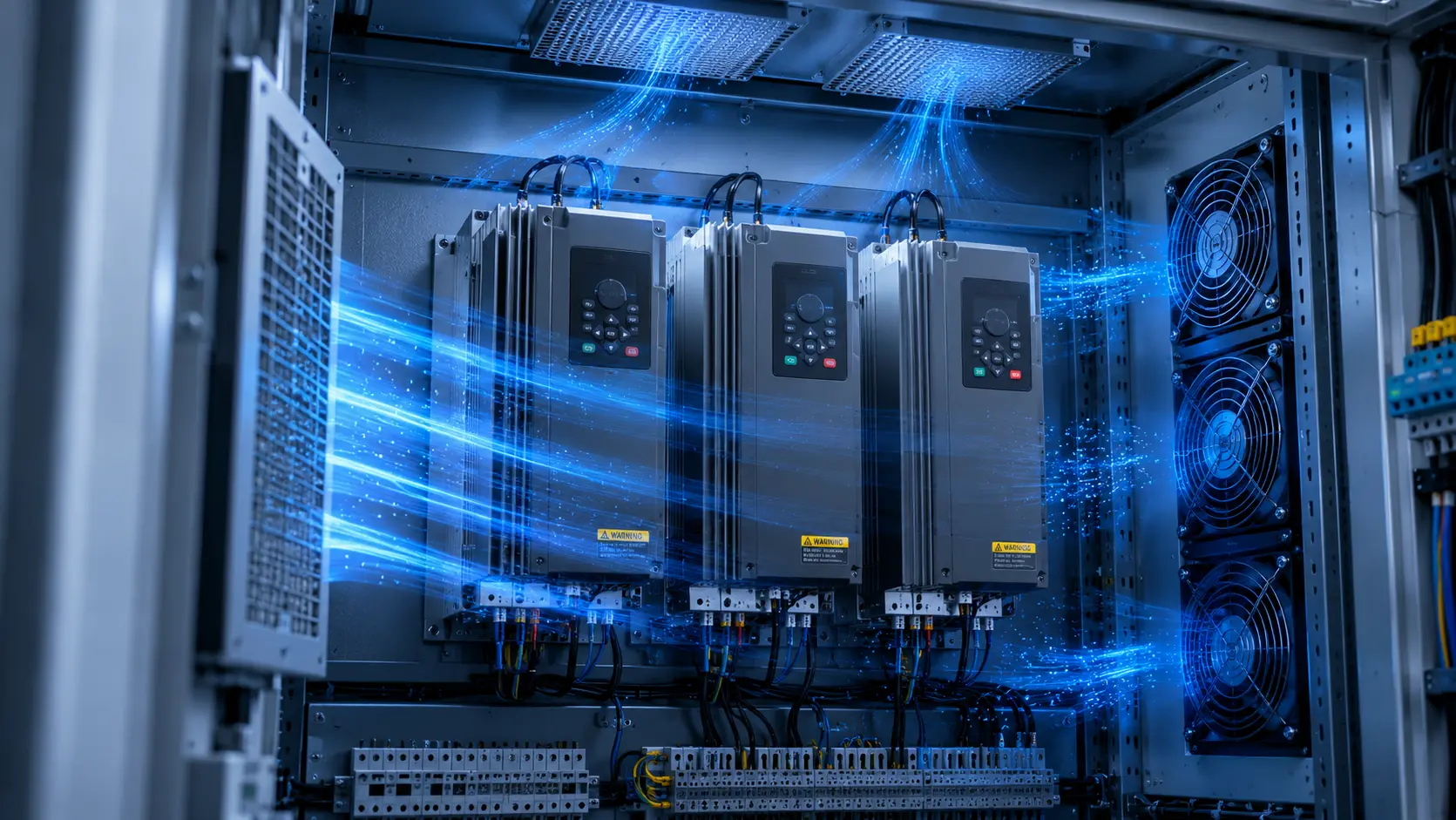
Validate VFD cabinet cooling with fan placement, thermal stratification, filter pressure, airflow bypass and maintenance conditions.
Read article →Solar load, dust, salt and condensation decide the cooling arrangement in an outdoor 5G cabinet before the fan is chosen.
Read article →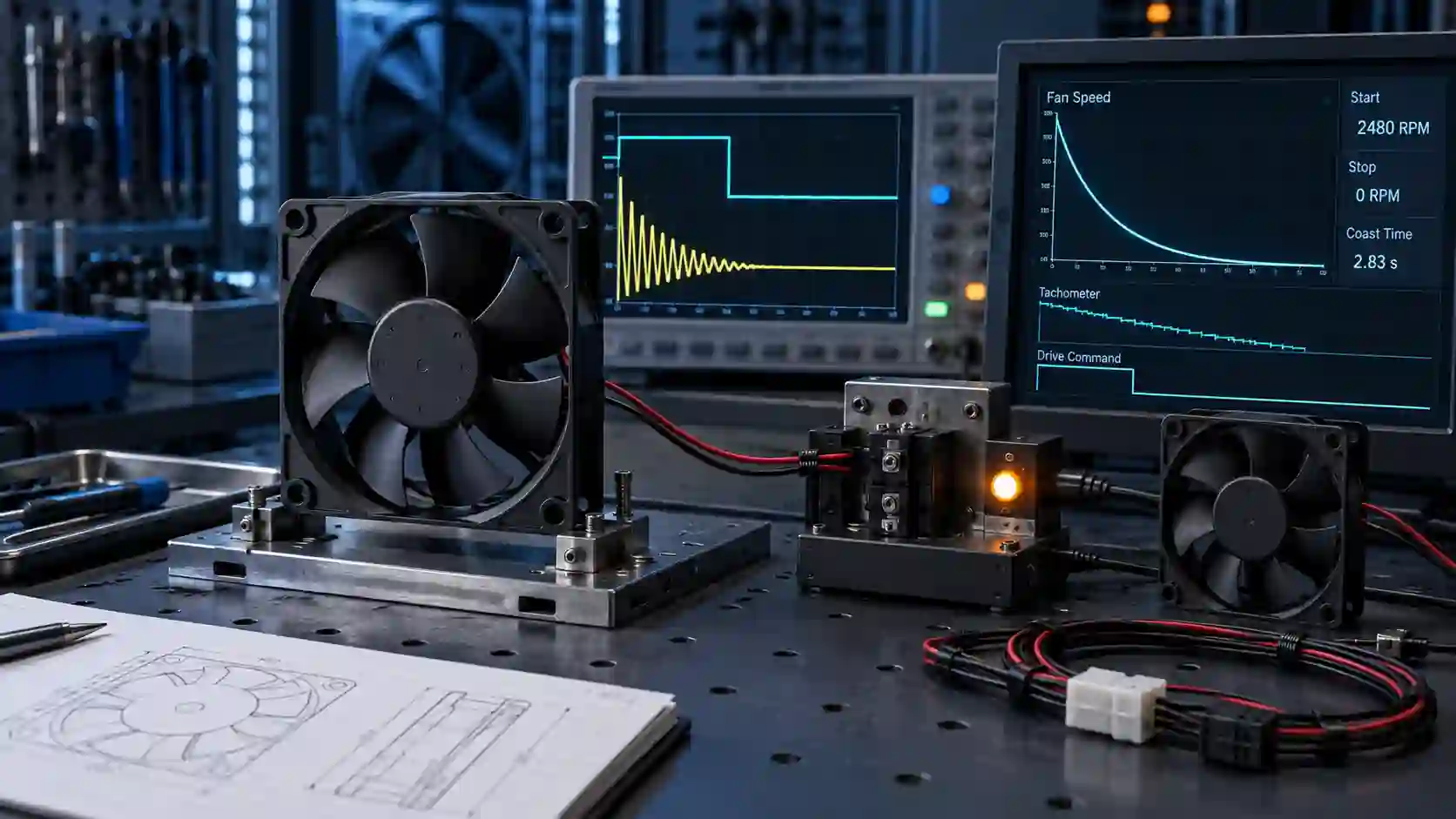
How to validate two-wire fan startup, coast-down, restart and braking behavior, including an anonymised 15–18 second to approximately 7 second project result.
Read article →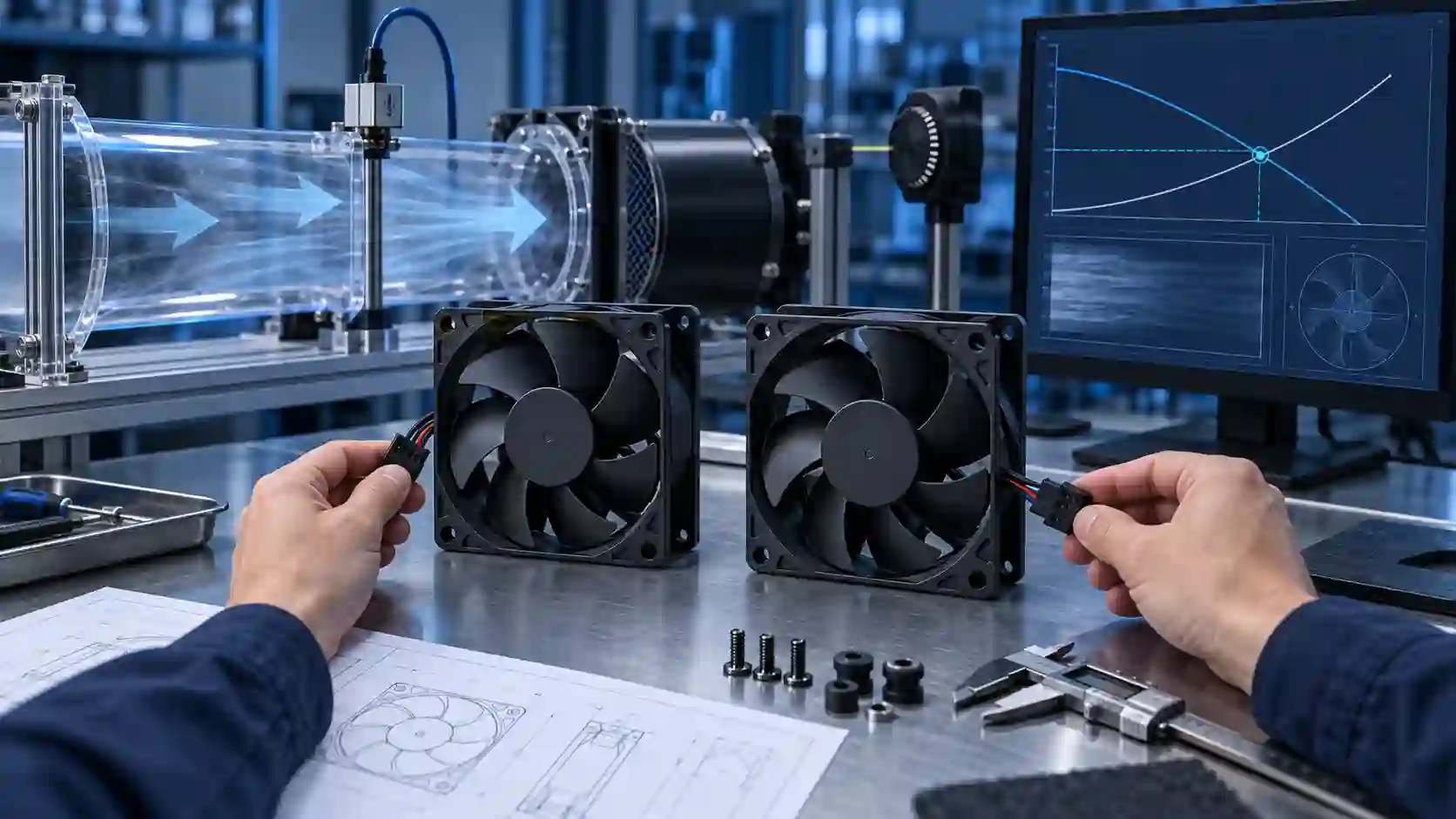
Evaluate a premium fan replacement by installed airflow, pressure, controls, noise, fit and validation evidence, not by maximum CFM alone.
Read article →
Turn a startup cooling requirement into a tested custom fan sample and a controlled pilot build, using a drone blower redesign as the example.
Read article →
Review projector fan layout before changing the fan: inlet wall gap, parallel spacing, recirculation and noise, with a three-configuration comparison plan.
Read article →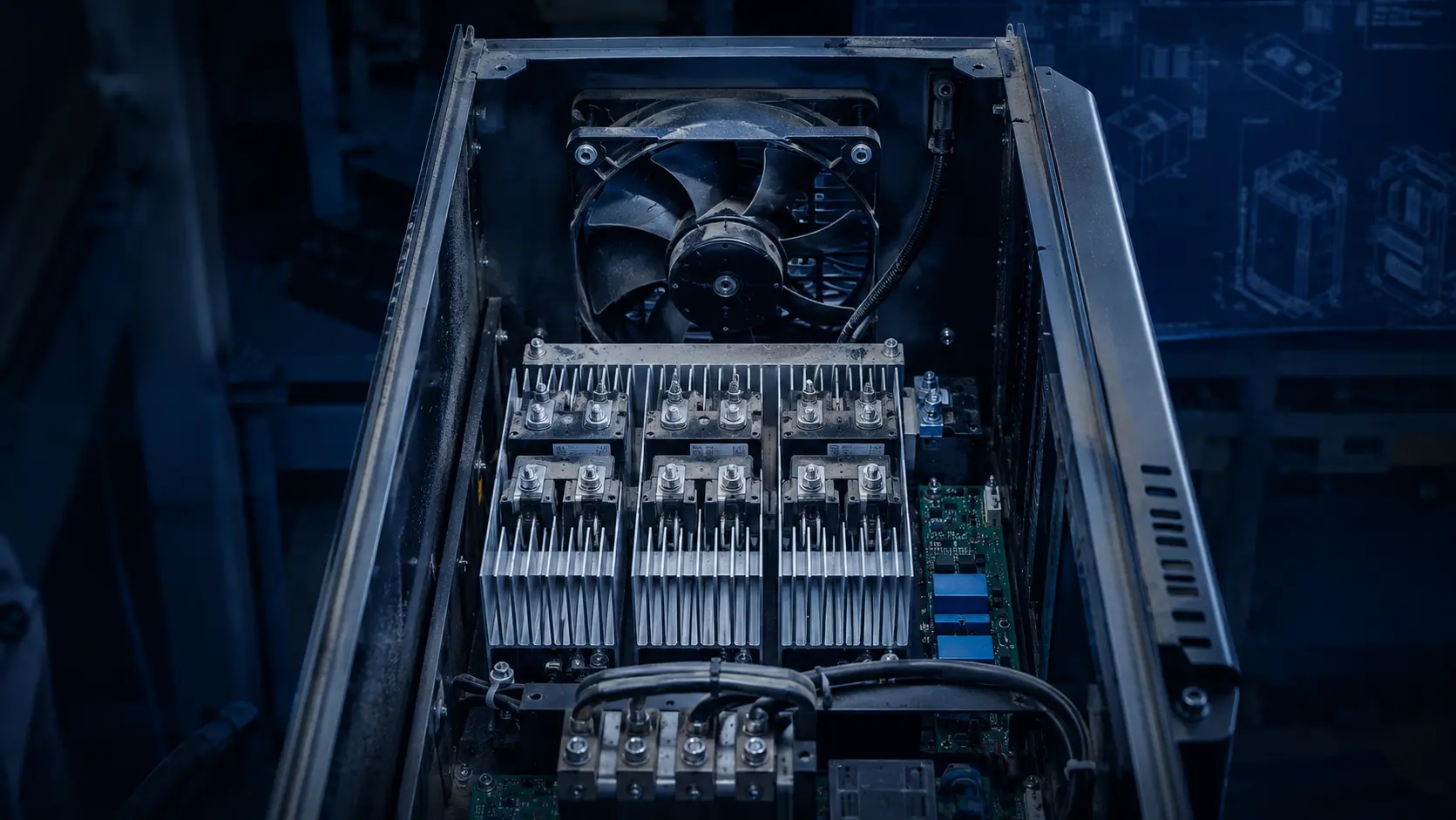
A self-derating drive was never a bad fan — dust and choked filters beat free-air CFM. See how pressure-led customization and cabinet testing fix it.
Read article →Air that short-circuits past the heat sink cools nothing: learn the airflow, static-pressure and IP decisions behind a customized cabinet fan.
Read article →
Temperature and altitude cut air density, so fan performance, motor derating and clearance limits must all be rechecked.
Read article →
How walls, elbows, guards and abrupt outlets add pressure loss, and how to size a fan on the corrected curve.
Read article →Why an installed fan is louder than its dBA rating, and how speed, pressure and mounting resonance shape the sound.
Read article →How to specify fan voltage, control input, start-up current and feedback, and why rotation is not proof of installed cooling.
Read article →L10 is not the whole life. How bearing temperature, orientation and restart cycles decide what a catalogue figure really means.
Read article →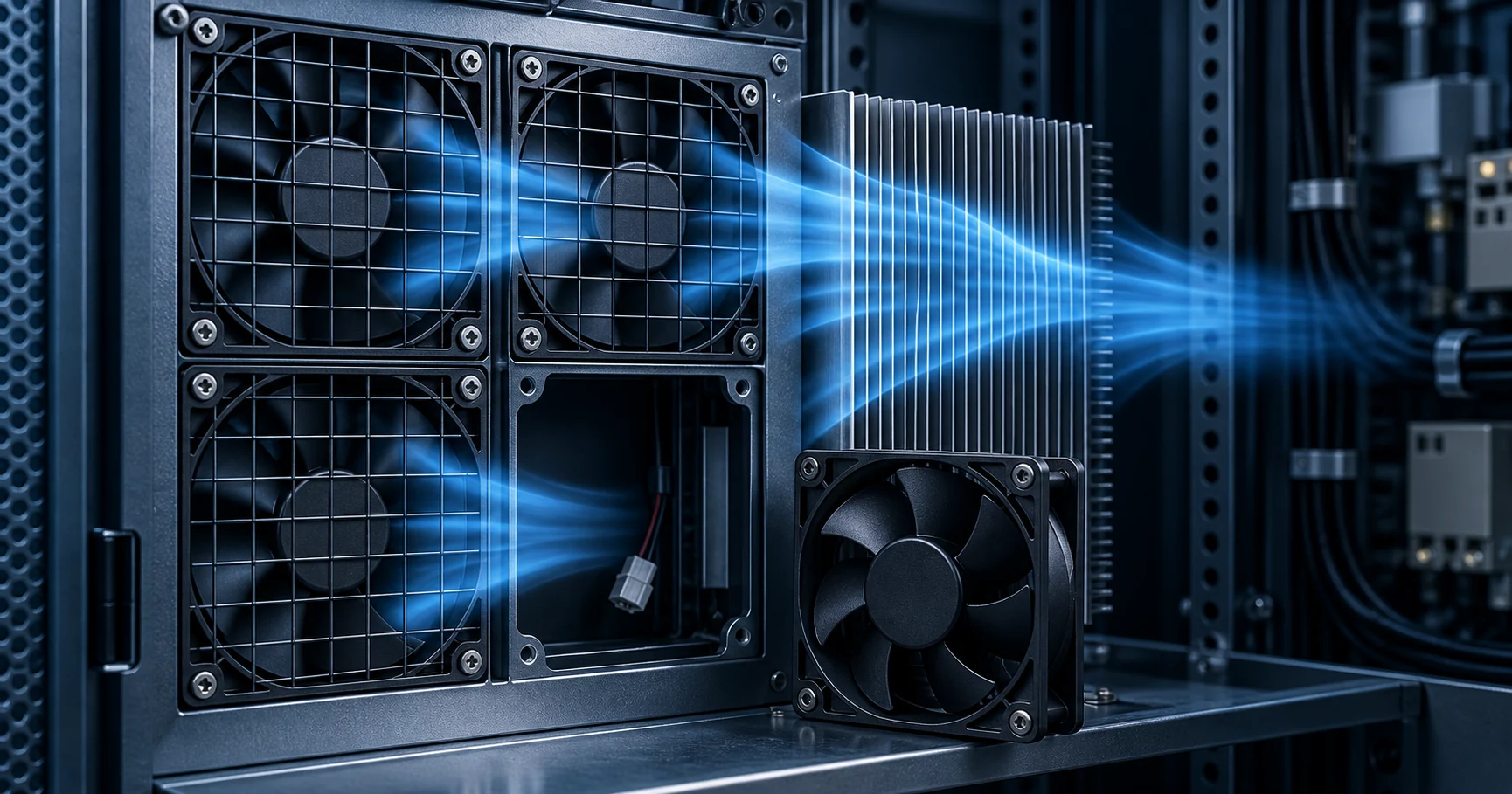
A parallel fan array settles on an operating point of its own; N+1 has to be proved at the real system pressure, not by multiplying airflow.
Read article →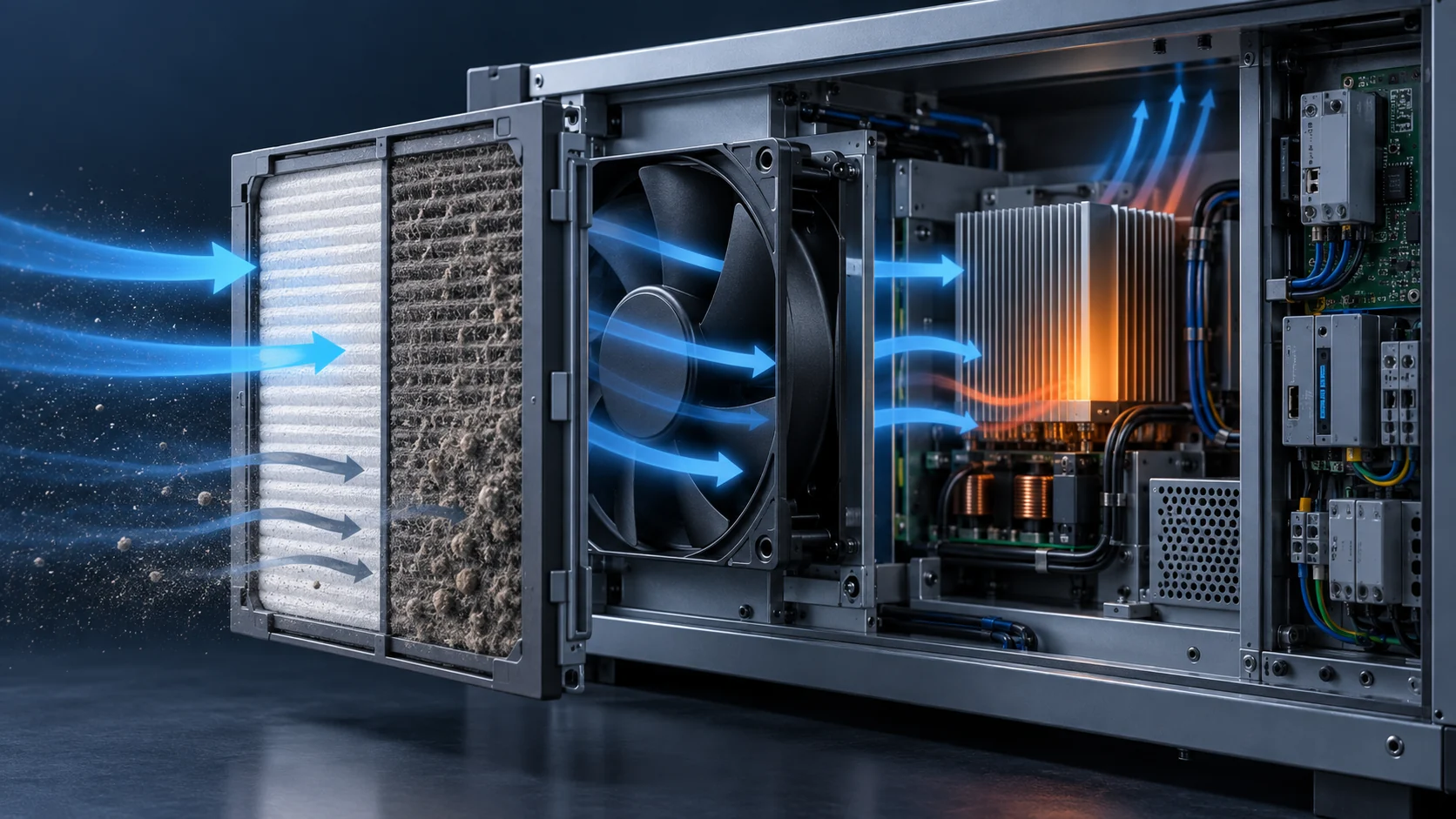
Filter pressure drop raises system resistance and cuts airflow: the filter states to specify and how to validate them.
Read article →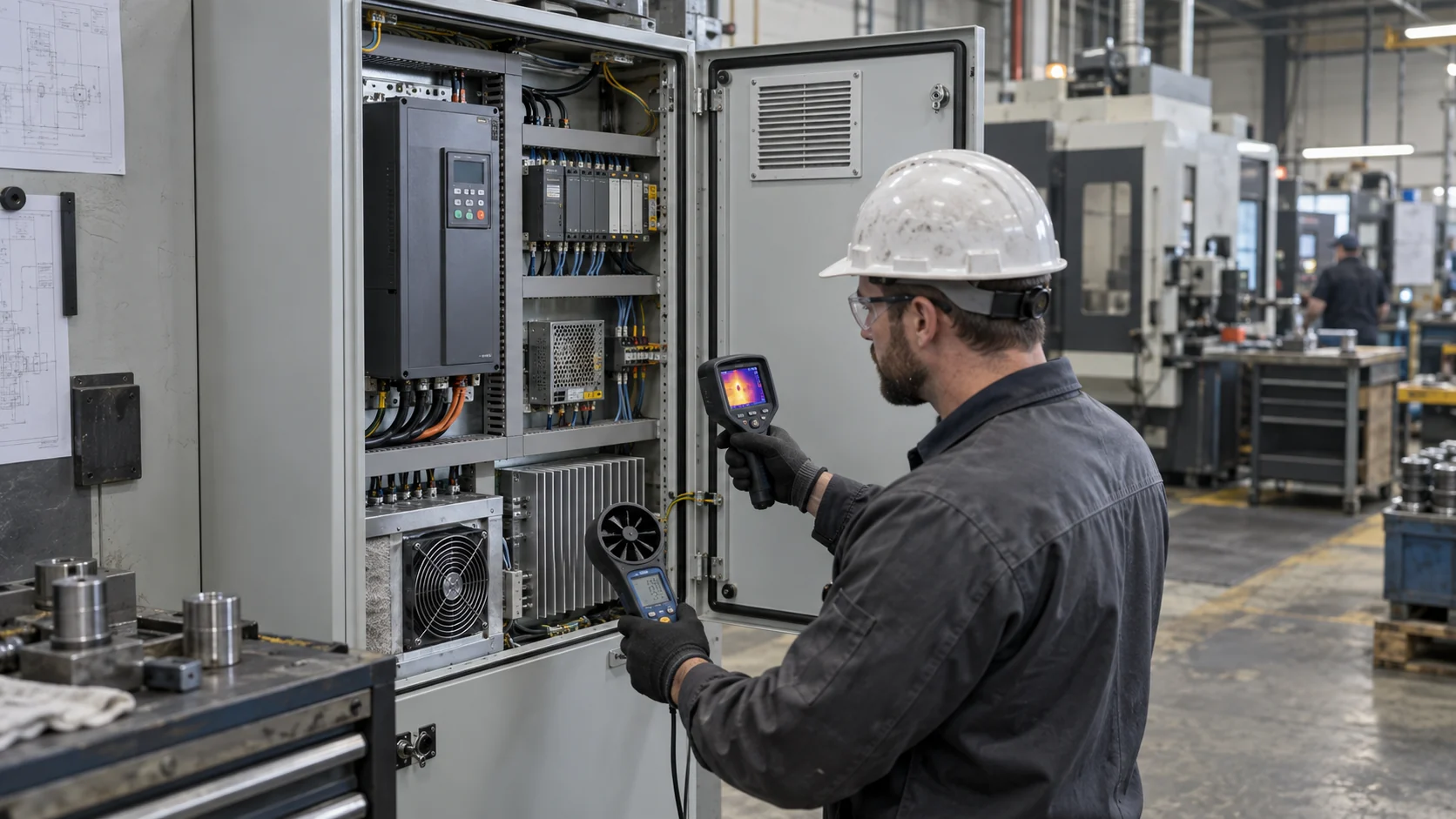
Cooling PLC, VFD and servo control cabinets: calculate drive heat loss, account for filter pressure and layout bypass, then validate the fan working point.
Read article →
Select VFD and UPS cabinet fans by heat load, filter pressure drop, airflow and real enclosure validation.
Read article →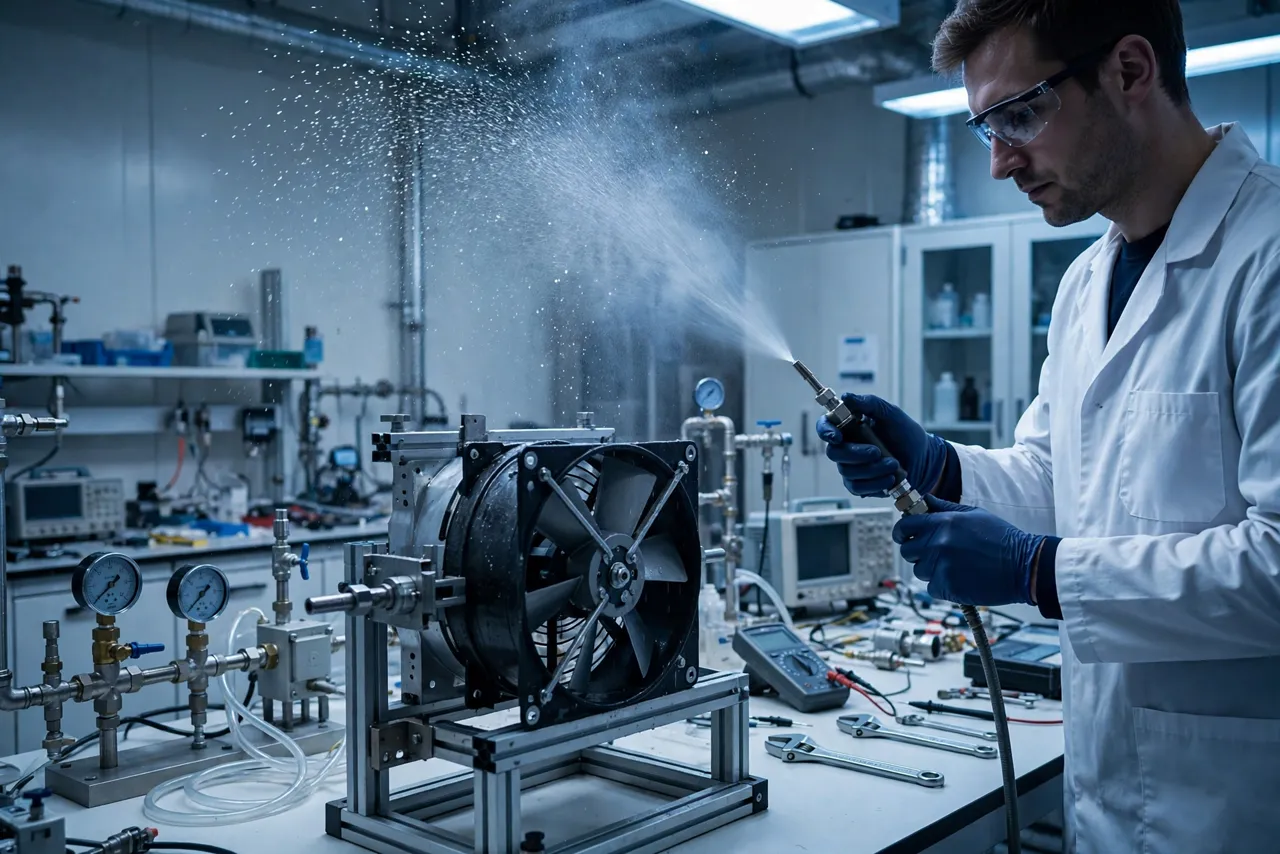
Decode IP54, IP55 and IP68 for cooling fans with five selection checkpoints and an installed-sample validation checklist.
Read article →
Understand UL, CE and RoHS fan markings, their limits, and the buyer checks needed before sample approval.
Read article →
Compare cooling-fan purchase price, energy, failures and replacements with a practical total-cost-of-ownership worksheet for engineering buyers.
Read article →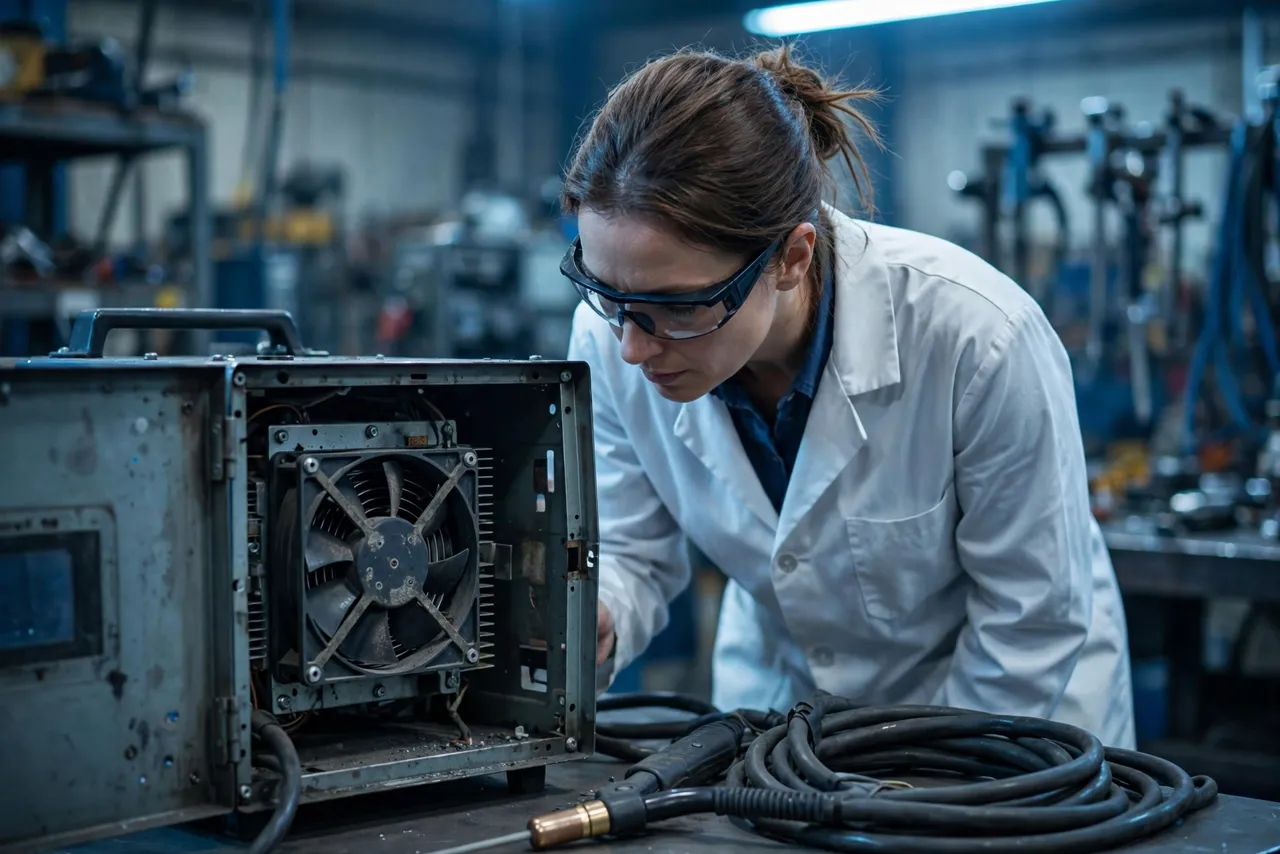
Select welder cooling fans for metal dust, spatter, duty cycle, pressure loss and installed validation for production teams.
Read article →Select 110/220 V AC axial fans for electrical enclosures by heat load, system pressure, frequency, filter loss and installed validation.
Read article →Select AC axial fans for condensers and heat exchangers by coil pressure drop, useful face airflow, ambient temperature and installed validation.
Read article →A measured method for baseband heat, cabinet airflow, pressure, control, noise and sample validation in indoor 5G edge equipment.
Read article →
A practical method for rectifier shelf heat load, airflow, pressure, control, filter loading, alarm feedback and sample validation.
Read article →Validate fan power, PWM command, FG or RD feedback, crimp, routing, vibration and service conditions before production release.
Read article →Validate fan torque, grommets, clearance, panel resonance, air path, service reinstallation and assembly repeatability before release.
Read article →A measured validation method for variable-frequency-drive and servo-drive cabinet cooling: heat load, pressure, controls, noise and service state.
Read article →Define airflow, static-pressure taps, fixture leakage, density, uncertainty and repeatability before approving a cooling-fan sample.
Read article →3D Printing
Stable temperature control for 3D printing, including chamber circulation, part cooling and the small-batch development realities of new equipment.
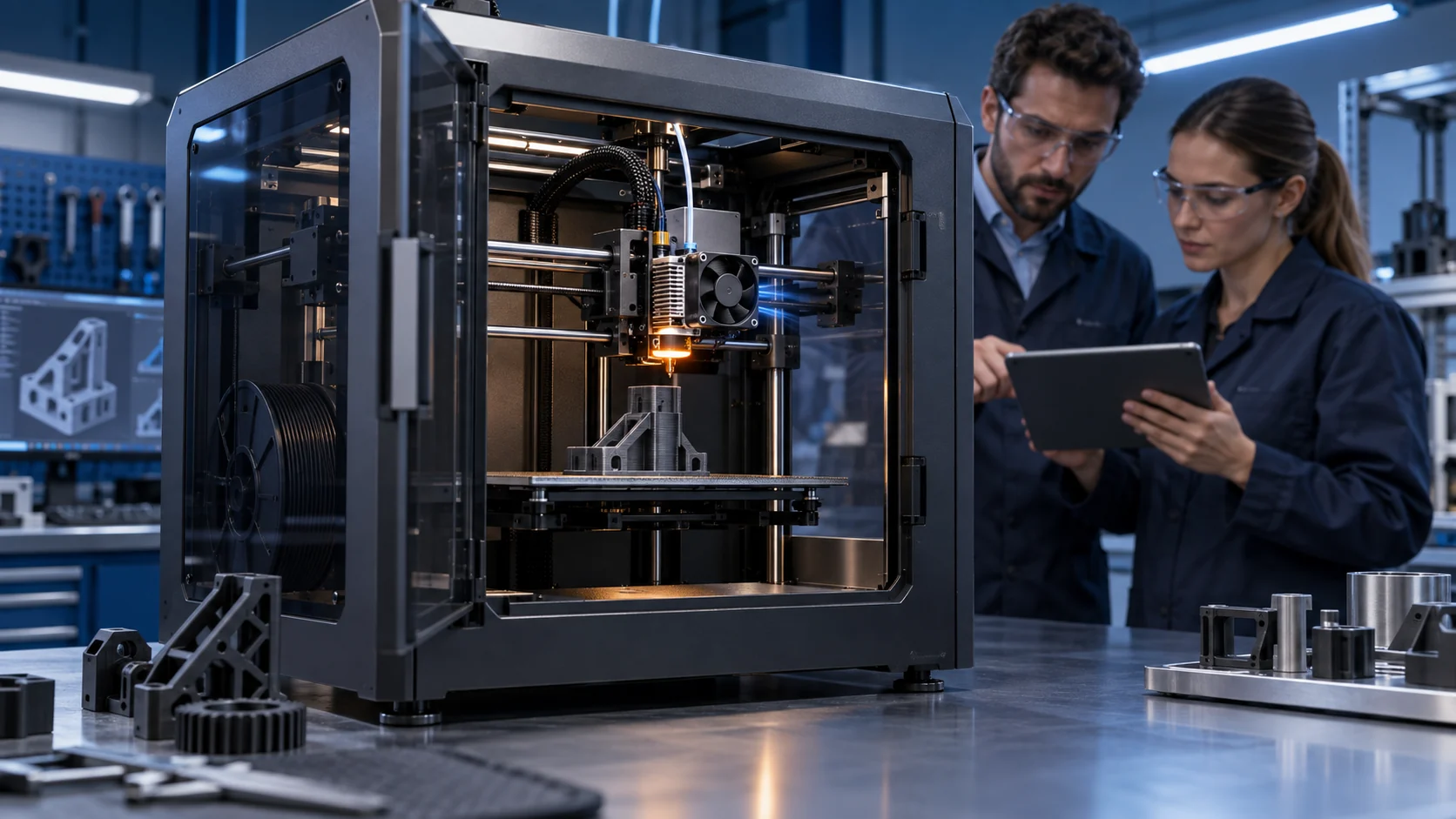
Validate 3D printer hotend fans for heat-creep margin, warm inlets, dust loading, startup, feedback and long-print reliability.
Read article →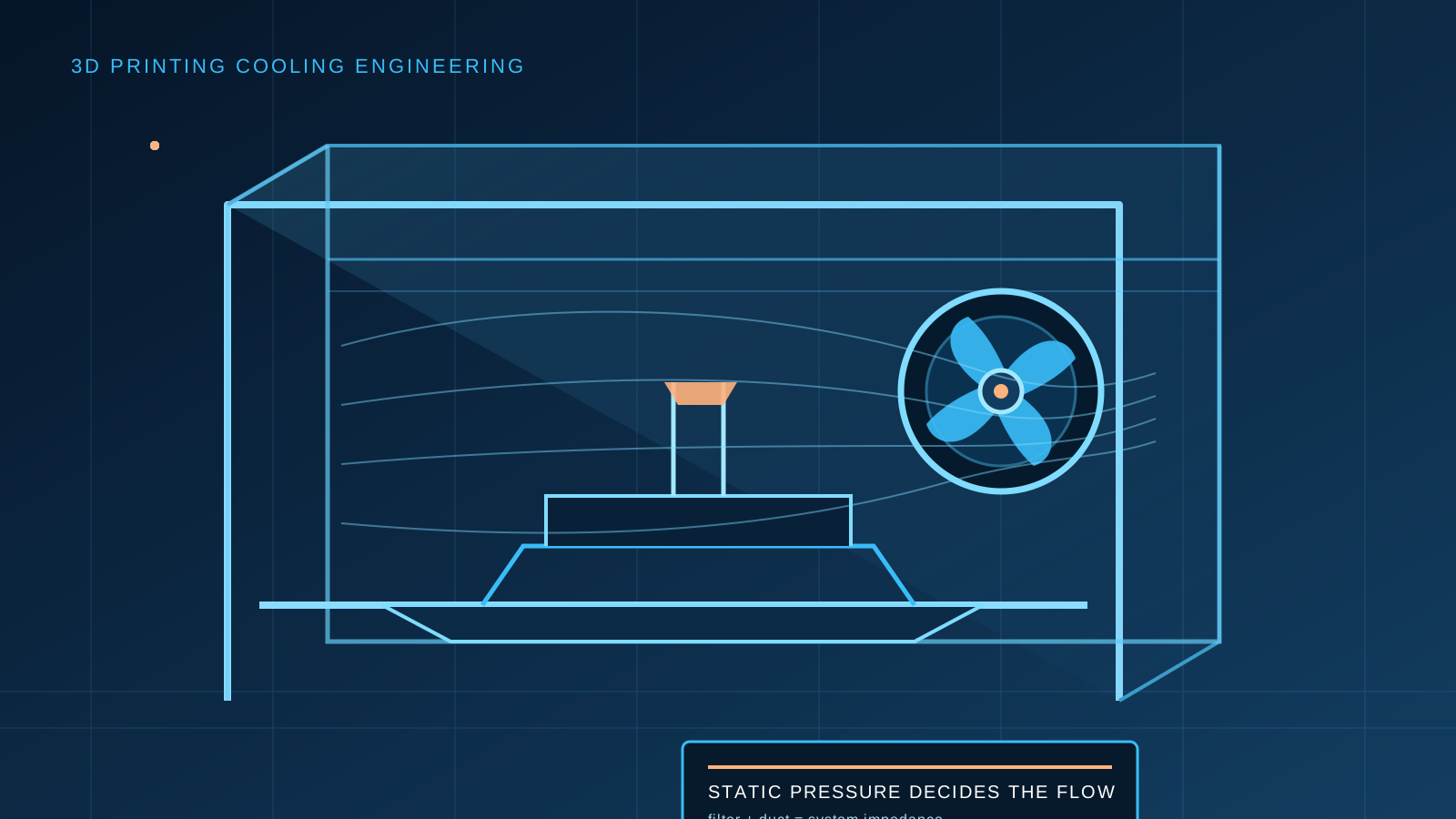
Select high-speed 3D printer fans from installed static pressure, duct loss, material process and real toolhead validation.
Read article →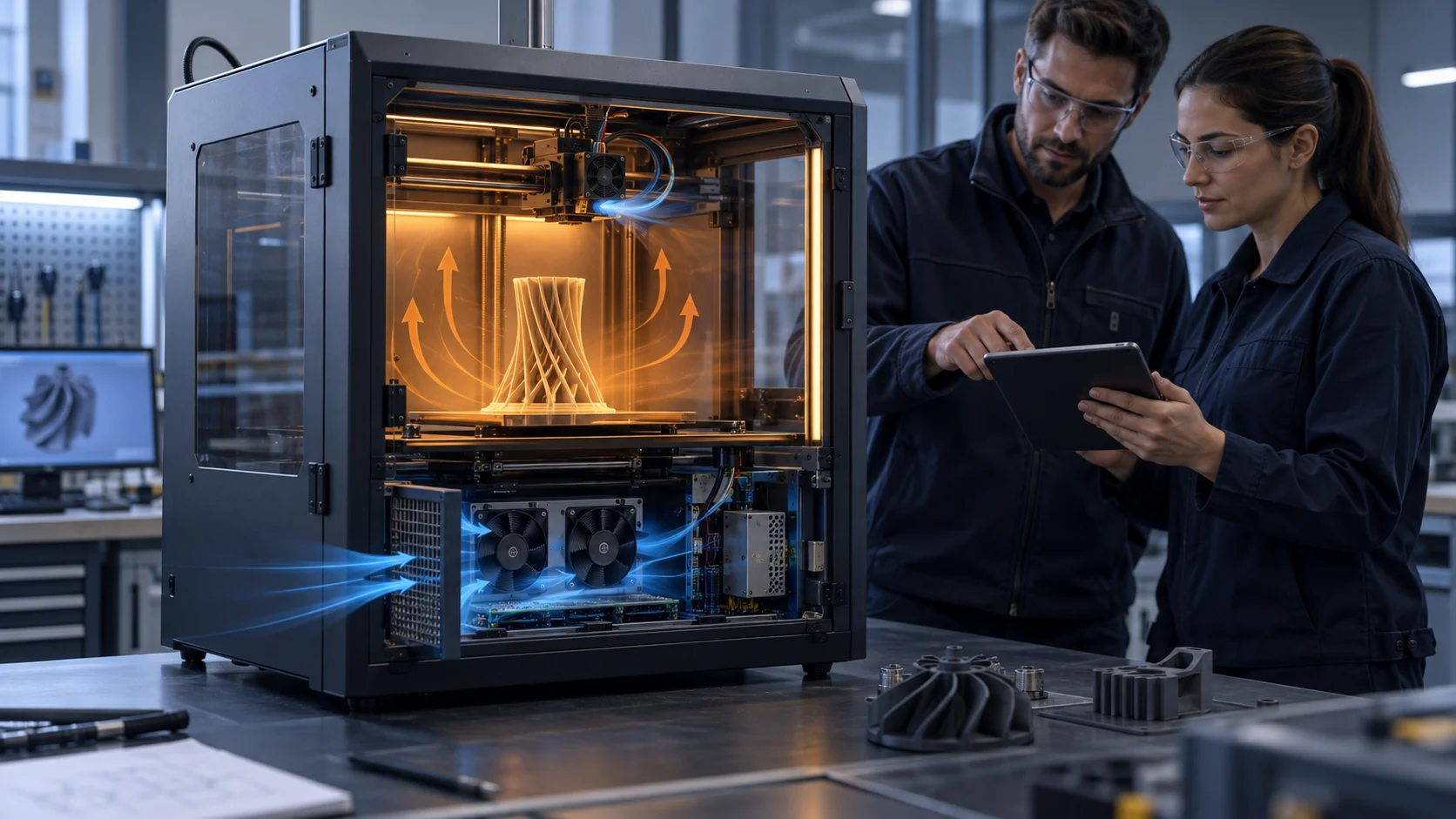
Separate chamber stability, electronics cooling and local part cooling into three validated air loops before selecting a custom fan for an enclosed FDM printer.
Read article →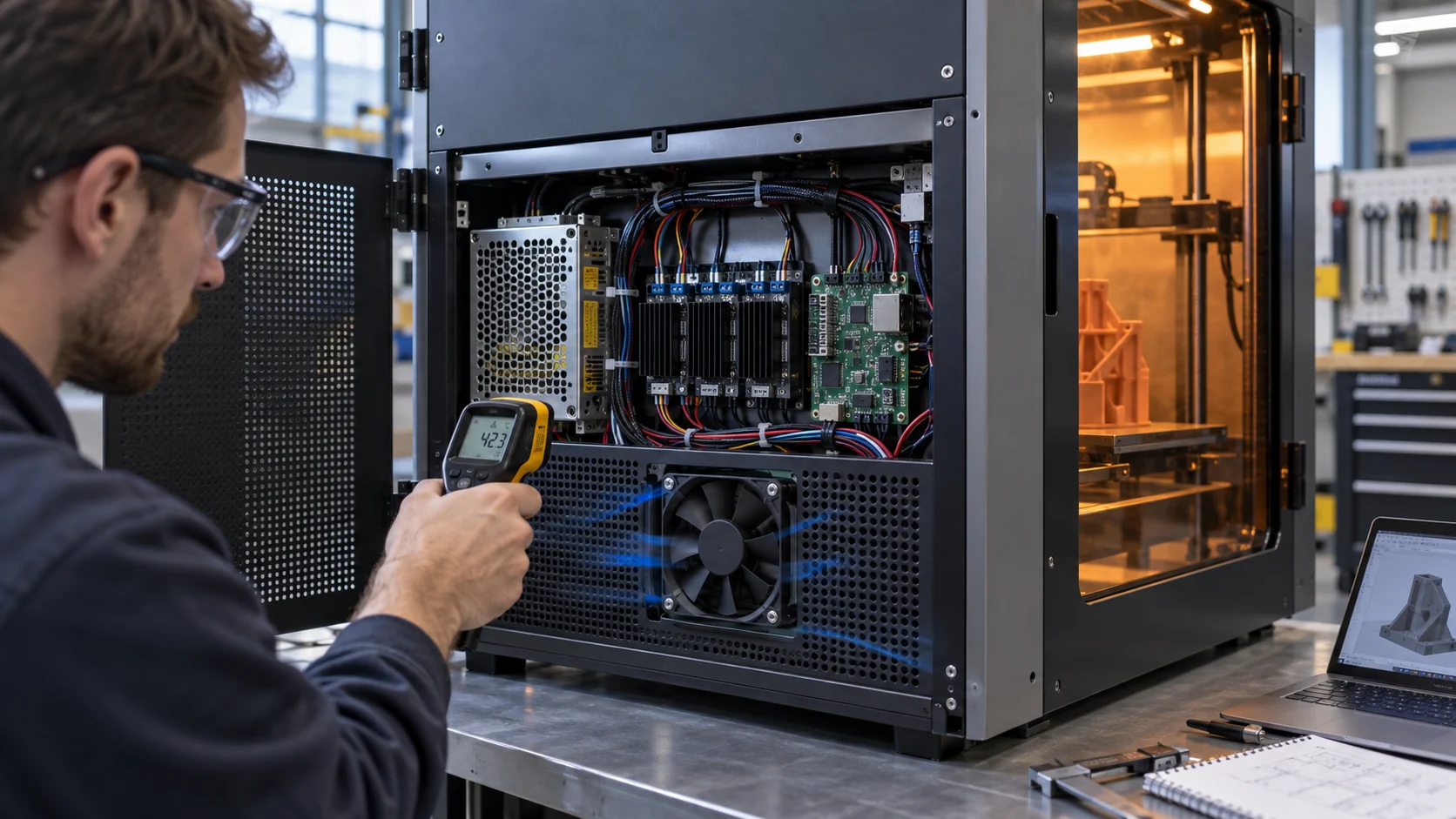
Cooling 3D printer electronics bays: separate chamber heat with a measured fan path, pressure budget, thermal contract and service-state validation.
Read article →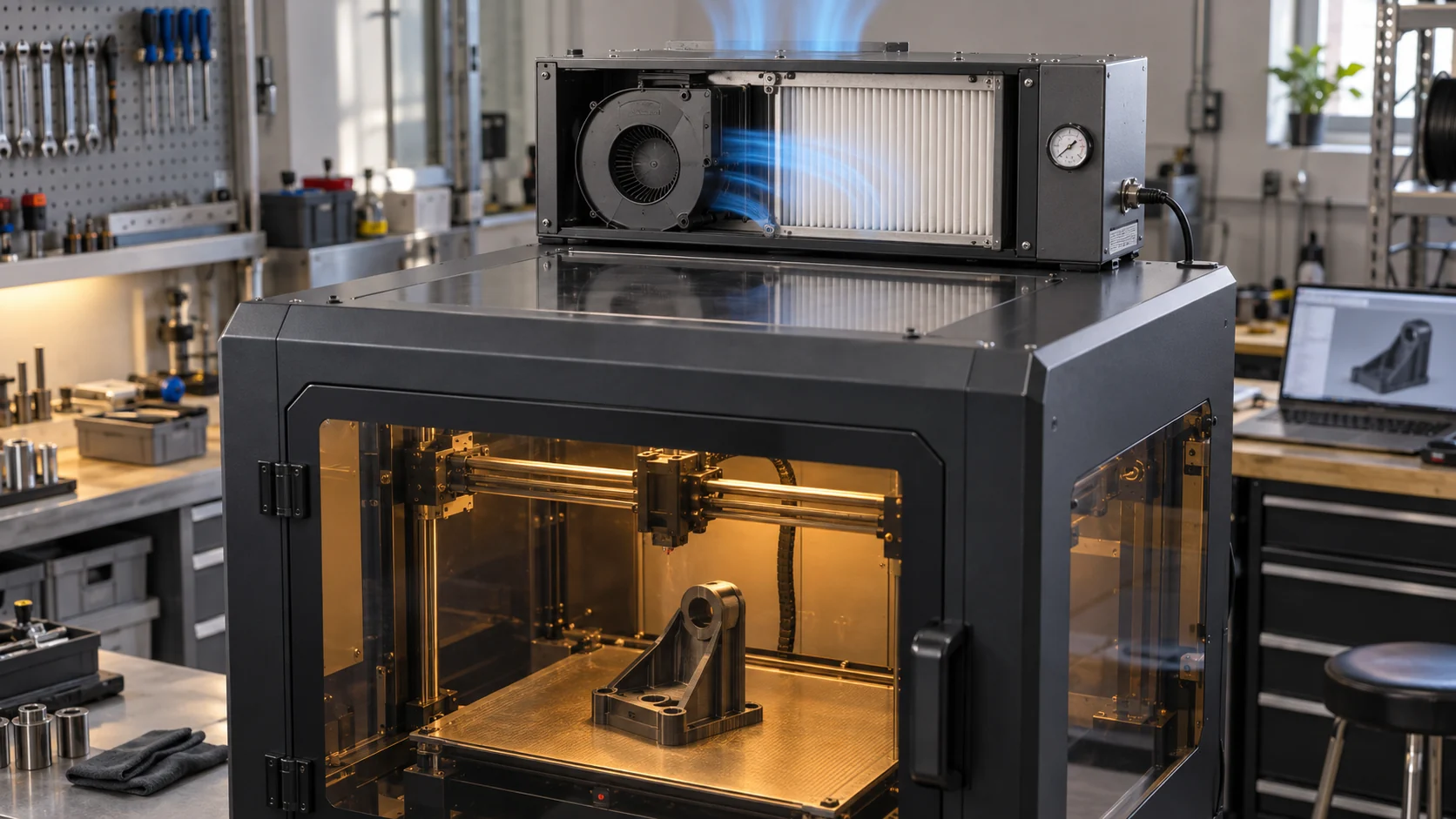
Select a 3D printer enclosure filtration fan by filter pressure, chamber temperature, bypass risk and service state rather than free-air CFM alone.
Read article →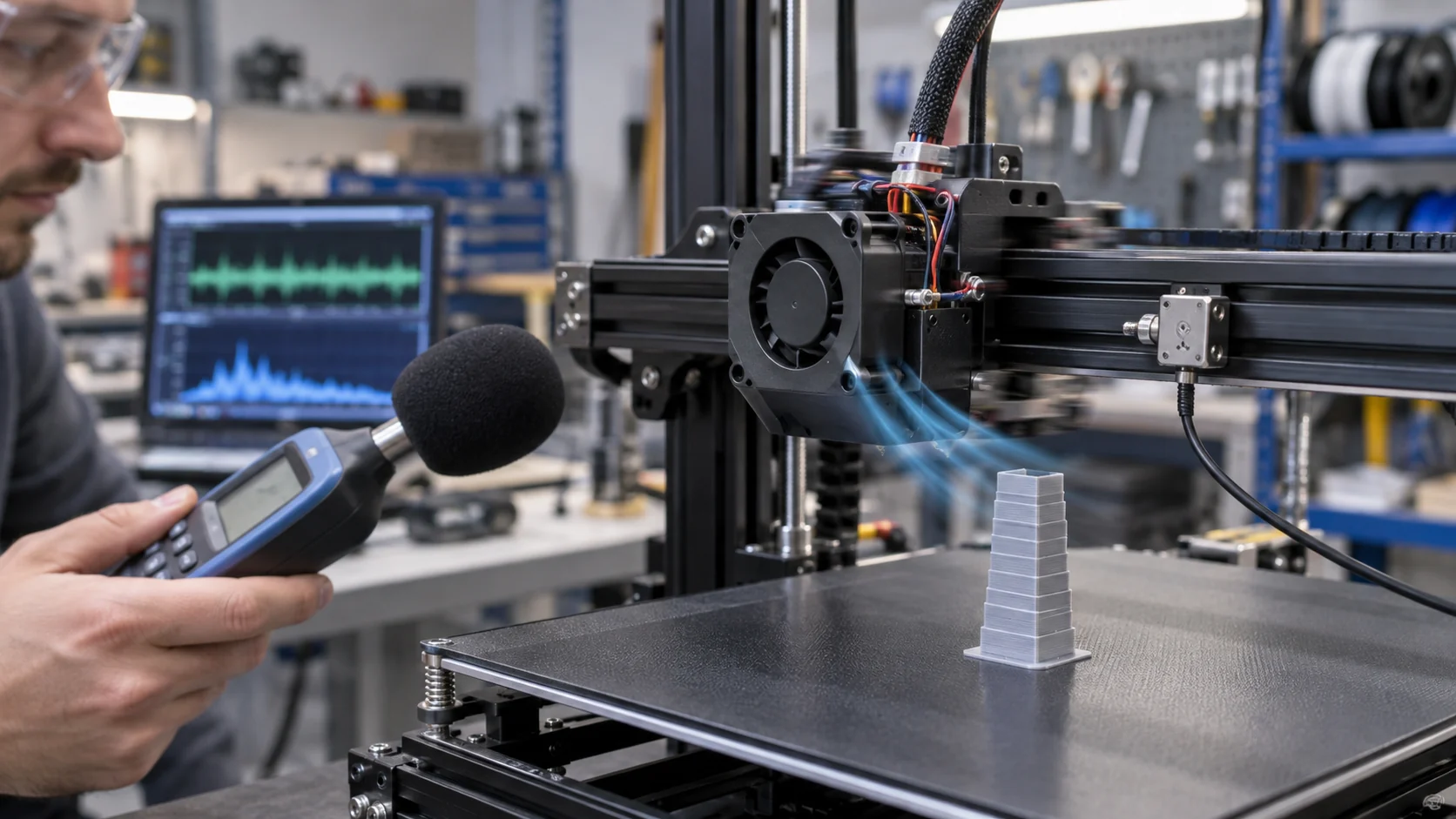
Separate aerodynamic noise, blade-pass tone, structural vibration and motion-system effects before approving a hotend, part-cooling or enclosure fan.
Read article →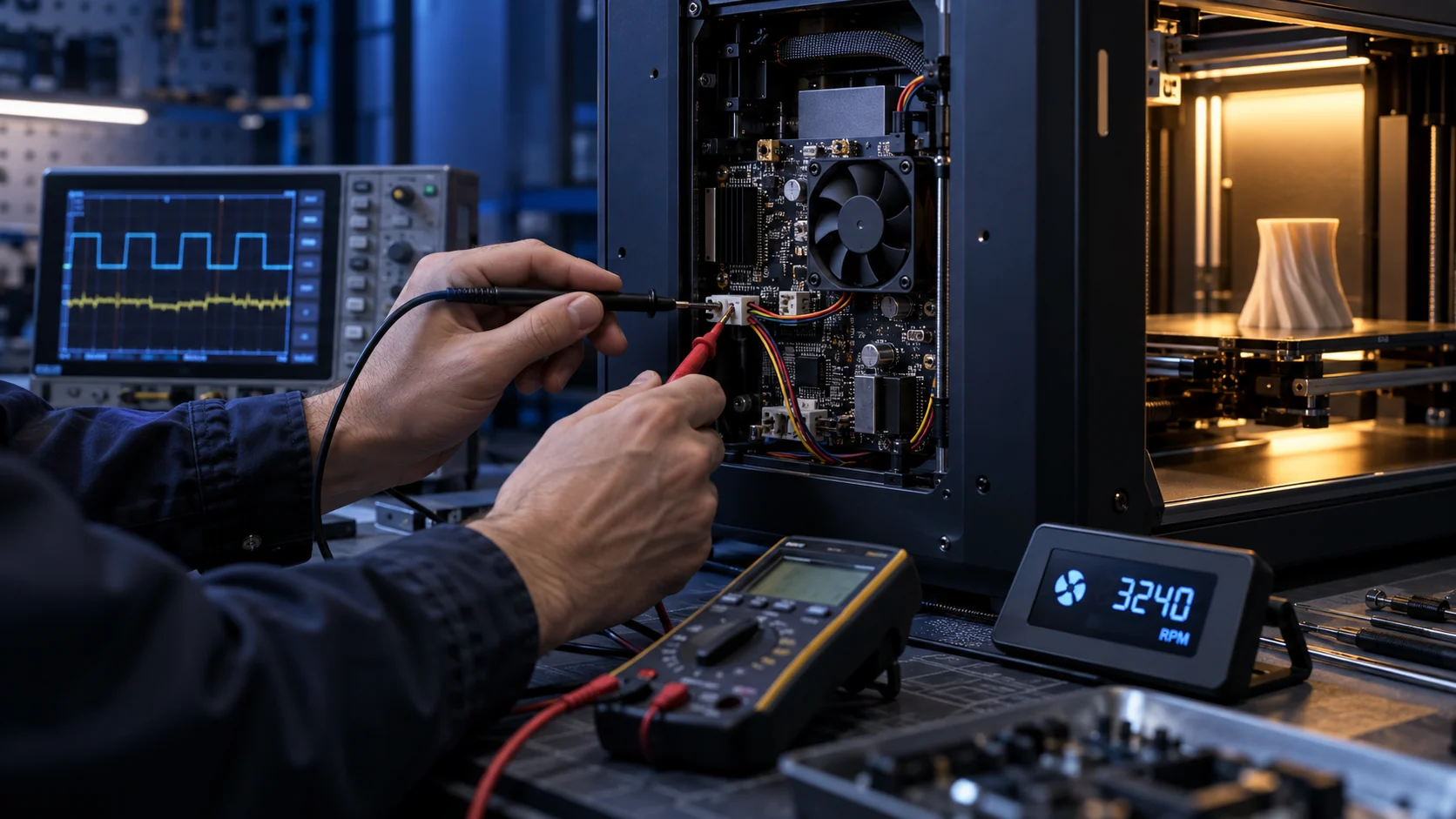
Diagnose 3D printer fan faults by separating PWM command, connector voltage, actual RPM, feedback signal, installed airflow and thermal response.
Read article →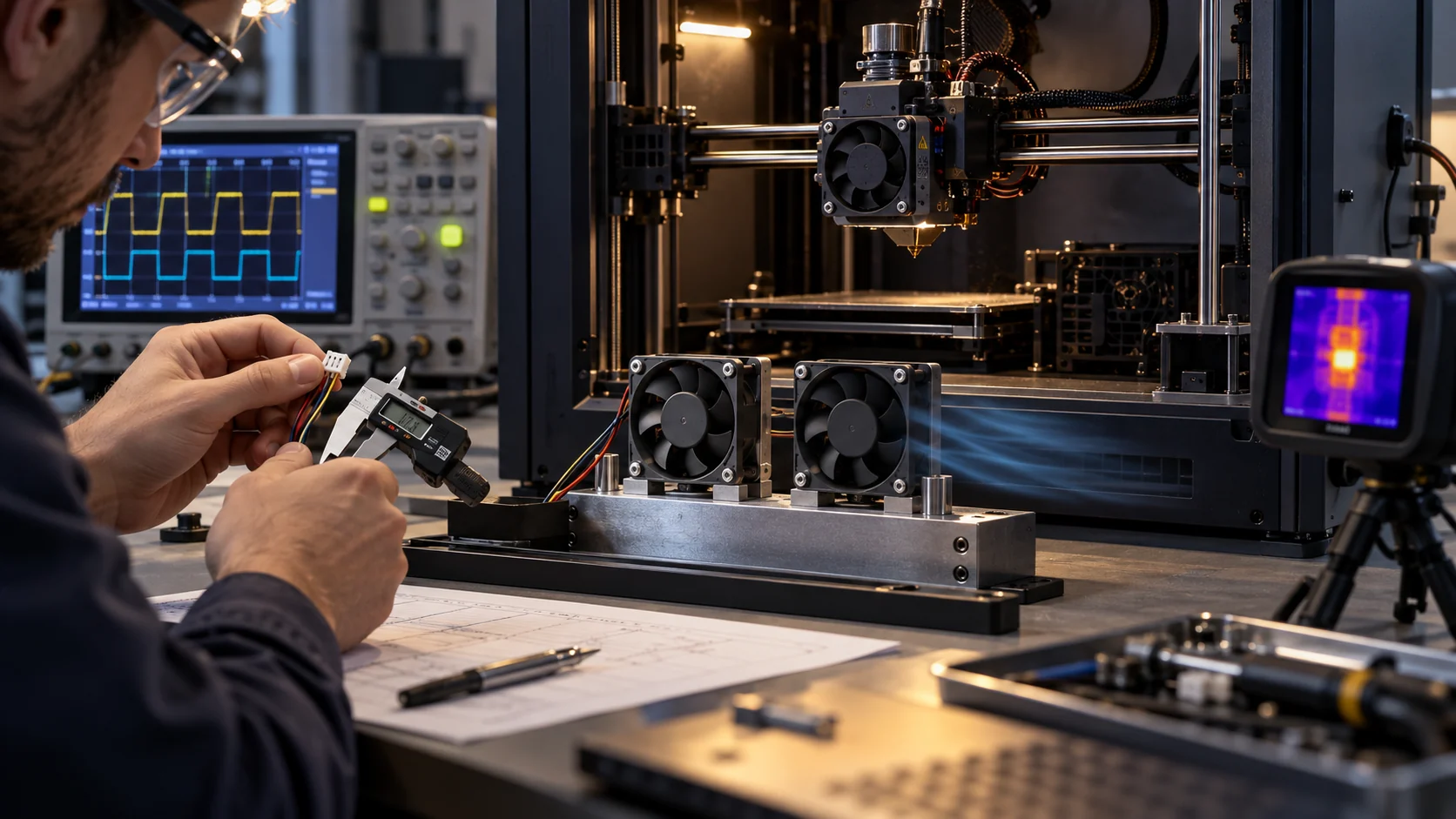
Qualify a replacement 3D printer fan by matching the installed interface, pressure, feedback, thermal margin, noise and print result.
Read article →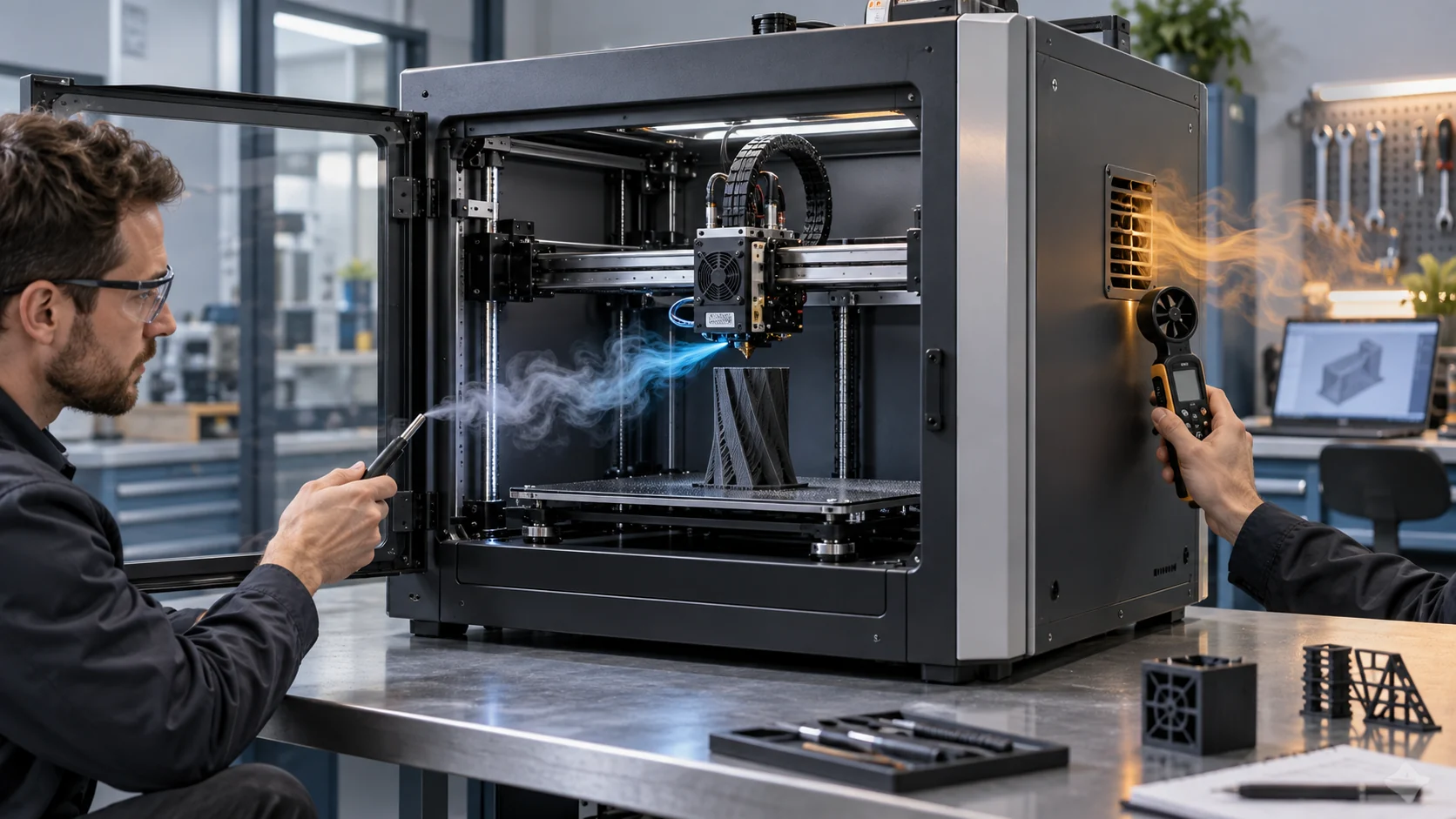
Map toolhead, part, electronics and chamber airflow to prevent hot-air recirculation, bypass and fan-on-fan interference in 3D printers.
Read article →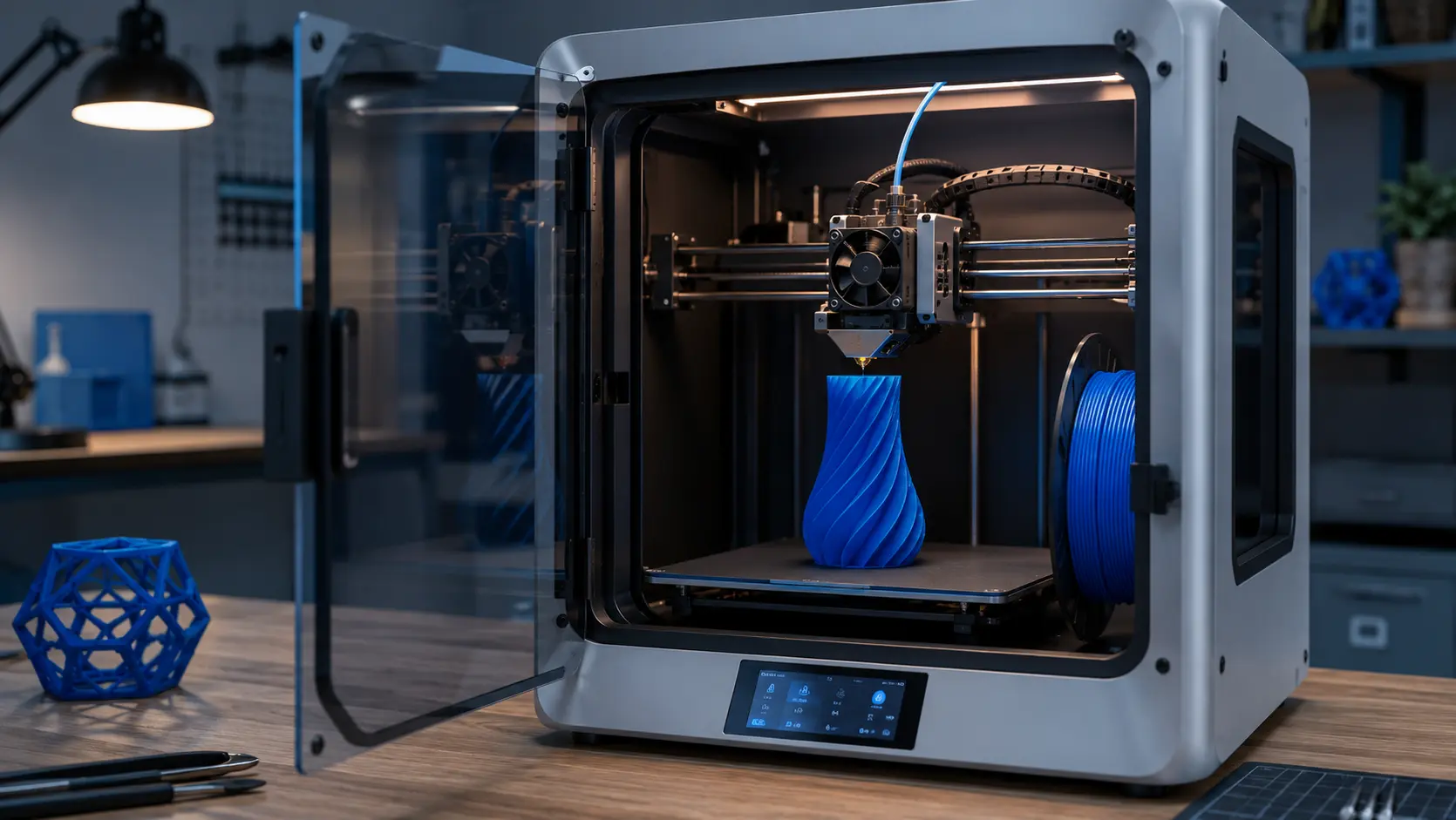
An enclosed printer must keep its chamber warm and uniform while cooling each layer fast, a balance that may need customized fans, ducts and sample testing.
Read article →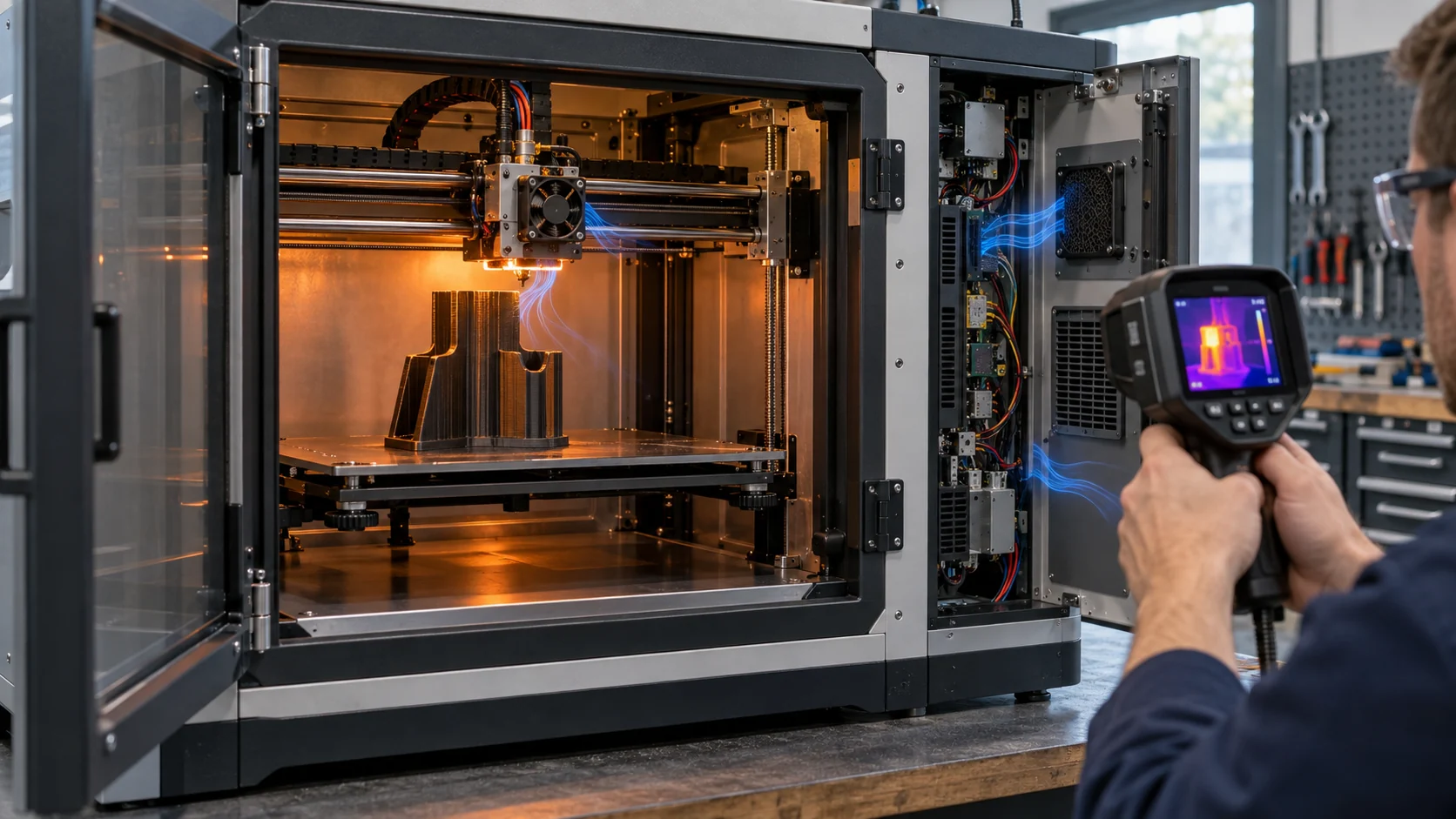
High-temperature 3D printer fan selection: validate three cooling loops — hotend heat-creep protection, part cooling and electronics-bay airflow.
Read article →Vertical Farming
Engineering airflow uniformity across stacked crop layers, from canopy velocity and humidity control to rack-level fan validation.
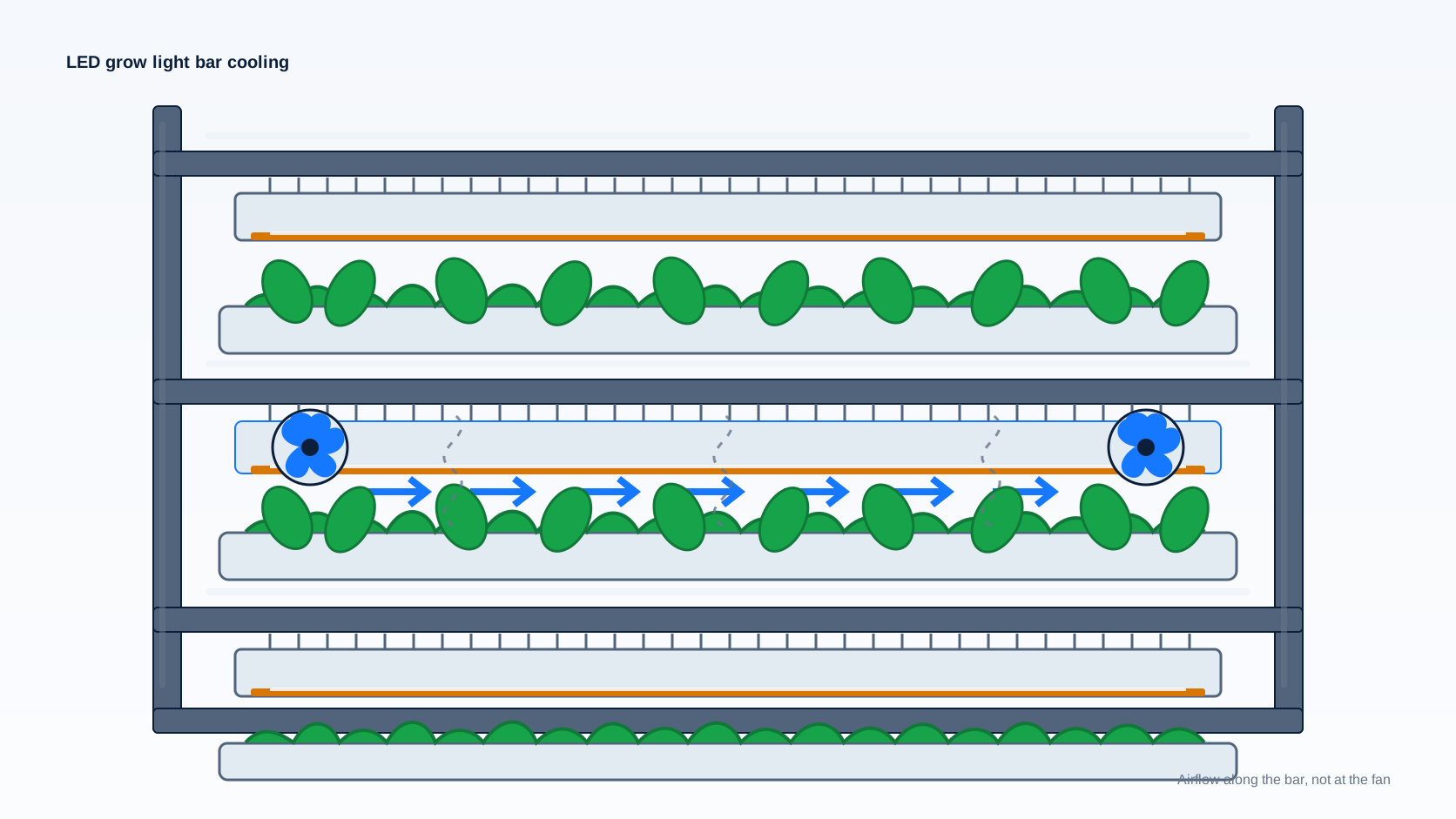
Size LED grow-light fixture fans by heat load, fin-stack pressure, airflow uniformity and the installed operating point.
Read article →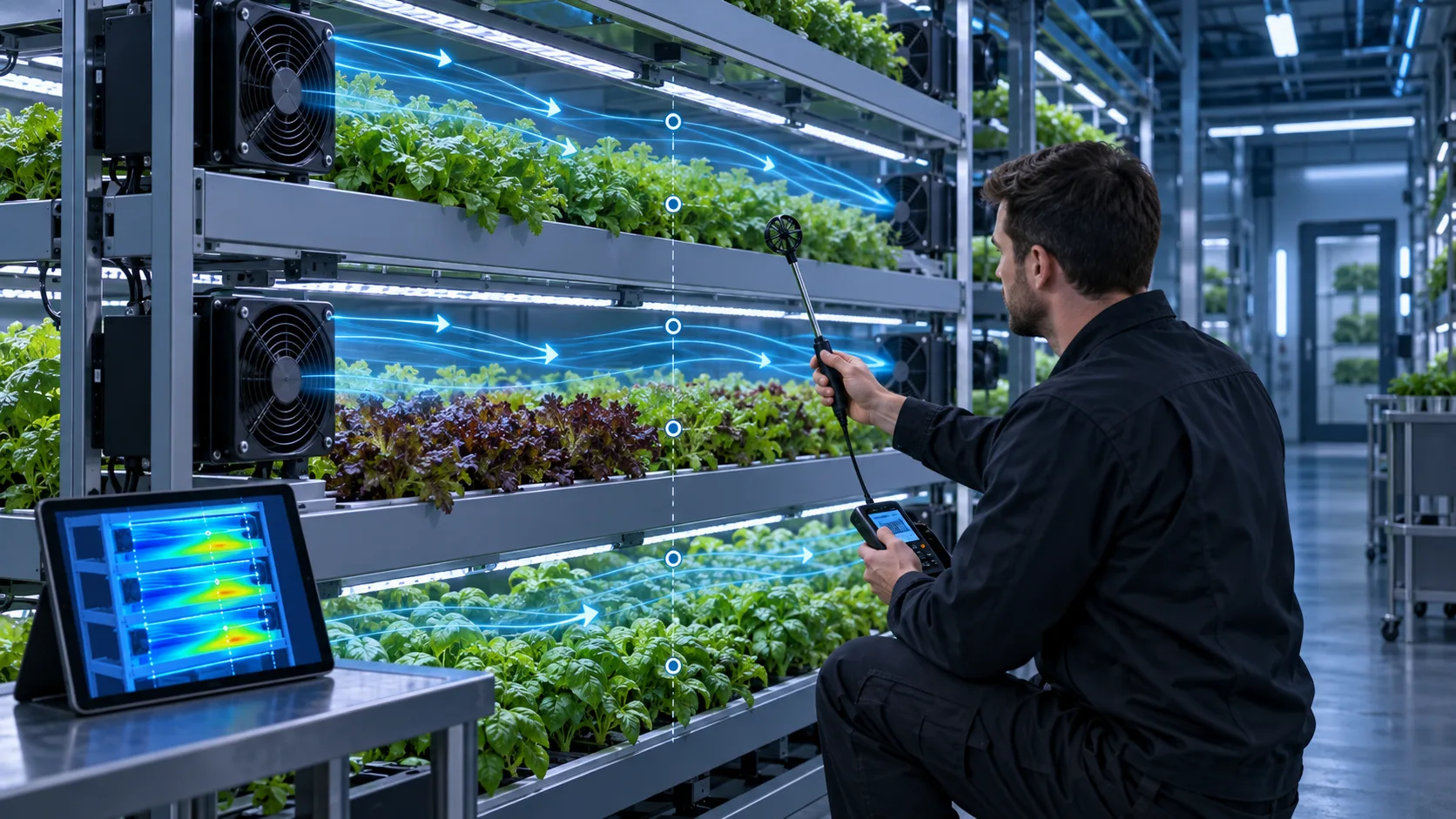
Validate airflow where the crop lives: set the band from the recipe, map velocity at canopy height on every layer, and log climate and fan data together.
Read article →
Compare vertical-farm fan layouts with a uniformity metric: fan placement, baffles, return paths and canopy air-speed targets held across every growing layer.
Read article →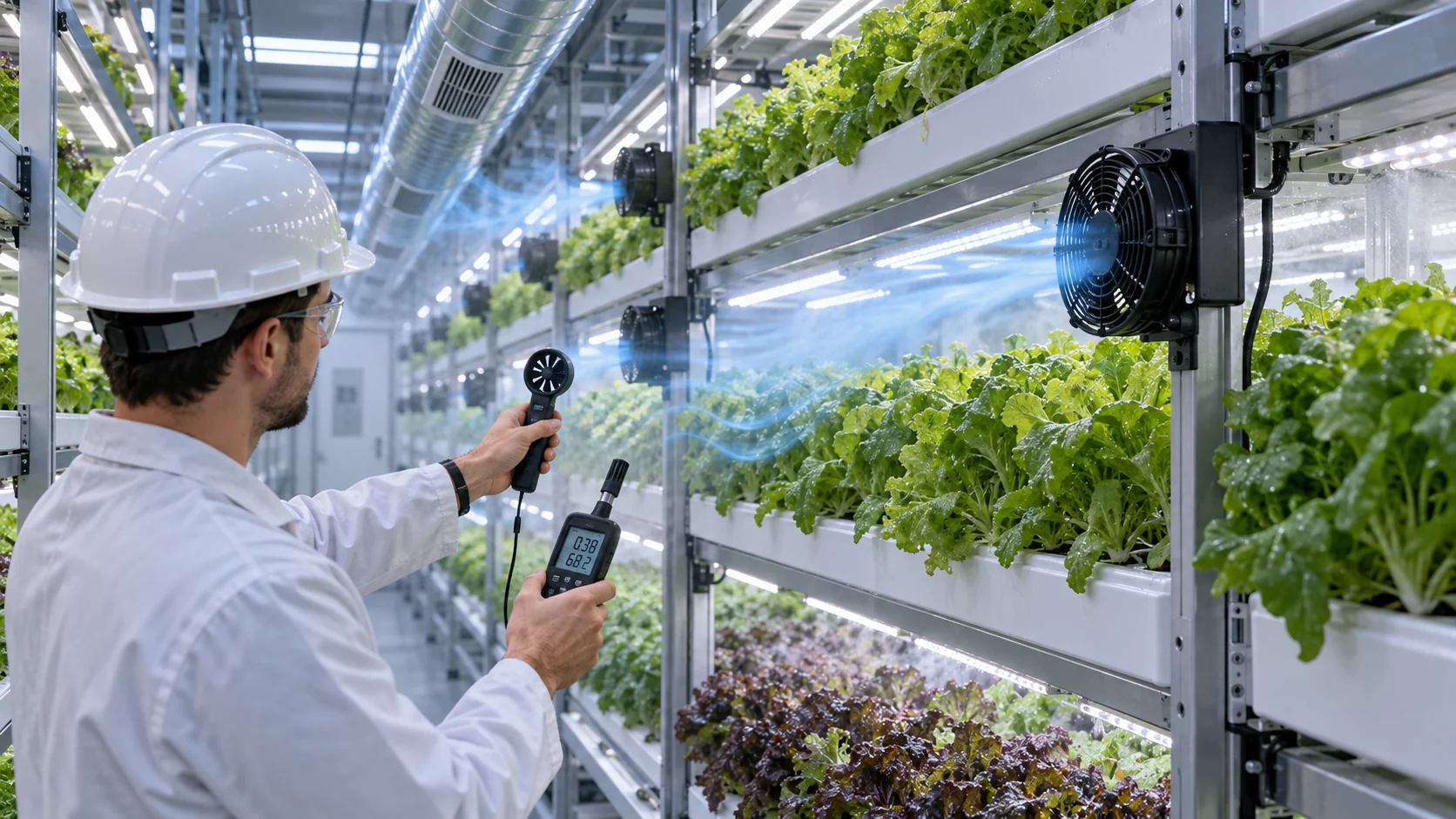
How vertical-farm engineers separate air delivery from rack-level mixing and validate canopy airflow, humidity, VPD, condensation risk, pressure and energy.
Read article →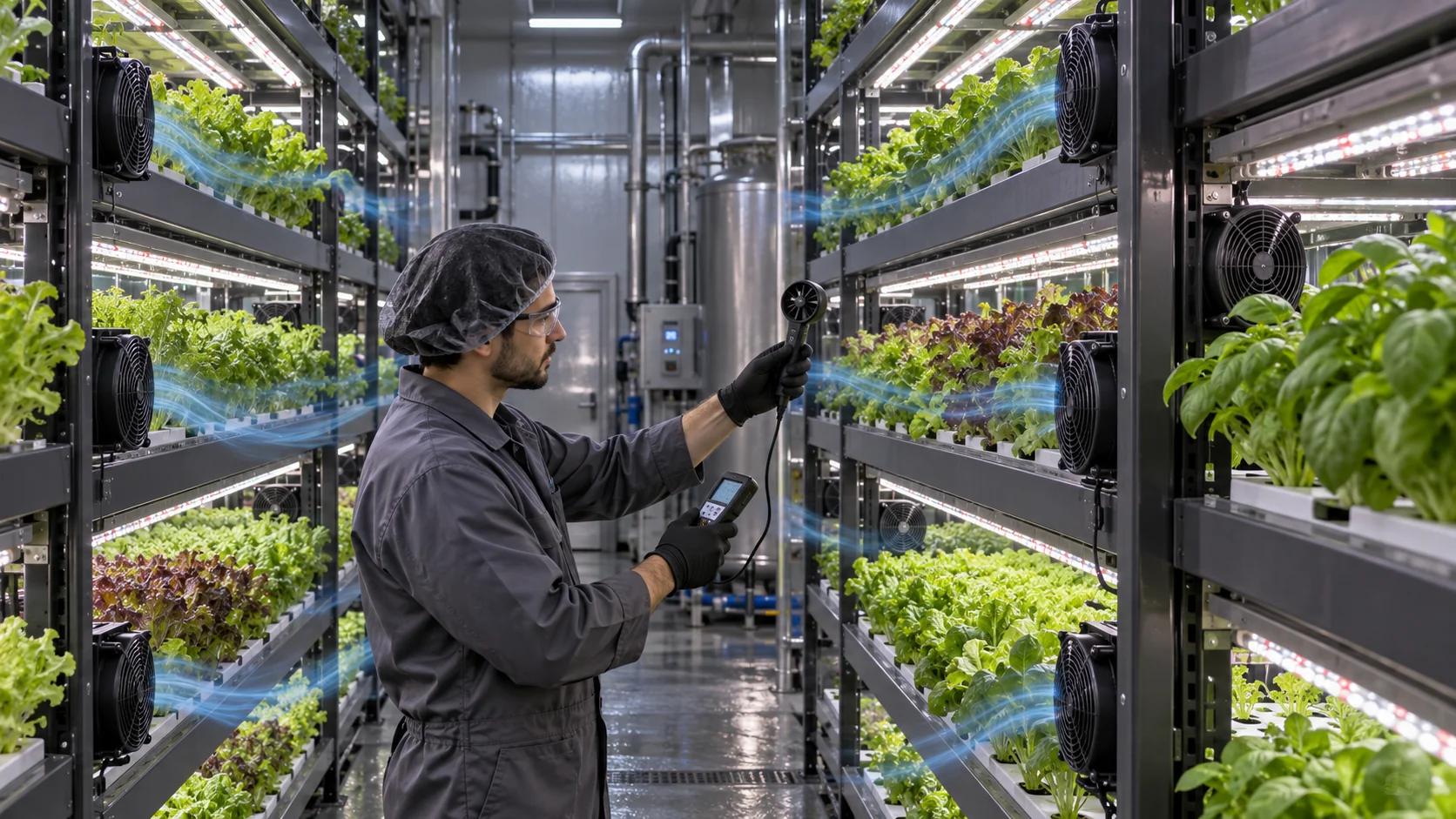
Guide to sidewall, aisle and rack-level fan layouts for vertical farms: pressure-drop estimation, canopy airflow mapping, PWM control and energy checks.
Read article →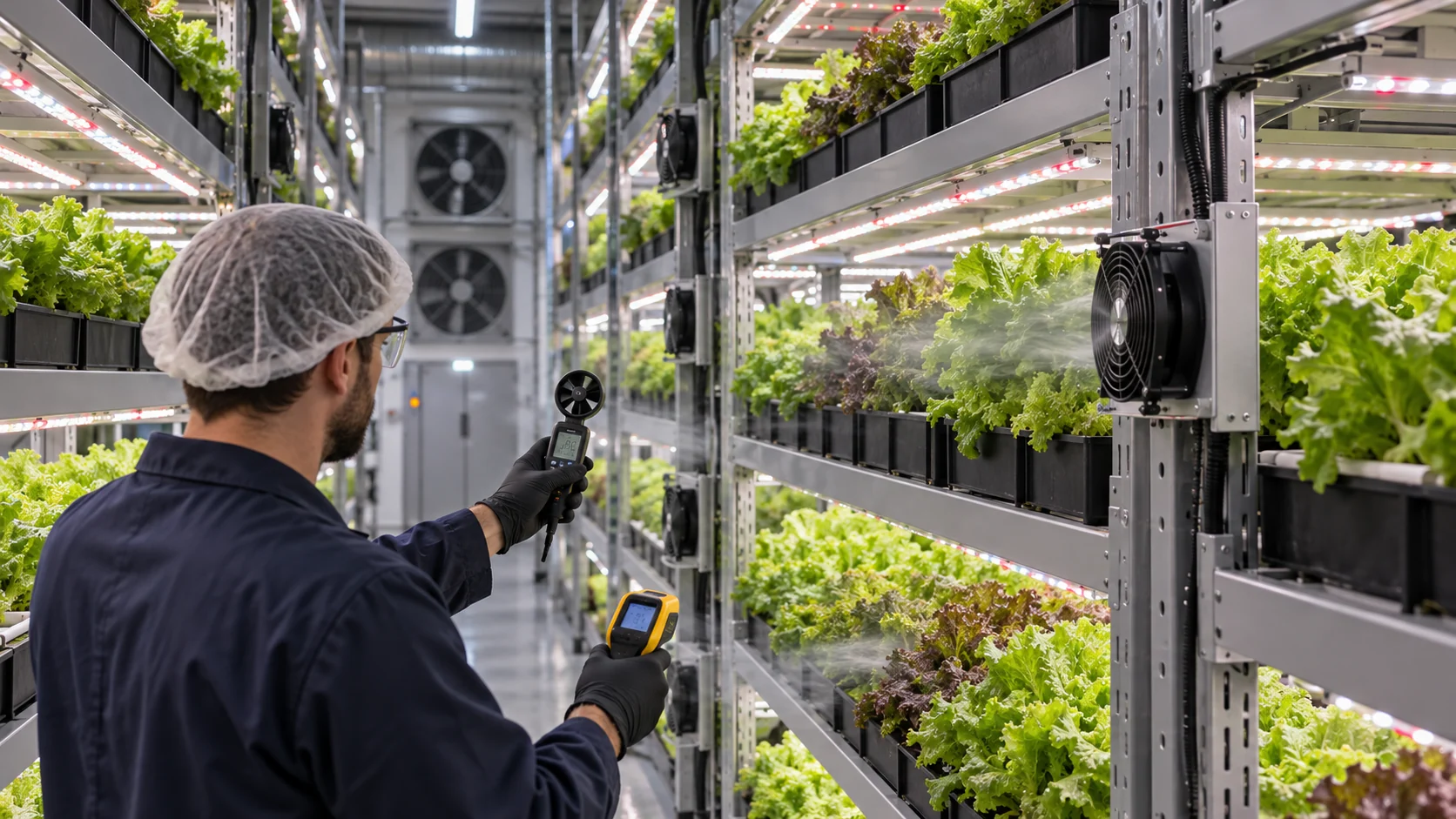
Case-style guide to vertical-farm rack airflow linking LED heat, leaf velocity, VPD, condensation, fan placement and energy before selecting a custom fan.
Read article →Robotics & Motion
Cooling for robot controllers, AMRs and cobots where battery heat, motion, vibration, sealing and low-noise operation meet.
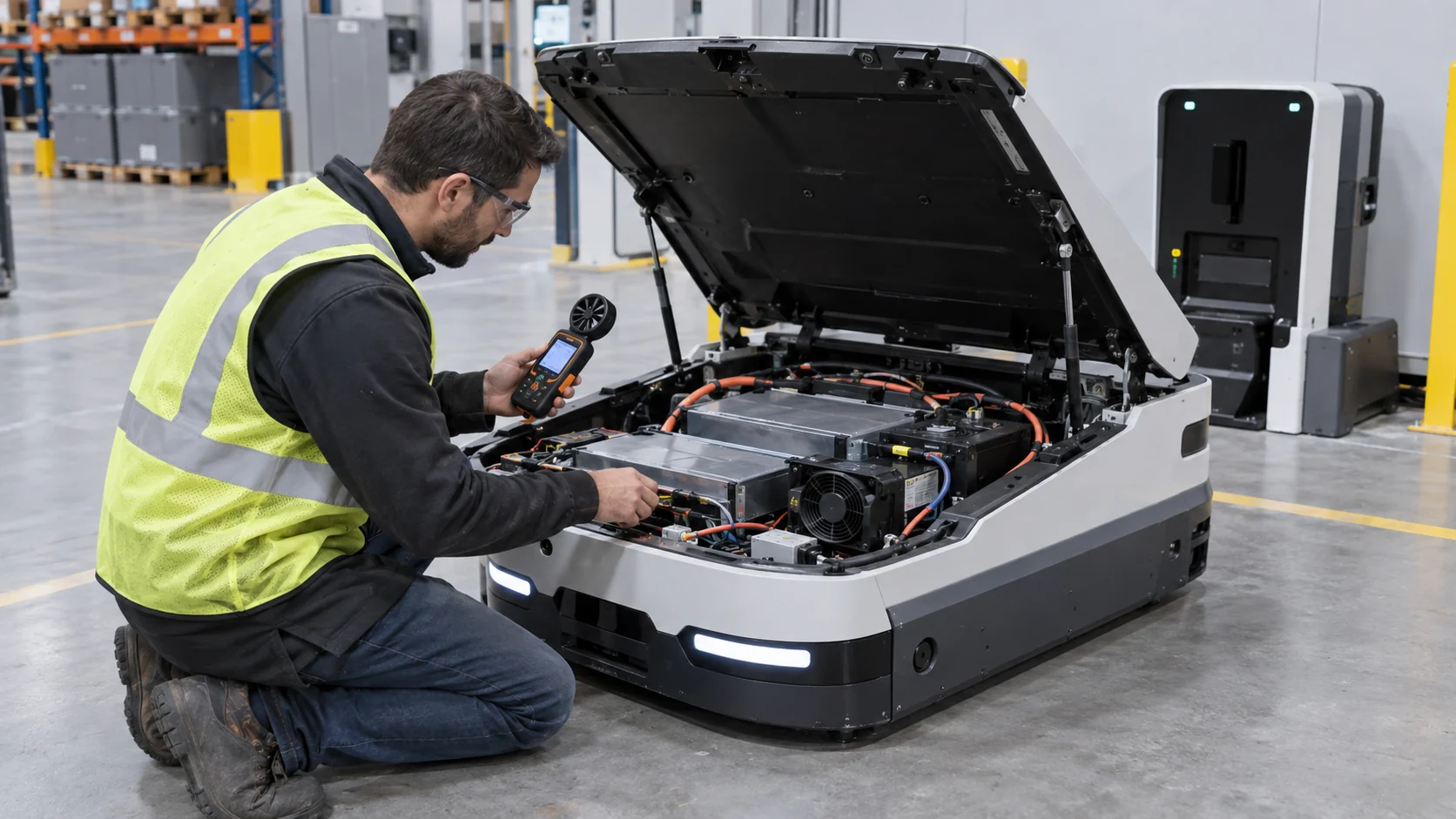
Validate AMR battery-pack cooling for charge heat, cold starts, warehouse dust, vibration and compact enclosure airflow.
Read article →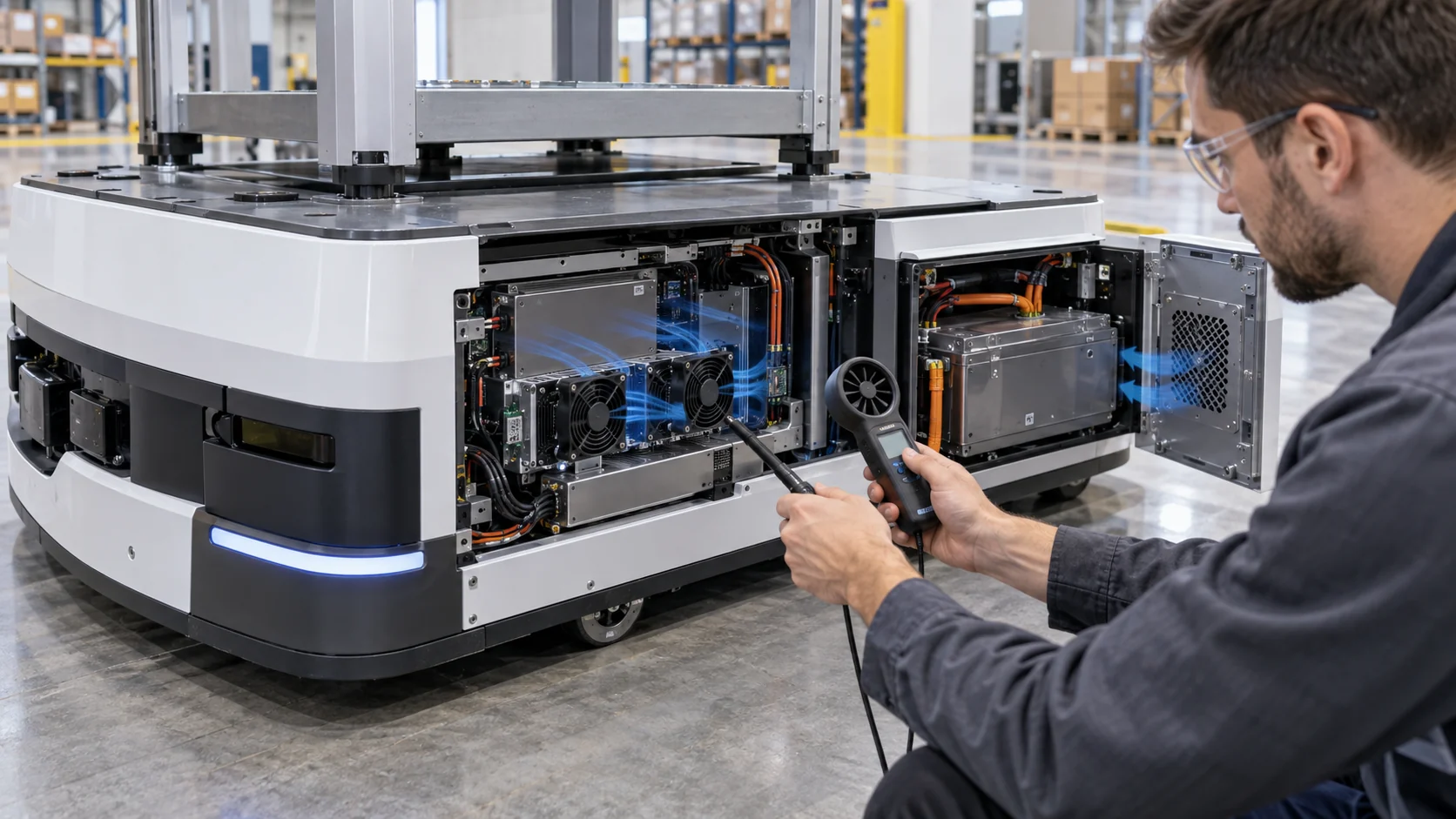
How engineers should balance sealed enclosure protection, filter pressure drop, fan operating point and vibration when cooling an AMR or AGV control cabinet.
Read article →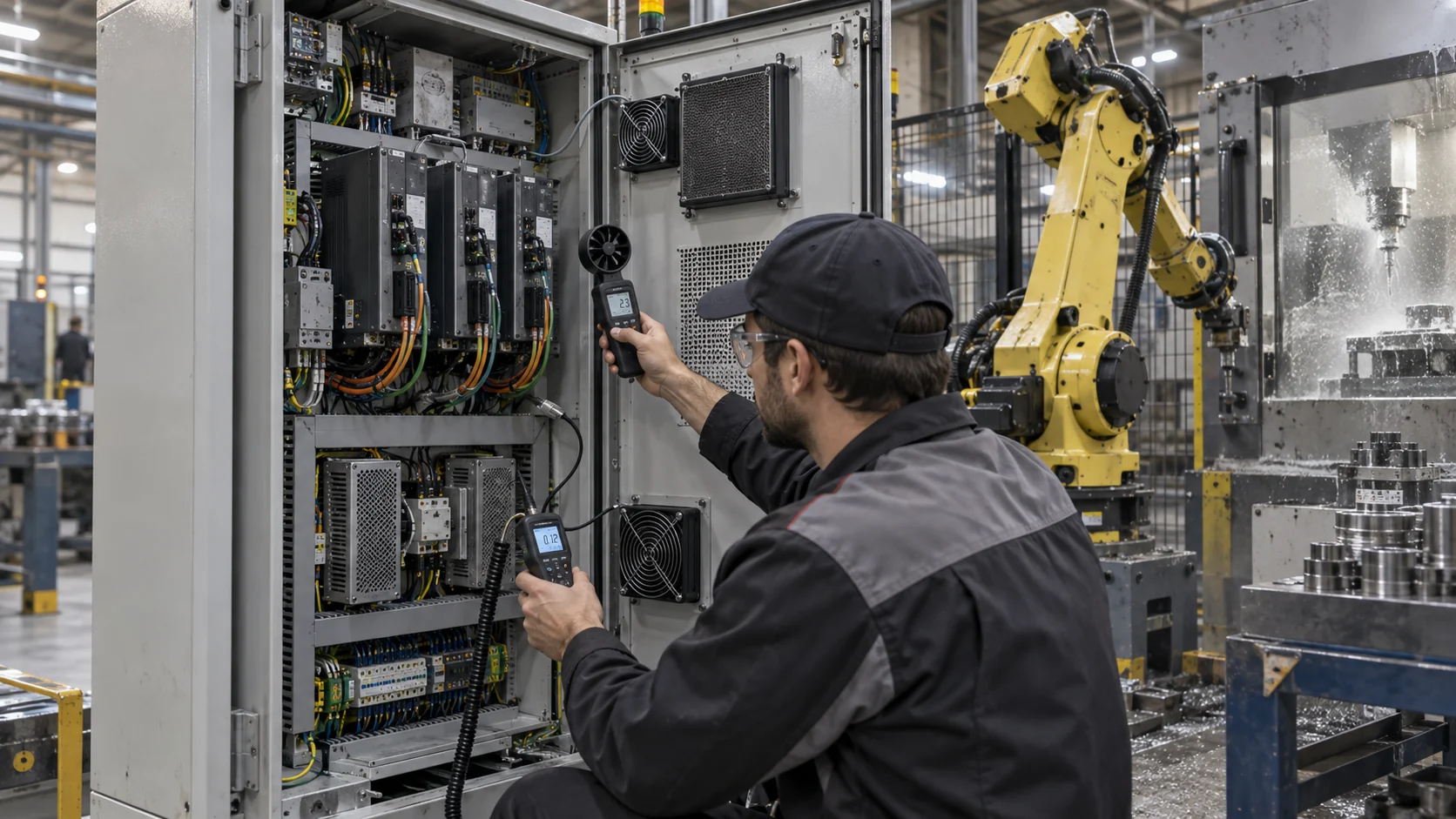
Selecting and validating cooling fans for robot controller cabinets and servo drives under vibration, dust, oil mist, filter loading and peak-motion heat.
Read article →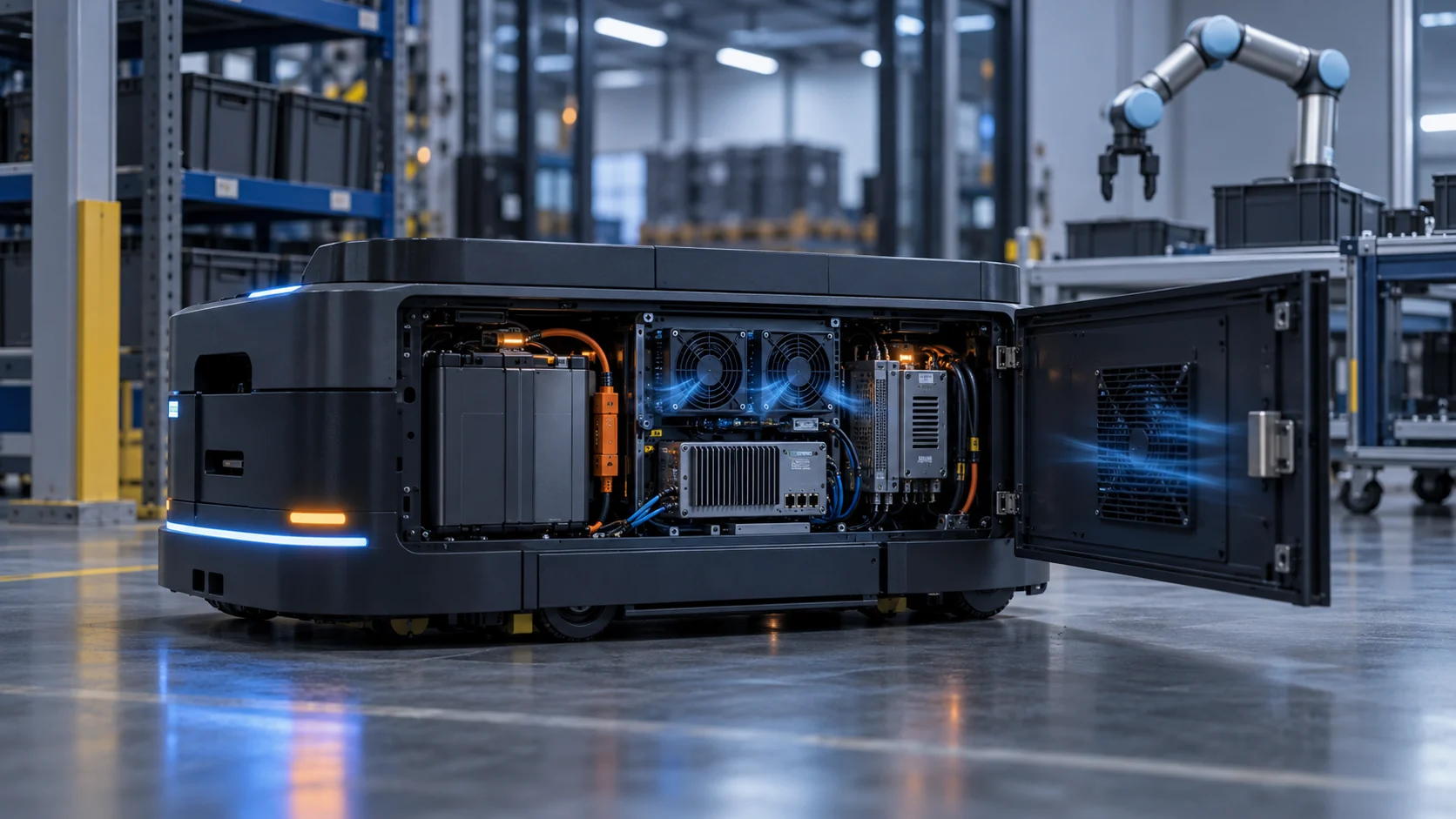
Cooling cobots and AMRs: validate battery heat, motor drives, edge AI, sealed housings, noise and motion duty in one compact air path.
Read article →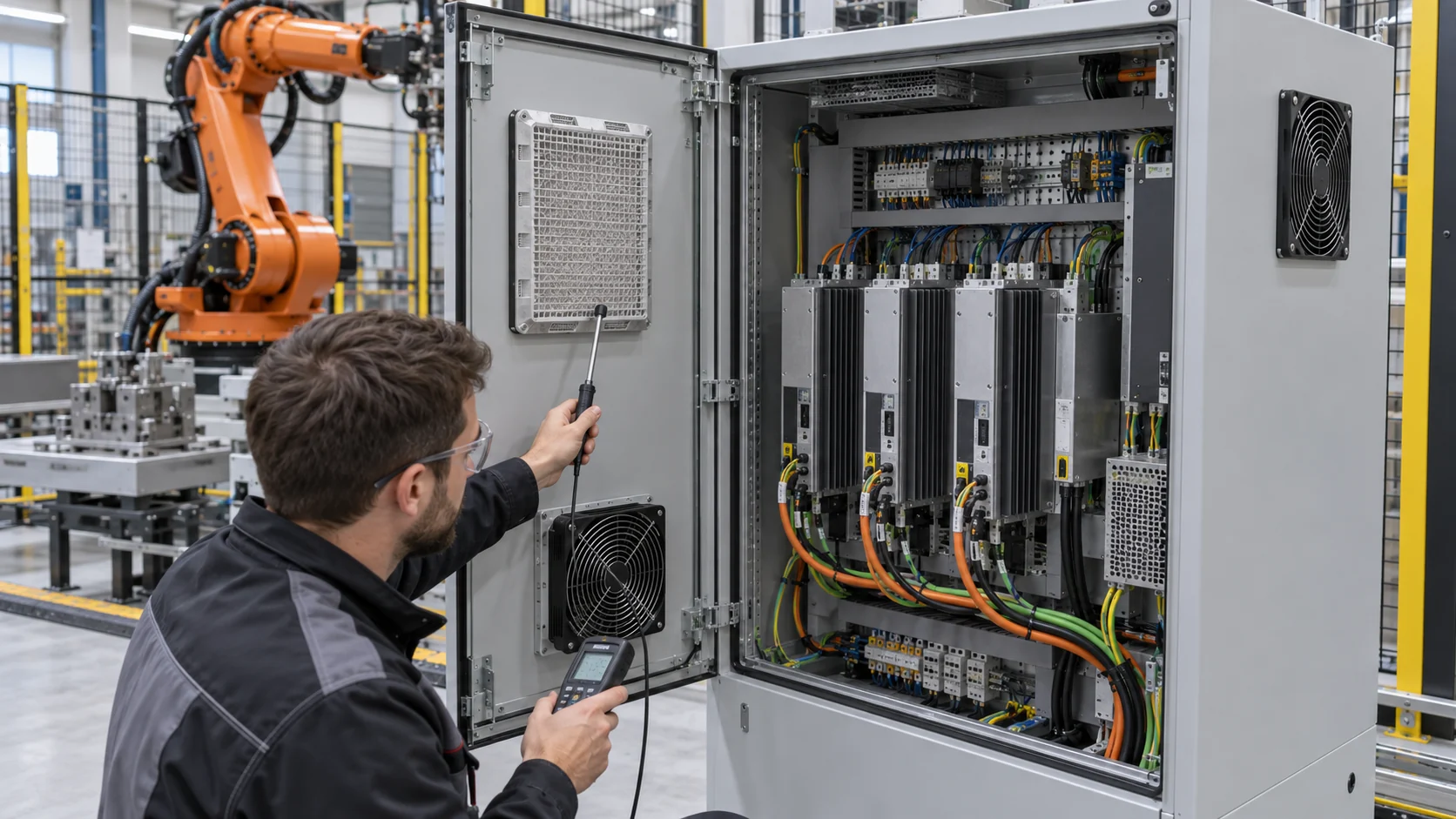
Cooling robot servo-drive cabinets when motion duty, regenerative braking, filters, ambient temperature and enclosure pressure shift the real operating point.
Read article →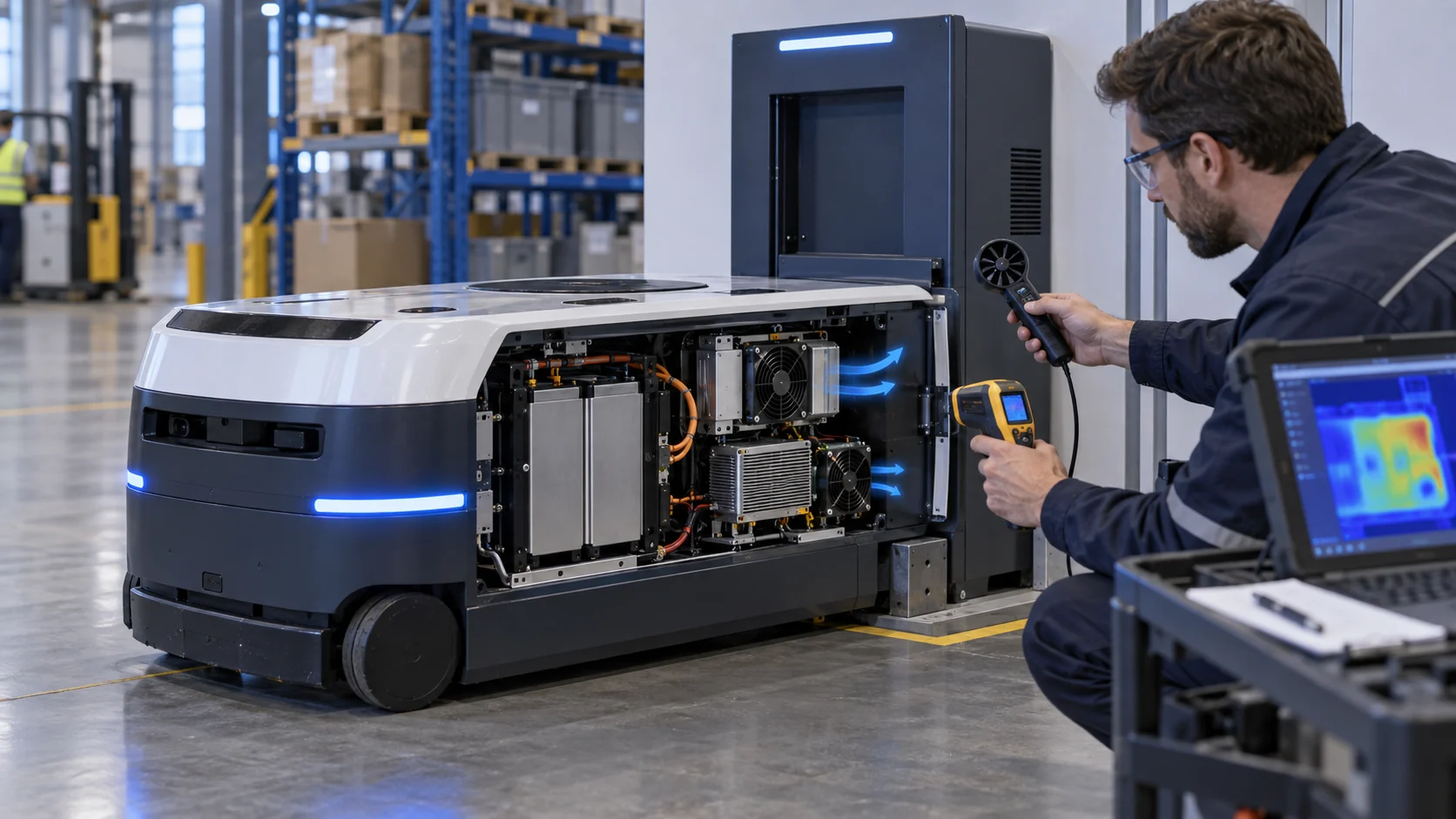
Cooling AMR charging docks and battery compartments: account for charge power, DC-DC loss, compact air paths, dust and fan control at the real operating point.
Read article →Telecom Cabinets
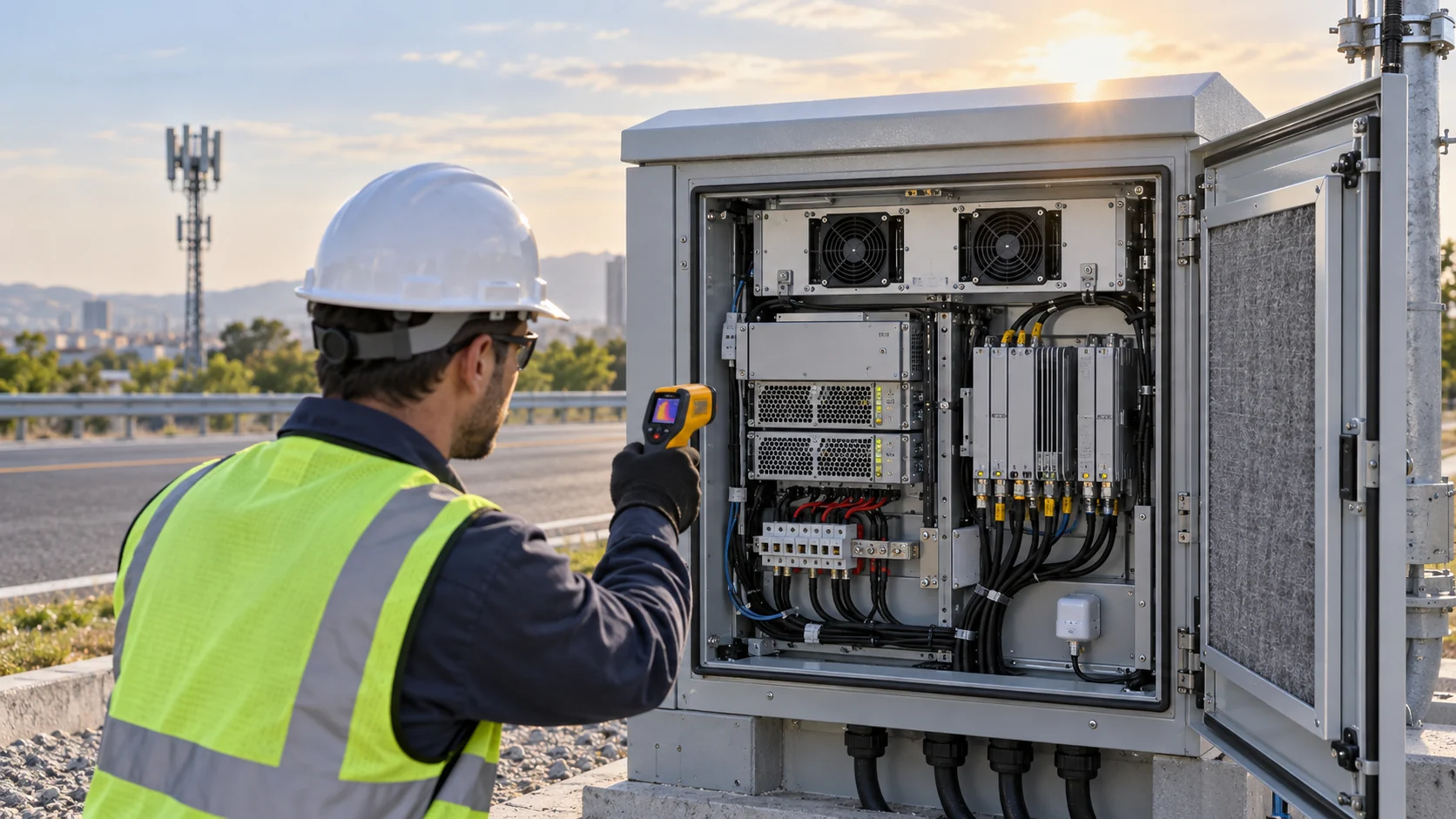
Outdoor 5G and edge-cabinet cooling decisions based on heat load, solar exposure, filter pressure, protection and service conditions.
Select cooling fans for coastal salt fog by matching corrosion protection, materials, bearings and validated exposure severity.
Read article →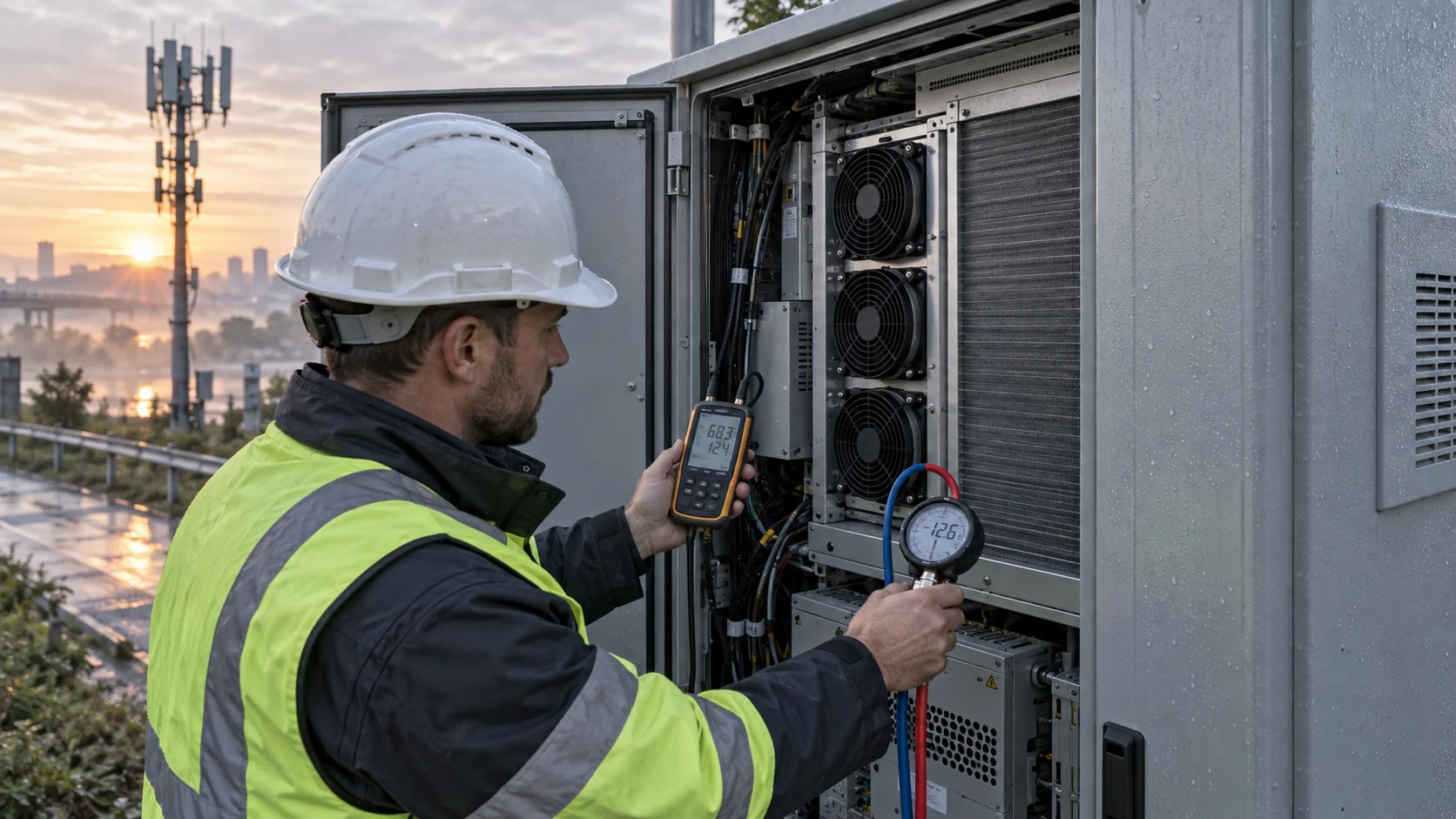
Validate outdoor telecom cabinet cooling against humidity, condensation, solar load, filter pressure, fan failure and service intervals.
Read article →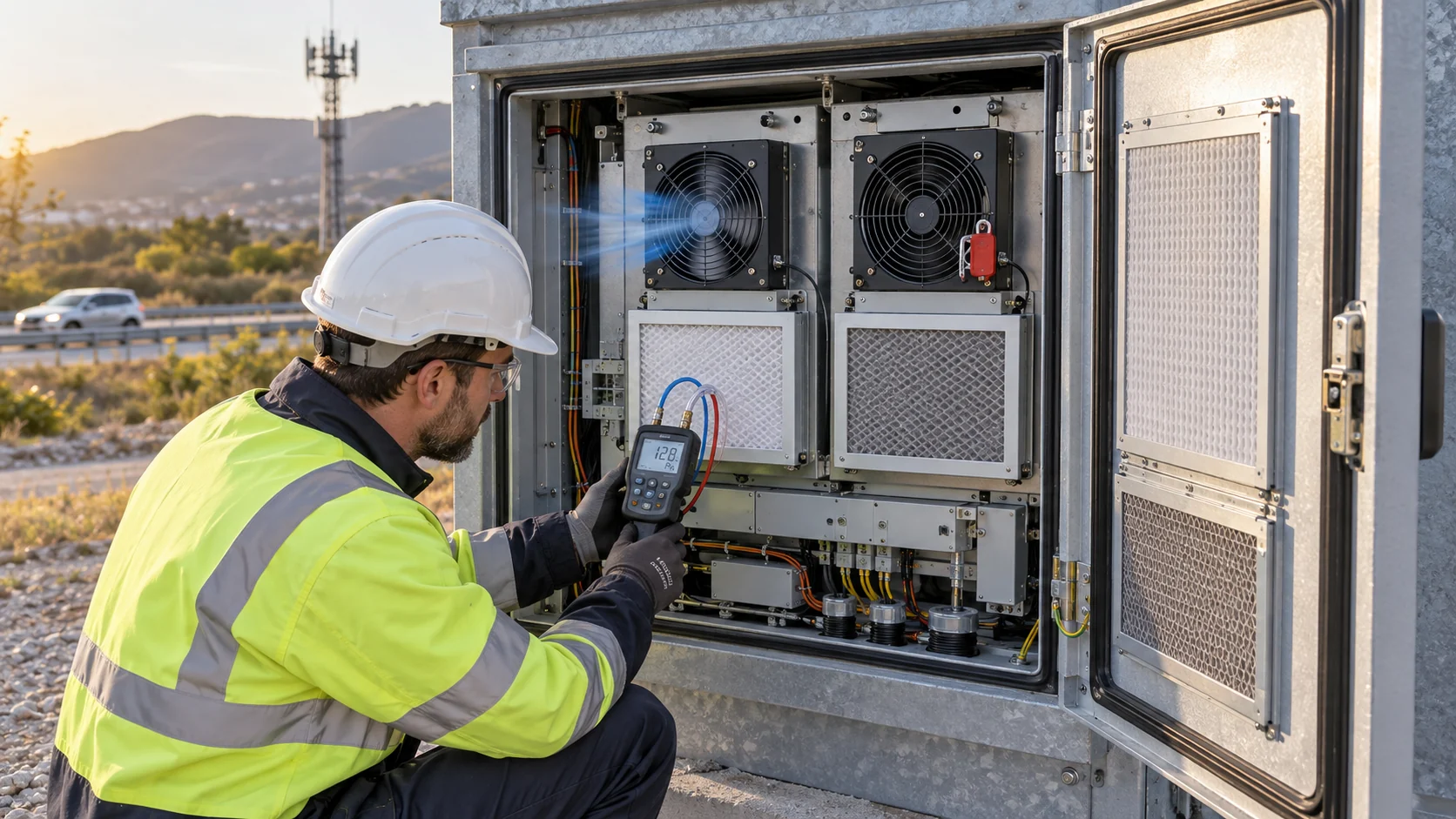
Validate 48V fan redundancy in outdoor 5G cabinets: reverse flow through stopped fans, filter loading, outdoor heat and service access in IP-rated cabinets.
Read article →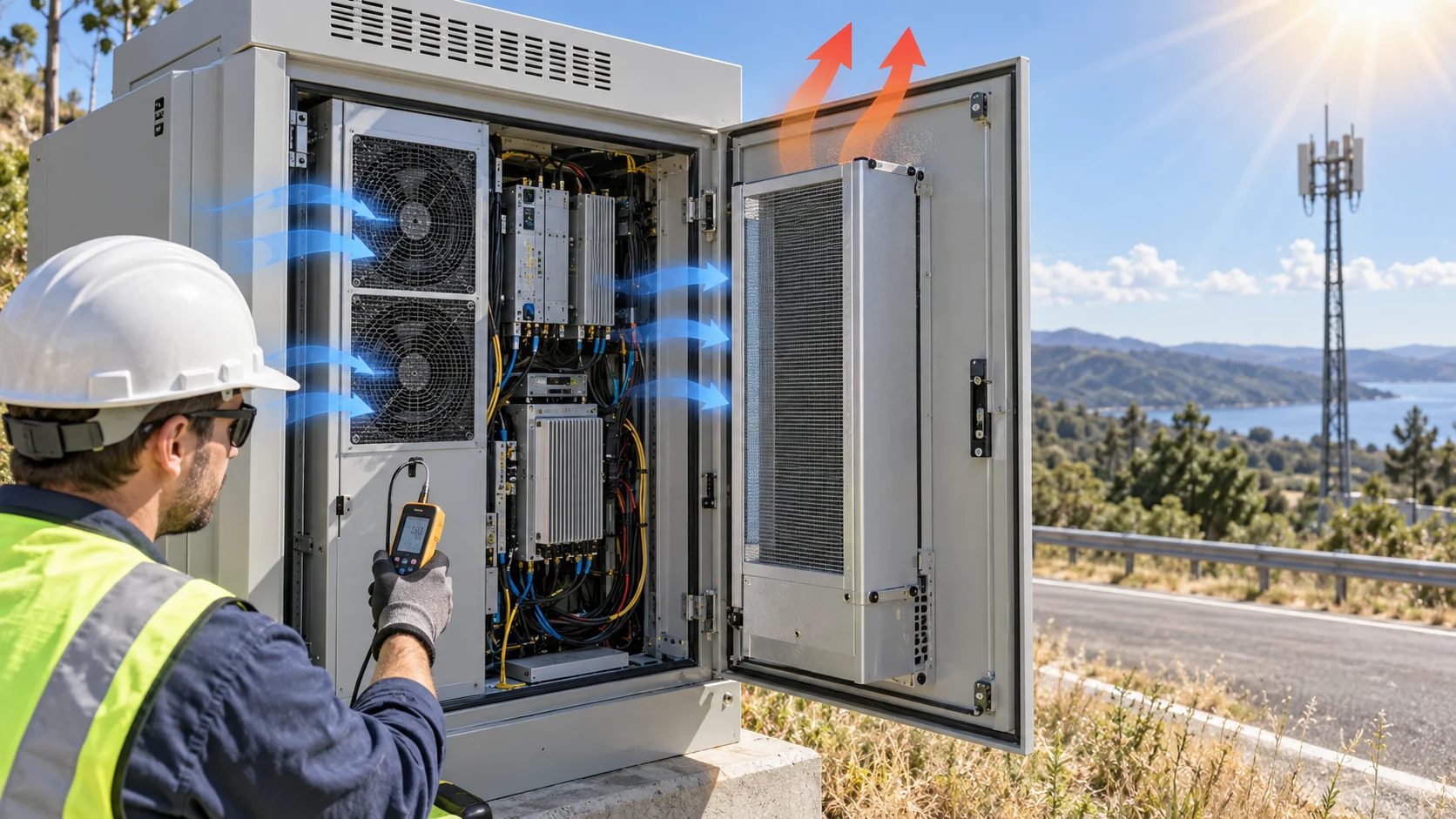
Outdoor cabinet cooling: when to use filtered ventilation, heat exchangers or AC — heat load, solar gain, ambient temperature, IP rating and pressure drop.
Read article →Outdoor 48V telecom cabinet cooling: connect solar heat, filter pressure, fan failure, humidity and condensation before selecting the cooling fan.
Read article →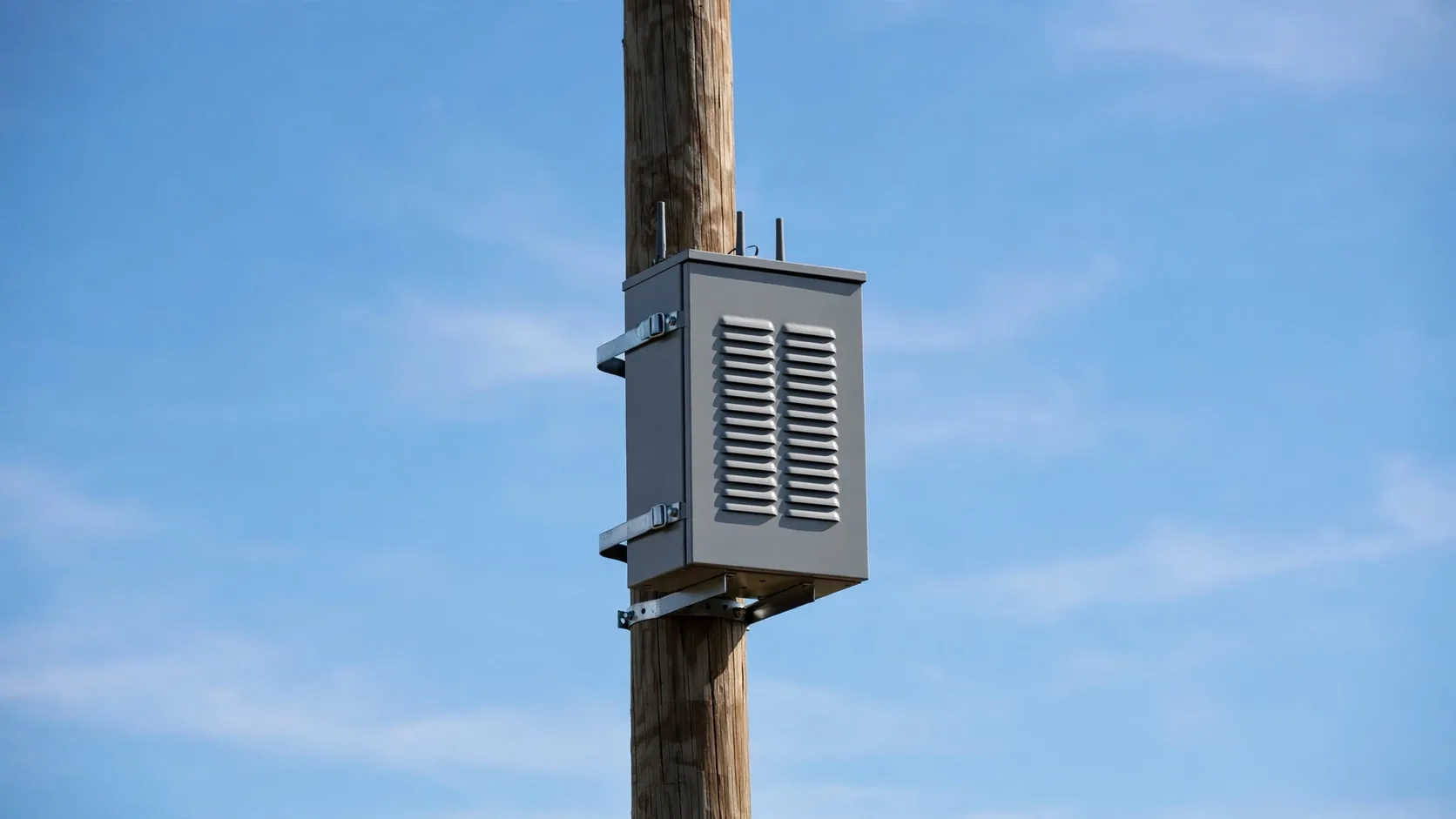
Why a 24 litre pole cabinet is not a small 5G cabinet: solar gain, filter pressure drop and fan life.
Read article →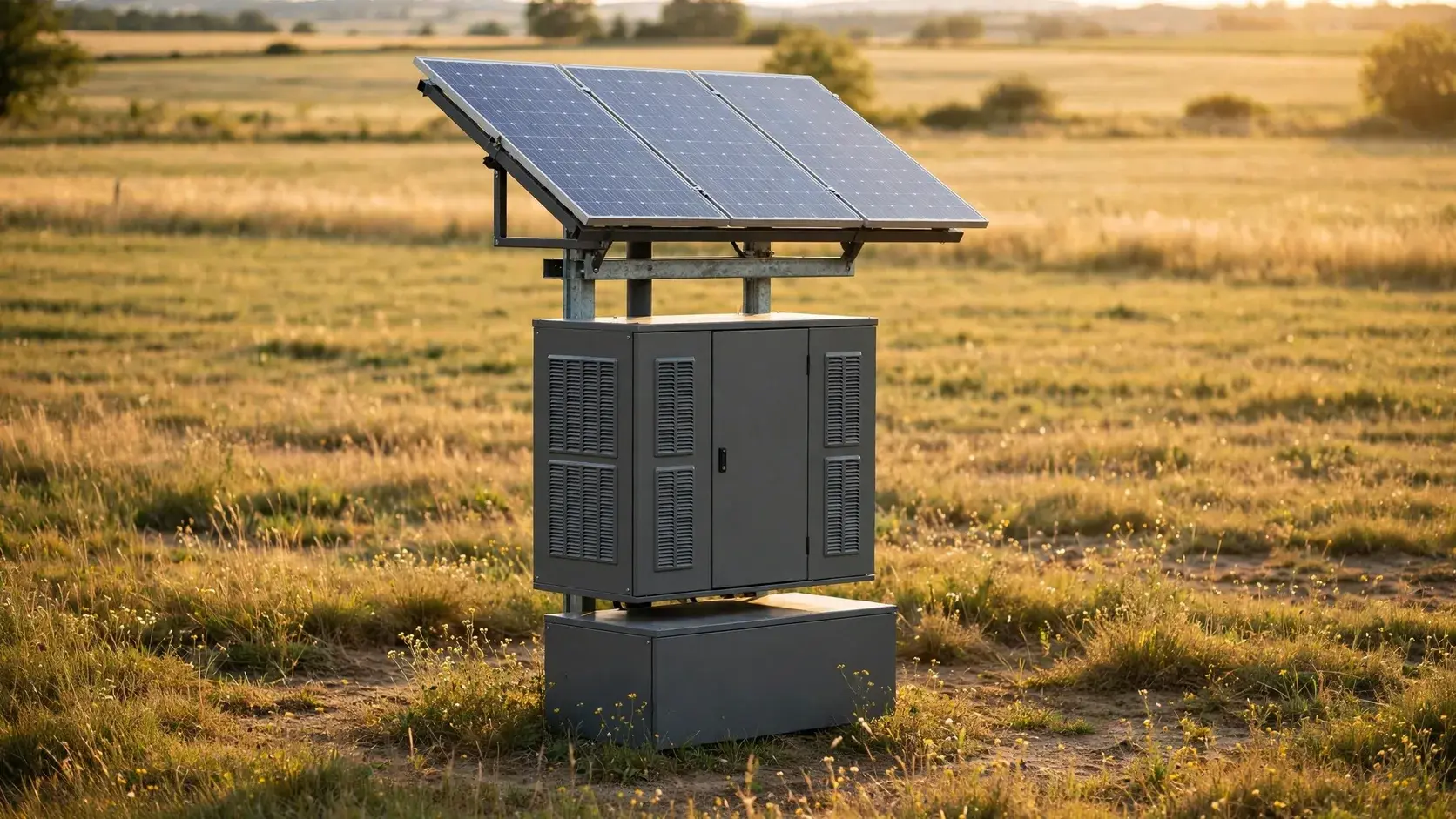
What a 10 W fan costs a solar cabinet: daily Wh, battery autonomy, array size and the cube law.
Read article →EV Charging
Thermal engineering for DC fast chargers, including air, liquid and hybrid cooling paths, fan validation and reliable derating control.
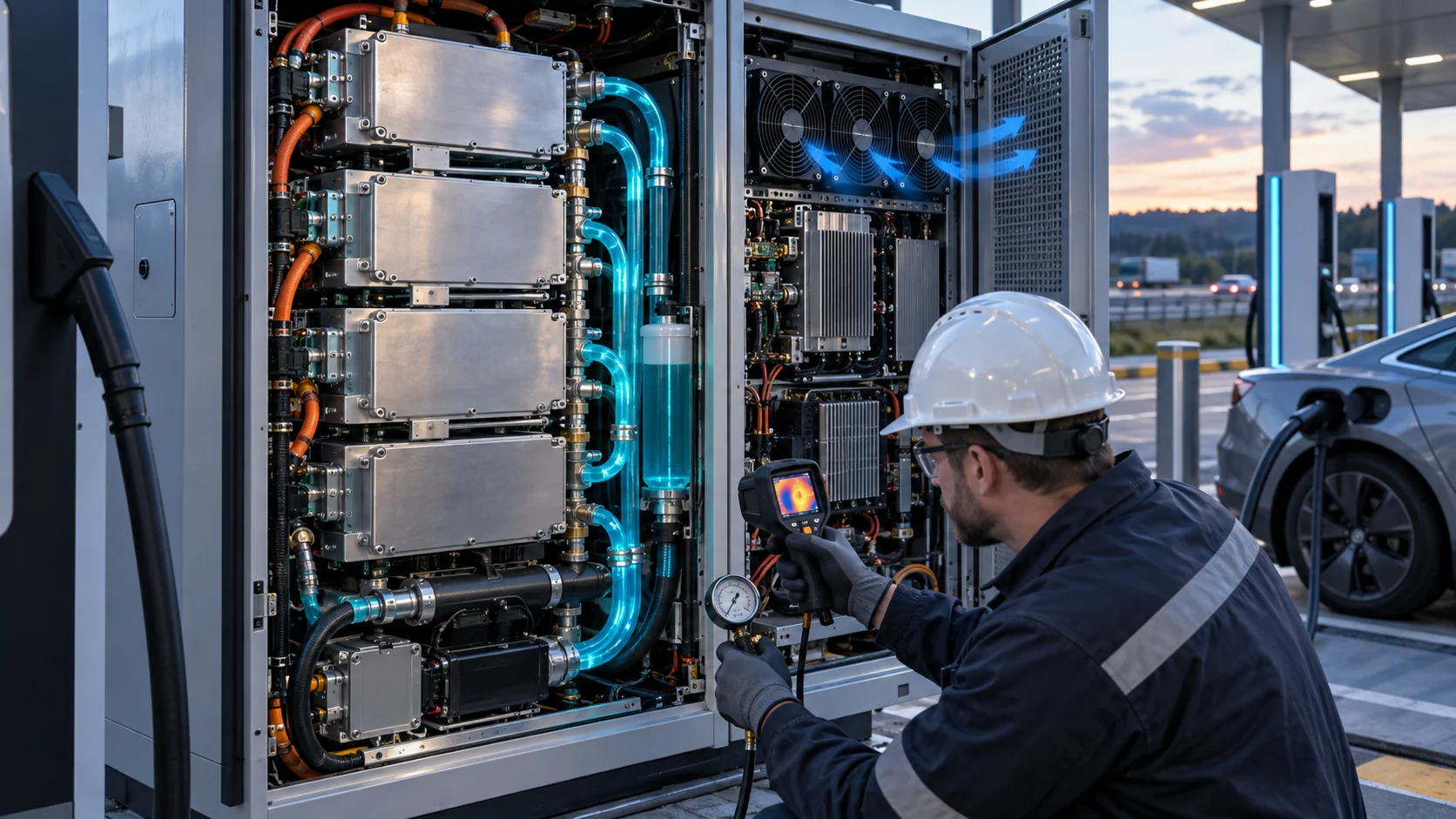
Select and validate fan banks around the liquid-loop heat rejection path for megawatt charging systems above 1 MW.
Read article →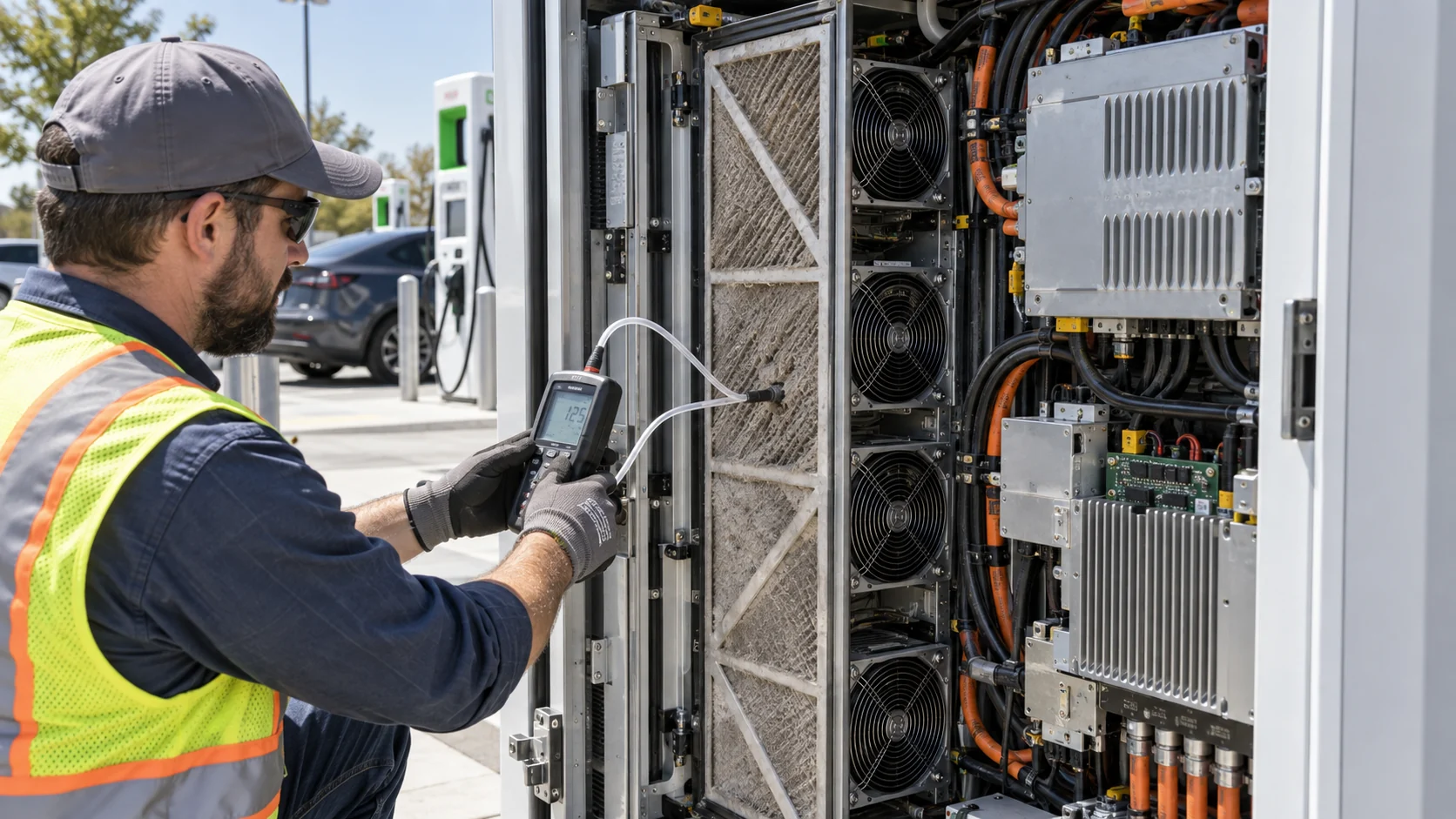
Diagnose EV fast-charger power loss through ambient temperature, filter pressure, fan margin, heat-exchanger resistance and control.
Read article →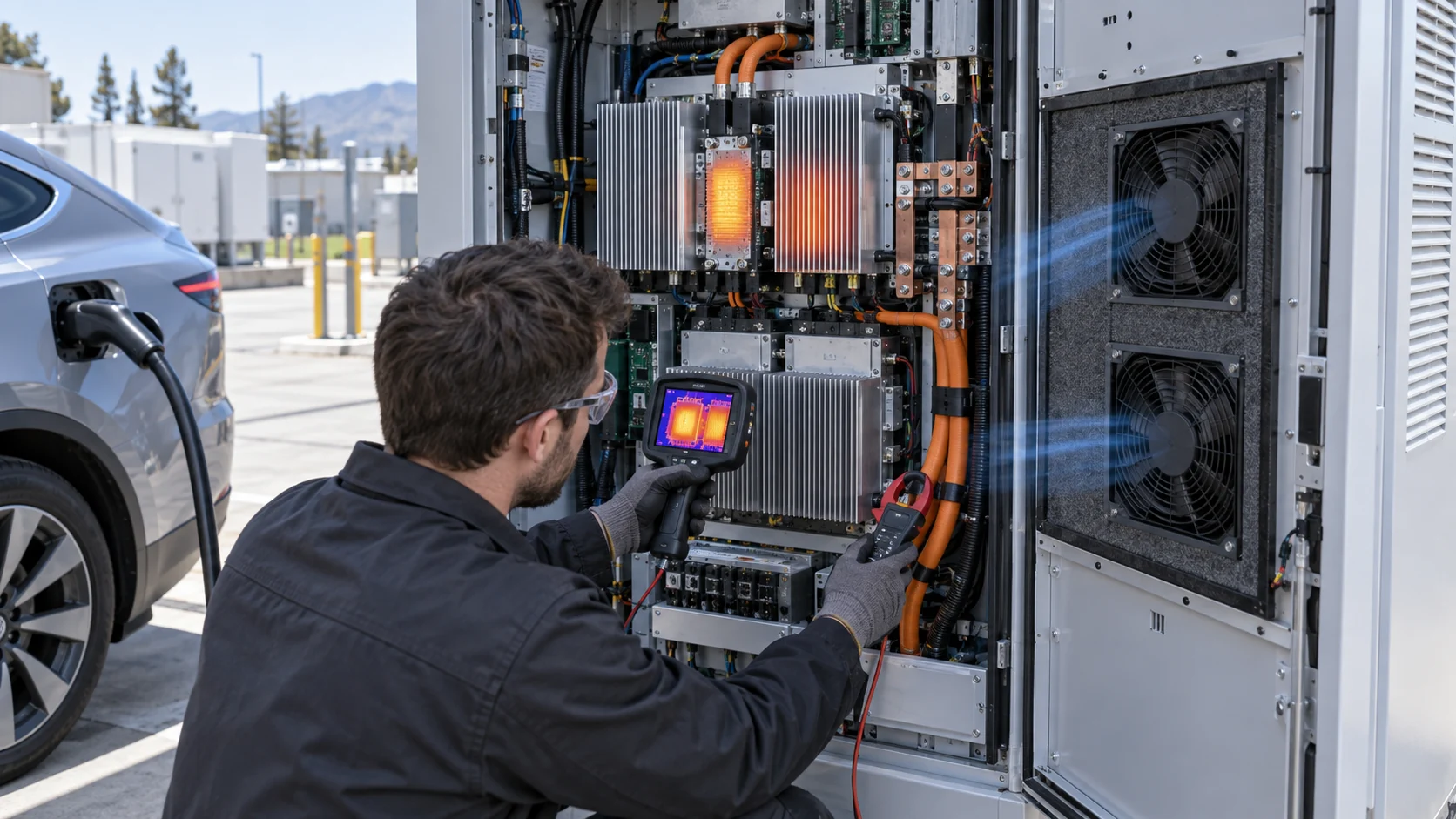
Convert EV charger power loss into an installed fan requirement, then validate heatsink airflow, pressure, PWM control and thermal derating in the real cabinet.
Read article →Fan cooling for 60–350 kW EV chargers: select fans when SiC modules, liquid cold plates, cabinet air paths, noise, dust and derating must work together.
Read article →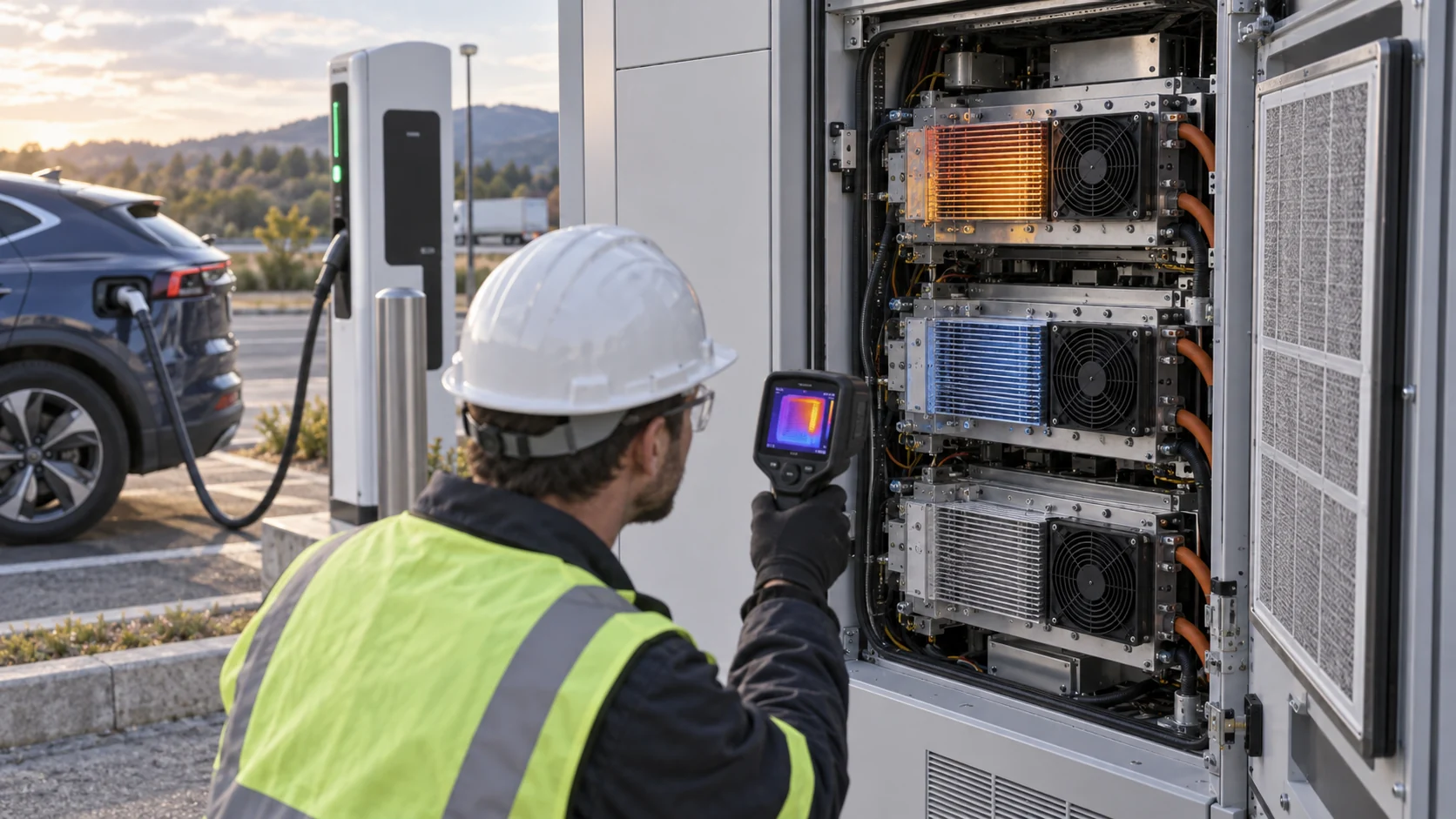
EV charging-cabinet validation: convert power-module losses into fan duty, test variable power, filter pressure, fan control and derating before release.
Read article →Solar Inverter
Thermal management for PV string and central inverters: sealed versus ventilated cabinets, derating curves, dust, altitude and a 25-year fan duty.
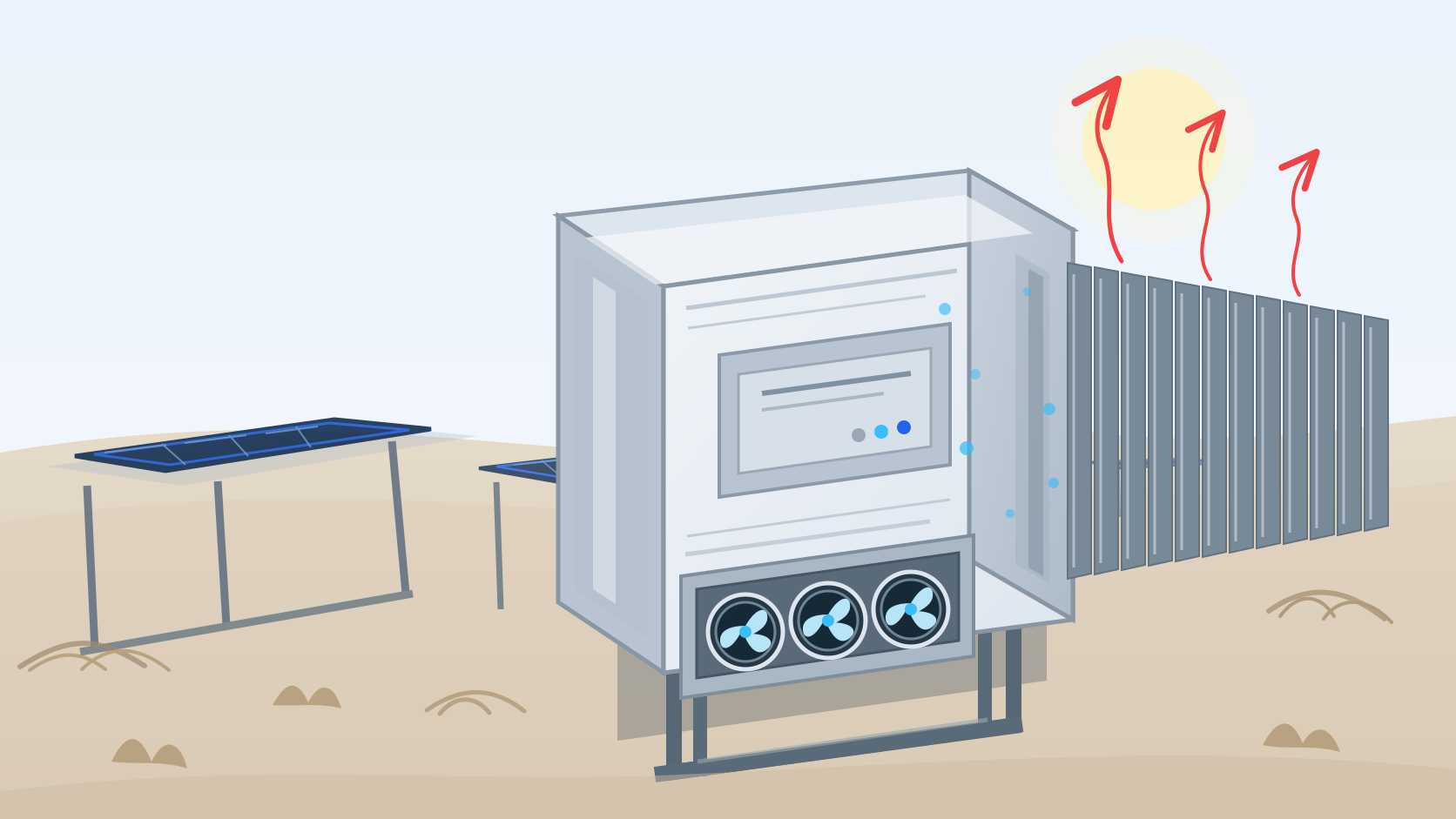
Select solar-inverter cabinet cooling fans for 45 C ambient, dust loading, IP65 sealing and long service duty.
Read article →Outdoor LED Display
Thermal management for outdoor LED screens and signage: solar gain, sealed IP65 cabinets, filtered forced air versus air conditioning, condensation and brightness derating.
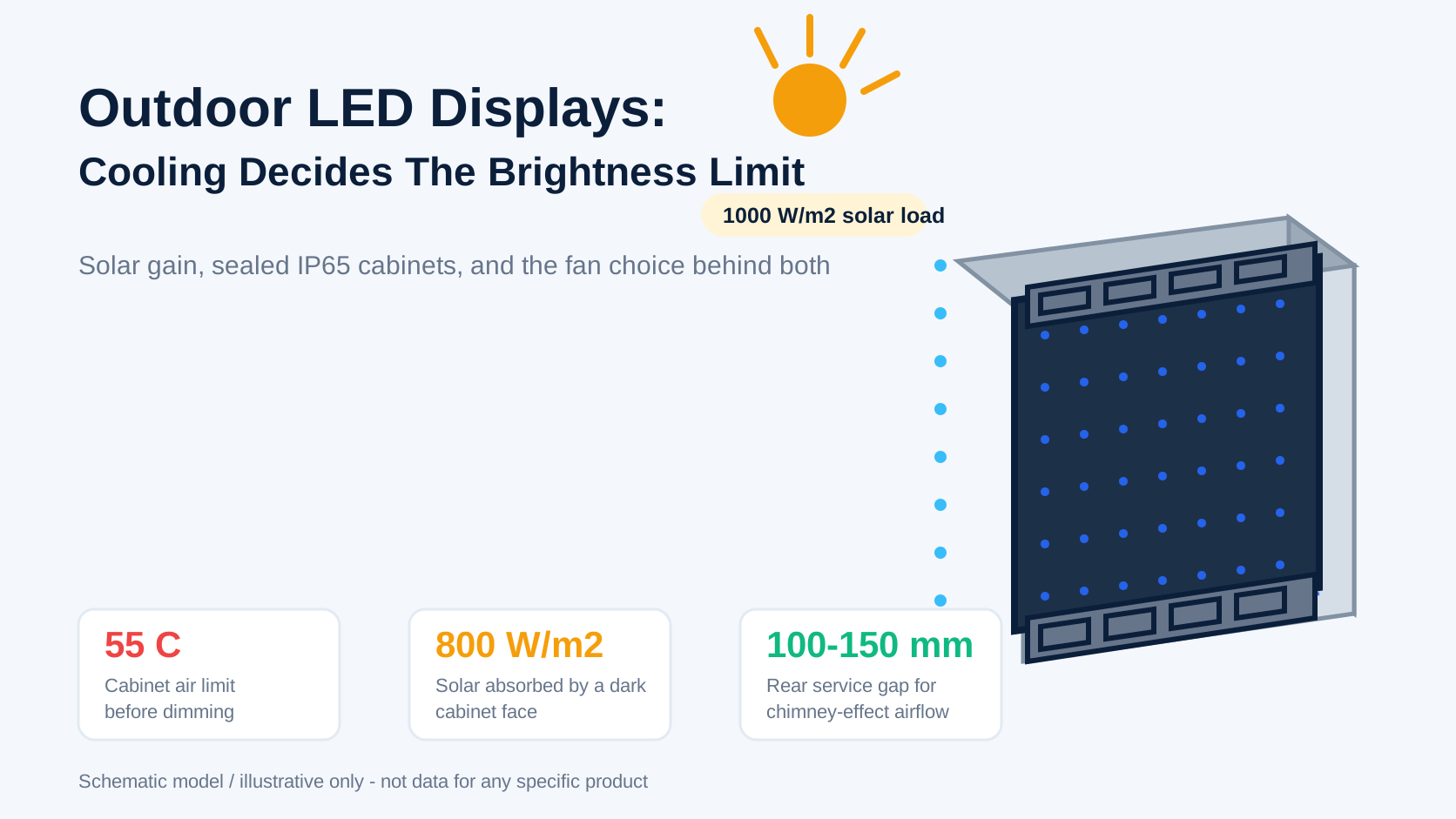
Select outdoor LED display cooling fans for solar gain, IP65 sealing, cabinet temperature and brightness protection.
Read article →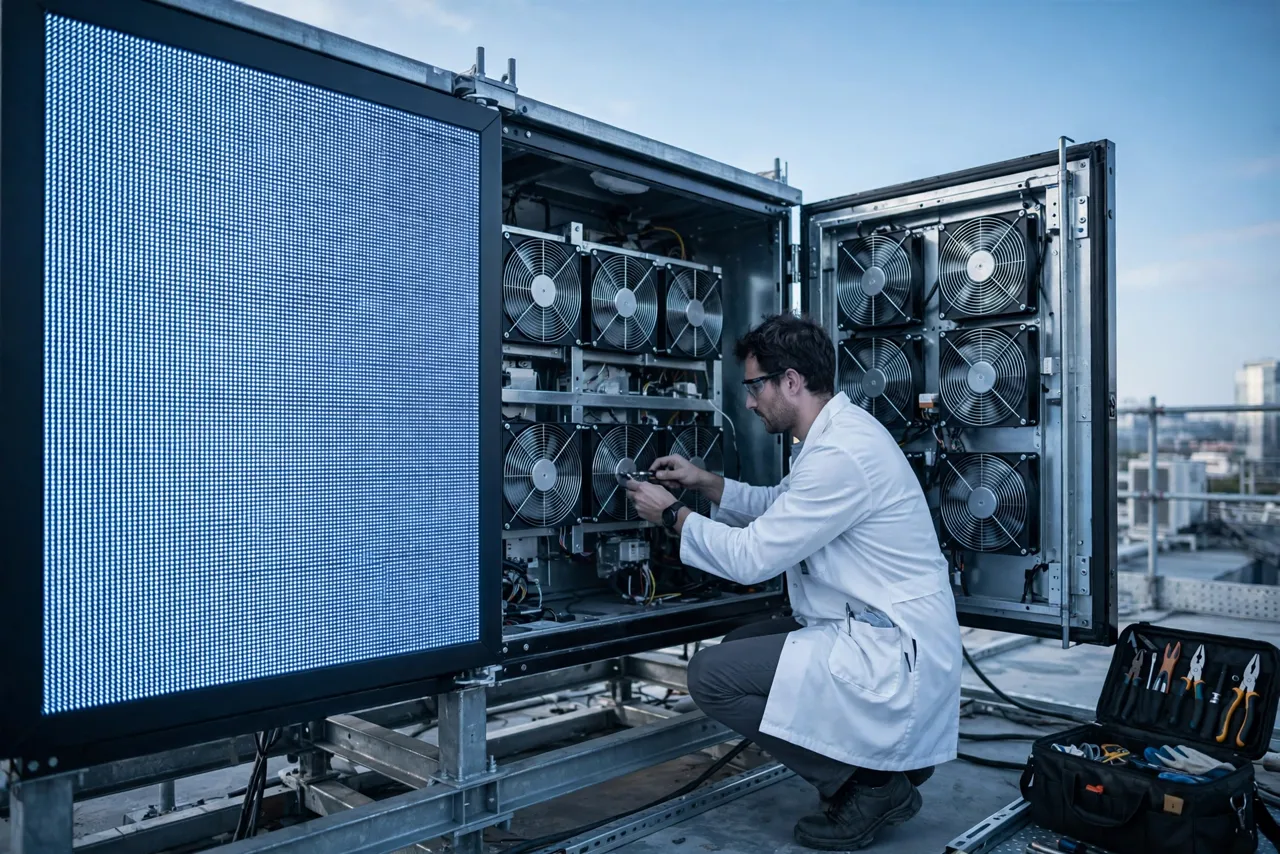
Select outdoor LED display fans around solar load, brightness heat, IP, airflow and maintenance conditions at the installed duty point.
Read article →