A Matching Frame Does Not Prove a BESS Replacement
The replacement must meet the installed cooling duty, not just the original fan's outer dimensions.
A BESS fan may sit behind a filter, grille, coil, duct or battery-module restriction. When an OEM part becomes costly, unavailable or obsolete, compare candidates at the same voltage, speed, air density and flow-pressure operating point. Free-air CFM and maximum static pressure are endpoints of a curve, not proof of the installed duty; two fans with identical dimensions can deliver airflow differing by well over ten percent at the same system resistance.
The reasons to replace are practical: the OEM part got expensive, its lead time stretched past the maintenance window, or the maker discontinued it. Those reasons put pressure on the schedule, and schedule pressure is exactly when a dimension match gets waved through. Writing the duty record before the replacement search starts is what keeps the schedule from deciding the engineering.
MEGA Tech is a custom cooling-fan manufacturer. We can review a current SANYO DENKI, Delta, SUNON, NMB or ebm-papst reference part and develop a more cost-competitive candidate where the required frame, pressure/airflow duty, interface and validation evidence can be matched. A part-number cross-reference is an engineering screen; sample validation decides whether a replacement is suitable.
Measure the Duty Point Before You Shop for a Number
The nameplate describes an intention from years ago; the installation is the real specification.
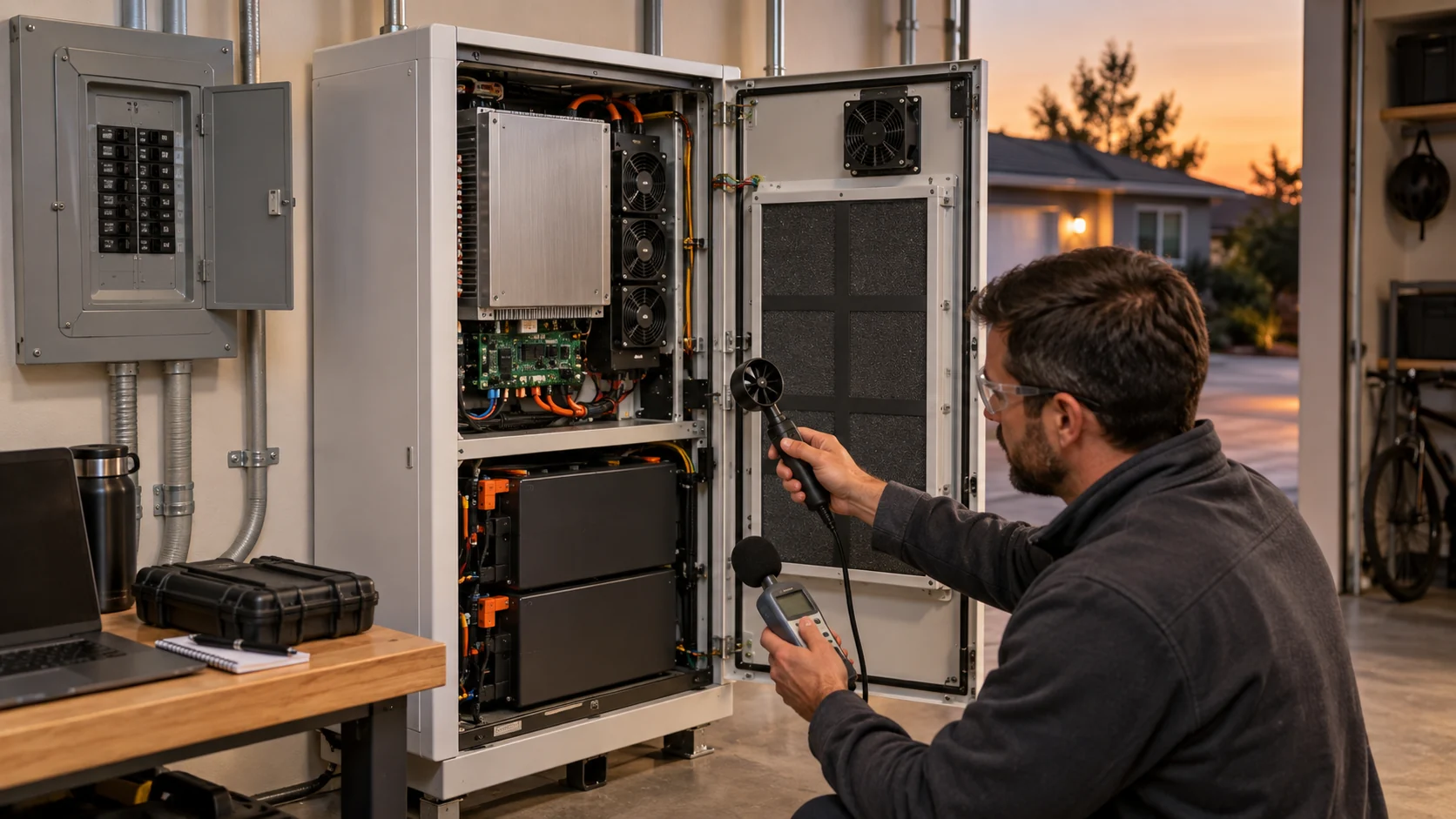
Field-replacement guidance is blunt about this: measure what the fan is actually doing rather than trusting the old label. Record airflow at the grilles or by traverse, static pressure across the fan with clean and loaded filters, absorbed power with a clamp meter over a working day, speed with a tachometer, and the ambient temperature and altitude needed to attach a density to every number. Twenty years of service changes, added screens and aged filters will have moved the duty point away from the day-one drawing.
Photograph everything before the old fan comes out: the label with its full suffix, mounting holes and depth, inlet ring, cable routing and connector positions. Rotation catches people out because it can be quoted from either end of the shaft; always state which end you measured from. A page of measured data and interface dimensions turns a week of detective work into an afternoon, and it is exactly what a manufacturer needs to propose a candidate honestly.
When measurement is impossible, because the unit is sealed or the site unreachable, estimate the duty point from the system instead: sum the filter, coil and duct resistance at the design airflow from component data, and state the assumption on the record. An estimated point marked as estimated is usable; an estimated point dressed up as a nameplate number is how a marginal candidate gets approved.

Build a Like-for-Like Duty Record
A defensible replacement record has six linked checks, and every check carries its own evidence.
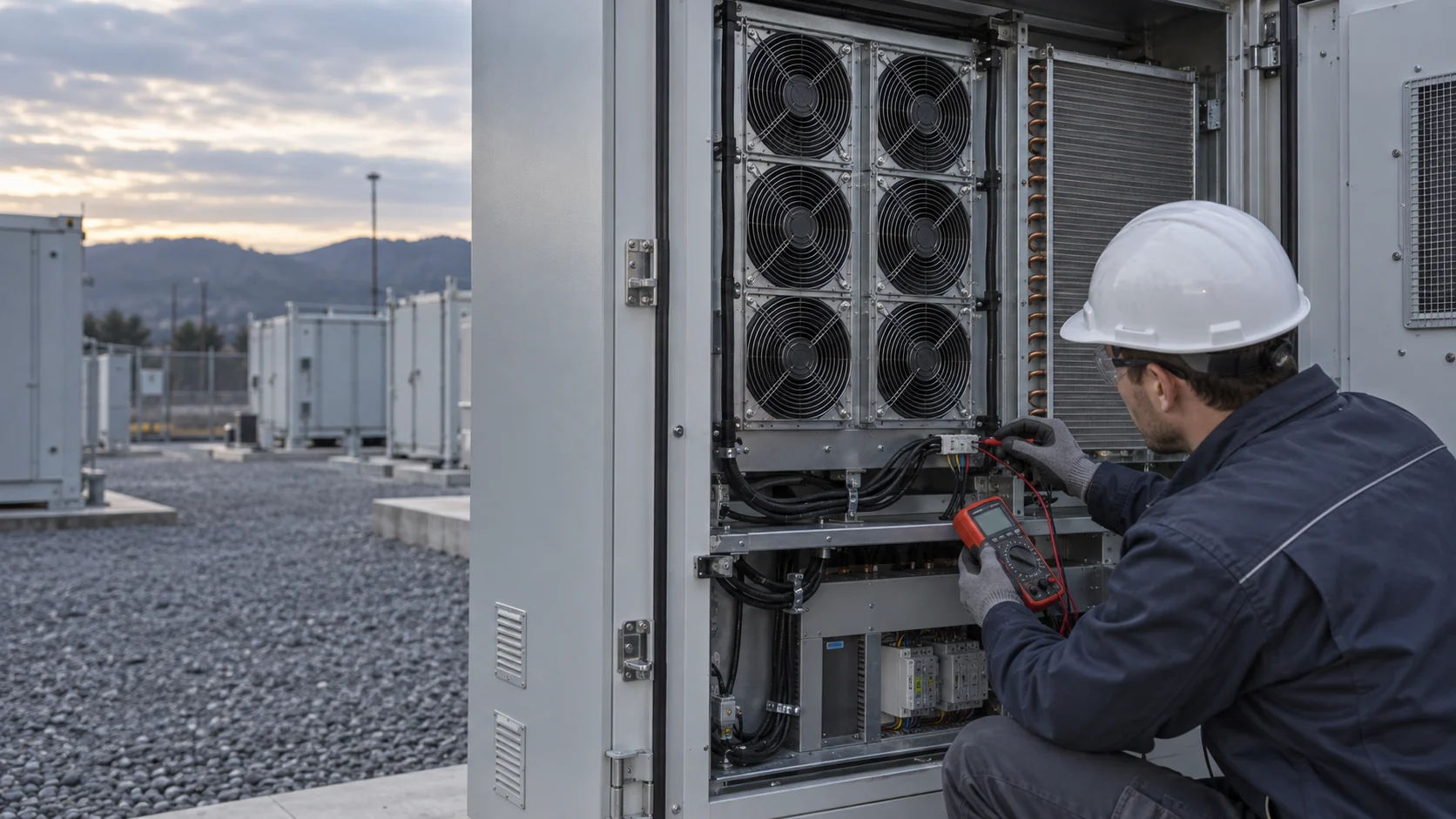
A clean filter on a mild day is only one state. Include the specified loaded-filter or maintenance condition, high expected inlet temperature, normal and relevant fault states. Field maintenance guidance confirms that fan replacement is a qualified-person task and that a failed cooling fan can affect BESS efficiency or cause derating; the exact isolation and safety procedure belongs to the system manufacturer and site rules.
Keep the six checks together. A candidate that passes airflow but fails the connector definition has not passed; one that matches electrically but was never run against a loaded filter has not passed either. The record is what lets a second engineer approve the same replacement a year later without repeating the work.
| Check | What to match | Evidence |
|---|---|---|
| Air duty | Required flow at stated pressure | Fan and system curve or representative measurement |
| Thermal result | Inlet, return and named hotspot temperatures | Comparable duty run |
| Mechanical | Frame, thickness, direction, mounting and service access | Drawing and installed fit check |
| Electrical | Voltage range, startup current, PWM/FG/RD, connector and cable | Power-on and control test |
| Environment | Temperature, contamination, vibration and duty cycle | Model specification and site condition record |
| Life and support | L10 at the installed temperature, availability, price at volume | Quoted life basis and supply terms |
The Electrical Interface Is Where Drop-In Hopes End
Wires that fit are not signals that work; the control conversation decides most replacement outcomes.
Start with the connector: housing, pitch, pin order and wire colors can differ between fans that look identical from the front. Then the signals. A tach output is commonly two pulses per revolution, but not always, and a controller expecting a different pulse count will read the wrong speed. PWM control differs in frequency and polarity between families; an alarm or RD line can be open-collector, pull-high or a different logic level, and a failsafe behavior that runs full speed on signal loss in one fan may hold last command in another.
Startup and low-speed behavior belong in the same conversation: inrush current against the site supply, the minimum commanded speed the controller can rely on, and what the fan does at the voltage extremes of the DC bus. Confirm all of this against the actual controller before samples arrive, because these are the differences a photograph can never show.
Cable length and routing finish the list. A longer lead changes voltage drop at startup and can pick up noise that corrupts a tach signal; a relocated connector can foul the service cover; an unshielded PWM run next to power cables can glitch the command line. These are installed-condition checks, and they belong on the sample checklist next to the curve.
- Connector housing, pitch, pin order and wire colors, photographed and drawn.
- Tach pulses per revolution and the signal level the controller expects.
- PWM frequency, polarity and the behavior below minimum commanded speed.
- Alarm or RD output type and the failsafe behavior on signal loss.
- Startup current, operating current and behavior at the DC bus extremes.
Interactive Model: Compare the Replacement Evidence
Select a check to see why a lower purchase price cannot replace a working-point validation.
The model is an engineering checklist, not an approval calculator or a safety procedure.
What the Sample Run Must Prove
Fit one, measure it, and only then order the rest.
The sample goes into the representative path: the real louver, filter, coil or heat sink, at the filter state you will defend. Compare measured airflow, pressure and electrical power against the original fan's readings taken the same way, not against a datasheet. Check noise as installed rather than in free air, and run the control through its whole range, because that is where interface differences show up: dead spots below minimum command, wrong tach counts, alarm lines that never assert.
Agree the pass criteria before the sample arrives. Decide in advance what airflow shortfall, temperature rise or noise increase would reject the candidate, and who signs the record. A validation without pre-agreed limits drifts toward whatever result already feels acceptable, which is how a marginal part becomes a fleet decision.
Listen to the candidate too. Installed sound carries a different character from free-air sound: a fan operating near its limit at the far right of the curve adds a tonal edge the original never had, and new bearing noise in the first week is a sample-level defect, not a site characteristic. If vibration trend data exists from the predictive-maintenance program, capture a baseline on the candidate the day it goes in, so the comparison a year later starts from its own signature.
Write the acceptance record with the same care. Filter state, inlet temperature, command points, measured airflow, power, speed feedback and temperatures belong in one document, with photos of the installed candidate. This is the record that turns a cost conversation into an engineering decision, and it is what protects the site when the third-party question arrives years later.
When the Honest Answer Is No
Some replacements fail, and saying so early is the valuable outcome.
Where no candidate meets the required duty, the correct outcomes are redesign, a different fan technology, or retention of the approved part with a supply plan. An obsolescence program works better as maintenance than as an emergency: knowing which fans are single-sourced, which have long lead times and which have approved alternates turns a line-down event into a routine order.
A replacement cycle is also the cheapest moment to upgrade. Swapping a fixed-speed AC fan for an EC unit commonly saves around 30 percent of fan energy and adds speed control the original never had, provided the electrical interface work above is done first. The goal is not the lowest sticker price; it is the lowest validated cost per delivered airflow-pressure duty over the site's life.
A Representative Sample Path
A worked example shows what the validation loop looks like in practice.
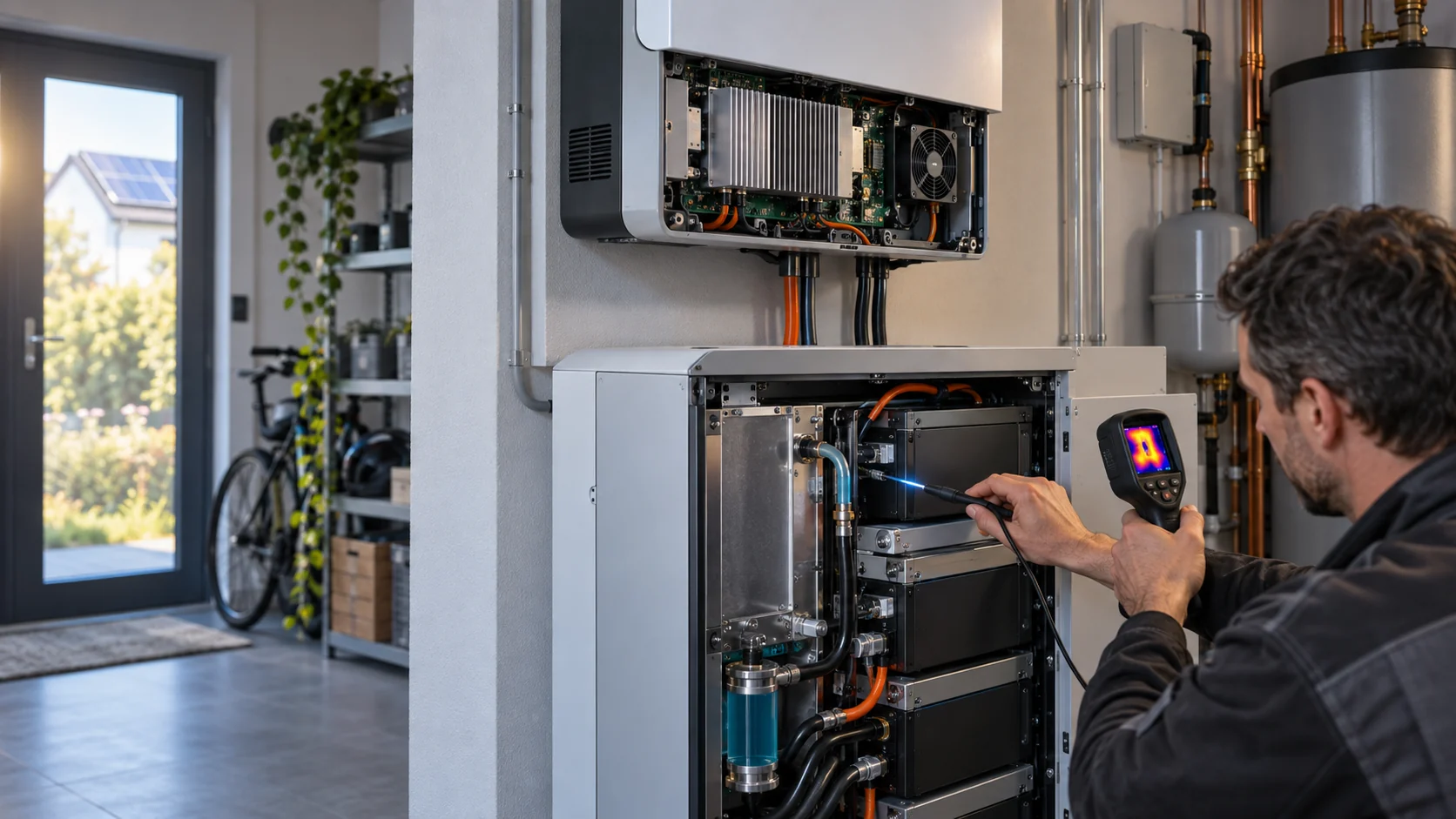
In a representative BESS HVAC review, an integrator supplied the existing fan label, enclosure dimensions, wiring photos, filter details and thermal acceptance points. The measured duty point came from a site run: airflow at the grilles, pressure across the fan with clean and loaded filters, absorbed power over a working day, and speed feedback logged against command. MEGA Tech prepared a candidate around that normal cooling requirement, then the integrator checked startup, command response, tach feedback, current, relevant pressure and supply/return temperatures with the unit installed. The acceptance record preserved the filter state and test configuration.
Two details decided the outcome. First, the candidate's curve passed the loaded-filter point with margin, not just the clean-filter point where the original datasheet stopped. Second, the tach pulse count matched the controller's expectation, which the bench check caught before installation. Neither detail appears on an outline drawing, and both would have surfaced as field complaints instead of checklist items if the sample had been skipped.
This anonymised scenario does not say every OEM fan can be replaced. Where no candidate meets the required duty, the correct outcome is redesign, a different fan technology or retention of the approved part.
Cross-References, Look-Alikes and the Cost Math
The cheapest failure is the one caught on paper; the expensive ones wear a familiar outline.
Cross-reference tables match dimensions, and the second-source market includes parts that imitate a premium outline down to the label style. A look-alike can pass a photograph review and still carry a different impeller, a weaker motor, a shorter-life capacitor or a curve that was never tested by anyone. Treat any candidate without a published test basis, a traceable company and a written L10 basis as unqualified, whatever the outline resembles.
Compare cost the way the site will experience it: price per validated duty point at the loaded-filter condition, plus the cost of the validation itself, plus the risk carried by a batch that fails in year three. A candidate that costs more per unit but arrives with curves, interface documents and a sample program usually wins the total. Keep a register of which fans in the fleet are single-sourced, which have approved alternates and which carry long lead times, so the next obsolescence event is a routine order instead of an emergency.
A worked comparison keeps the stakes visible. Saving a few dollars per unit across several hundred fans looks like real money until one marginal batch derates a block on a hot afternoon and the incident review costs more than the entire fan spend. The unit price that matters is the one attached to a curve that passes the loaded-filter point, a sample record from the real path, and a supplier who answers the L10 question in writing.
Where MEGA Tech Fits
MEGA Tech builds custom DC and EC cooling fans, axial and backward-curved centrifugal, and evaluates replacement duty against the installed condition rather than the part number.
For a replacement program we review the reference part and its measured duty point, propose a candidate with the same frame class where the duty allows it, and support the six-check record with curves, interface drawings and L10 life quoted at your operating temperature. Where the standard range does not reach, we develop a custom fan and deliver working samples for validation in your equipment, with your controller and your filter states.
To start, send the current part number and label photo, enclosure photos or drawings, the heat load, voltage range, signal requirements, expected ambient, filter and grille details, the noise limit and the acceptance temperatures. With a measured duty point the evaluation takes days; with only a part number it becomes guesswork, and we would rather not guess.
Our boundary stays the same as ever: we do not supply HVAC units, controllers or BMS logic, filter media or differential-pressure sensors, and we do not take responsibility for enclosure safety design or emergency ventilation. We make and validate the fan that meets the duty you define.
Recommended Fan Starting Points
These catalogue series may be suitable starting points for this application. Final selection depends on the installed airflow, static pressure, voltage, noise target and operating environment.
Request a sample for validation on your equipment.
Engineer FAQ: BESS Cooling-Fan Replacement
Use these questions before requesting a replacement sample.
Q: Can the same frame and voltage be treated as drop-in? A: No. Check actual pressure/flow duty, connector, startup current, control, direction, mounting, environment and thermal result.
Q: Is normal RPM proof of cooling? A: No. RPM proves rotation; validate the installed pressure path and temperatures.
Q: Is a cross-reference table enough to qualify a replacement? A: No. Tables match physical dimensions. Ask the supplier to mark your measured duty point on a tested curve, then validate a sample in the equipment.
Q: The tach wire has continuity but the controller reads the wrong speed. What changed? A: Likely pulses per revolution or signal level. Count pulses against a known speed and compare signal levels before blaming the controller.
Q: Can MEGA Tech replace premium-brand fans? A: We can evaluate a reference part and provide a custom candidate for normal cooling. Recommend replacement only after the required evidence and sample validation are complete.
Q: Is a replacement also the moment to move from AC to EC? A: Often, yes. An EC swap commonly saves around 30 percent of fan energy and adds speed control, provided the interface and validation work is done first.
Q: What should be sent for review? A: The current part number and label, enclosure photos or drawing, heat load, voltage, signal requirements, expected ambient, filter/grille details, noise limit and acceptance temperatures.
Q: Who performs the replacement in the field? A: A qualified person, following the system manufacturer's isolation and safety procedure. The fan supplier validates the part; the site owns the safety process.
Questions for a Design Review
Bring these nine to the review before any replacement batch is purchased.
- Is the duty point measured at the installed condition with clean and loaded filters, or copied from a nameplate?
- Does the candidate's tested curve pass through the measured point, and where does the point sit relative to its best efficiency?
- Have the connector, tach pulse count, PWM frequency and alarm behavior been confirmed against the actual controller?
- Were startup current and behavior at the DC bus extremes measured, not estimated?
- Does the sample run cover the loaded-filter state and the high-inlet-temperature case, not only a clean mild day?
- Were the original and candidate measured the same way, and is that method written down?
- Does the acceptance record carry filter state, inlet temperature, command points, power, speed feedback and temperatures?
- What is the L10 life basis at the installed temperature, and what are the supply terms at batch volume?
- If no candidate passes, who owns the decision to redesign, change technology or retain the approved part?