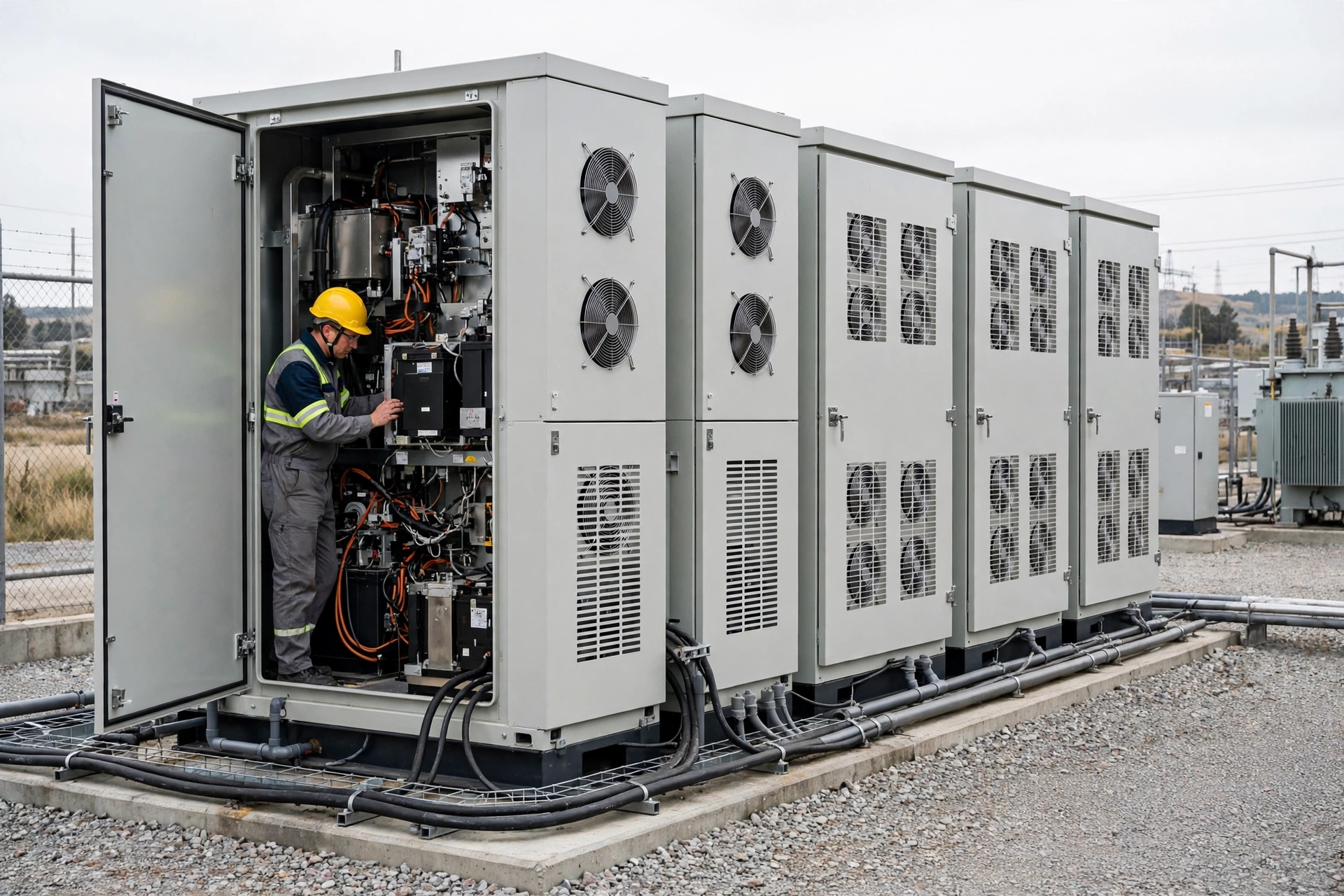
C&I BESS Air-Cooling Fan Selection Guide
Size air-cooling fans for small C&I battery cabinets by airflow, temperature rise, noise and dust, then prove the sample.
Read guide → TECHCooling Solutions
Practical knowledge from a fan manufacturer
Airflow, pressure, control and reliability methods for selecting or developing the right cooling fan for your product.
Need a direct answer?
Find practical answers about P-Q curves, installed airflow, controls and replacement, or download requirement and validation worksheets for your next review.
Selection, airflow and thermal-design methods for real cooling systems.
Size air-cooling fans for small C&I battery cabinets by airflow, temperature rise, noise and dust, then prove the sample.
Read guide →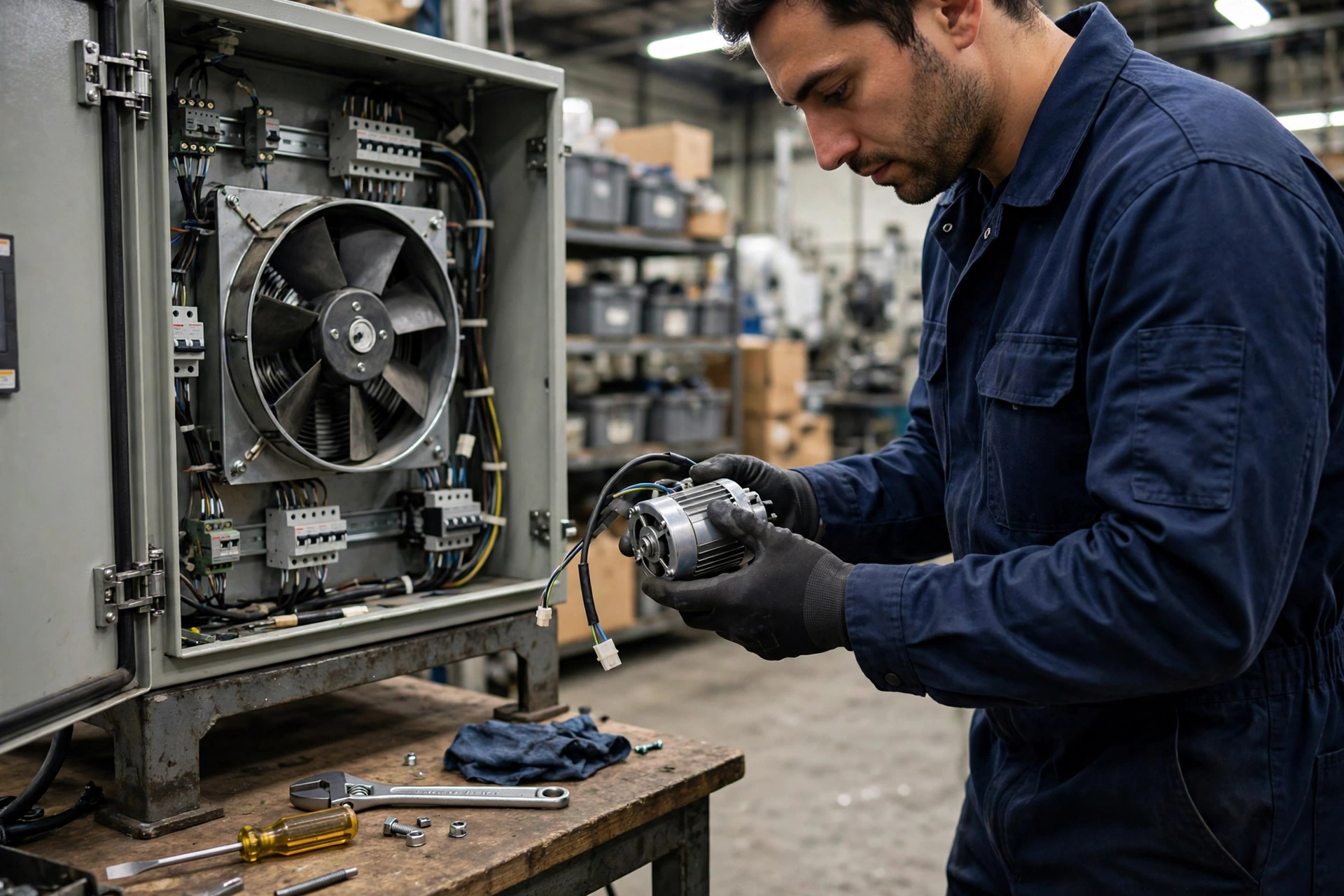
An EC fan failure is not always a whole-unit swap. Check repairable parts, match the duty point, and validate a sample first.
Read guide →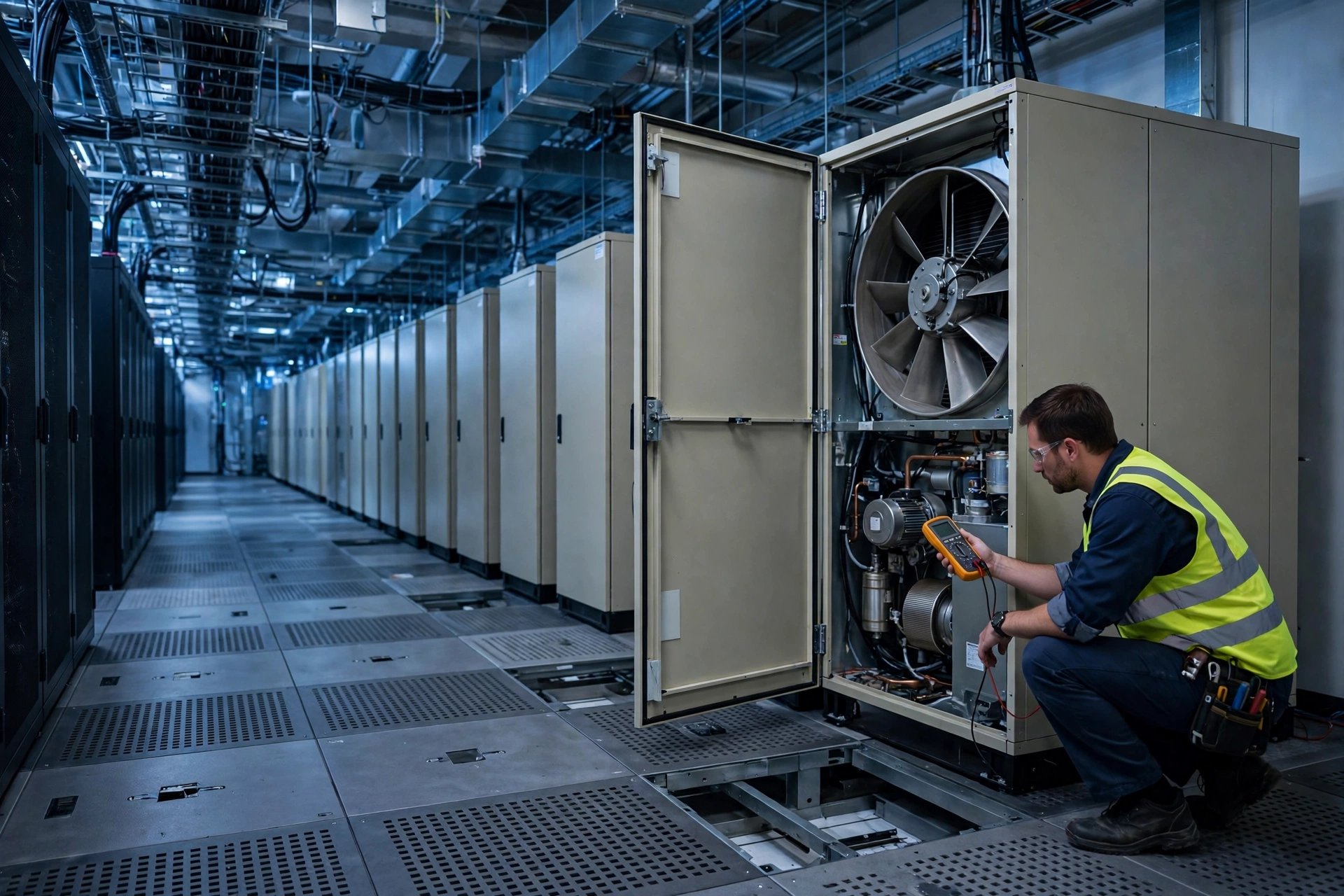
Replace CRAC AC fans with EC fans: size at the real duty, hold static pressure, prove it on a pilot. Savings of about 50%, payback under two years.
Read guide →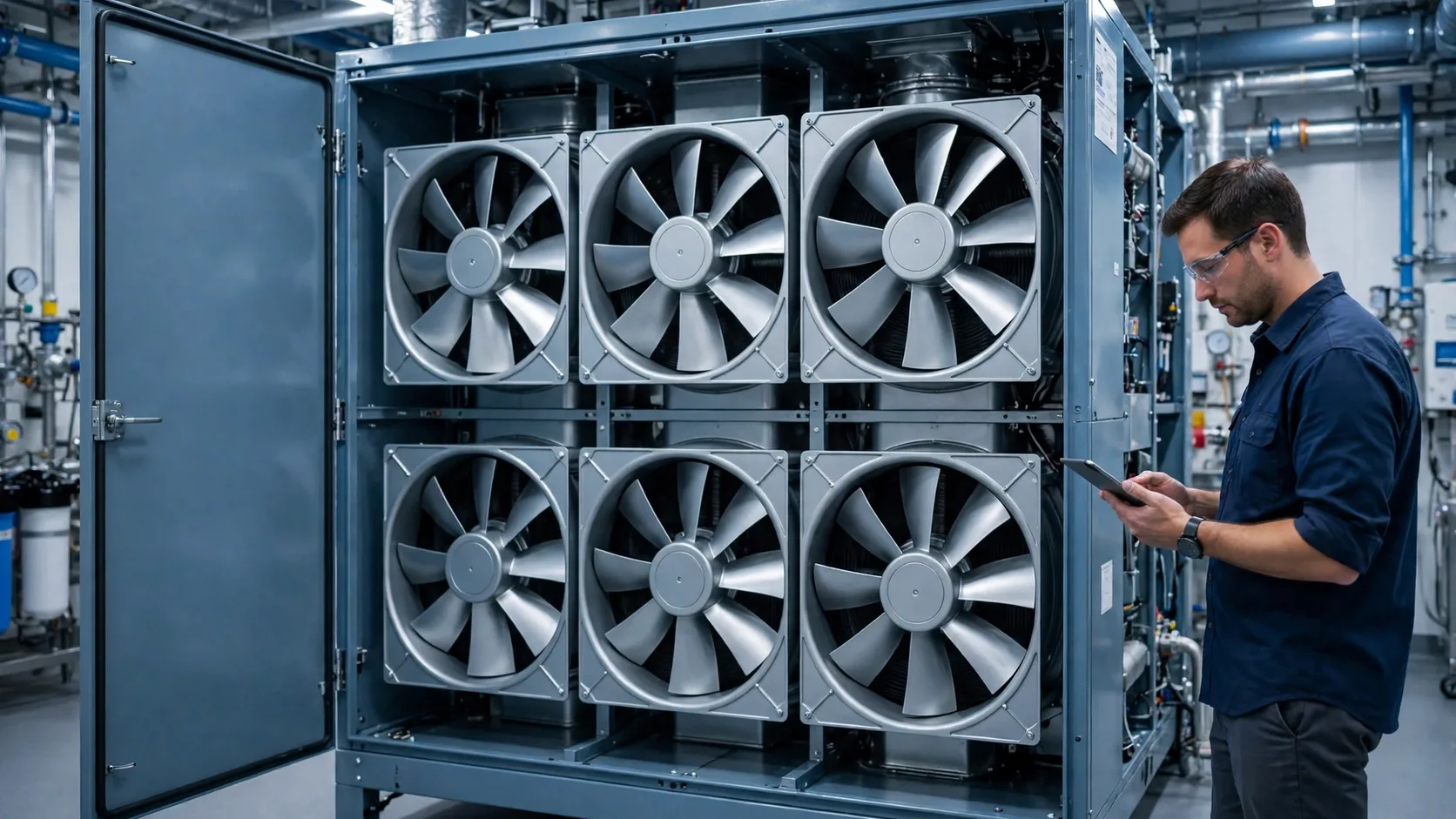
Replace one belt-driven AHU fan with a parallel fan wall: size the array, hold static pressure, plan N+1, prove it on a pilot.
Read guide →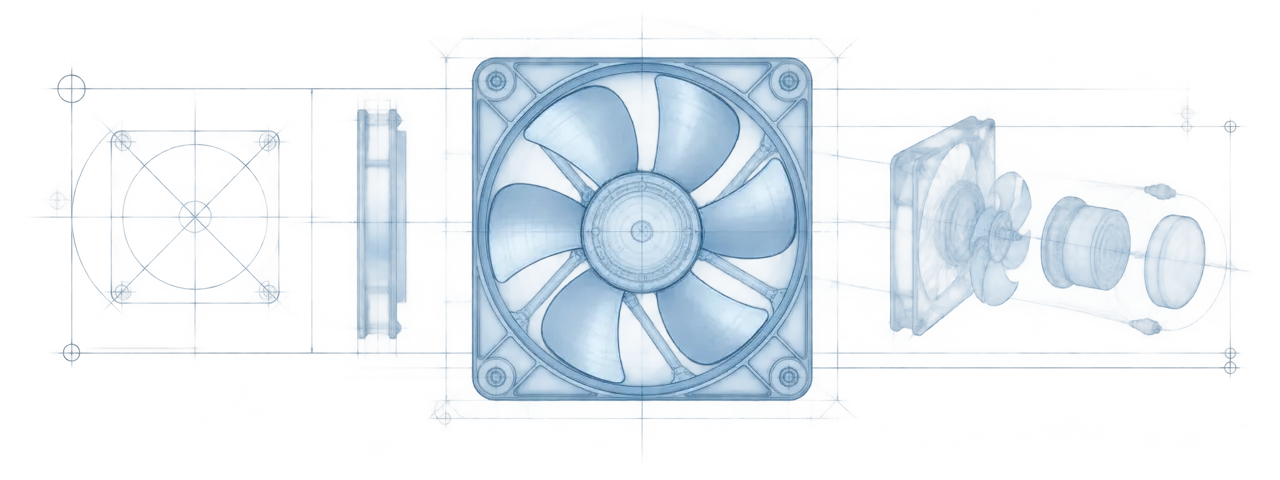
ErP compliance does not require premium-brand prices at every position. Split the premium, evaluate equivalents at the duty point, and validate samples.
Read guide →Regulation (EU) 2024/1834 is live. Check whether your fan is in scope, then validate replacement samples at BEP and at the real duty point.
Read guide →
A practical guide to cooling laser optics and power electronics against dust, vibration, noise and installed pressure.
Read guide →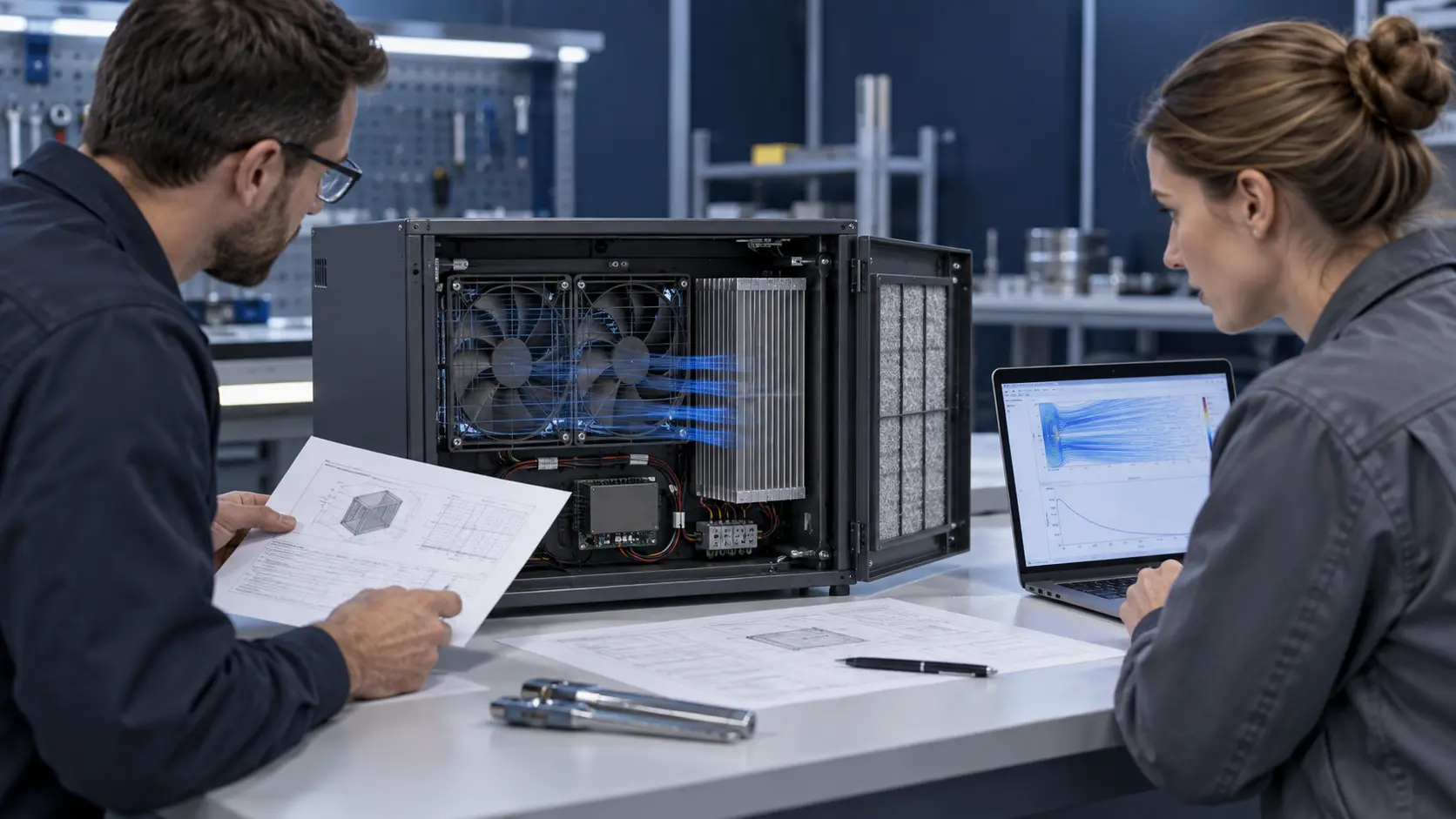
Original fan discontinued or too slow to ship? Match the operating point, check the differences that matter and validate samples before you commit.
Read guide →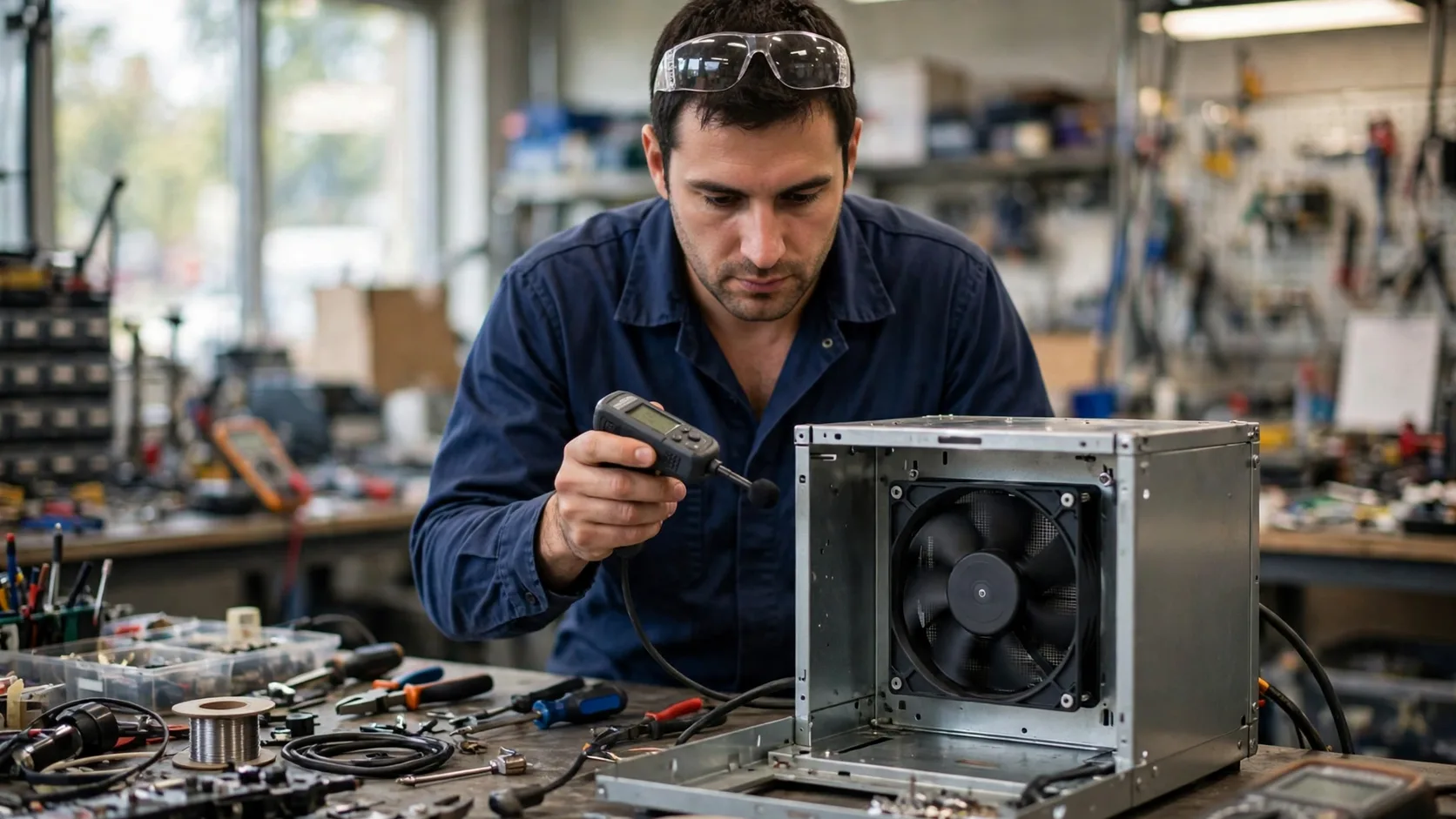
Measure installed cooling-fan noise with a fixed duty point, background, microphone position, mounting condition and thermal check.
Read guide →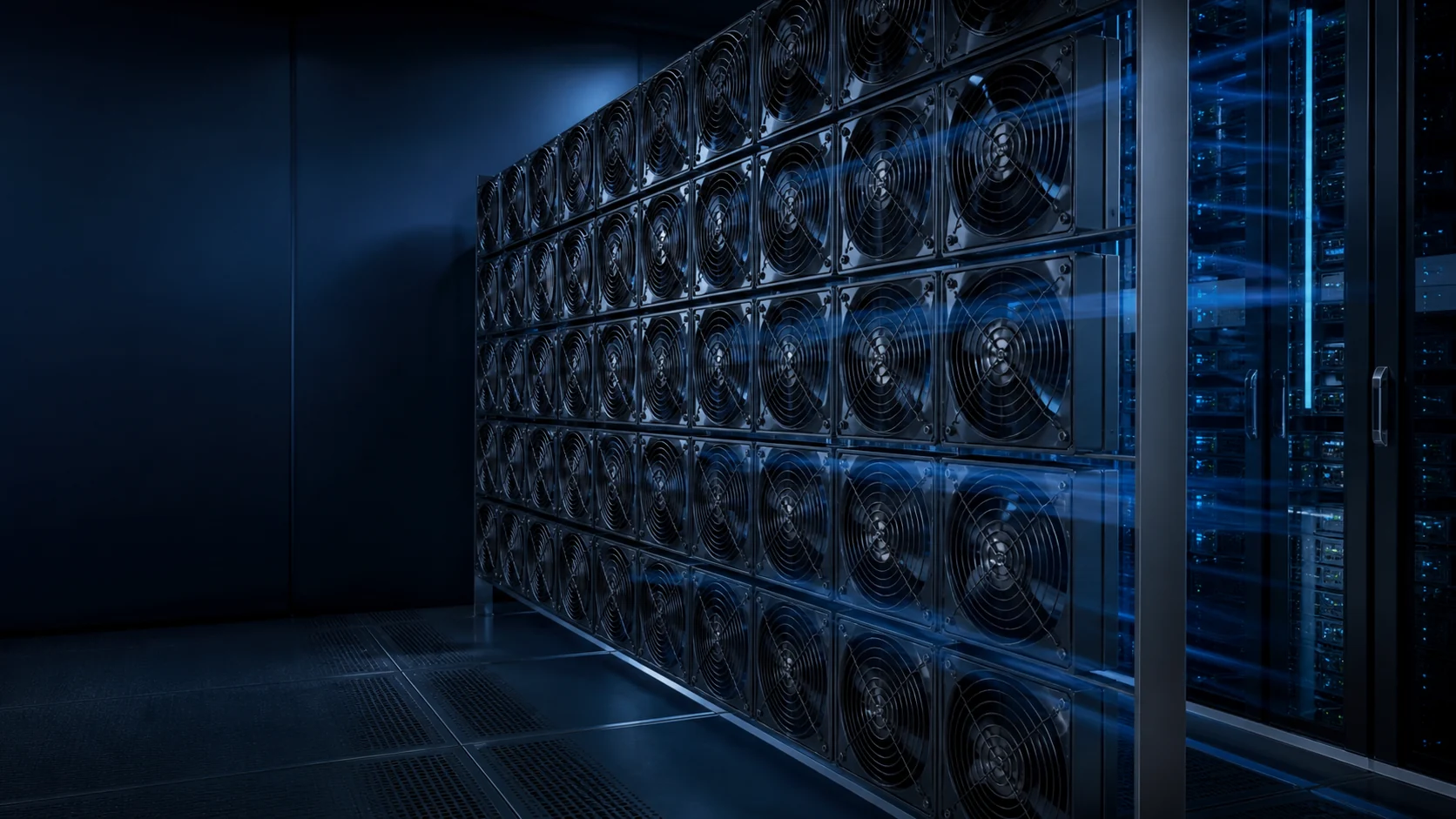
Custom cooling fans for data center fan walls. Match airflow, pressure, N+1 redundancy and controls. Request a sample.
Read guide →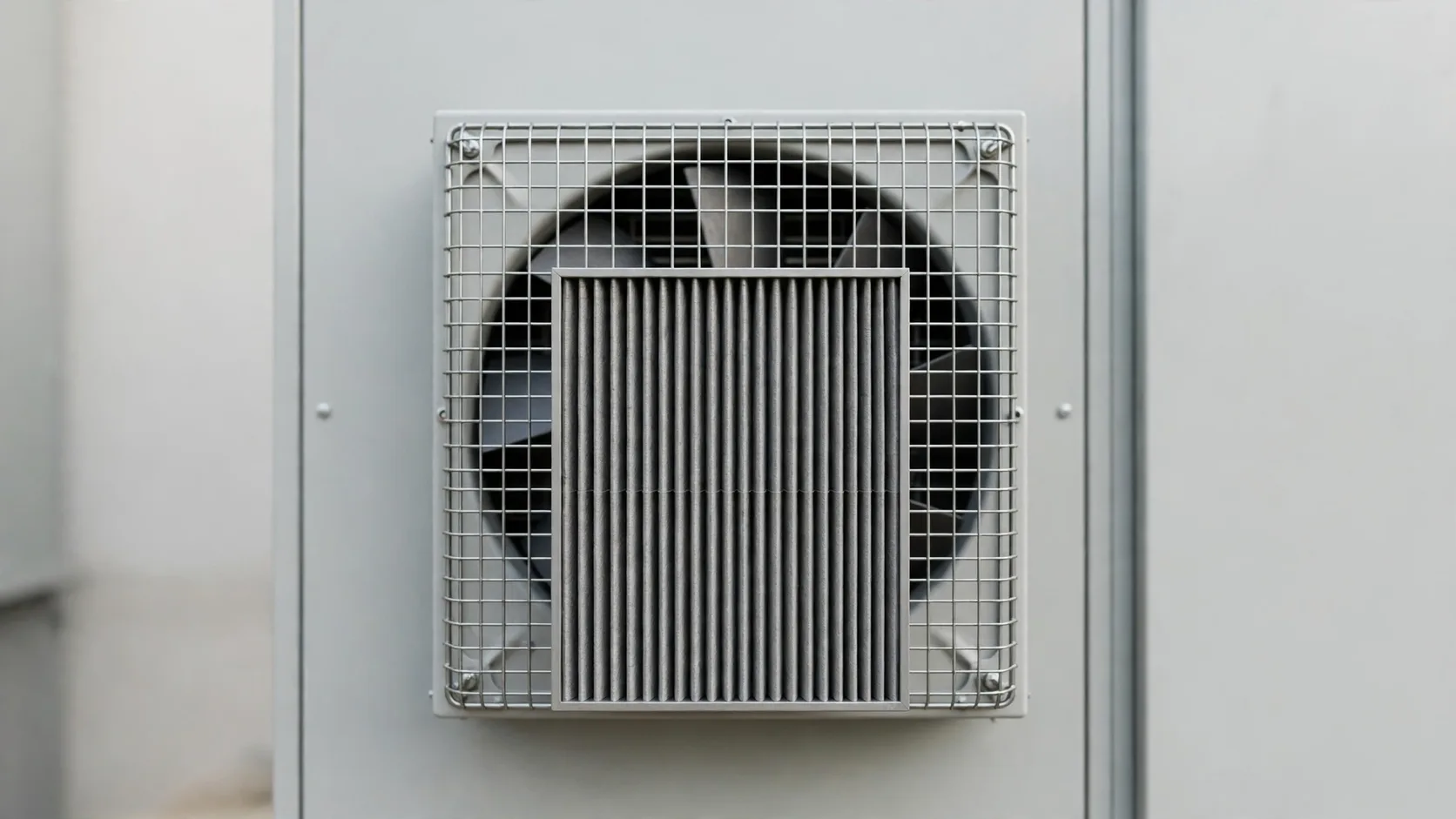
Include fan guard, inlet filter and clearance losses in the pressure budget before selecting and validating a cooling fan.
Read guide →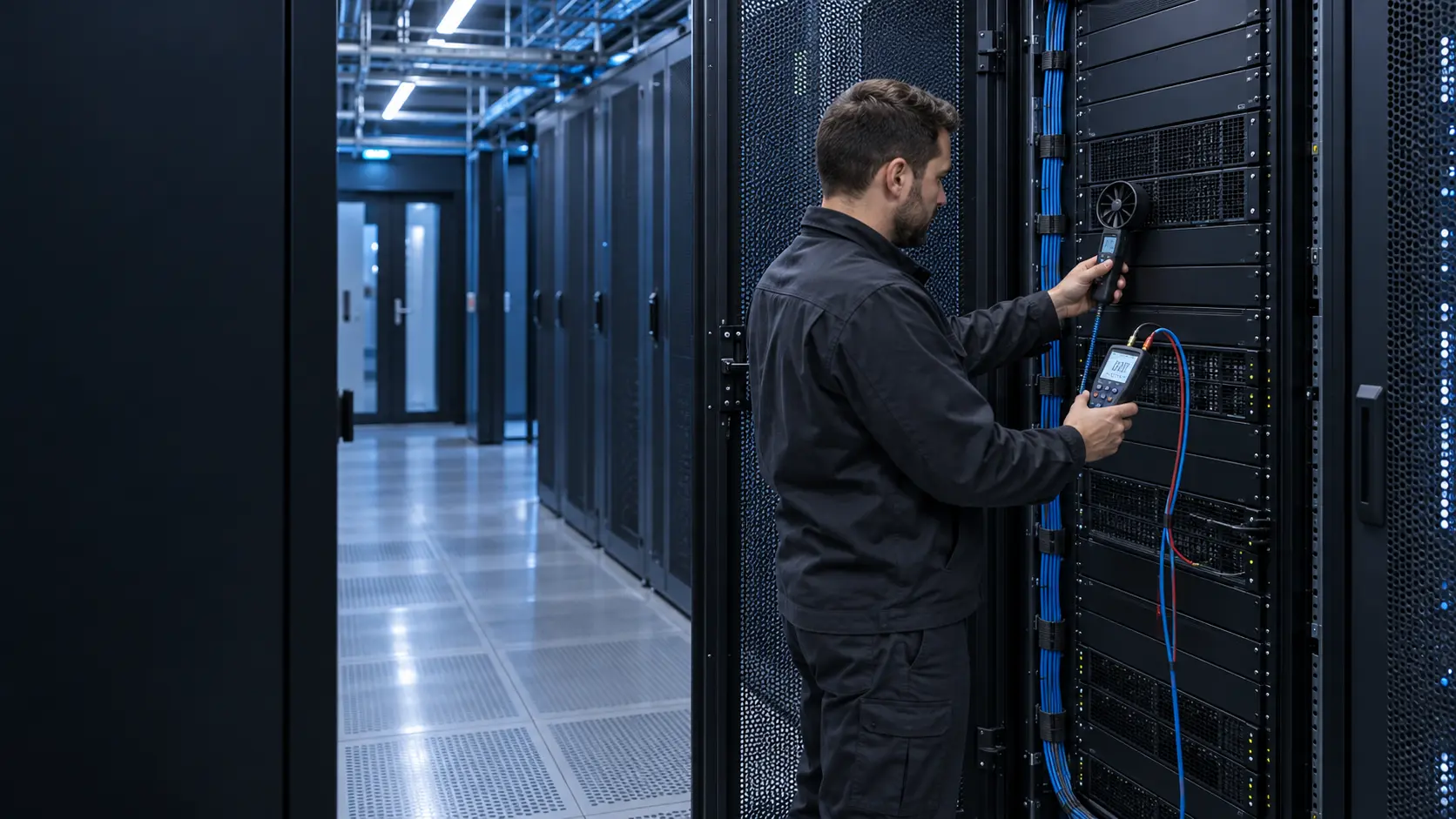
Select network switch cooling fans by matching chassis pressure, airflow direction, rack conditions, noise, control and service requirements.
Read guide →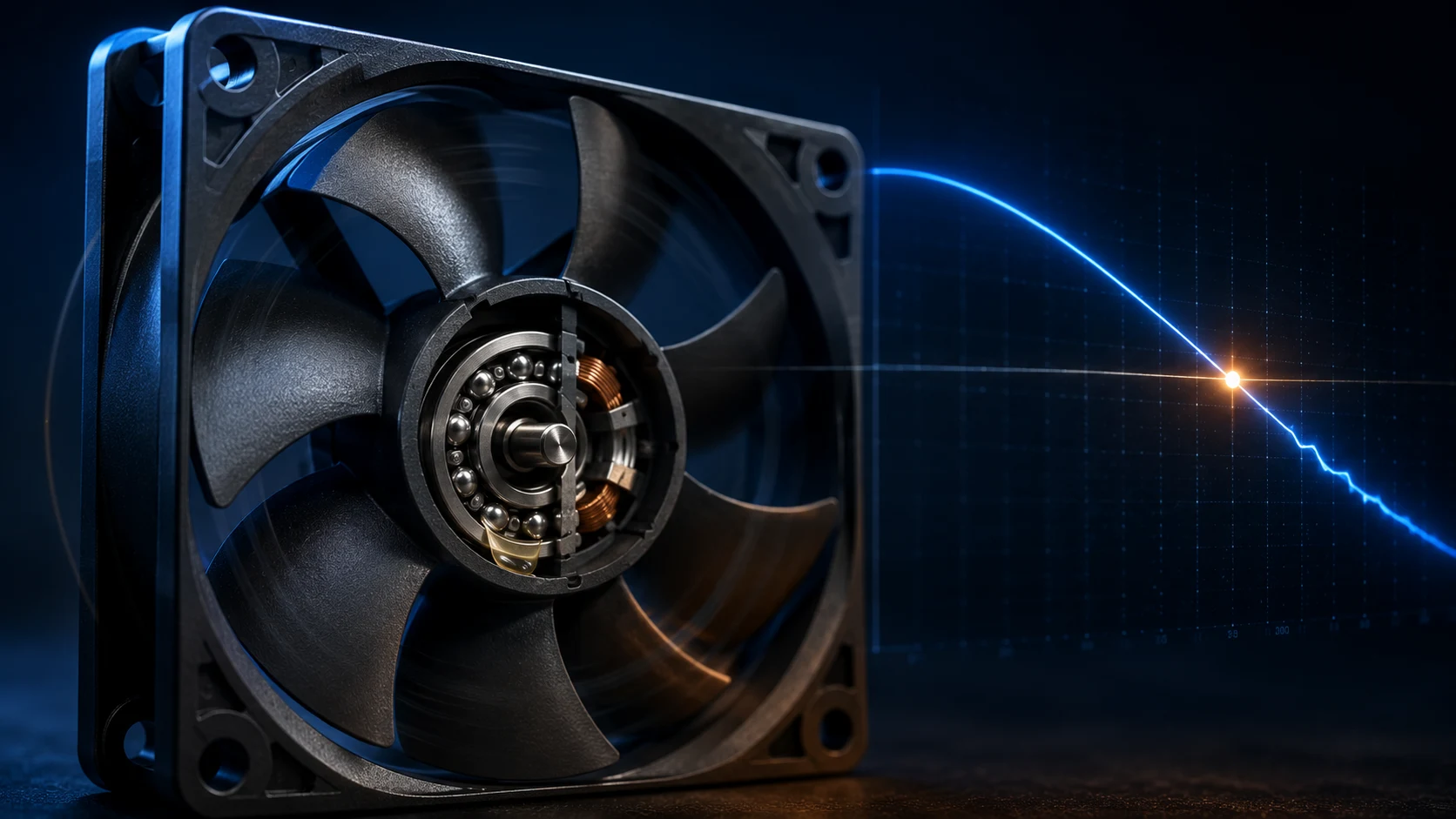
Choose a cooling fan bearing by temperature, orientation, dust, noise, life assumptions and representative sample validation.
Read guide →
Choose axial, centrifugal or blower fans by matching air path, system resistance, pressure, operating point and cooling requirement.
Read guide →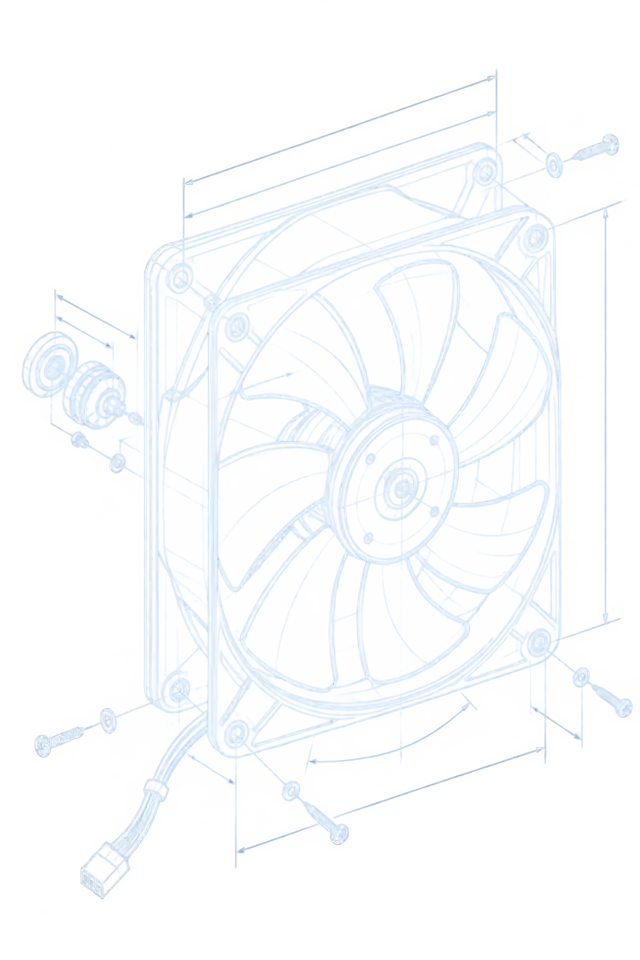
Compare Delta, NMB and SUNON fan replacements by footprint, interface, duty point, life and validated sample testing.
Read guide →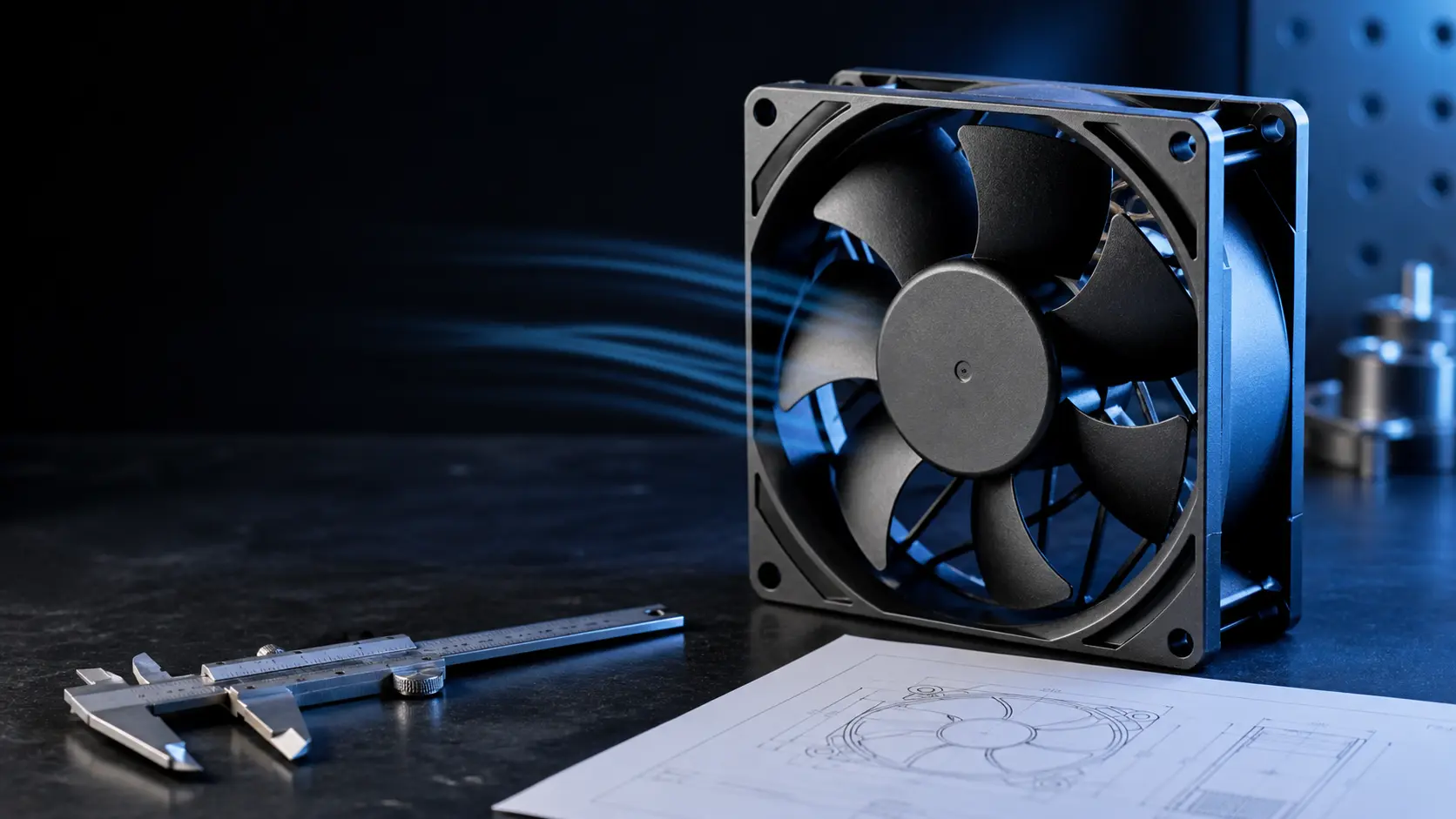
Replace Sanyo Denki 9GA and 9GV fans by checking fit, airflow, pressure, interface, life and sample validation.
Read guide →Select a custom replacement cooling fan by matching duty point, interface, environment, life and validated sample results.
Read guide →Prepare a custom cooling fan RFQ with heat load, airflow, static pressure, interface, environment and sample acceptance requirements.
Read guide →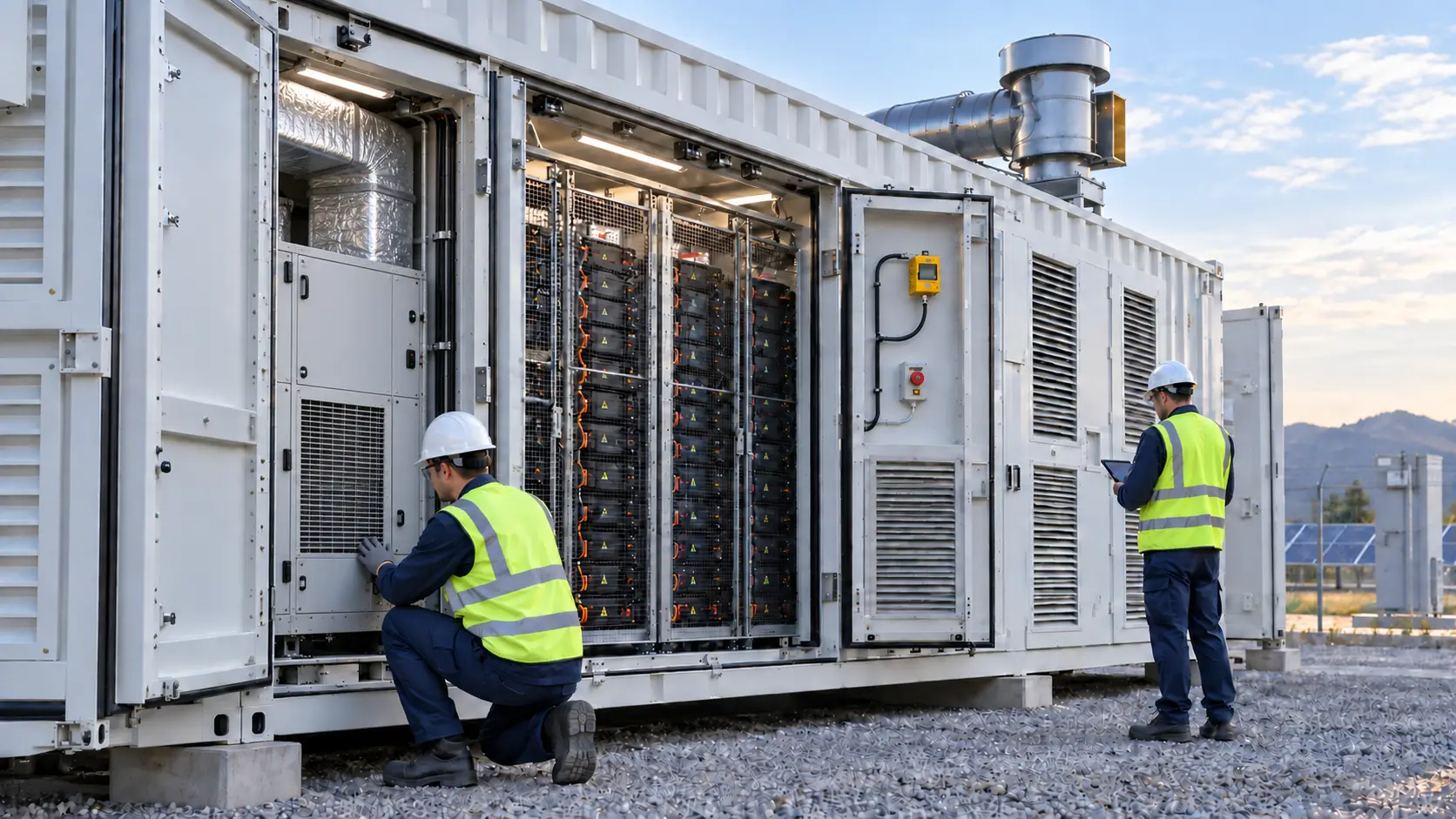
Separate BESS normal cooling from emergency ventilation by defining fan duty, controls, evidence and custom-sample boundaries.
Read guide →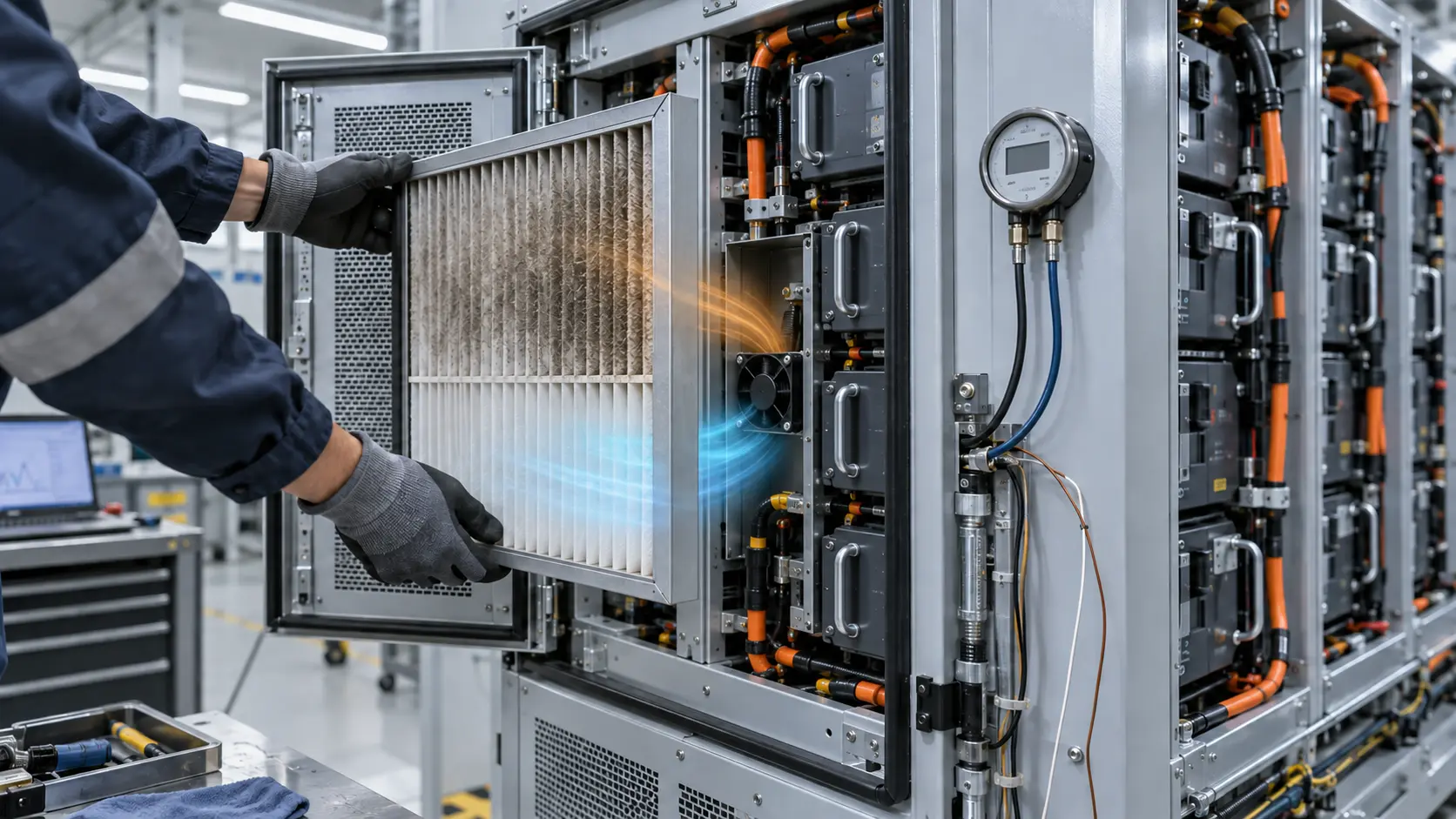
Plan BESS fan selection for filter loading with pressure-drop evidence, PWM limits, maintenance alarms and representative thermal validation.
Read guide →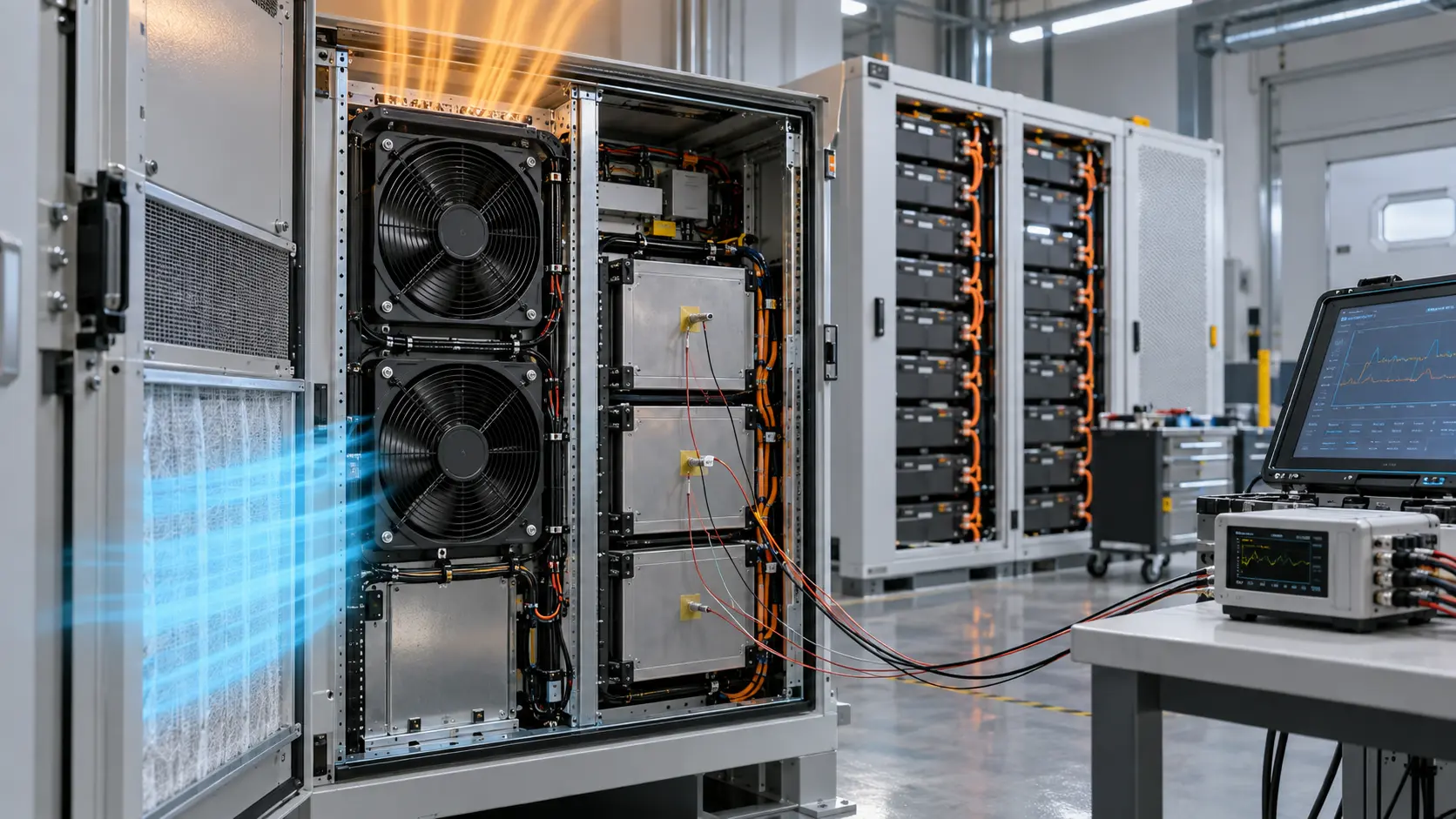
Design BESS fan control around thermistors, PWM, FG feedback, alarm thresholds and the boundary between cooling and emergency ventilation.
Read guide →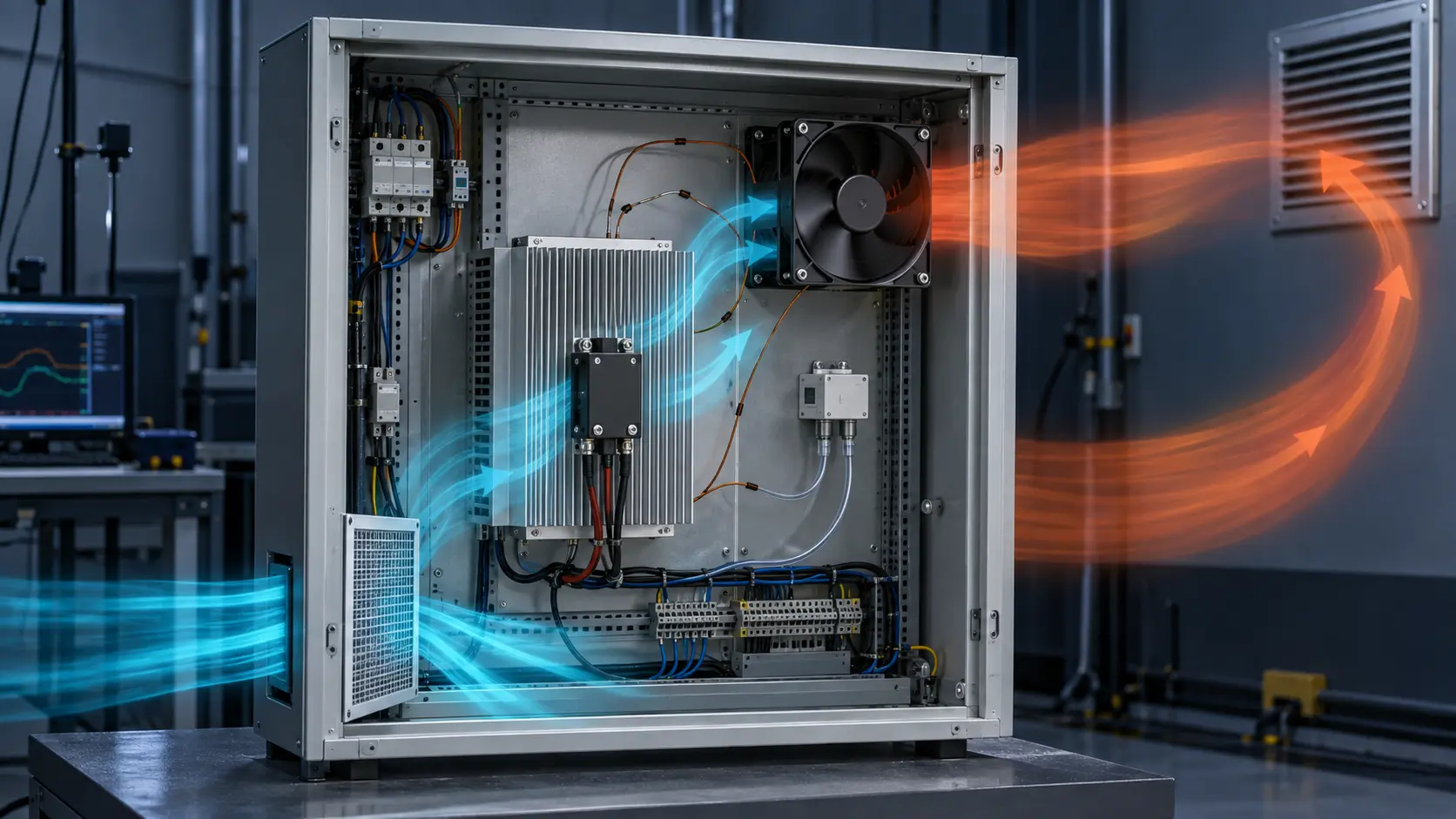
Diagnose hot-air recirculation and internal bypass, then validate intake, exhaust and hotspot temperatures before increasing fan speed.
Read guide →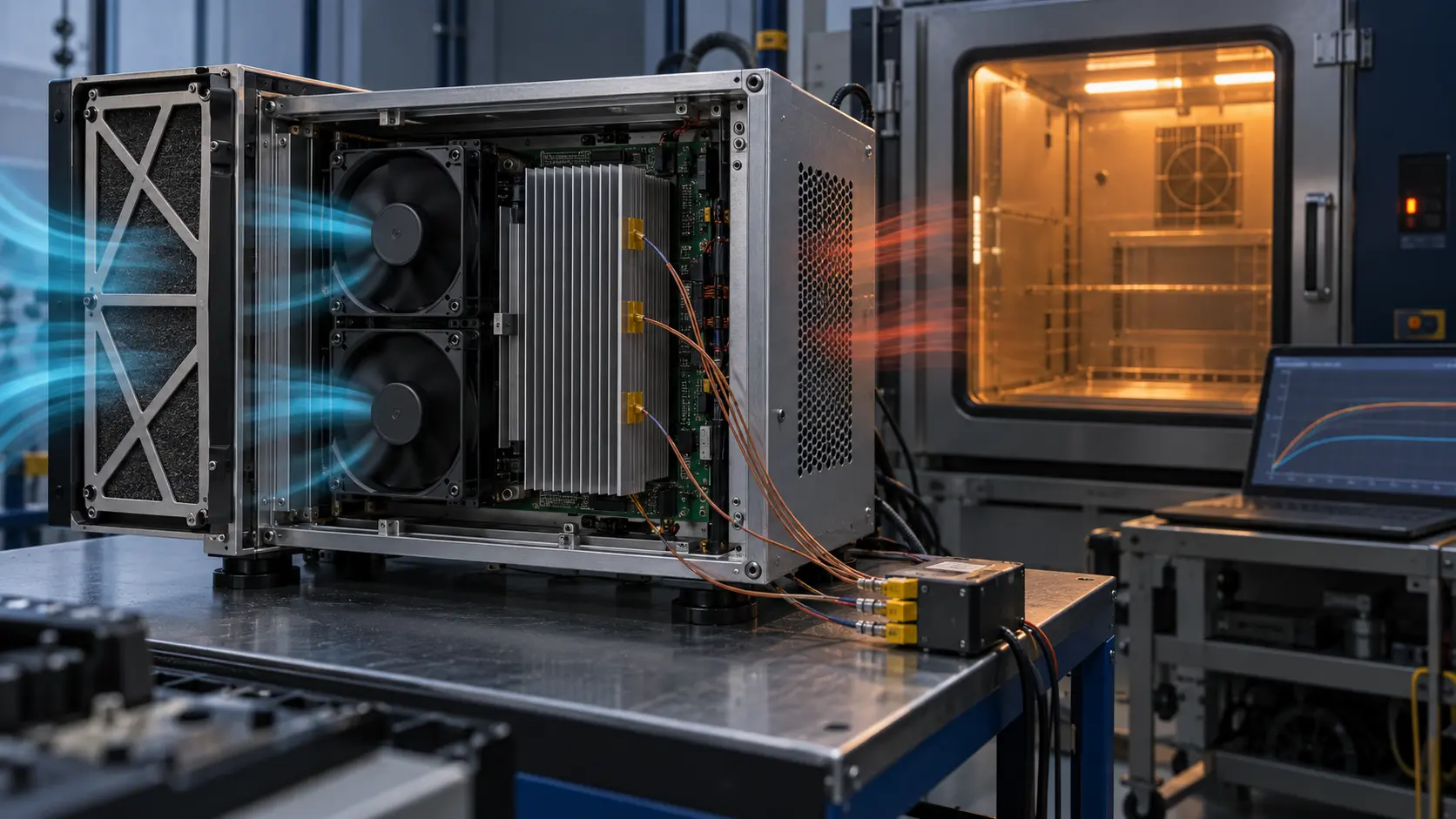
Validate cooling-fan thermal margin at high ambient, loaded filters, low command and realistic heat load before approving custom samples.
Read guide →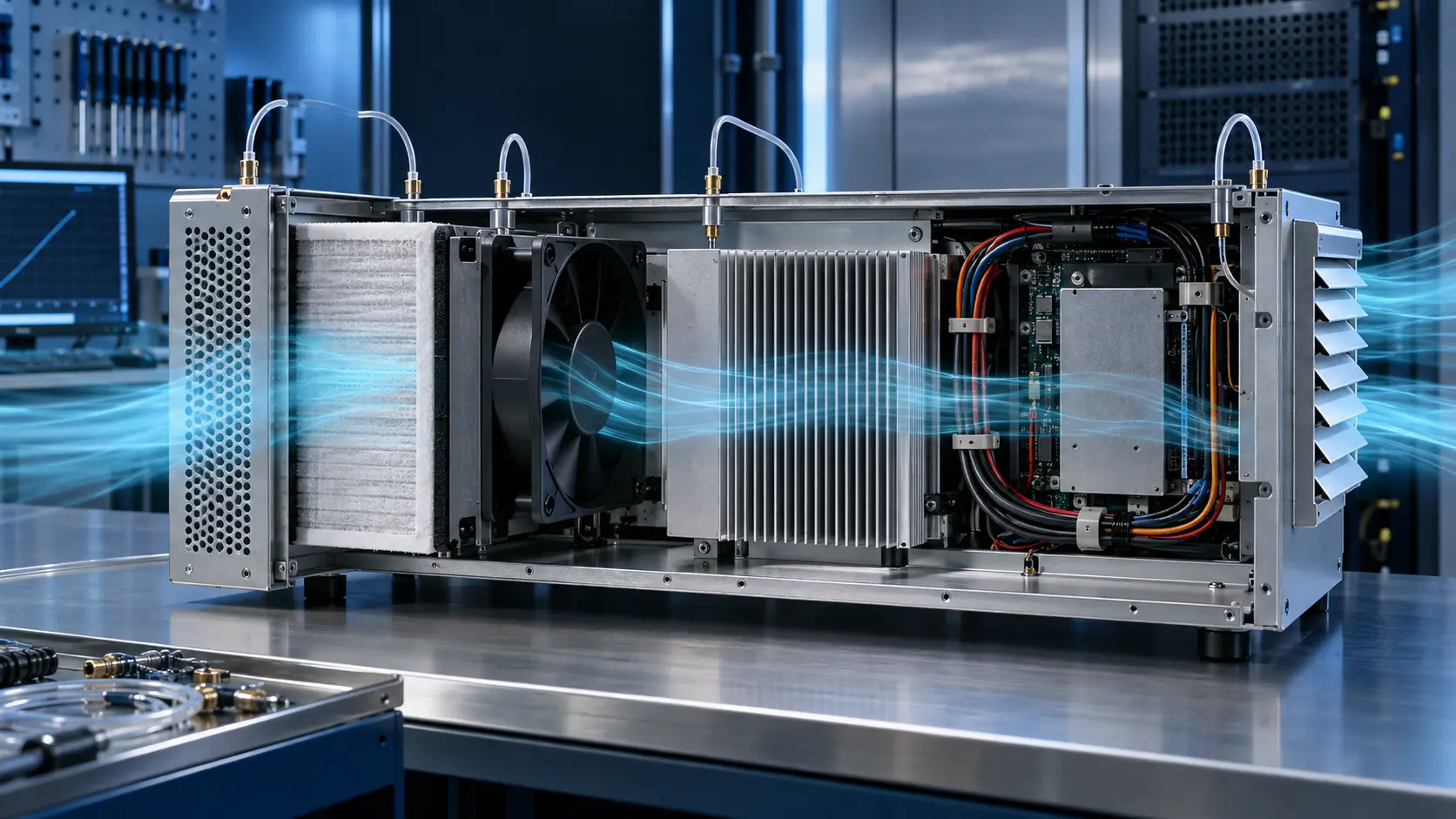
Build an electronics-enclosure pressure-drop budget for grilles, filters, heatsinks and outlets before changing fan size or speed.
Read guide →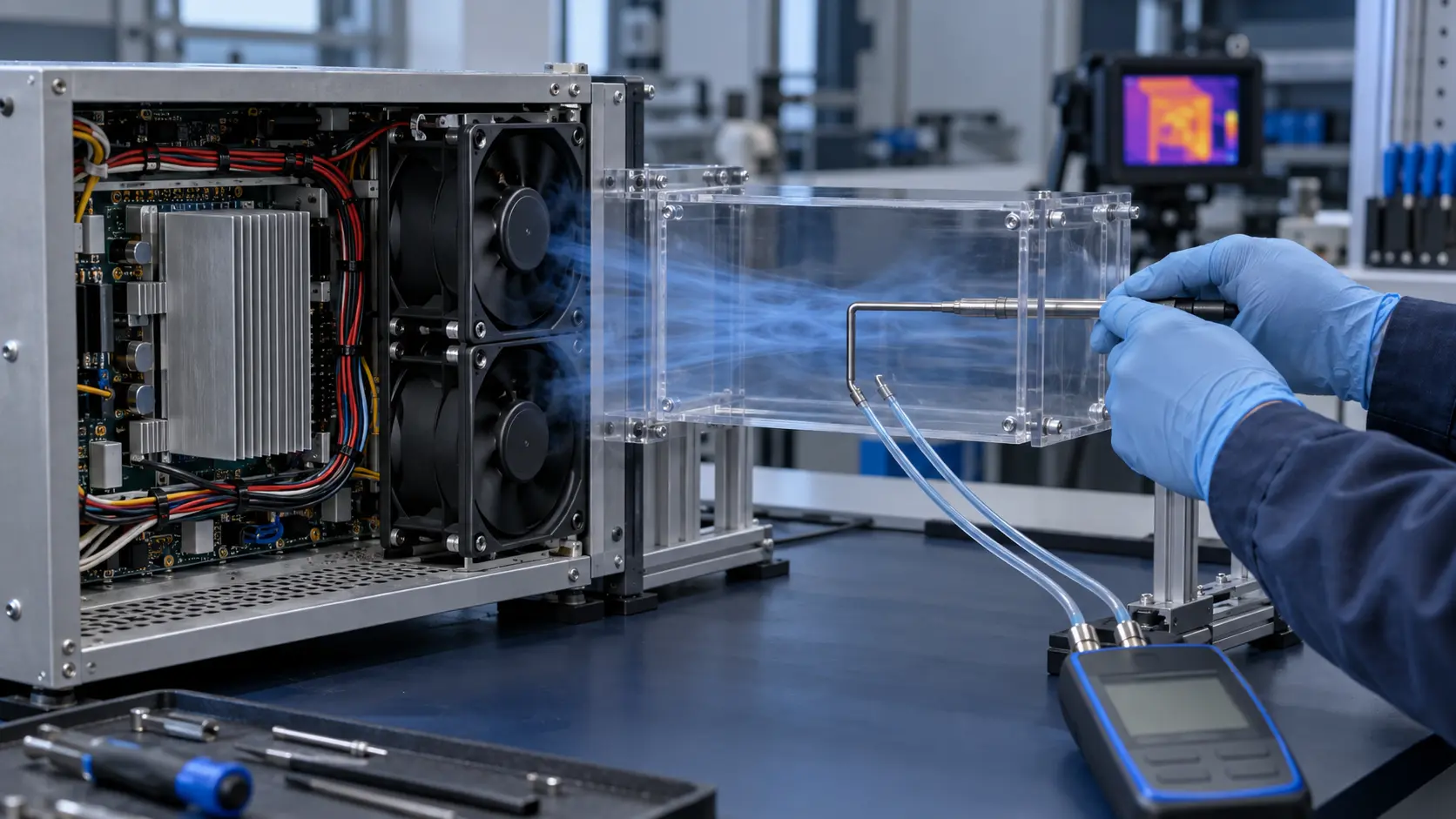
Measure installed cooling fan CFM with defined planes, pressure, velocity, temperature and RPM instead of one reading.
Read guide →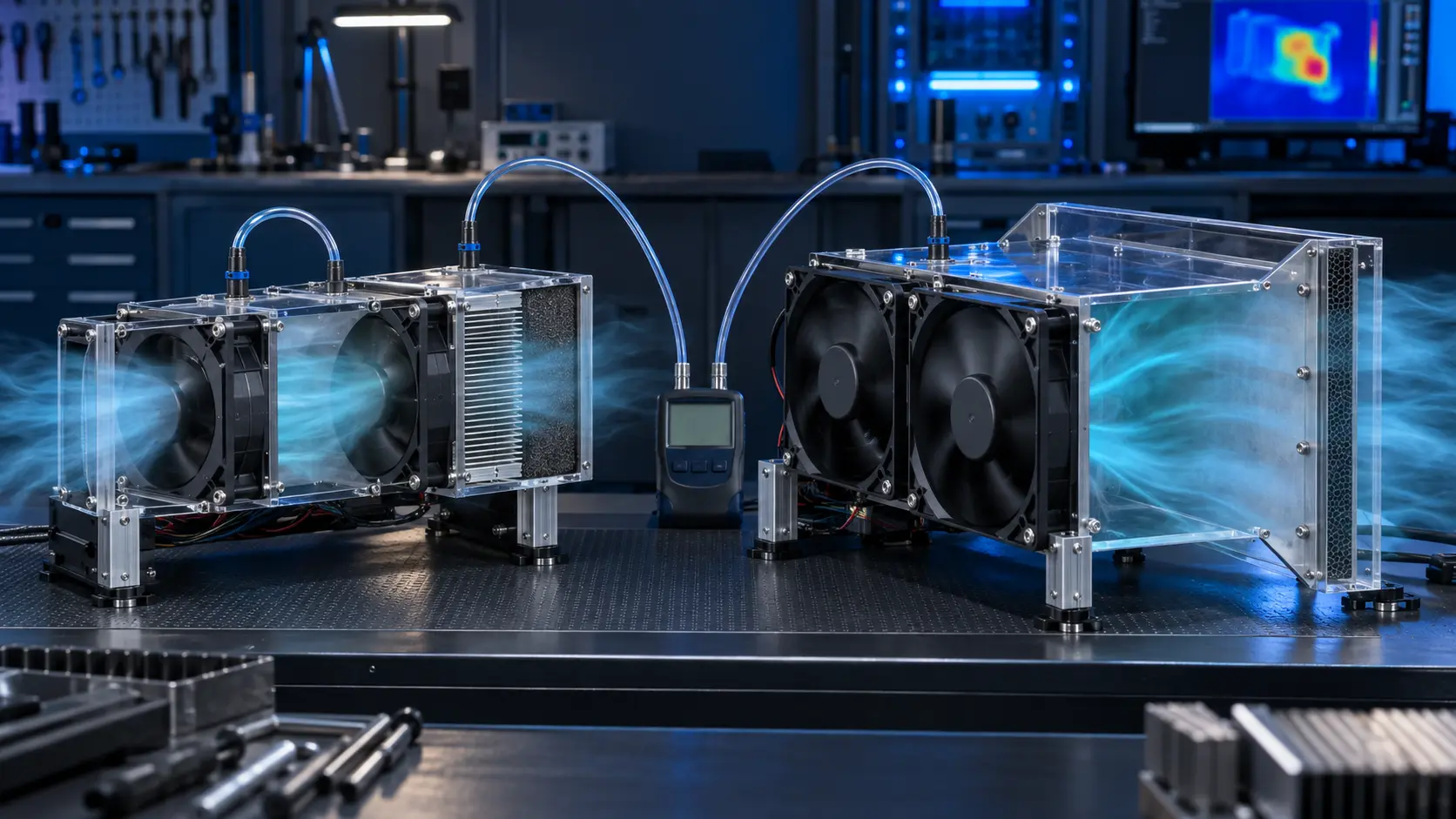
Choose series or parallel cooling fans from the system curve, then validate interaction, failure behaviour and installed airflow.
Read guide →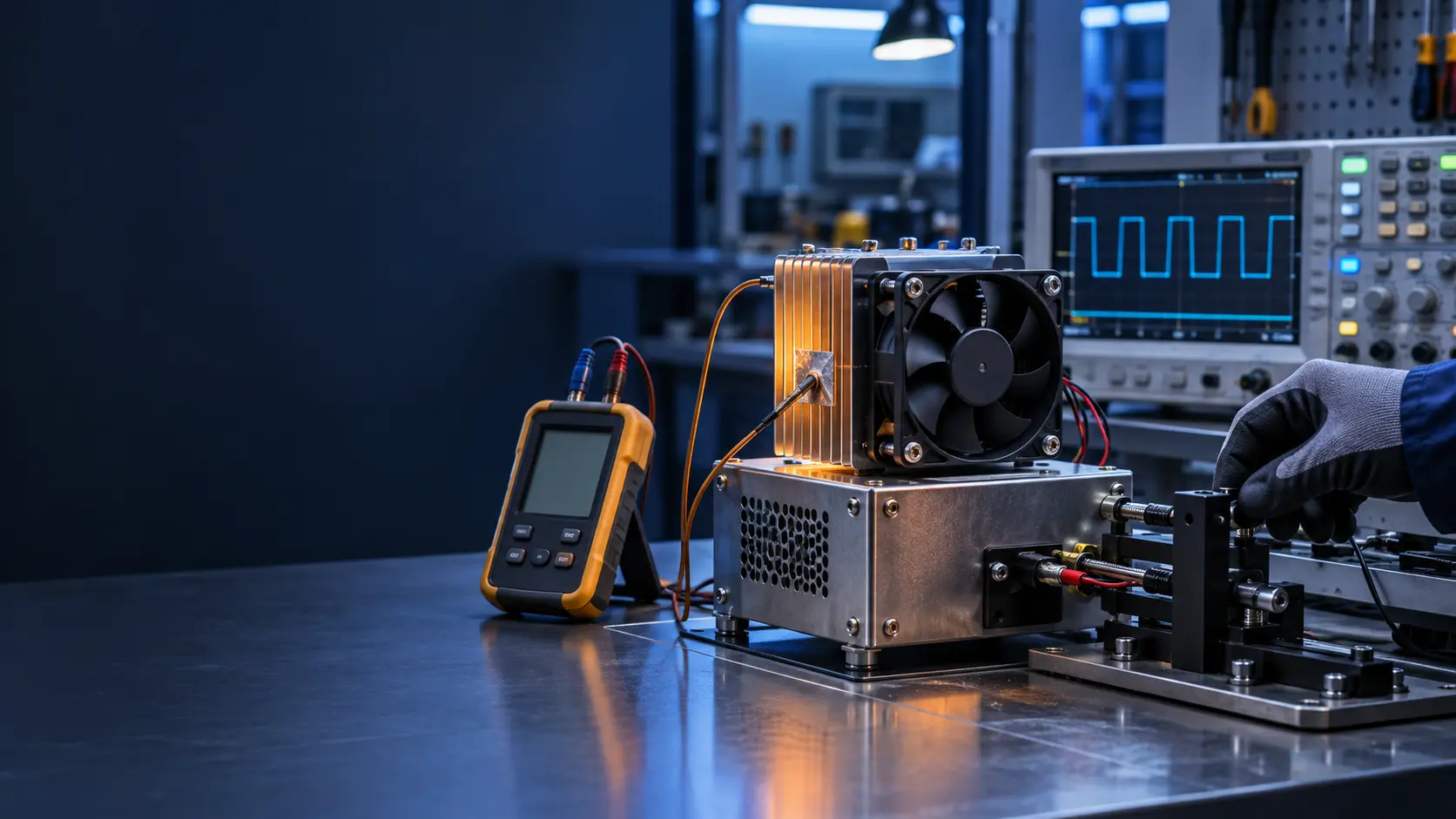
Validate cooling fan faults with TACH, RD, pressure and temperature evidence instead of treating normal RPM as proof of airflow.
Read guide →Stop cooling fan RPM oscillation by checking sensor placement, hysteresis, PWM minimum speed, ramp response and tach feedback.
Read guide →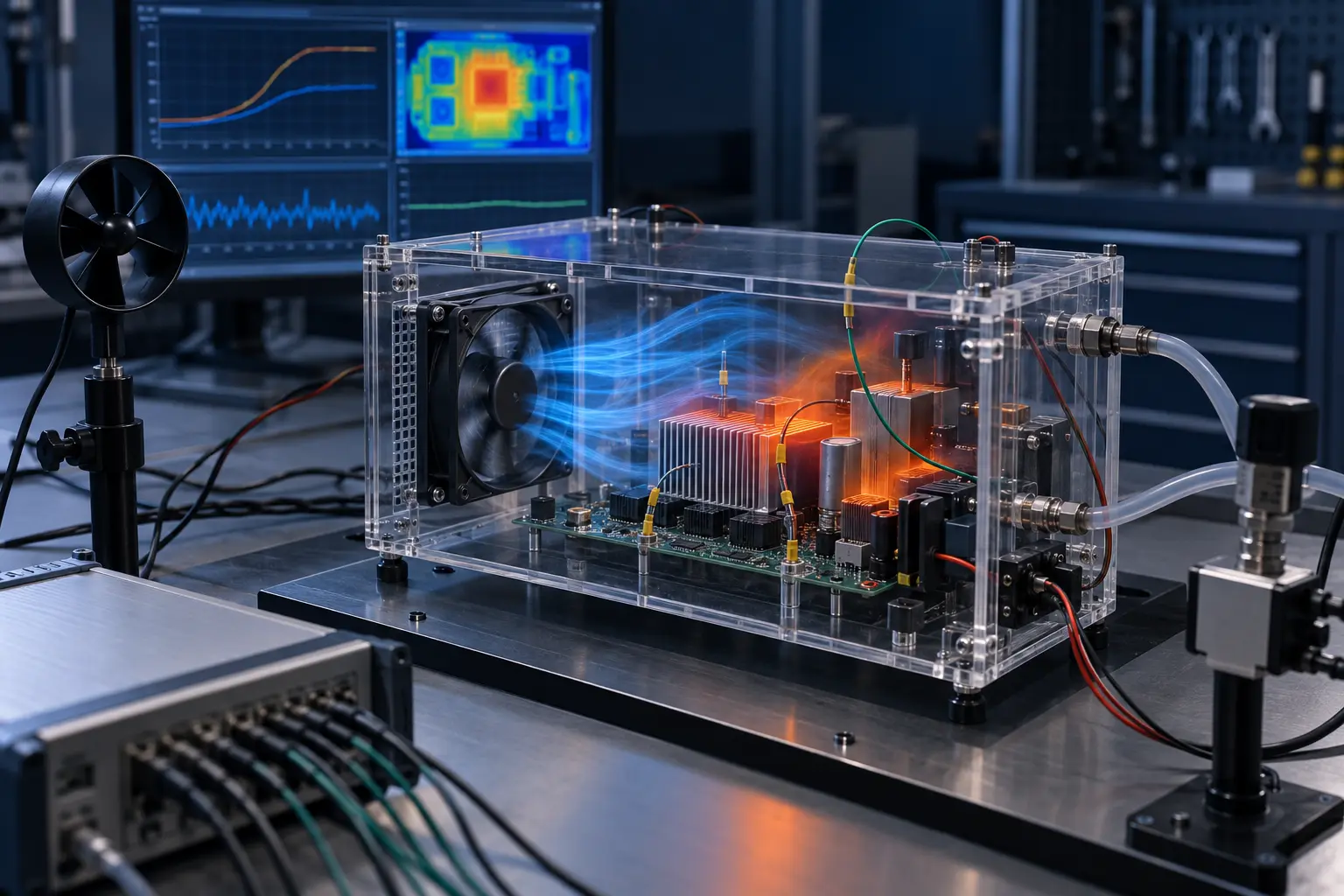
Validate a cooling fan sample with installed airflow, pressure, temperature, noise, controls and worst-case enclosure testing.
Read guide →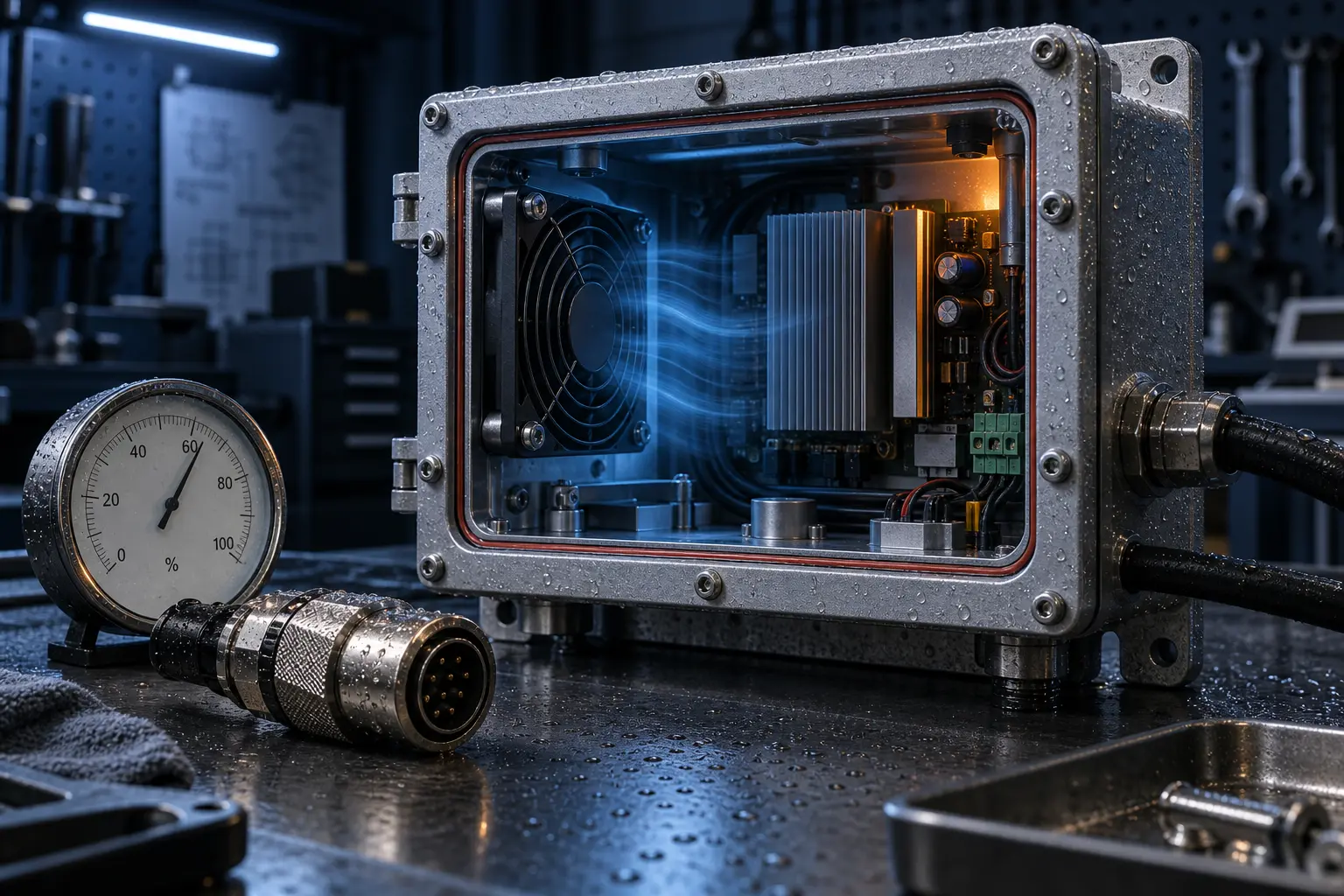
Specify cooling fan environmental protection by separating IP rating, enclosure sealing, humidity, condensation and whole-product validation.
Read guide →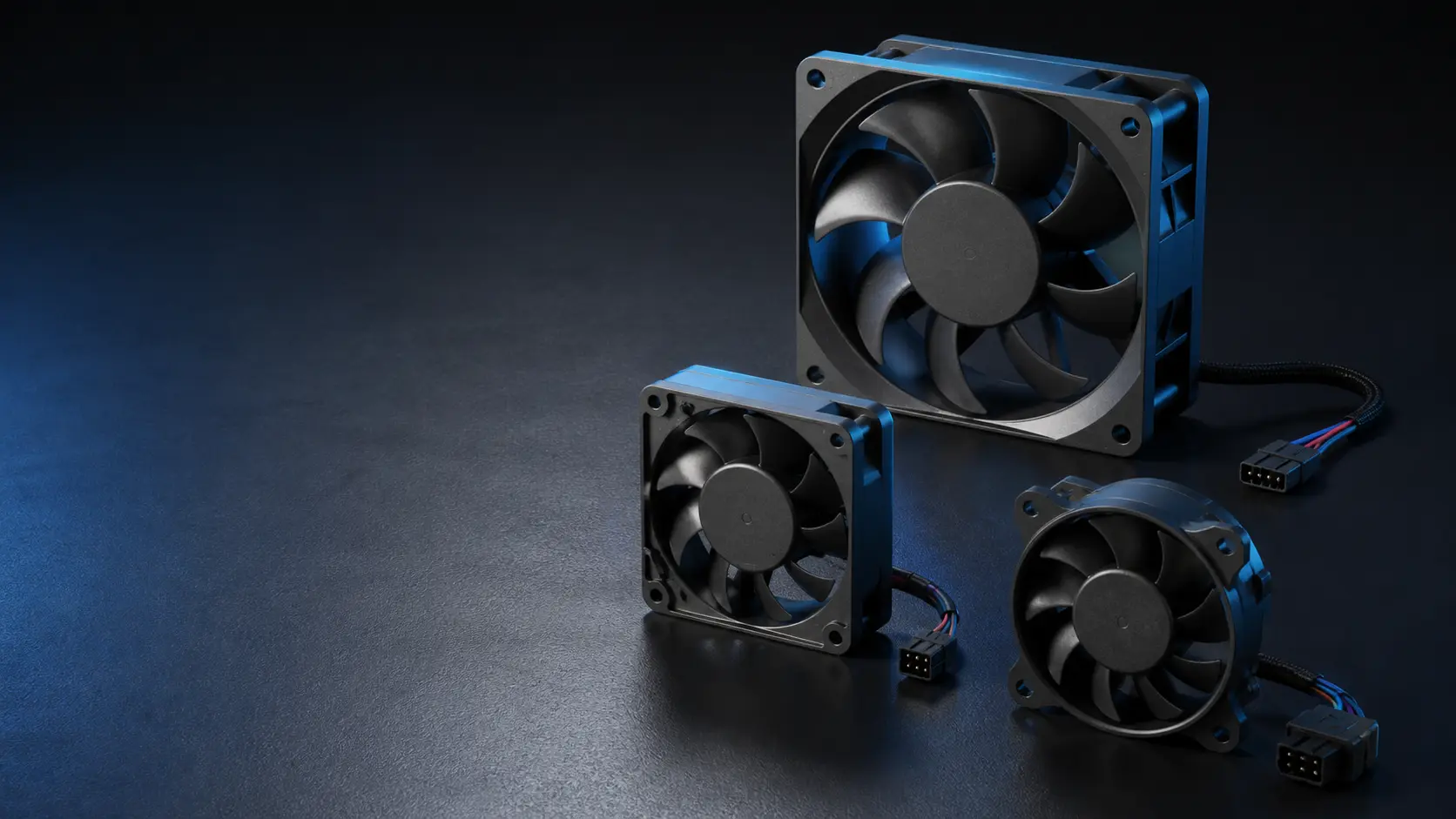
Compare EC, AC and low-voltage DC fans by duty point, pressure, control, power, redundancy and service needs before validation.
Read guide →Select AI server cooling fans from heat load, airflow path, system pressure, noise, redundancy and control, then validate a sample.
Read guide →Build an air-cooled AI server thermal architecture around heat maps, pressure budgets, fan control, fault states and measured performance.
Read guide →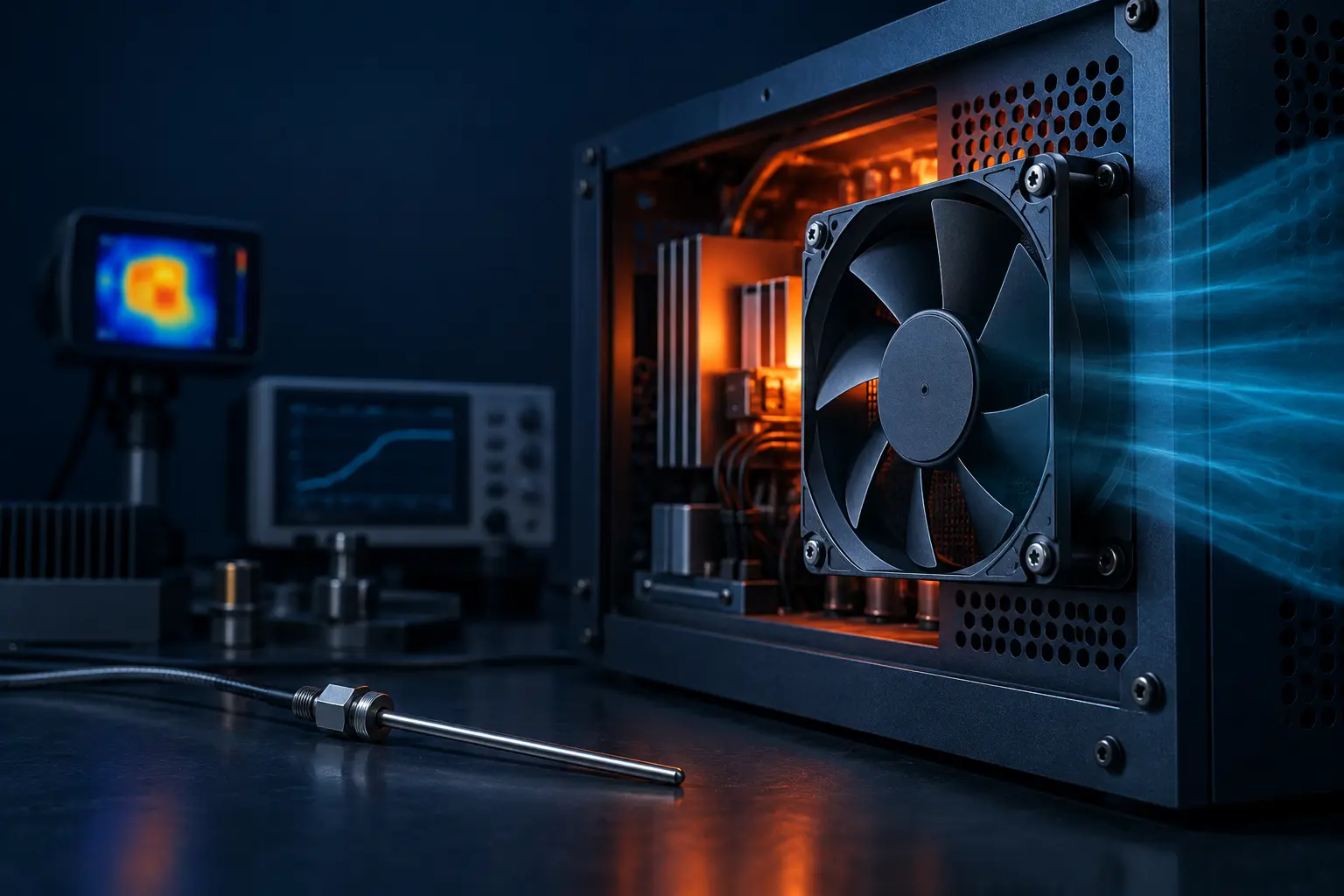
Select high-temperature cooling fans by checking air-density loss, operating point, bearing life, controls and enclosure validation.
Read guide →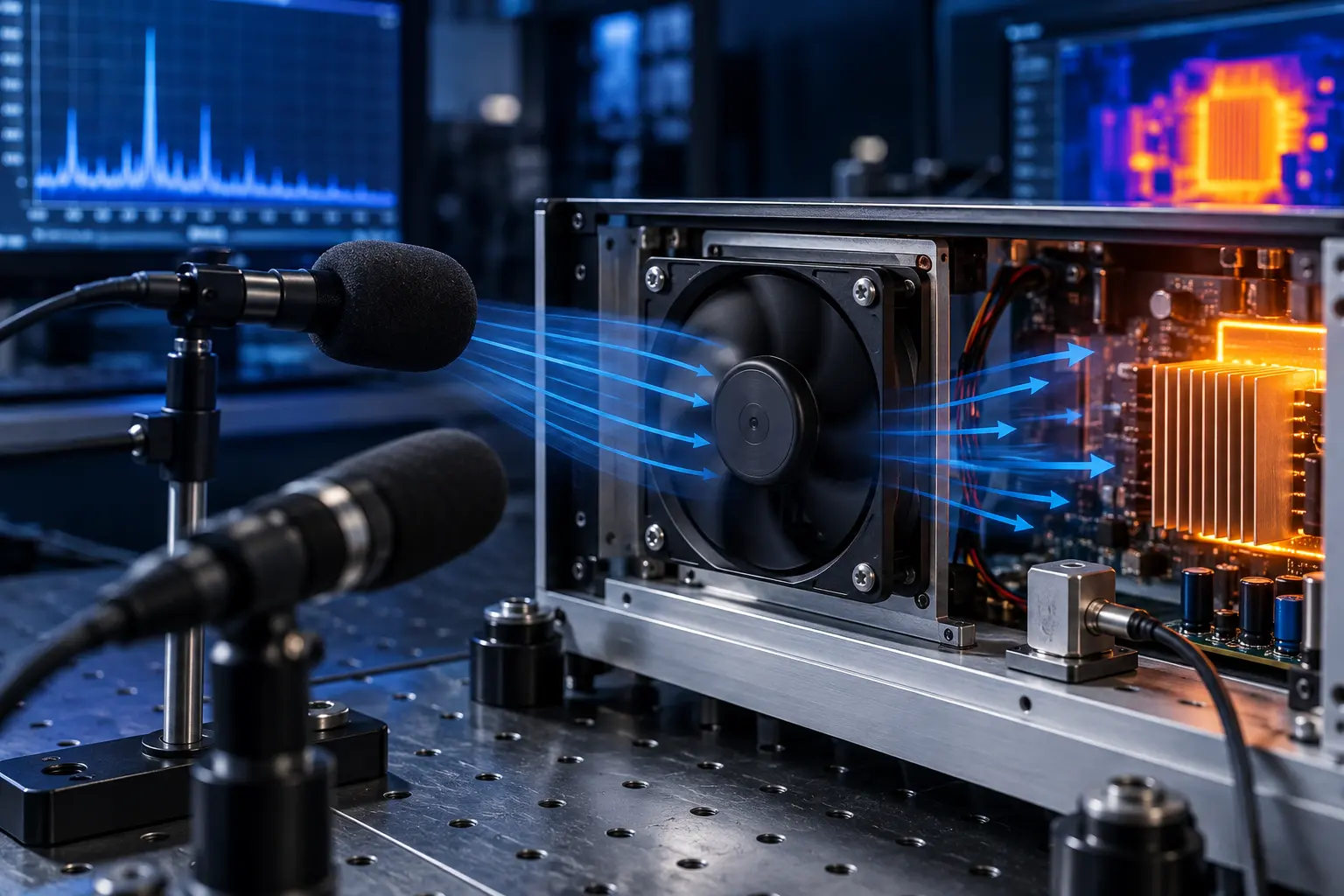
Evaluate installed cooling fan noise by measuring dB-A, tonal peaks, vibration and thermal performance at the real duty point.
Read guide →Diagnose high-density rack airflow by measuring bypass, recirculation, inlet conditions and service-state changes after equipment changes.
Read guide →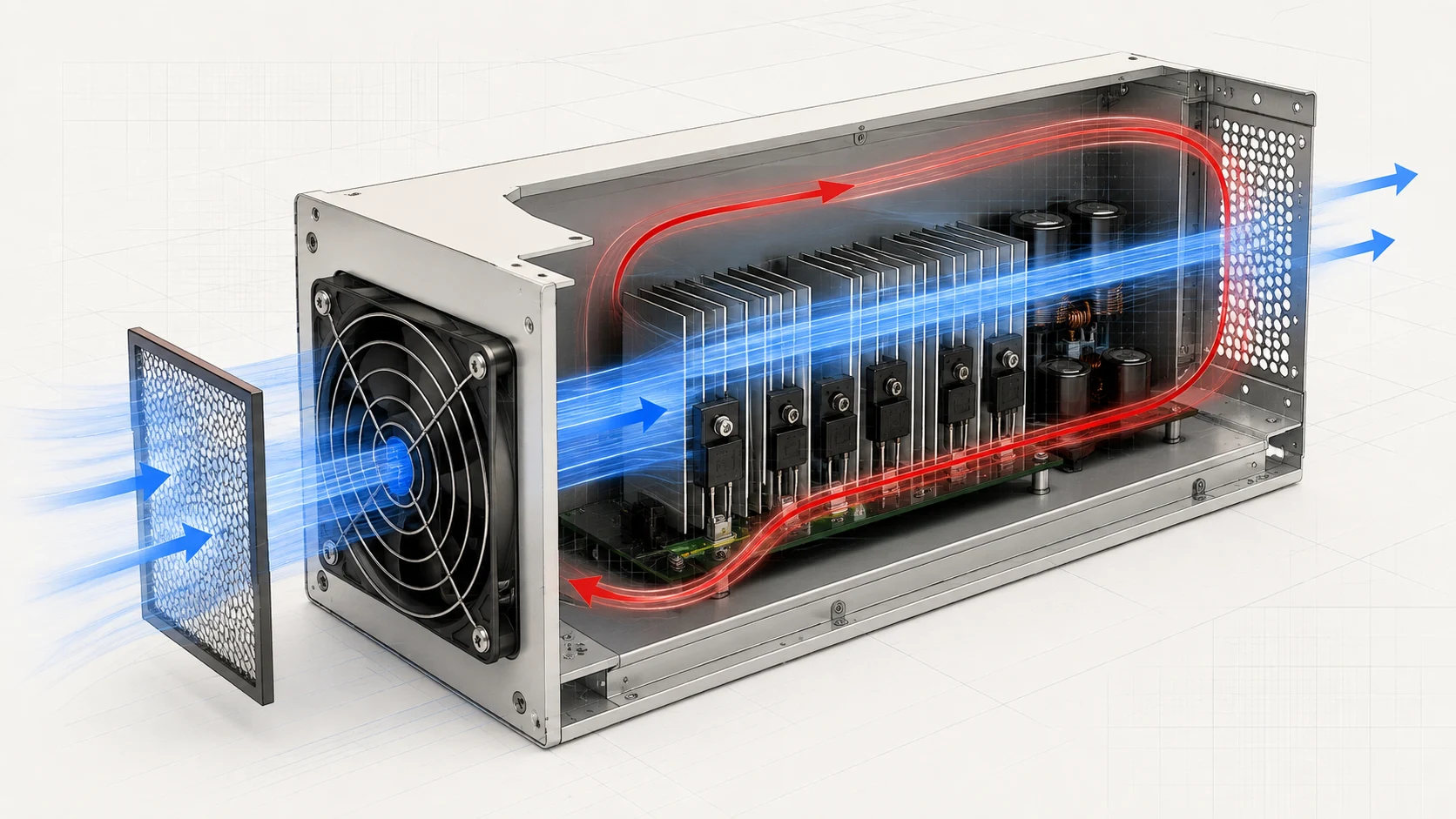
Prevent cooling fan installation failures by checking recirculation, bypass, grilles, filters, clearance and system effect before validation.
Read guide →Specify cooling fan bearing life and L10 by temperature, load, orientation and duty, then validate with a representative sample.
Read guide →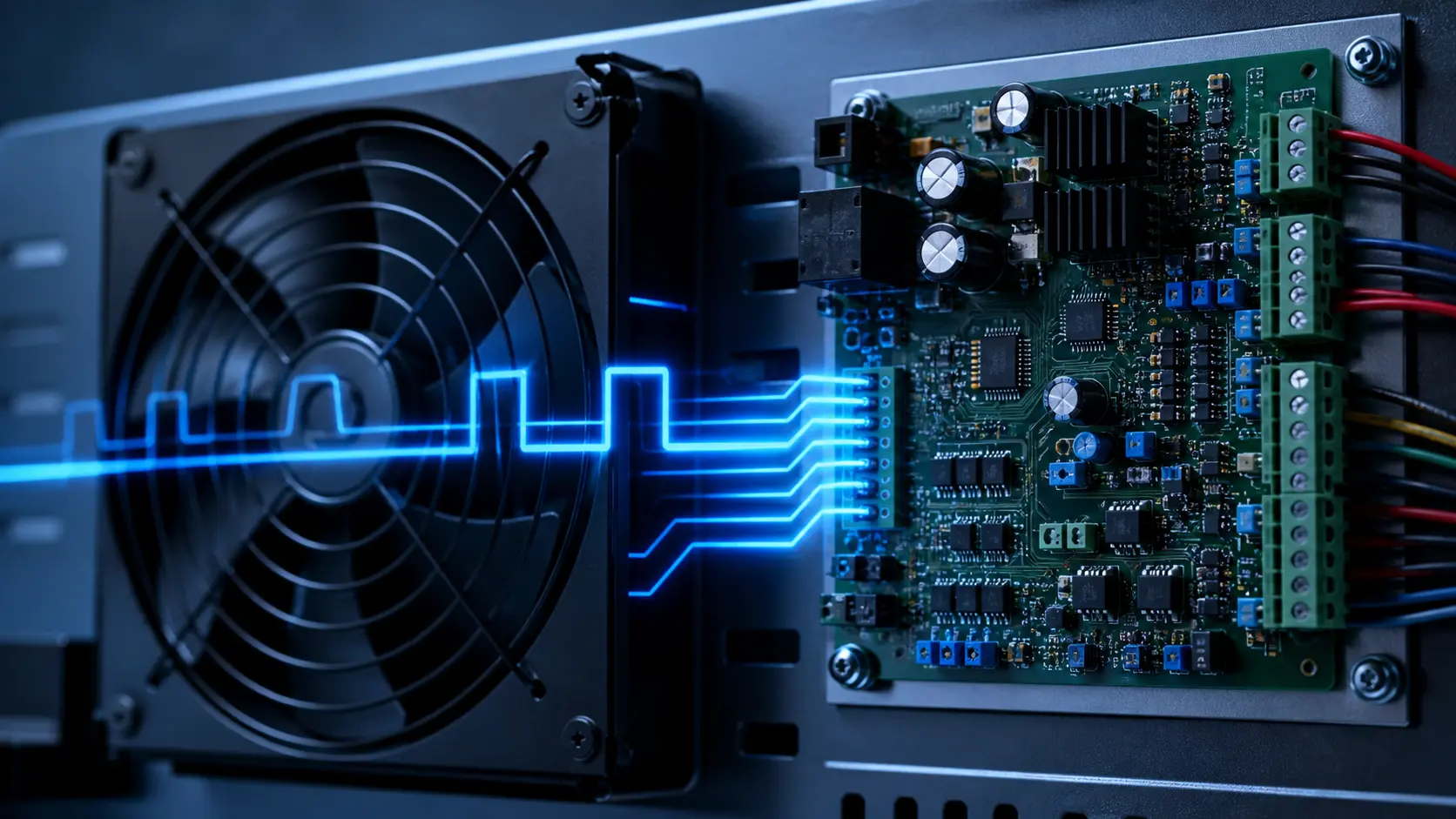
Validate 4-wire PWM cooling fans with TACH feedback, startup, minimum speed and closed-loop control in the installed system.
Read guide →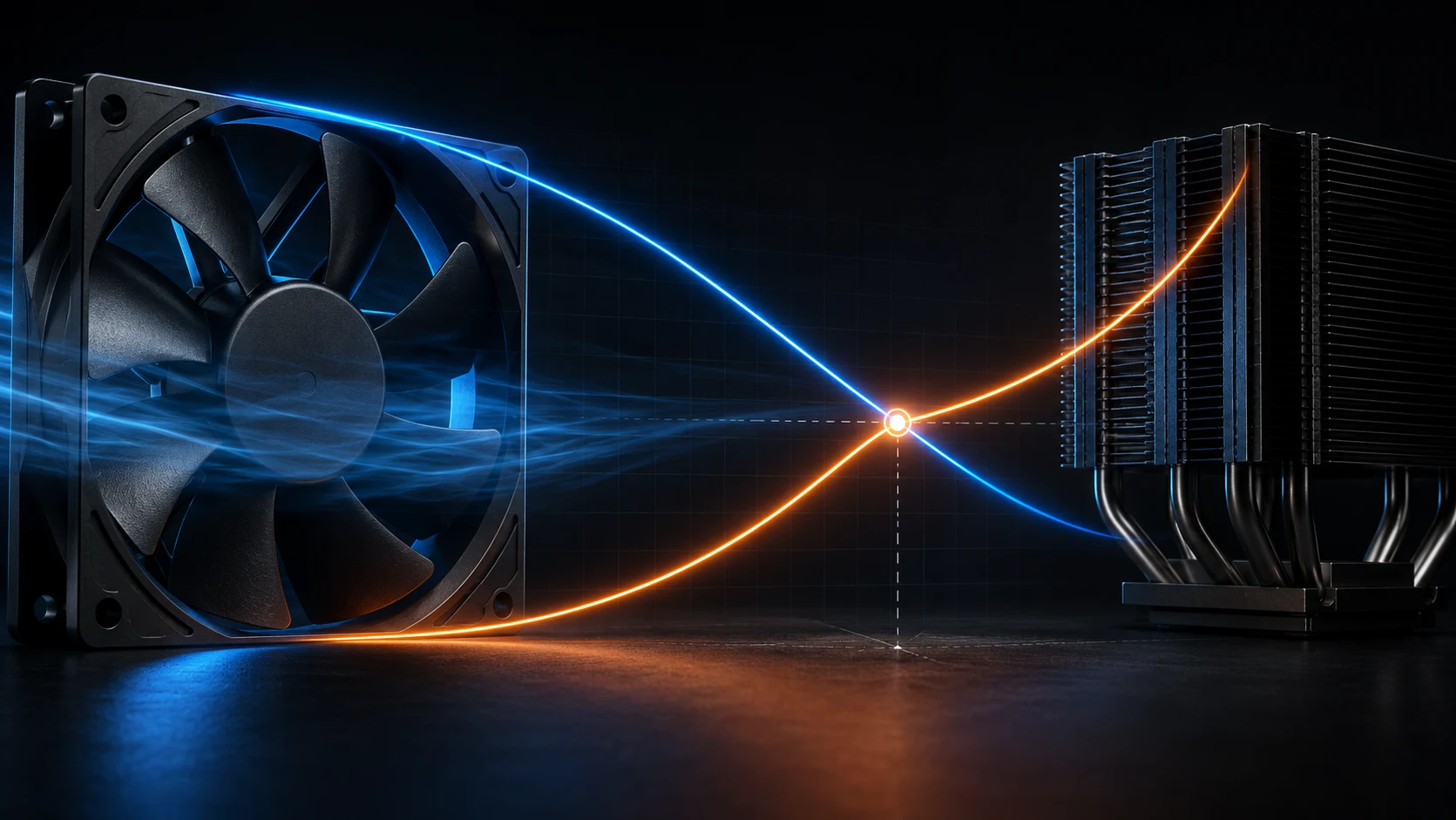
Learn how to read a fan P-Q curve and match airflow, pressure and the installed system operating point.
Read guide →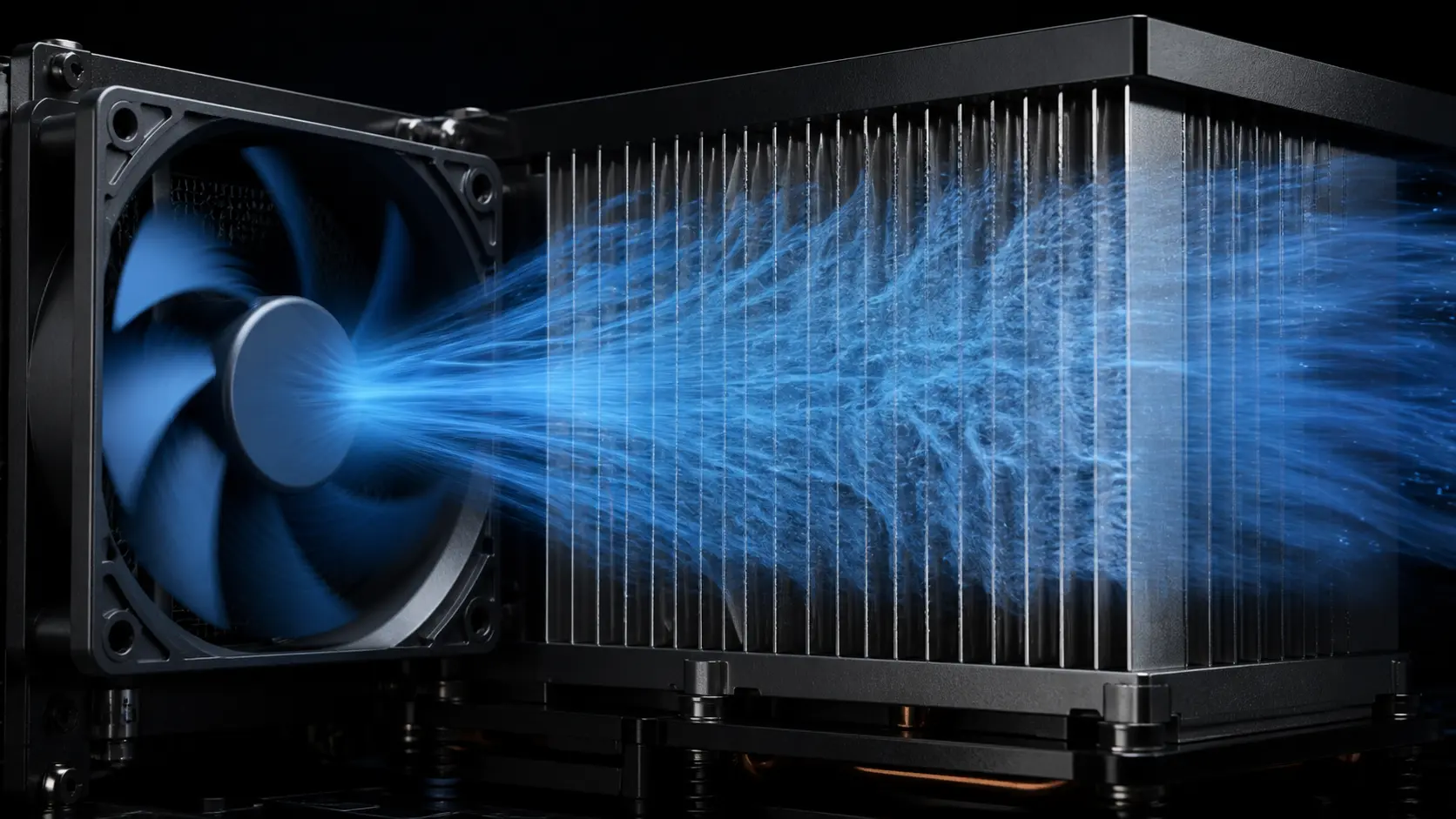
Understand fan static pressure by mapping filters, heatsinks, grilles and ducts to system resistance and the installed operating point.
Read guide →Calculate cooling airflow from heat load and temperature rise, then account for air density, system resistance and real fan performance.
Read guide →Select a cooling fan by heat load, system resistance and service life, then validate a sample in the airflow path.
Read guide →