Cell Temperature Spread
Uniformity across cells drives cycle life.
 TECHCooling Solutions
Application cooling
Reliable thermal management for battery energy storage systems.
Battery cabinets sustain steady heat through every charge and discharge cycle. We design airflow paths and fan packages that keep cell temperatures uniform, keep thermal spread tight and run unattended for years in outdoor cabinets.

Uniformity across cells drives cycle life.
Sustained heat during charge and discharge.
Dust, moisture and wide ambient ranges.
Years of reliable, low-maintenance operation.
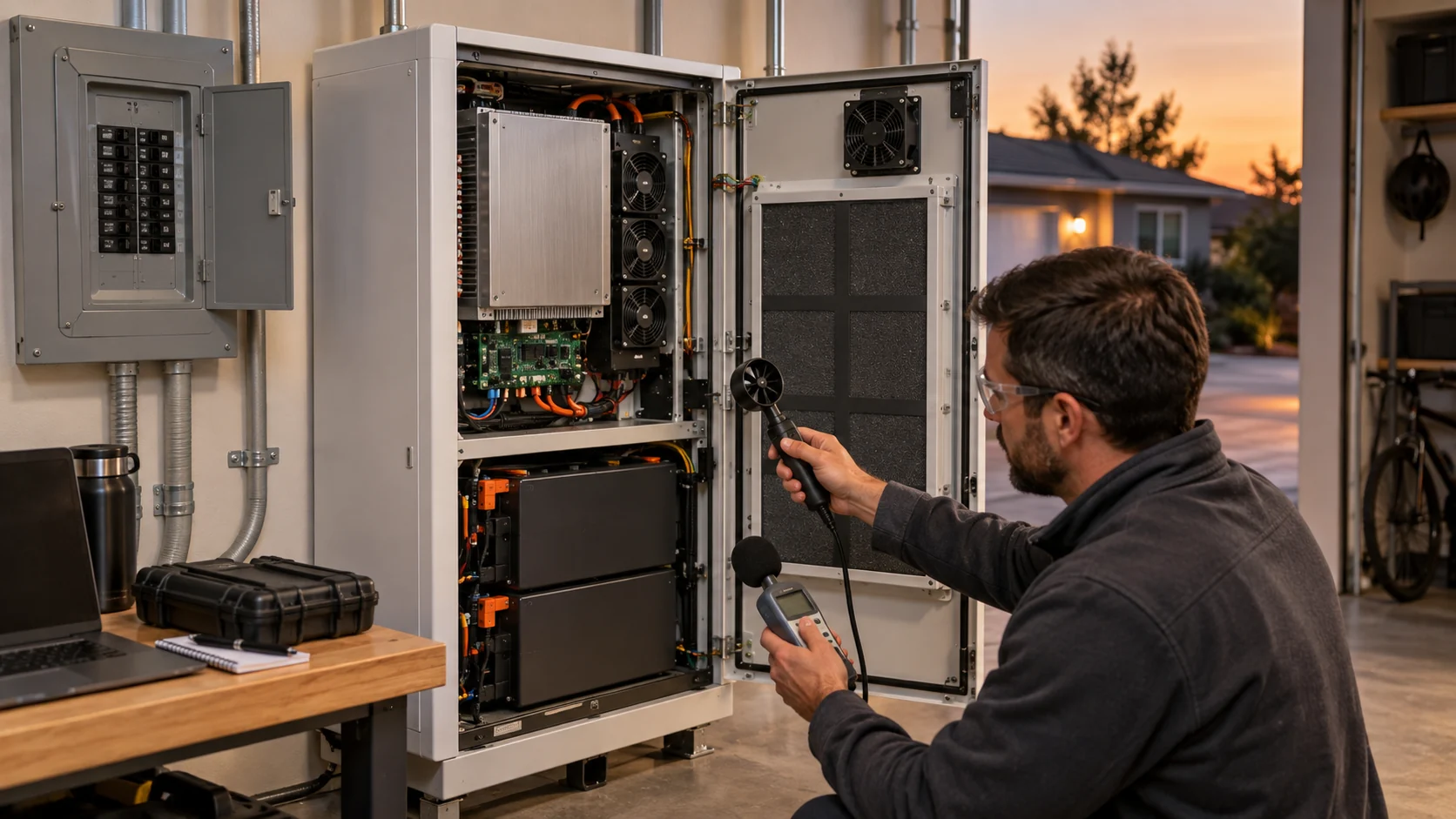
A practical engineering guide to validating residential energy-storage inverter fans across night standby, high ambient, loaded filters, acoustic limits and service conditions.
Read Article →
Why a BESS cabinet can pass an isolated thermal test and still lose cooling margin in a multi-container site, with a practical method for fan intake, filter pressure, recirculation and high-ambient validation.
Read Article →
A practical BESS cooling-fan control guide covering PWM frequency, minimum duty, FG pulse interpretation, RD alarms, grounding, EMC and installed airflow validation.
Read Article →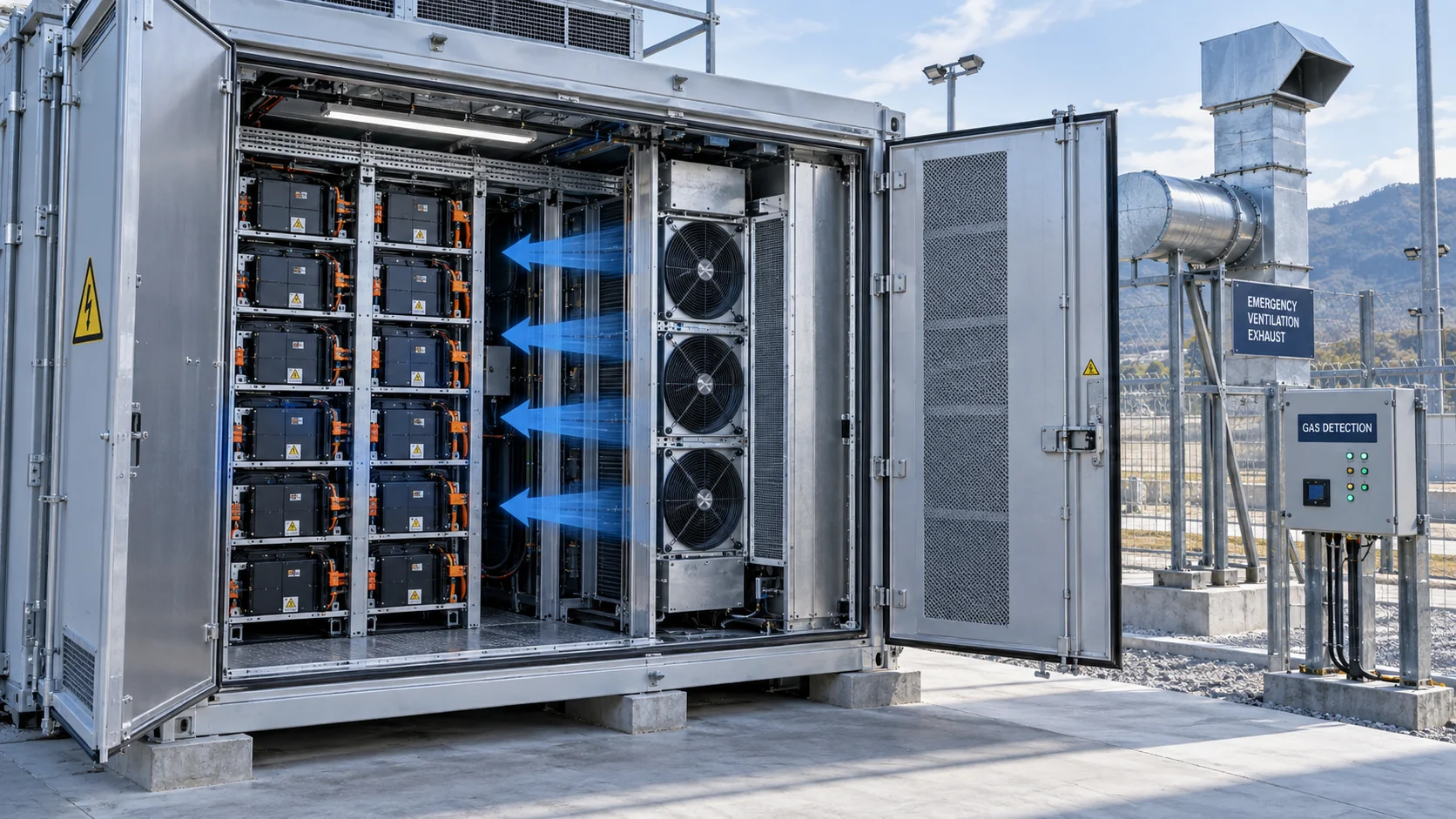
A practical BESS engineering guide to separating normal heat rejection, HVAC airflow and emergency ventilation duties before selecting a cooling fan or approving a cabinet design.
Read Article →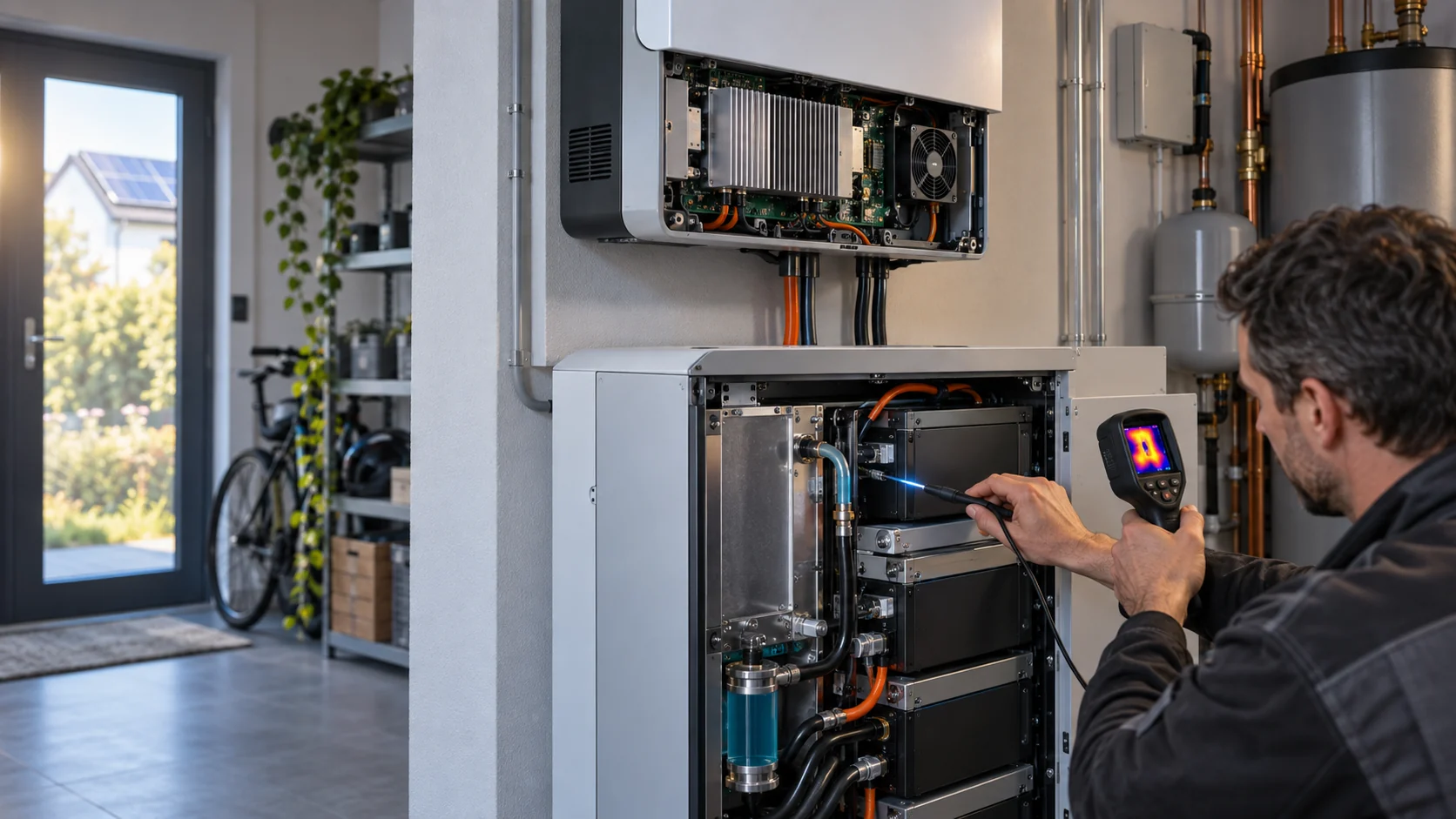
A practical guide to choosing passive, liquid, heat-pipe or fan-assisted cooling for European residential solar-storage systems.
Read Article →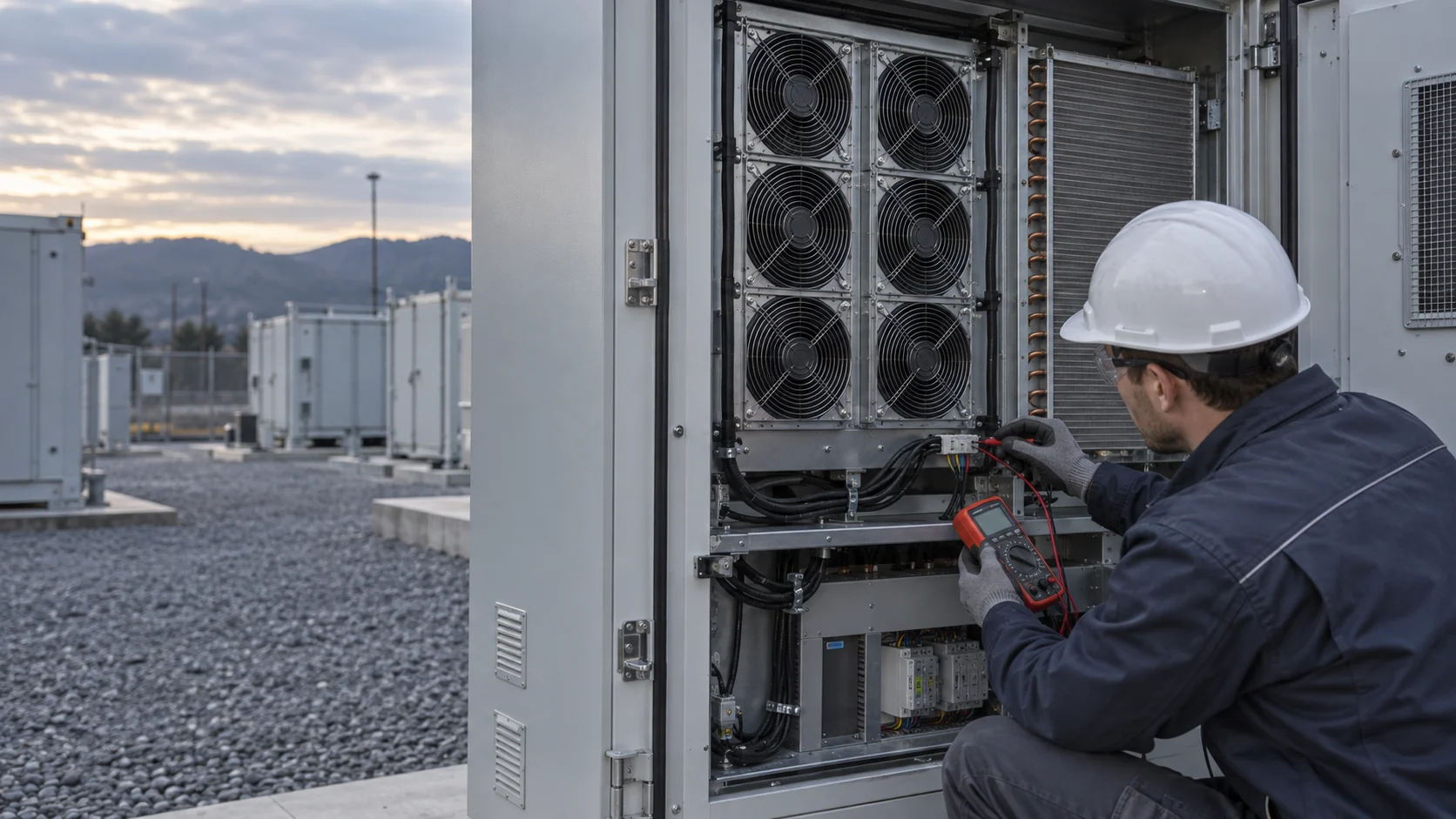
A practical BESS cooling diagnostic for fan supply voltage, cable drop, PWM control and tach feedback: verify the connector under load before classifying a fan as failed.
Read Article →
How BESS cooling teams can screen condensation risk by comparing inlet-air dew point with cold surfaces, then validate drainage, sealing, fan control and the installed air path.
Read Article →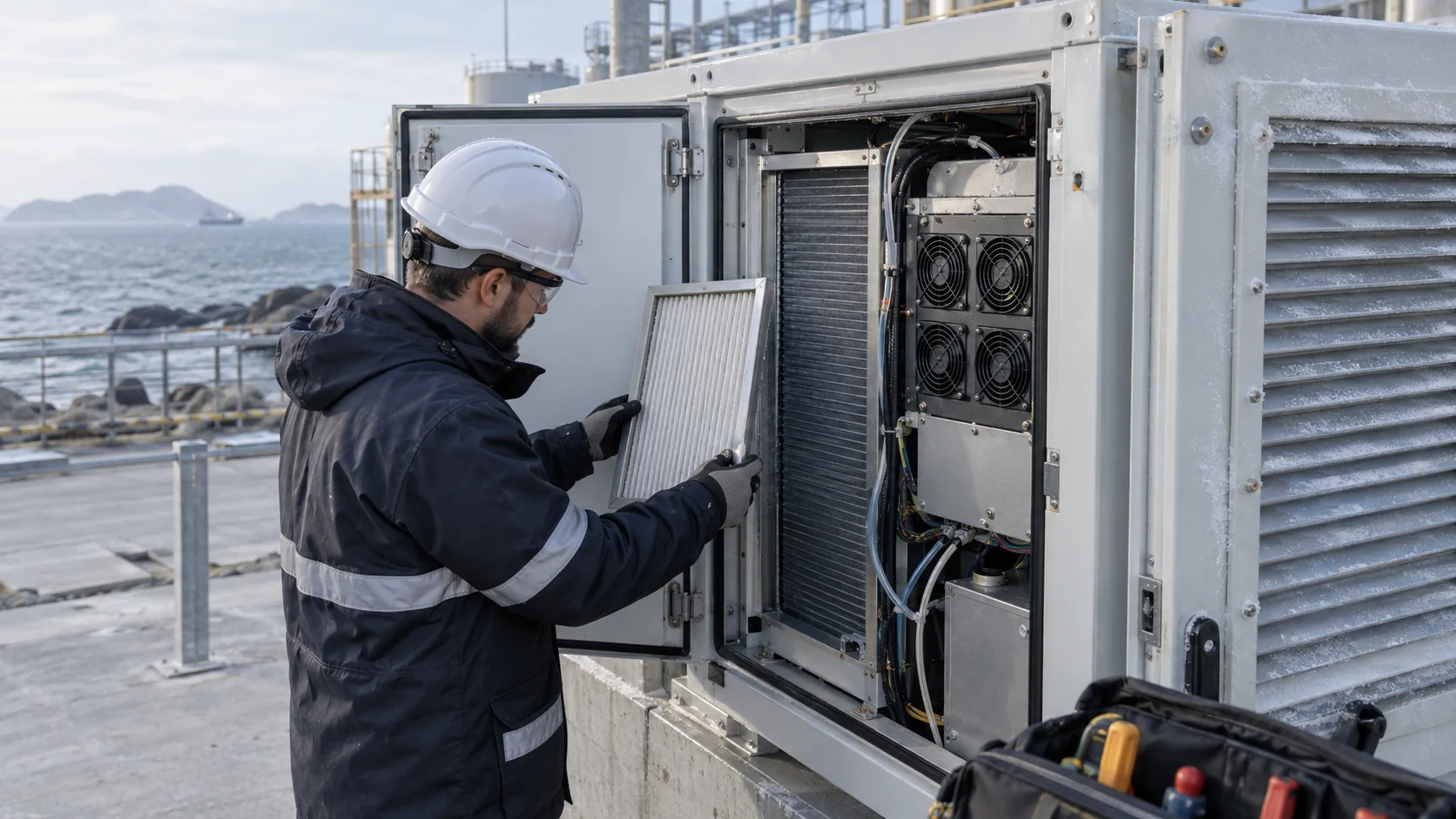
How to specify BESS cooling for dusty, coastal and humid locations: separate fan-level requirements from enclosure protection, define the service air path, and validate corrosion, ingress, pressure and thermal duty together.
Read Article →
Combine PWM command, tach feedback, current, pressure and temperature to catch fan and filter faults early.
Read Article →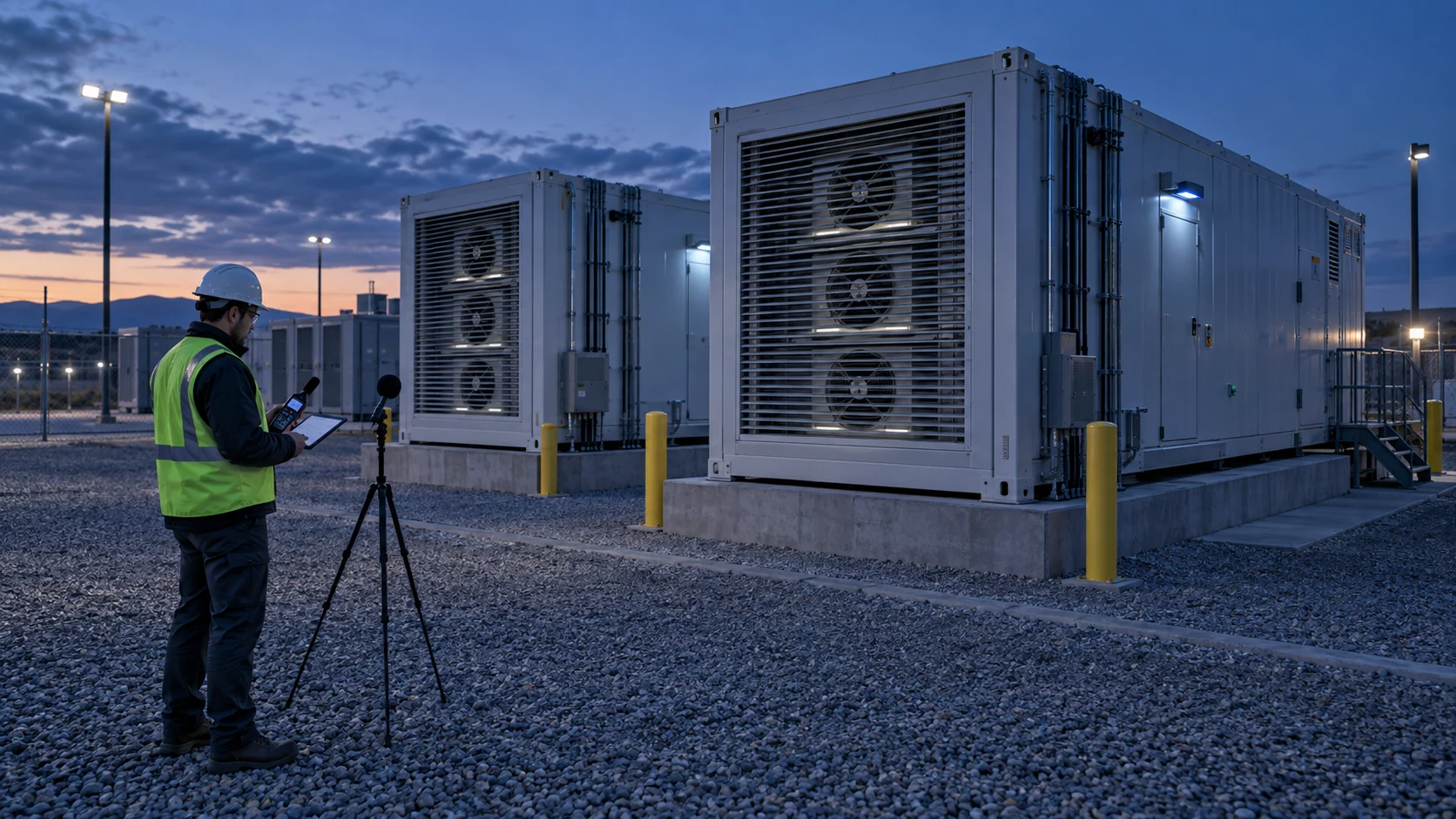
How to reduce outdoor BESS fan noise without hiding thermal risk: define the operating modes, measure the installed sound path, avoid resonance bands and validate PWM control at the real working point.
Read Article →
Set filter alarms from a clean baseline, the approved final pressure and speed-normalized logic, not one fixed Pa value.
Read Article →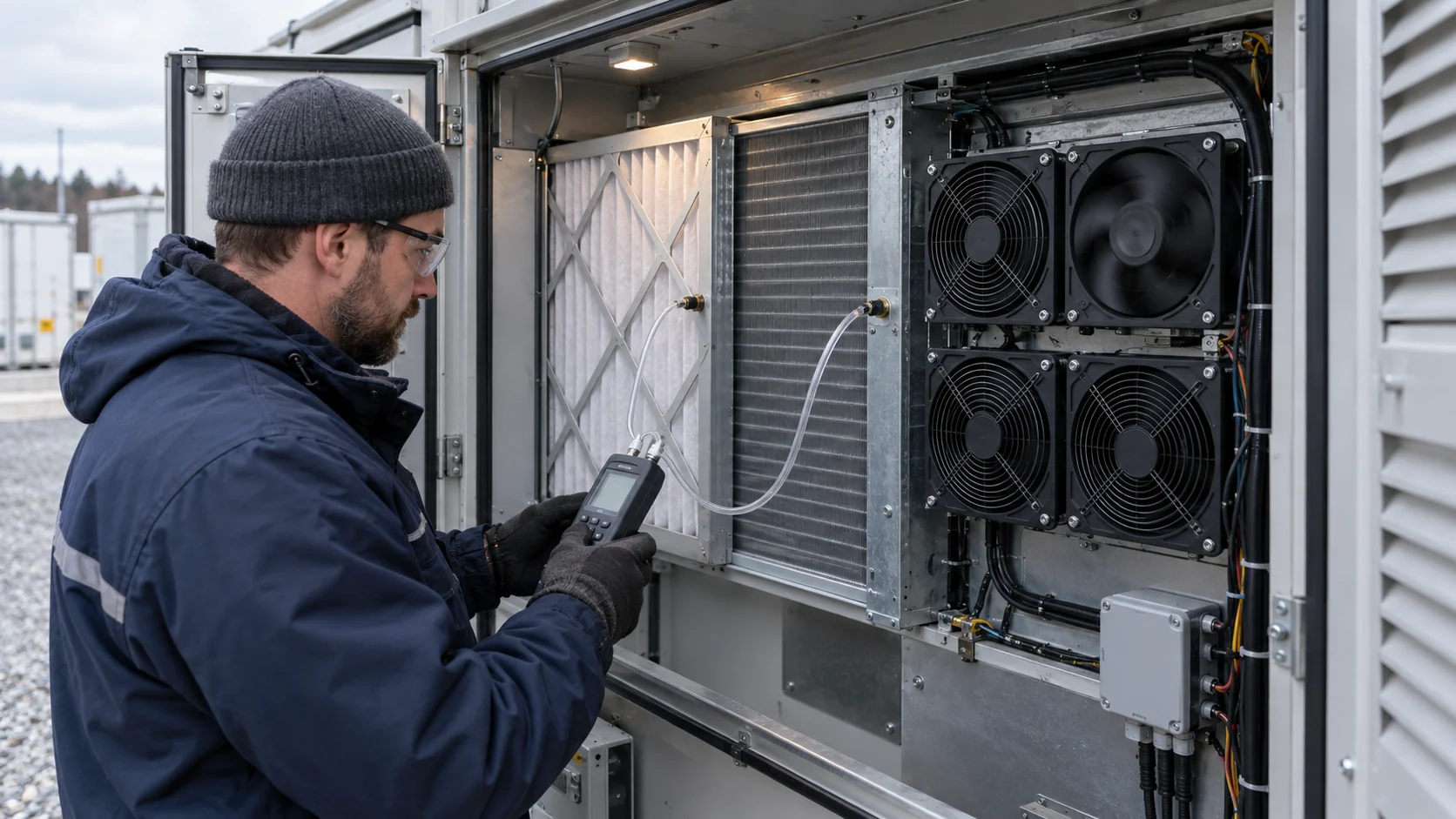
Tach feedback normal but BESS airflow low: read pressure, restriction, bypass and the operating point before replacing any fan.
Read Article →
Validate BESS fan arrays after one fan stops: installed pressure, reverse-flow path and thermal response before approving an N+1 claim.
Read Article →
How to reduce BESS cooling-fan energy responsibly by defining the auxiliary-power meter boundary, validating the installed duty point, and proving PWM control across load, ambient and filter states.
Read Article →
Validate BESS cooling fans at high ambient: attach density, recirculation and temperature ratings to every margin.
Read Article →
A practical BESS cooling acceptance test: verify temperature, airflow, pressure, fan control and alarms through a representative power step instead of approving HVAC from one stable reading.
Read Article →
How to select a BESS liquid-to-air heat exchanger fan for installed coil pressure, and validate airflow, face velocity and controls.
Read Article →
Qualify a BESS fan replacement at the measured duty point: frame match is not thermal match.
Read Article →
Pick the static pressure that beats casing bypass, then validate a customized fan and airflow path so air-cooled cells stay balanced over the design life.
Read Article →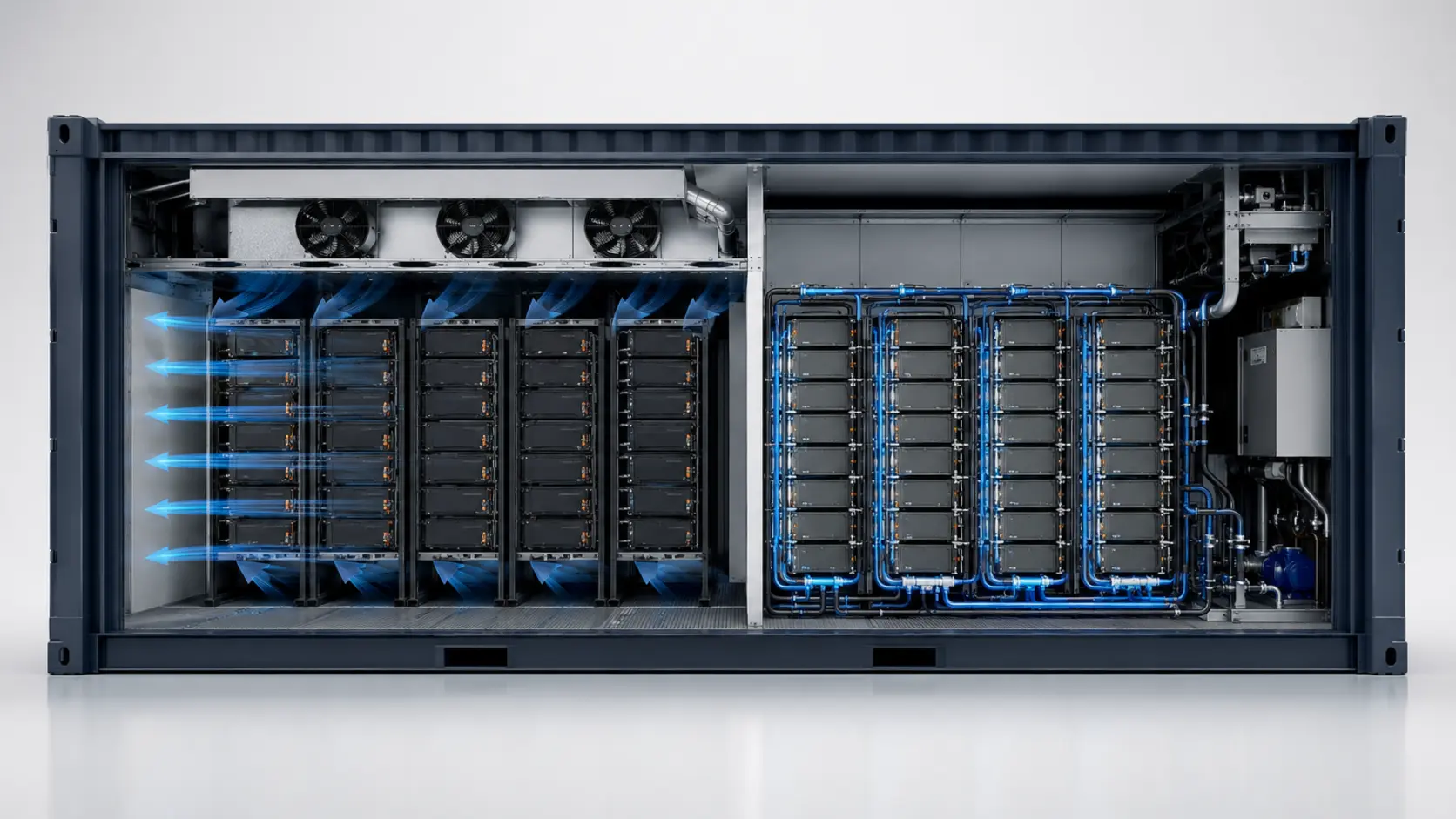
Where the air-vs-liquid line sits, why cell temperature uniformity beats raw cooling, and how a custom fan sample can make the air side work.
Read Article →
Separate normal BESS thermal management from gas detection and emergency ventilation, then define fan interfaces, evidence and custom-sample boundaries.
Read Guide →
Plan BESS cabinet cooling for filter loading with pressure-drop evidence, PWM limits, maintenance alarms and representative thermal validation.
Read Guide →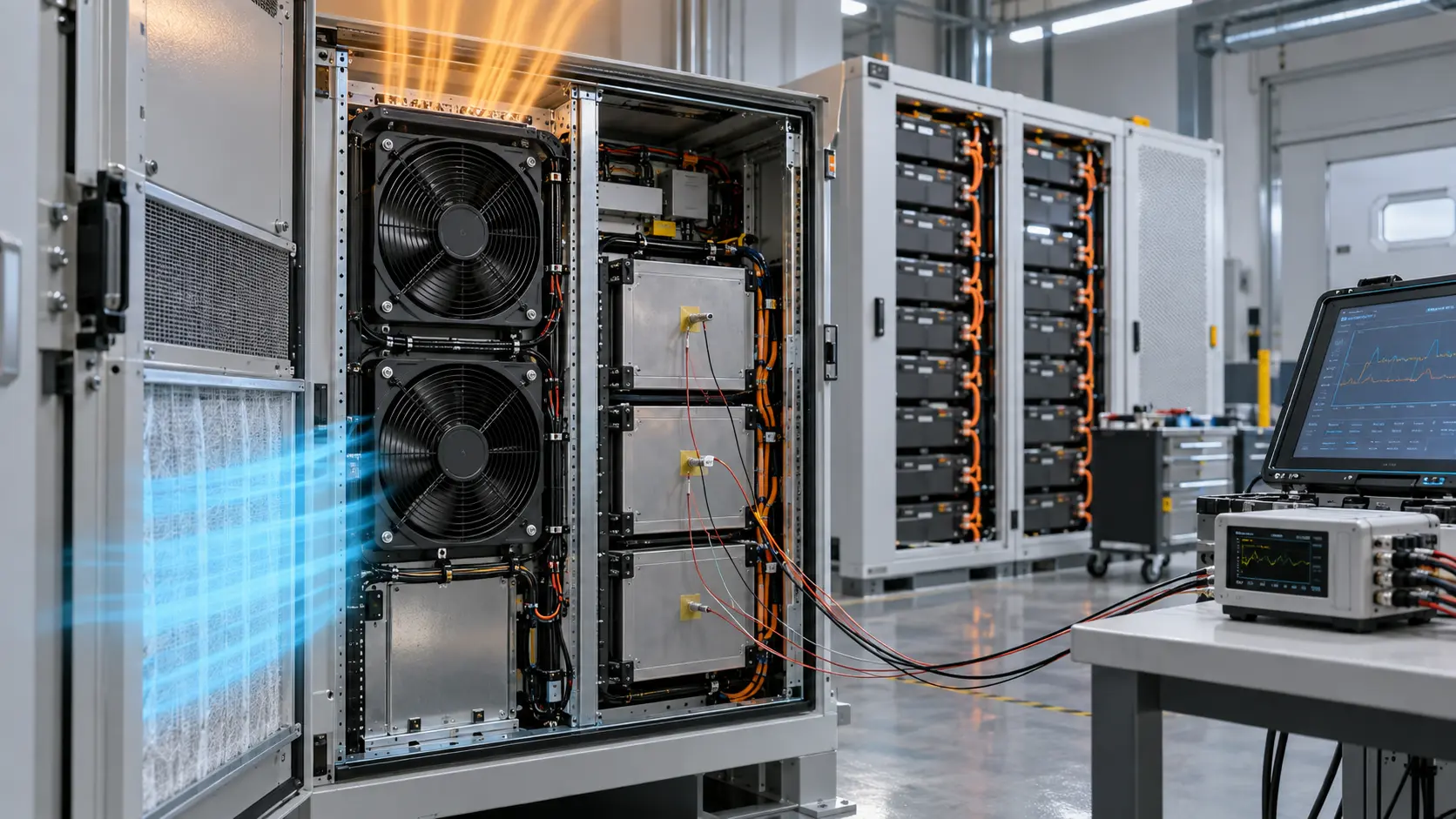
Design BESS cooling-fan control around thermistor placement, PWM response, FG feedback and a clear boundary between normal thermal management and emergency ventilation.
Read Guide →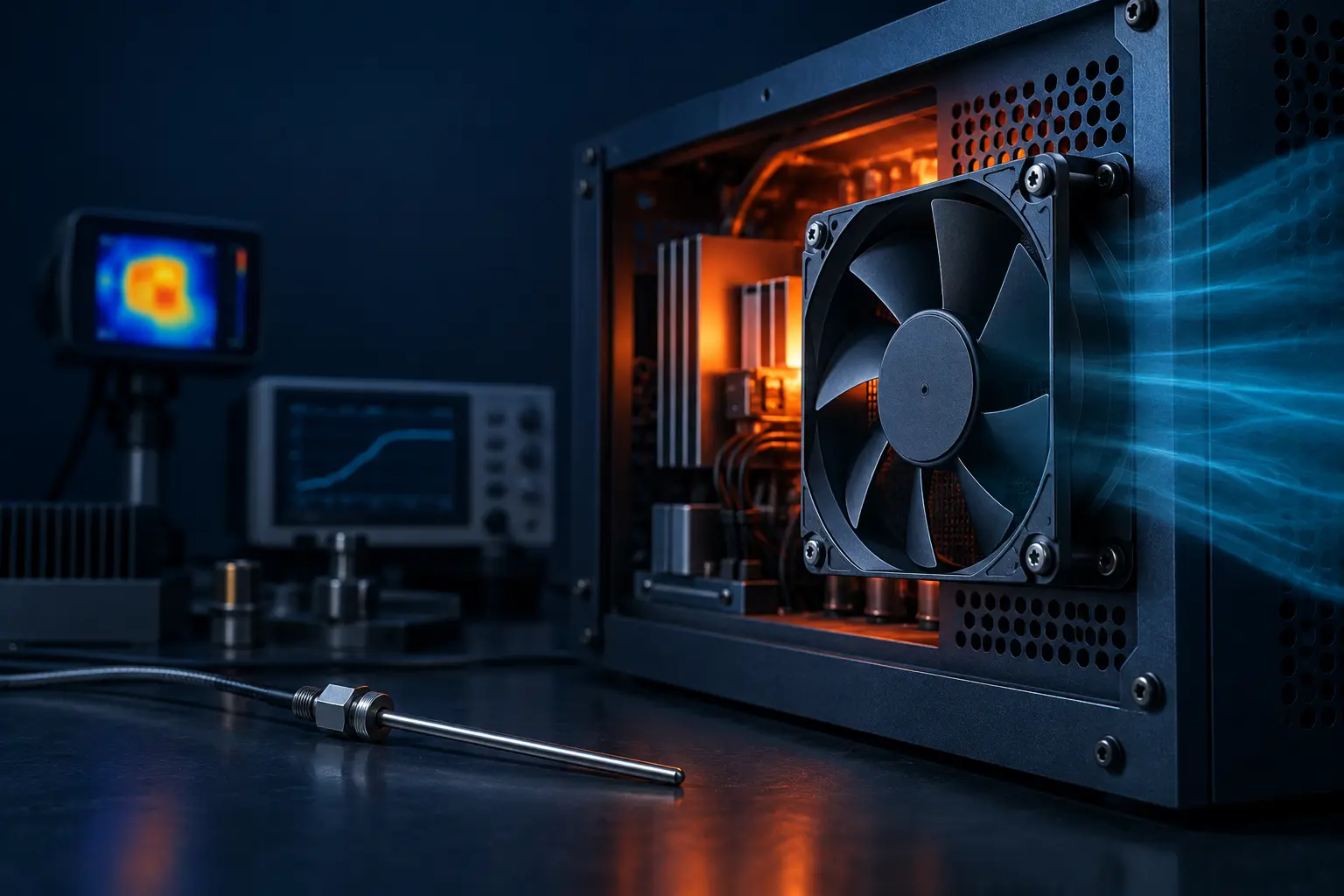
Select a cooling fan for hot or harsh environments by checking the real operating point, air density, bearing life, control interface, protection and sample validation conditions.
Read Guide →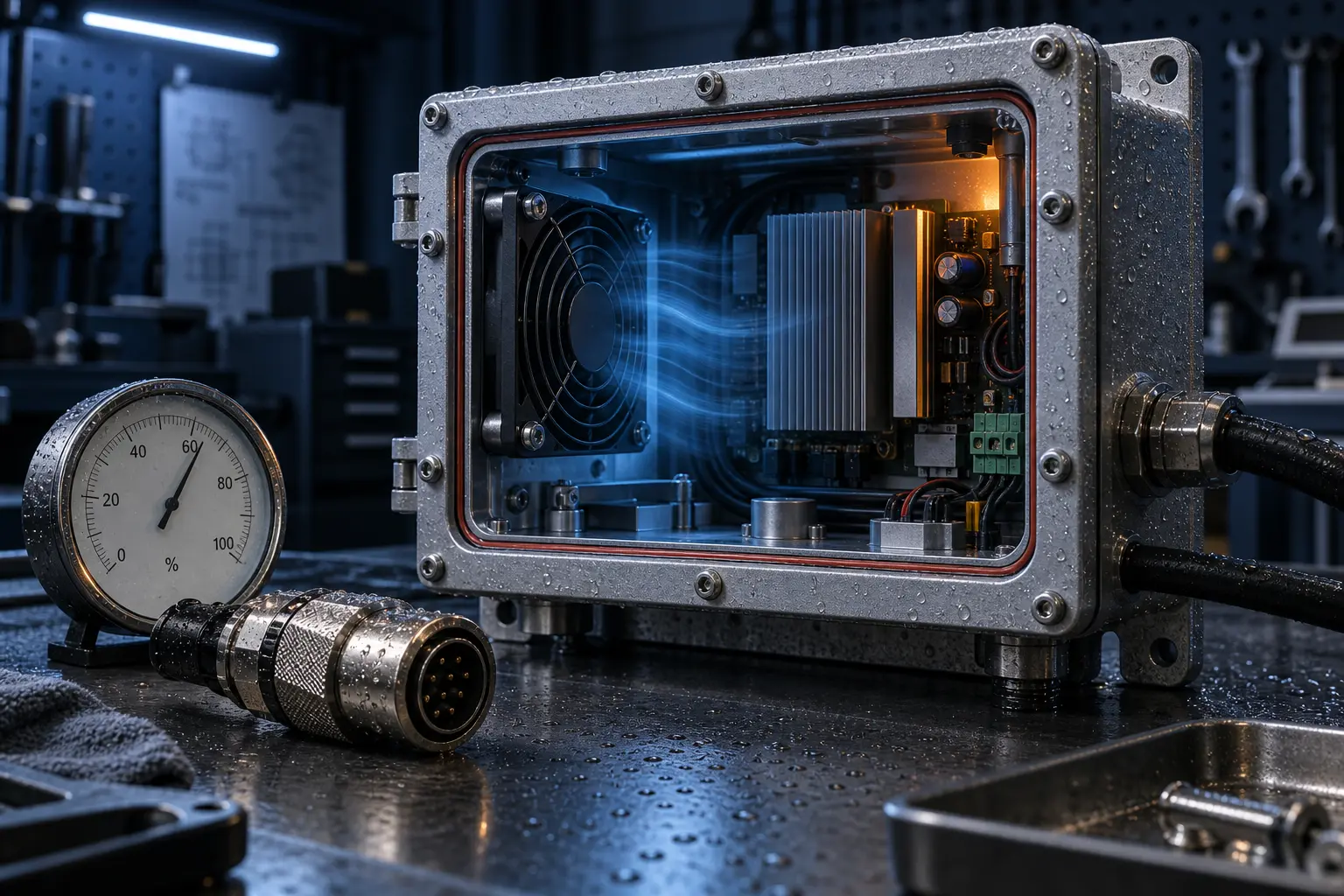
Specify cooling fan protection for dust, water, oil mist, humidity and condensation without confusing a fan IP rating with whole-product qualification.
Read Guide →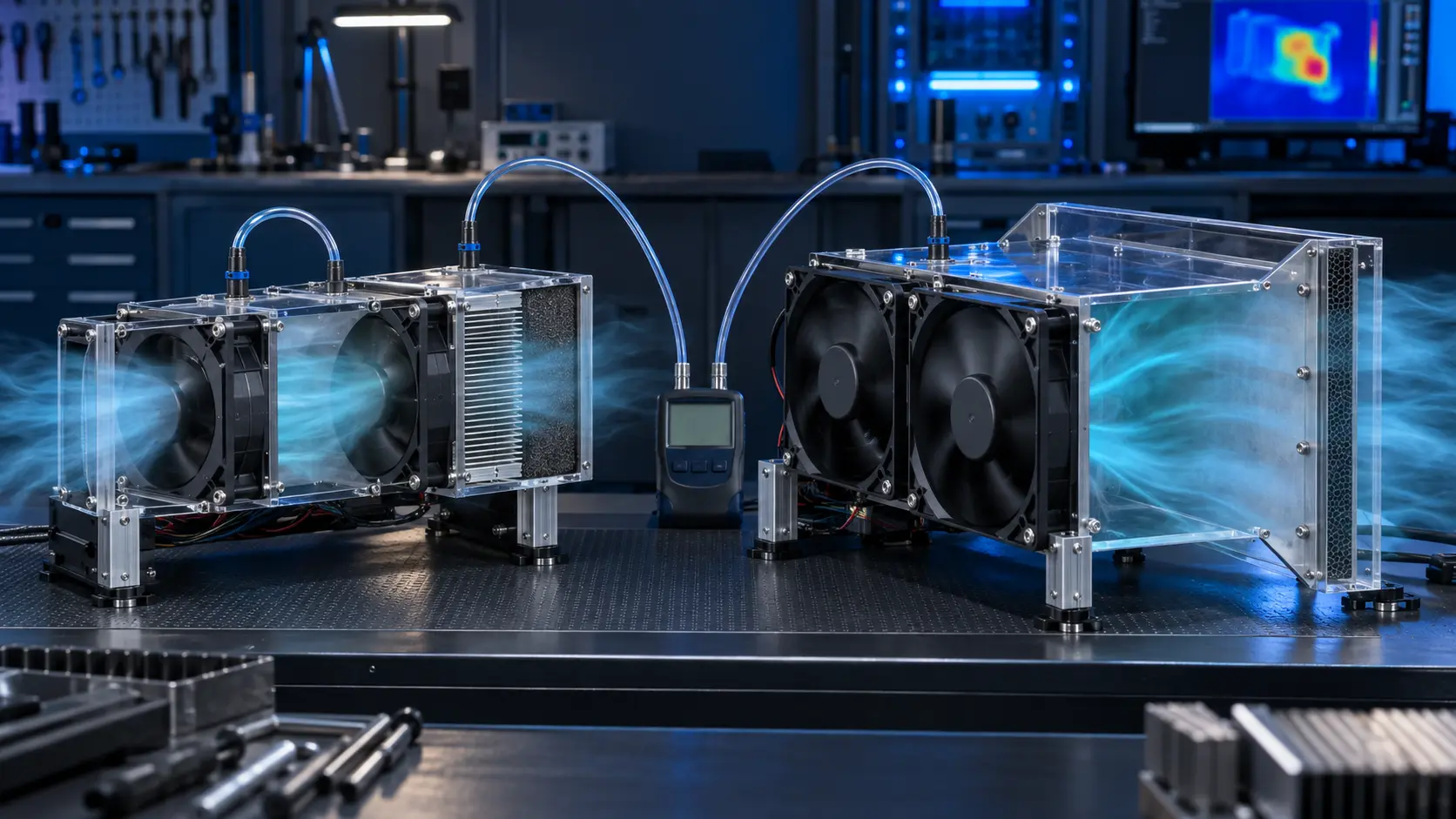
Choose series or parallel cooling fans from the real system curve, then validate interaction, failure behaviour and installed airflow before approving the design.
Read Guide →Target airflow and static pressure at that airflow, available space, voltage tolerance, control signal, connector, noise limit, quantity and the temperature or ingress conditions. If you have a current fan, send its label and the system context rather than relying on frame size alone.
Start fan selection →MEGA Tech catalogue reference
Our current catalogue contains 107 fan series and 1,184 listed variants. Use the catalogue voltage, current, input-power, airflow and static-pressure fields as a first selection reference, then confirm the final fan in the customer air path with a sample.
Scope: MEGA Tech develops and manufactures the fan. Complete cabinets, coils and liquid loops remain the system integrator responsibility.