High Power Density
Fast-charge heat in a small footprint.
 TECHCooling Solutions
Application cooling
Advanced cooling for EV power electronics and charging.
Electric charging generates intense heat in compact, outdoor-rated enclosures. We support charger, converter and battery cooling with high-airflow, sealed packages that survive weather, dust and years of daily cycling.
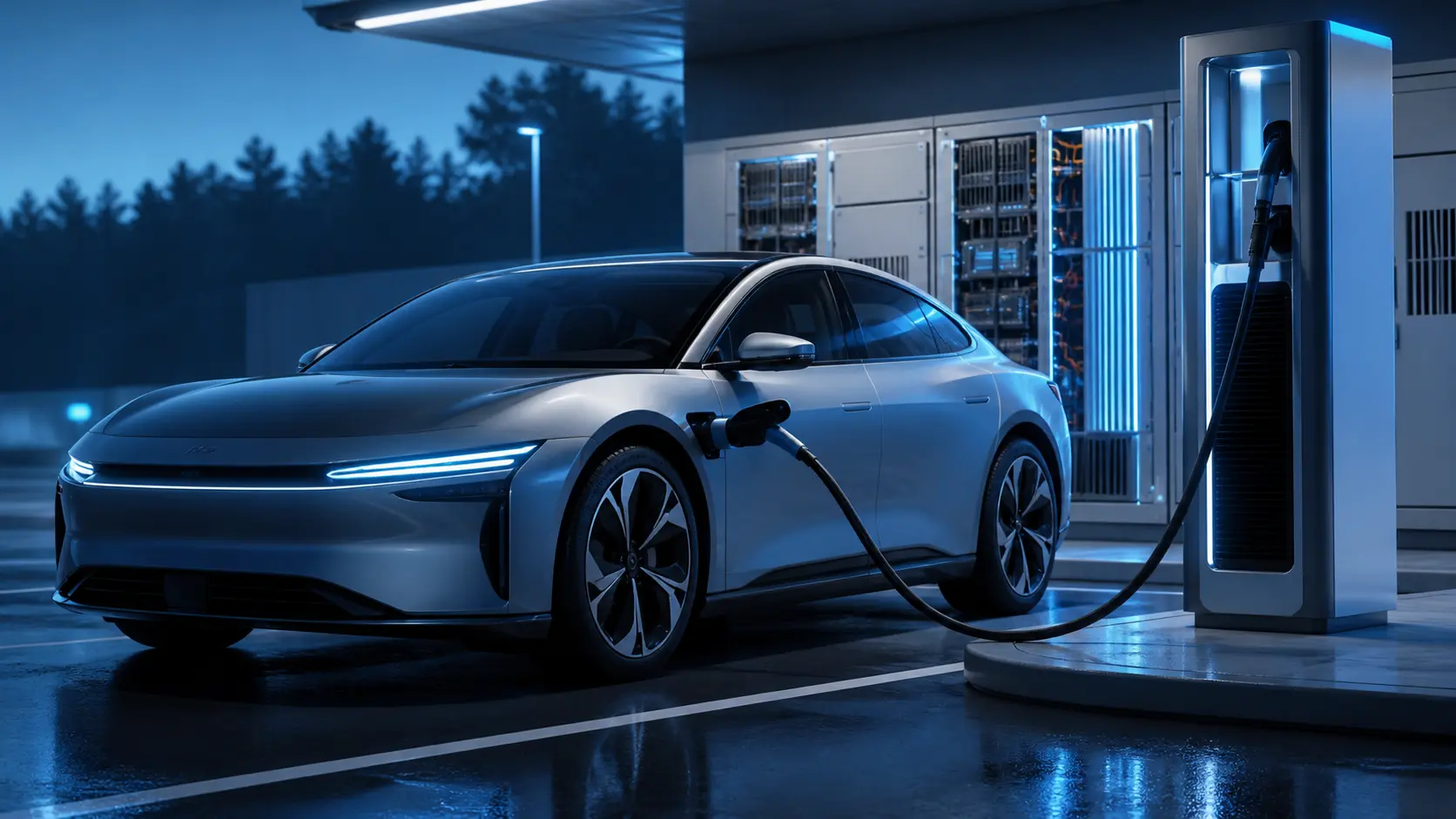
Fast-charge heat in a small footprint.
Rapid thermal rise and fall, day after day.
IP67-rated against rain and dust.
Consistent cooling at full duty.
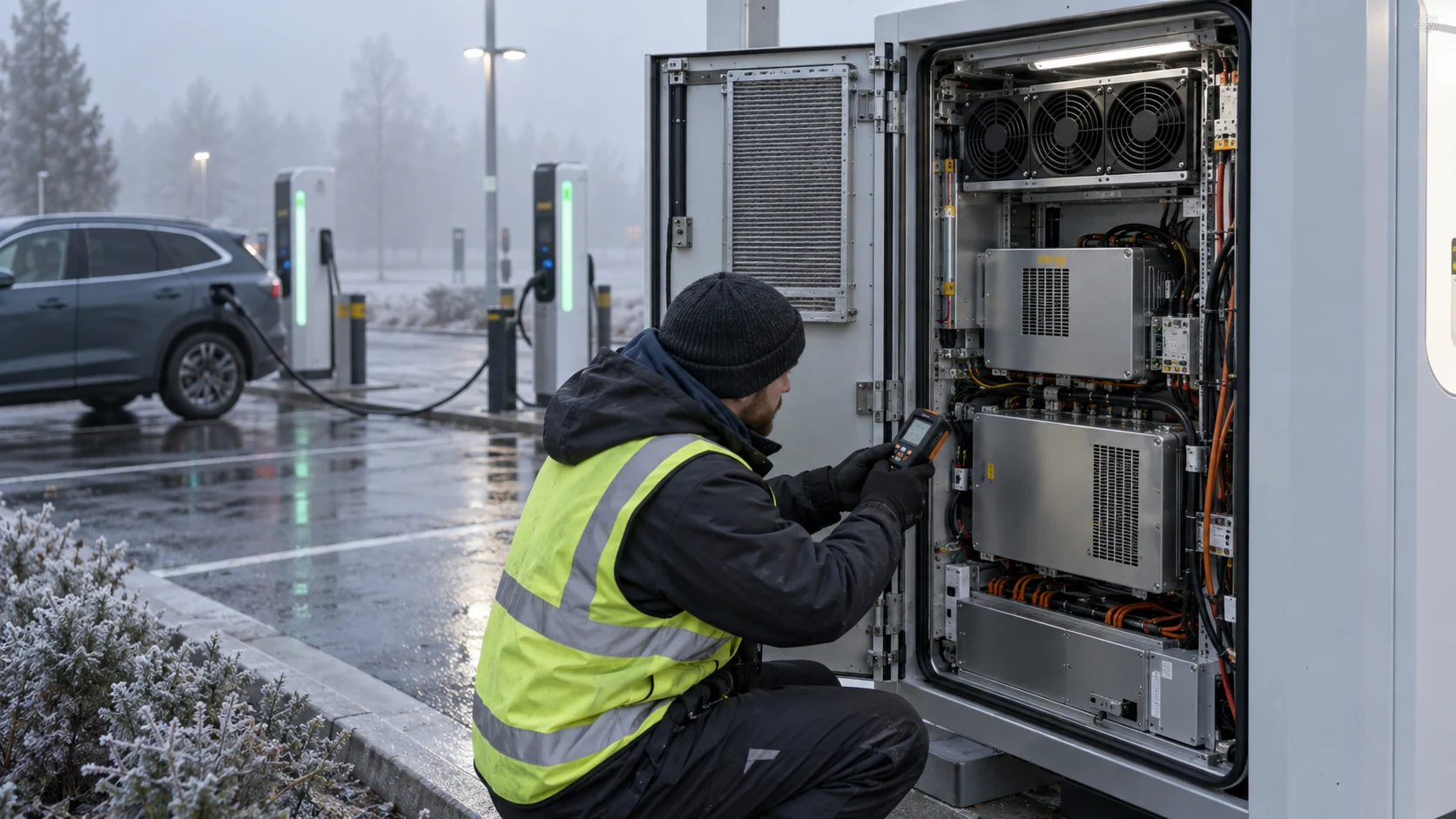
A practical engineering guide to outdoor EV fast-charger fan selection when cold starts, condensation, salt fog, filter pressure and charging power derating change the real cooling requirement.
Read Article →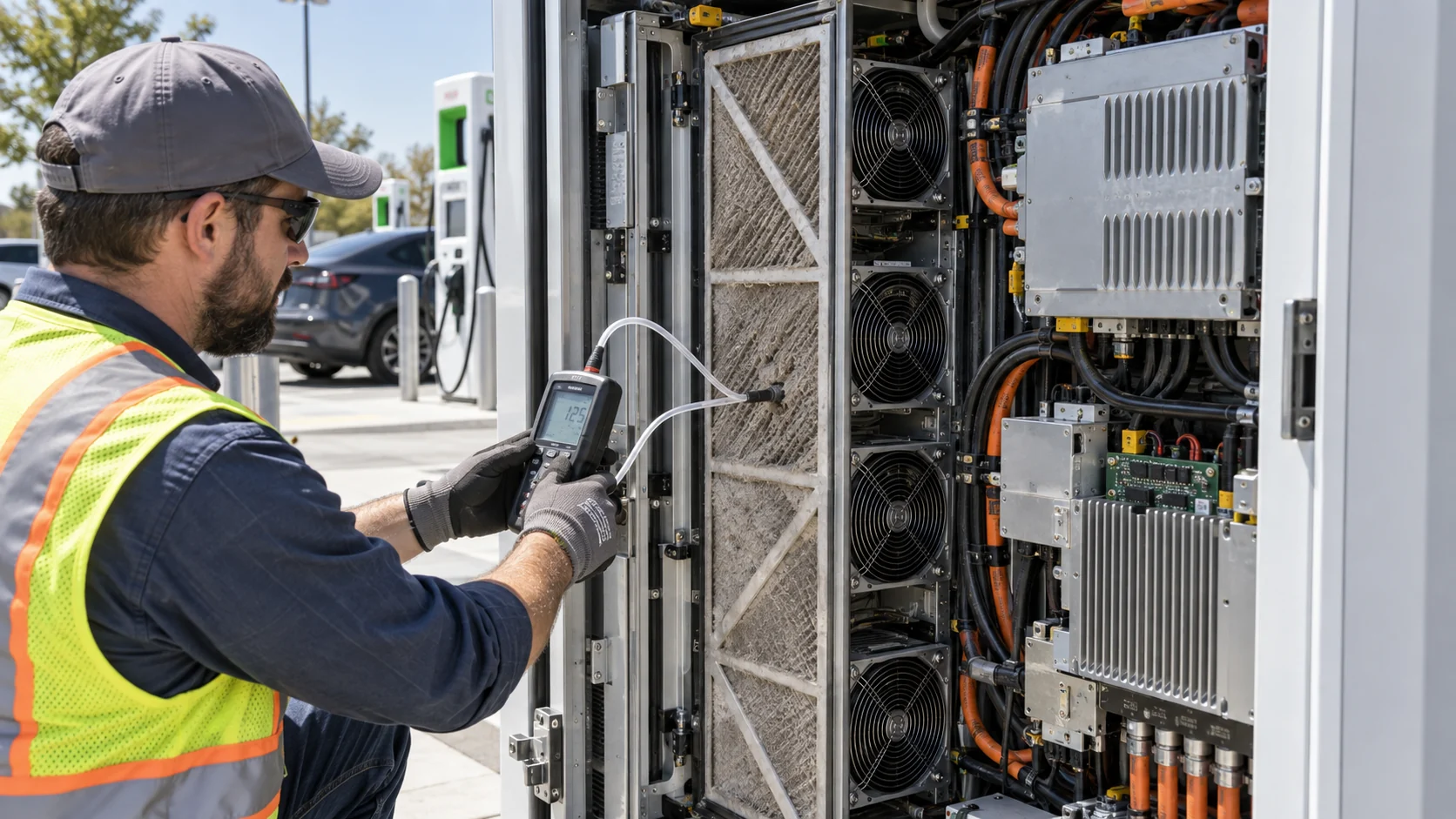
A practical guide to diagnosing EV fast-charger power loss when high ambient, clogged filters, heat-exchanger pressure and fan control interact.
Read Article →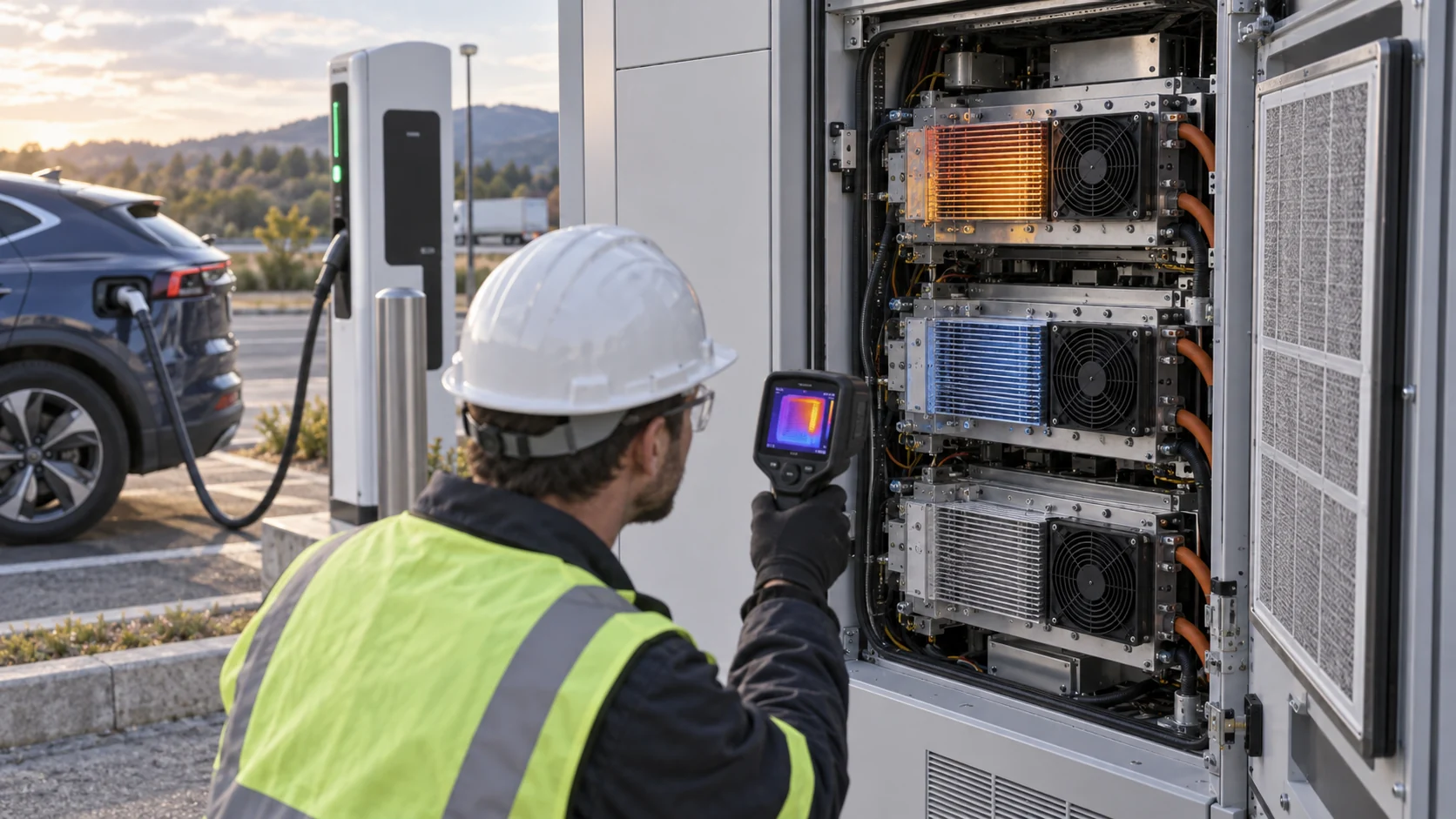
A practical thermal-validation guide for EV charging power cabinets: convert power-module losses into fan duty, test variable charging power, filter pressure, fan control and thermal derating before release.
Read Article →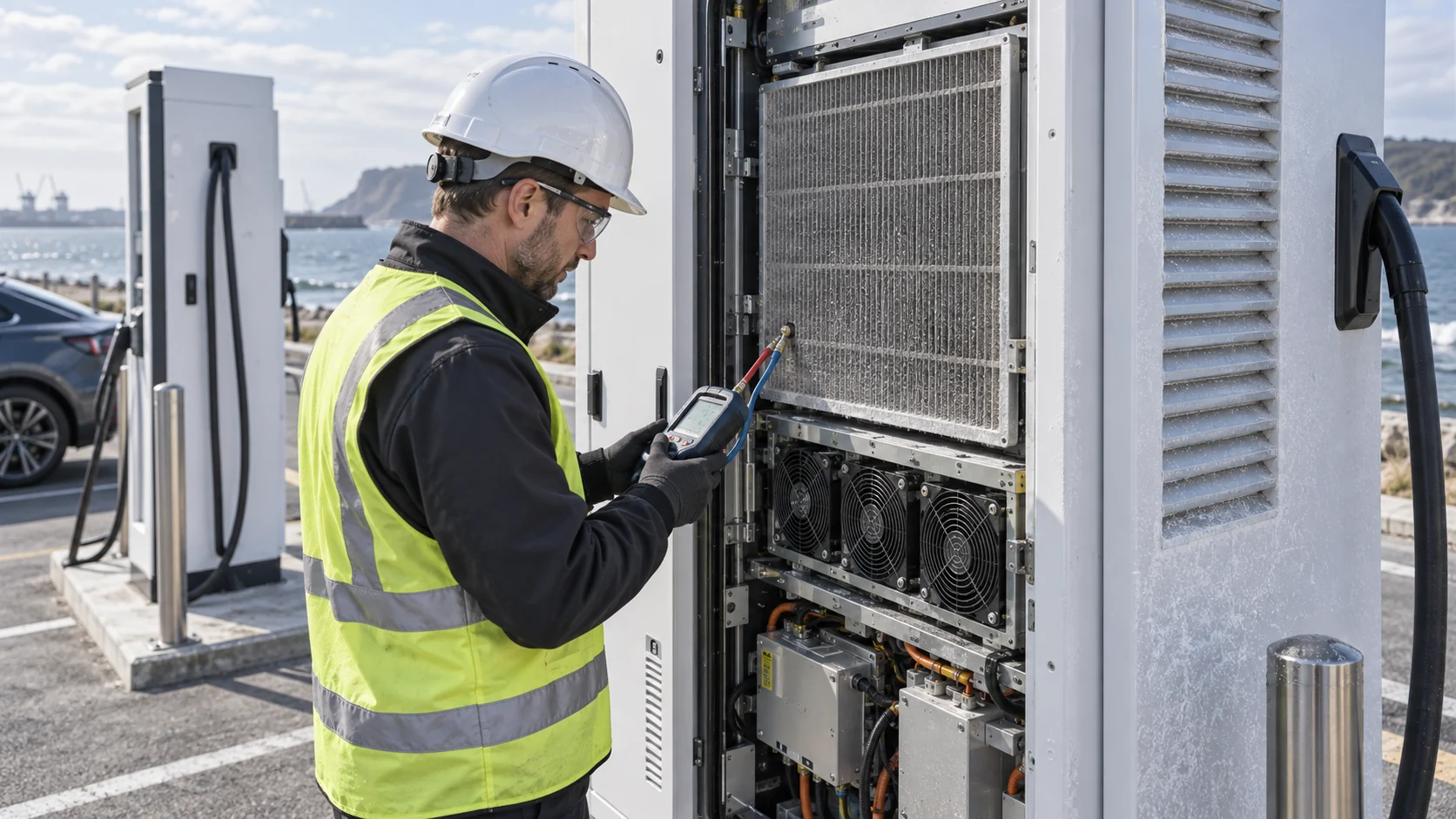
How EV fast-charger engineers can validate cooling fans and filters for dust, salt mist, pressure drop, corrosion, noise and power derating in outdoor installations.
Read Article →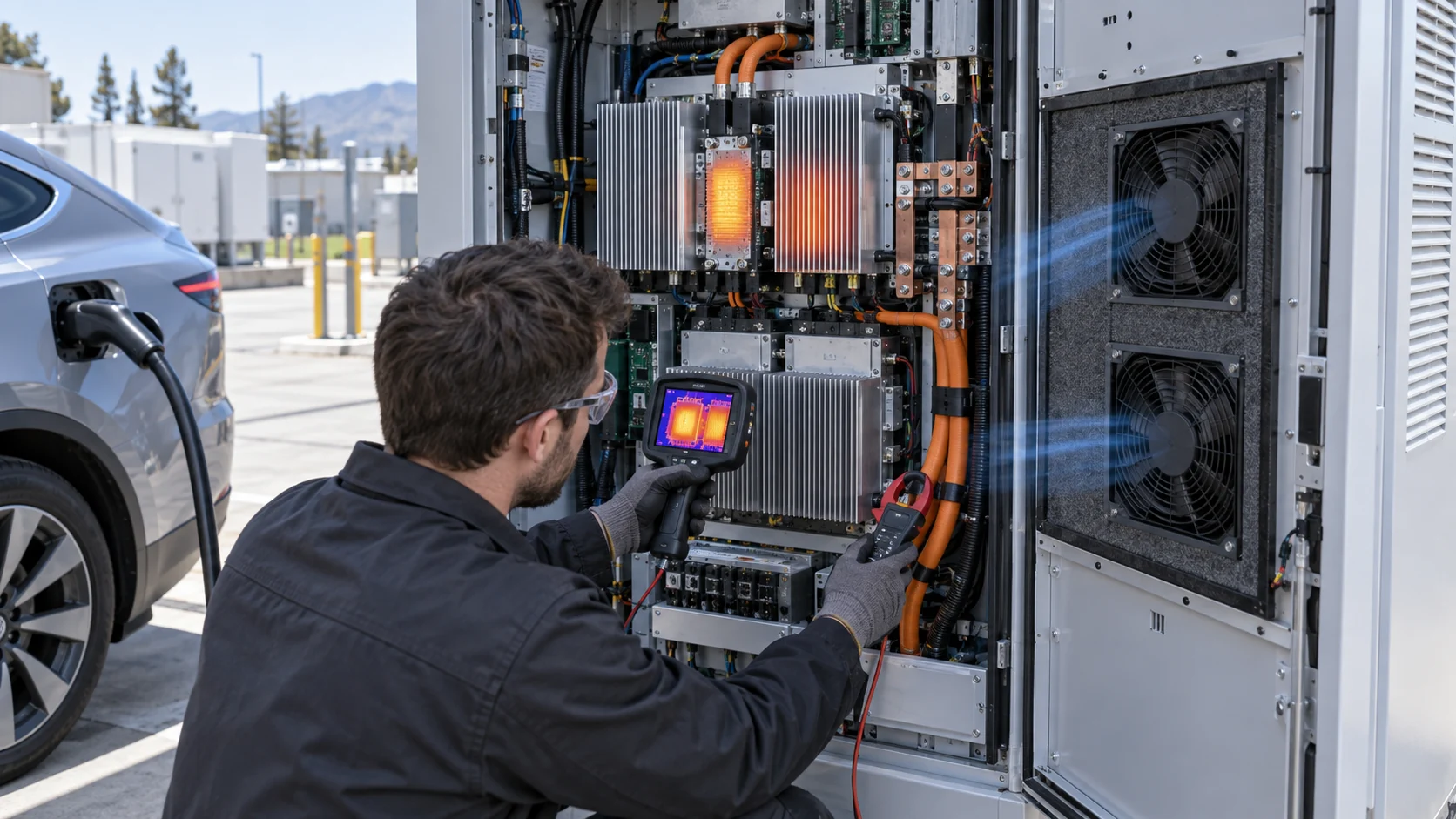
A practical engineering method for converting EV charger power loss into an installed fan requirement, then validating heatsink airflow, pressure, PWM control and thermal derating in the real cabinet.
Read Article →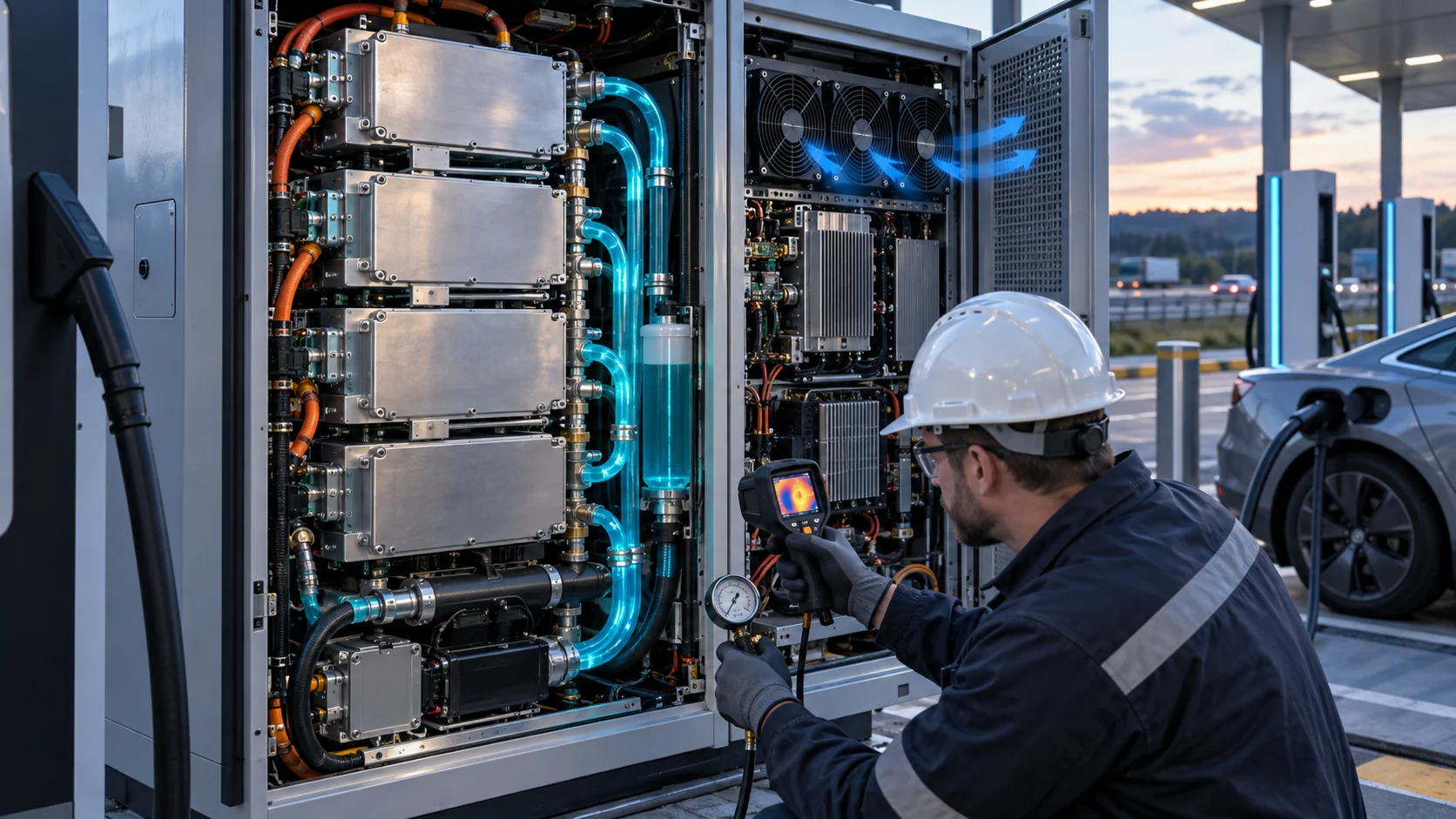
A practical guide to selecting cooling fans for 60–350 kW EV chargers when SiC power modules, liquid cold plates, cabinet air paths, noise, dust and thermal derating must work together.
Read Article →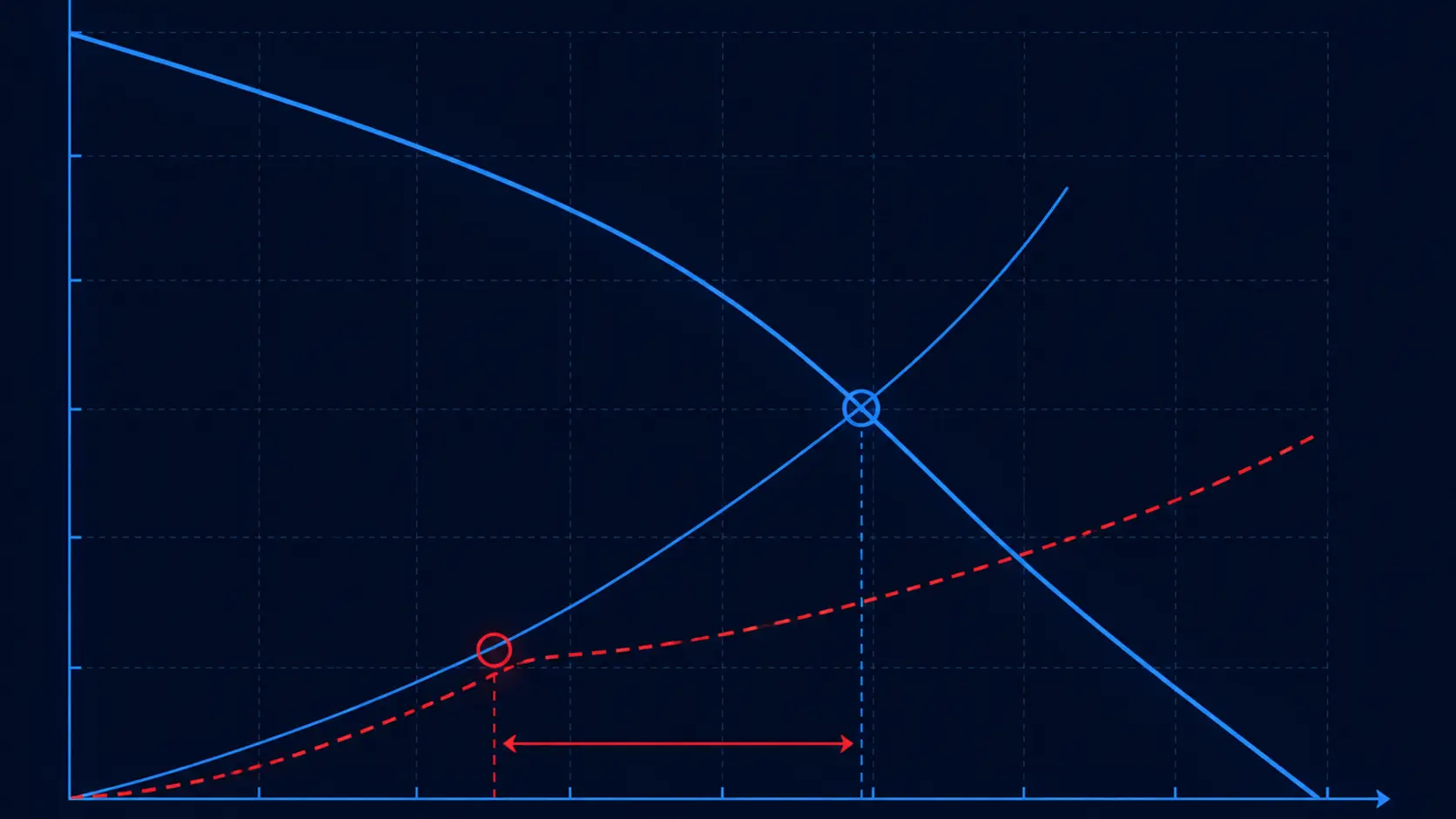
A commissioning and fault-diagnosis method for EV fast-charger cooling: separate PWM command and RPM from actual pressure, heat-sink airflow and thermal evidence.
Read Article →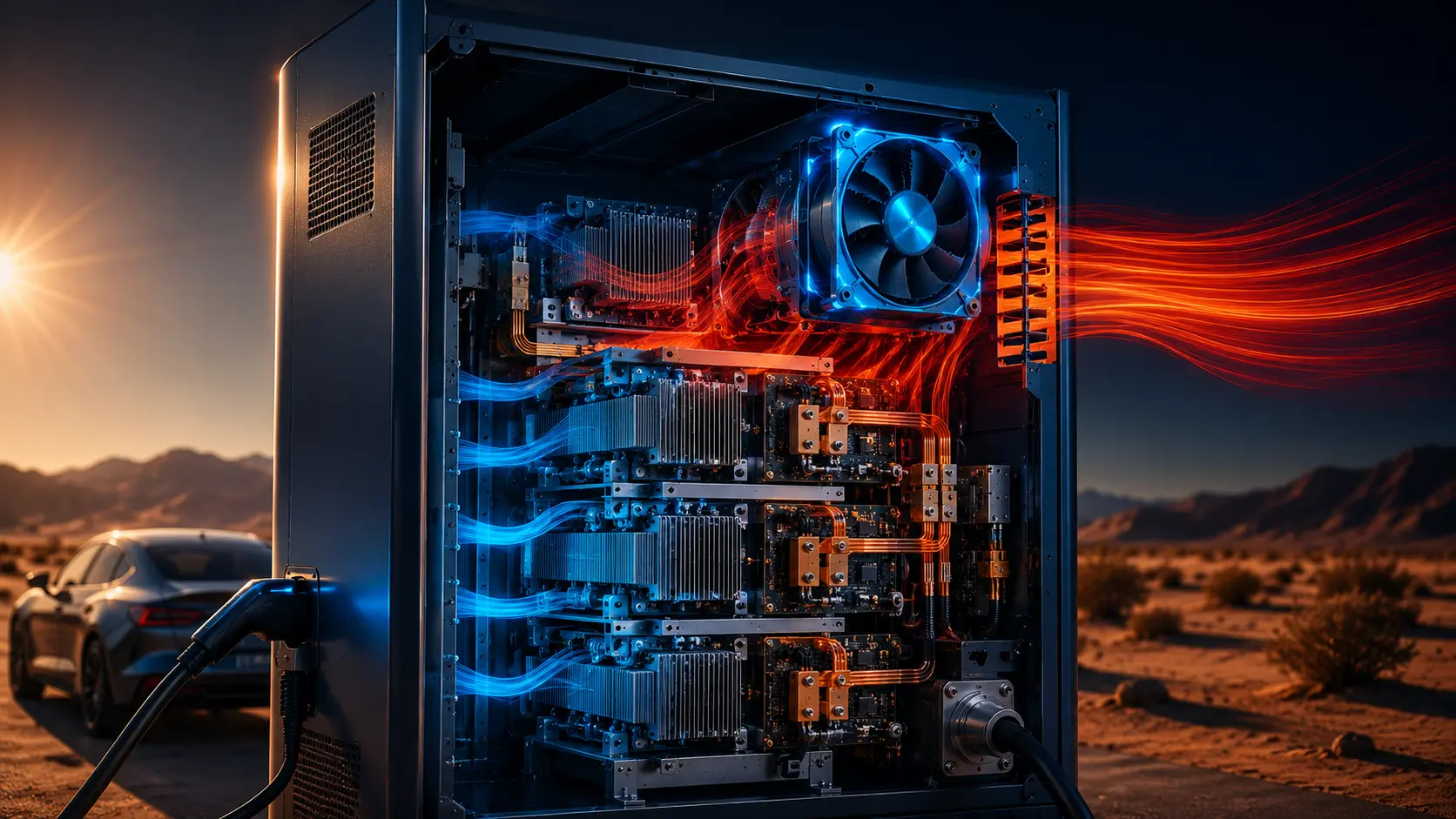
Why N+1 fan count is not automatically N+1 cooling: test reverse flow, pressure sharing, fault-state airflow and thermal margin in EV fast-charger cabinets.
Read Article →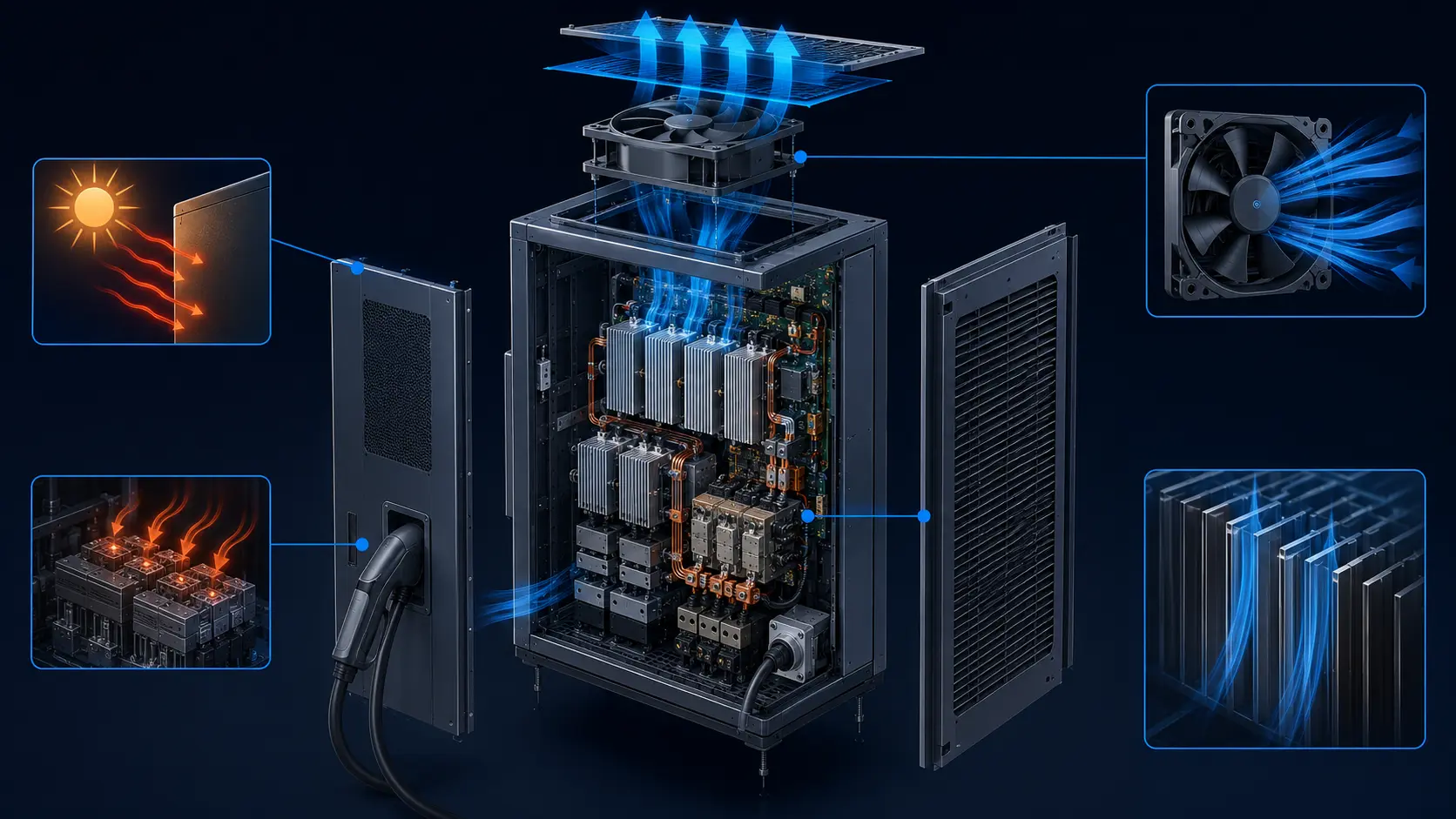
How bypass, uneven branch resistance and poor heat-sink airflow can hide local EV charger hotspots behind a normal average exhaust temperature.
Read Article →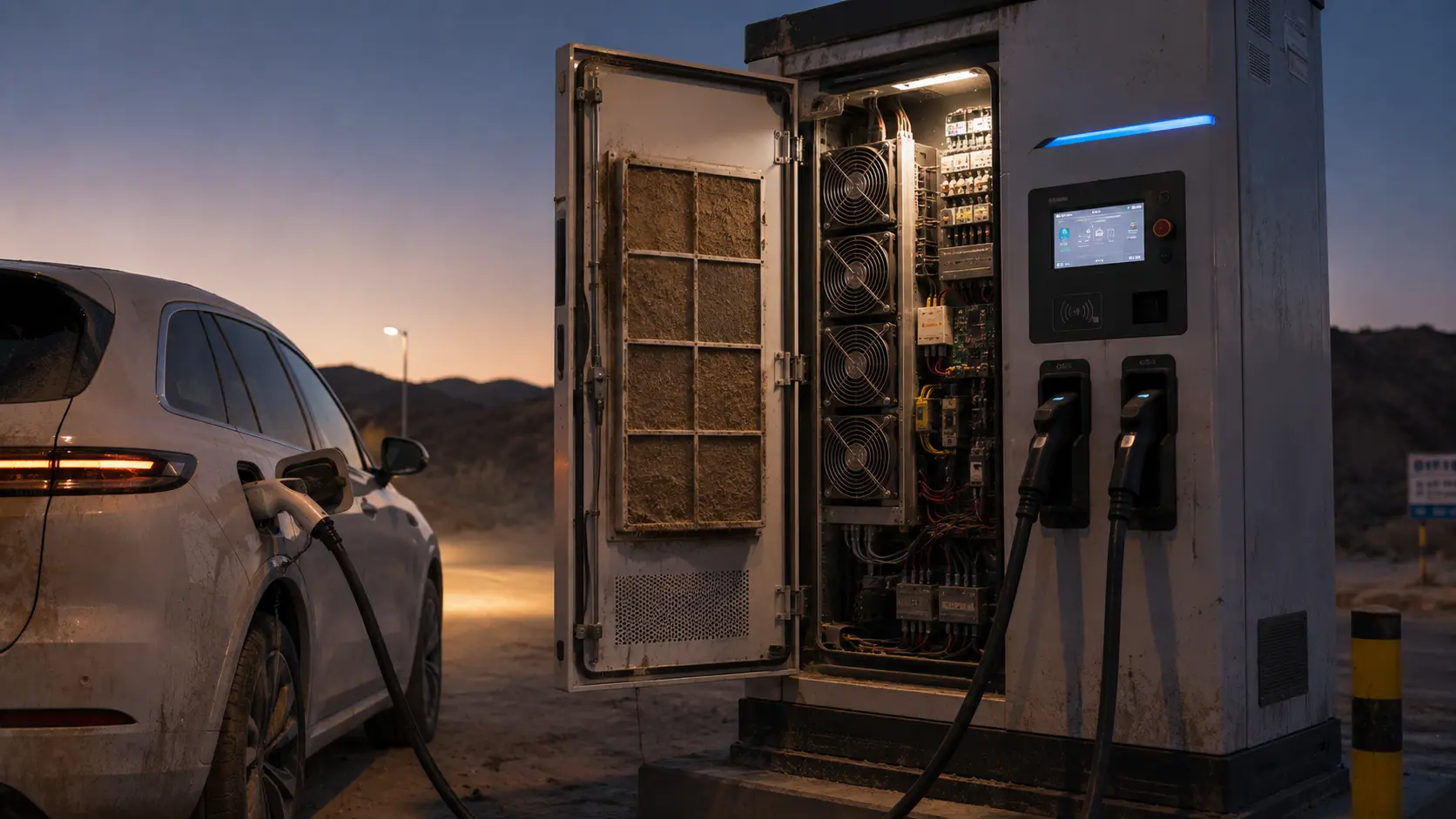
How altitude, high ambient temperature and air density change EV fast-charger fan pressure, mass flow and thermal derating decisions.
Read Article →Charger fans die from dust and heat, not rated hours — learn how site-specific fan customization, pressure headroom and sample validation protect useful life.
Read Article →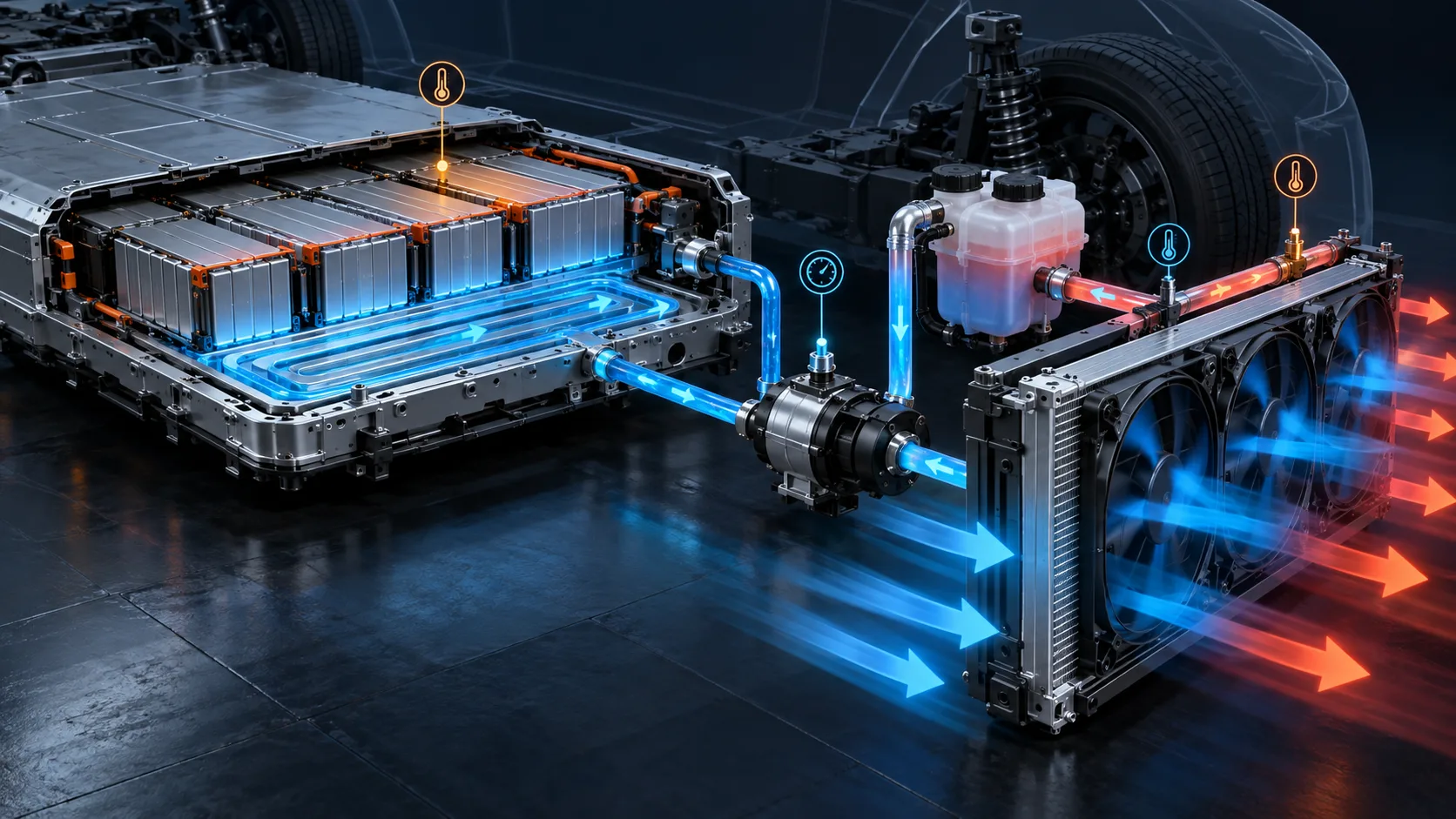
Select the battery-loop radiator fan from heat rejection and air-side pressure drop, with duty tables, environment limits and a reusable validation plan.
Read Article →An illustrative 150 kW charger calculation shows why 7.5 kW of heat needs a tested path out of the cabinet, and how to turn it into a customized fan module.
Read Article →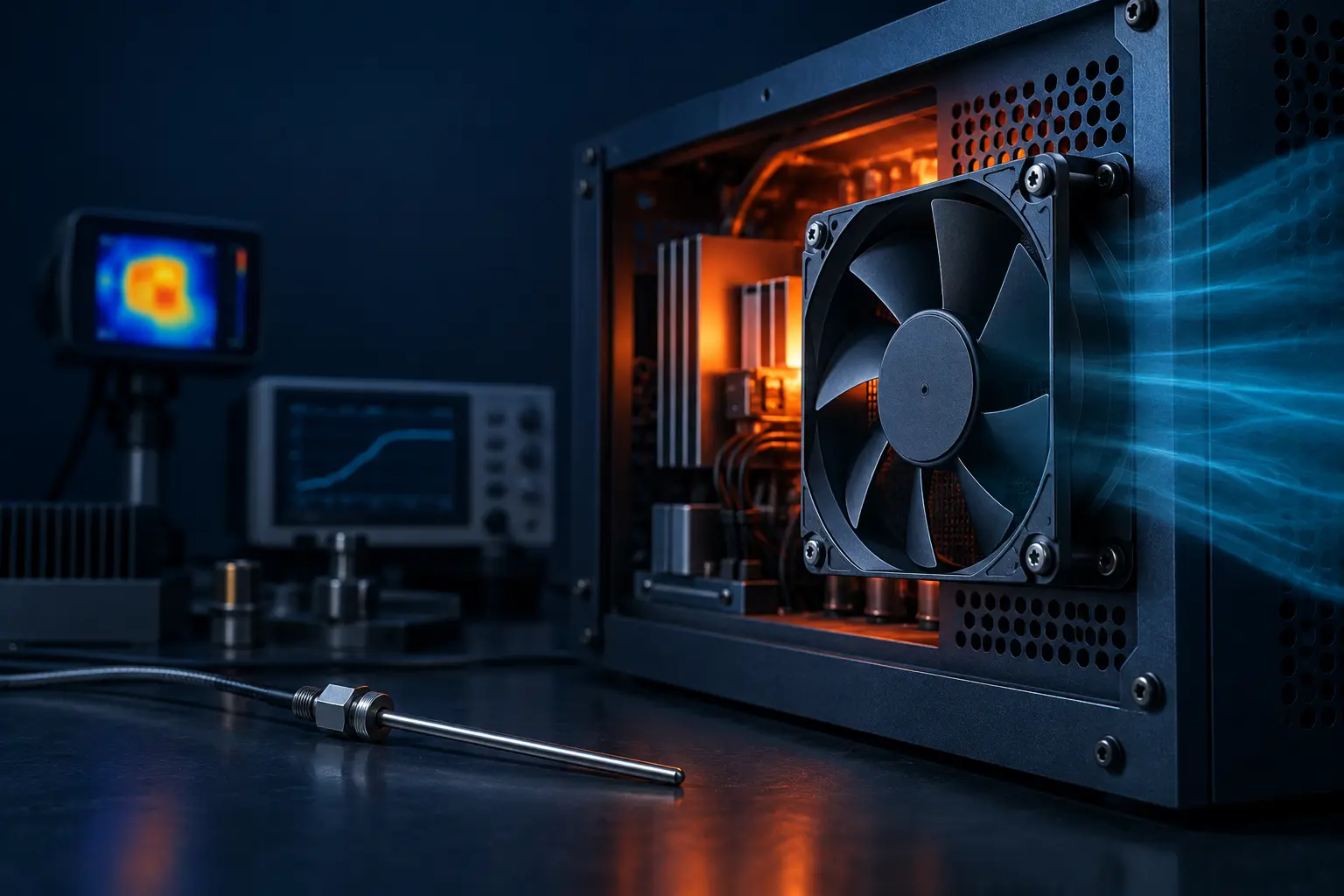
Select a cooling fan for hot or harsh environments by checking the real operating point, air density, bearing life, control interface, protection and sample validation conditions.
Read Guide →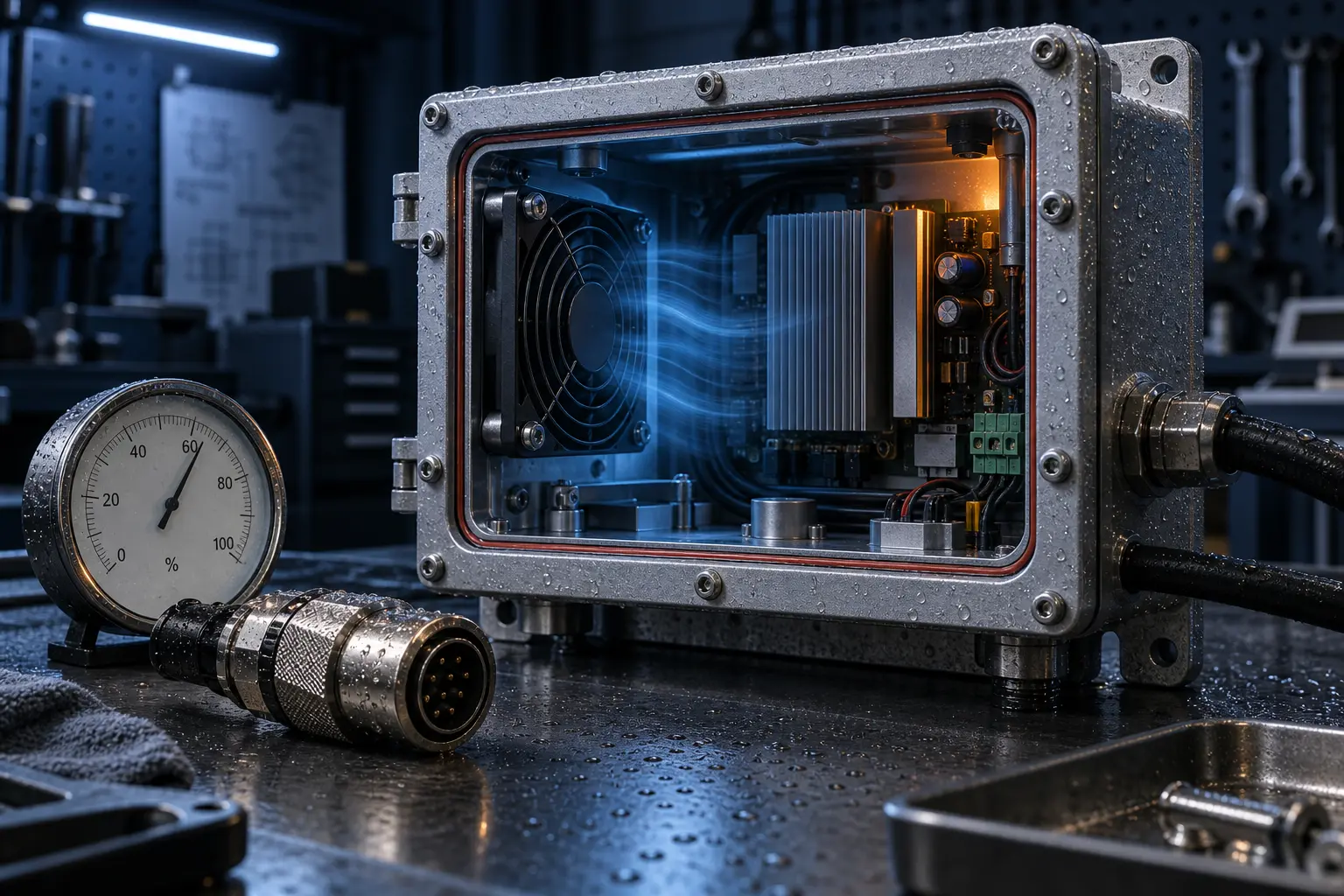
Specify cooling fan protection for dust, water, oil mist, humidity and condensation without confusing a fan IP rating with whole-product qualification.
Read Guide →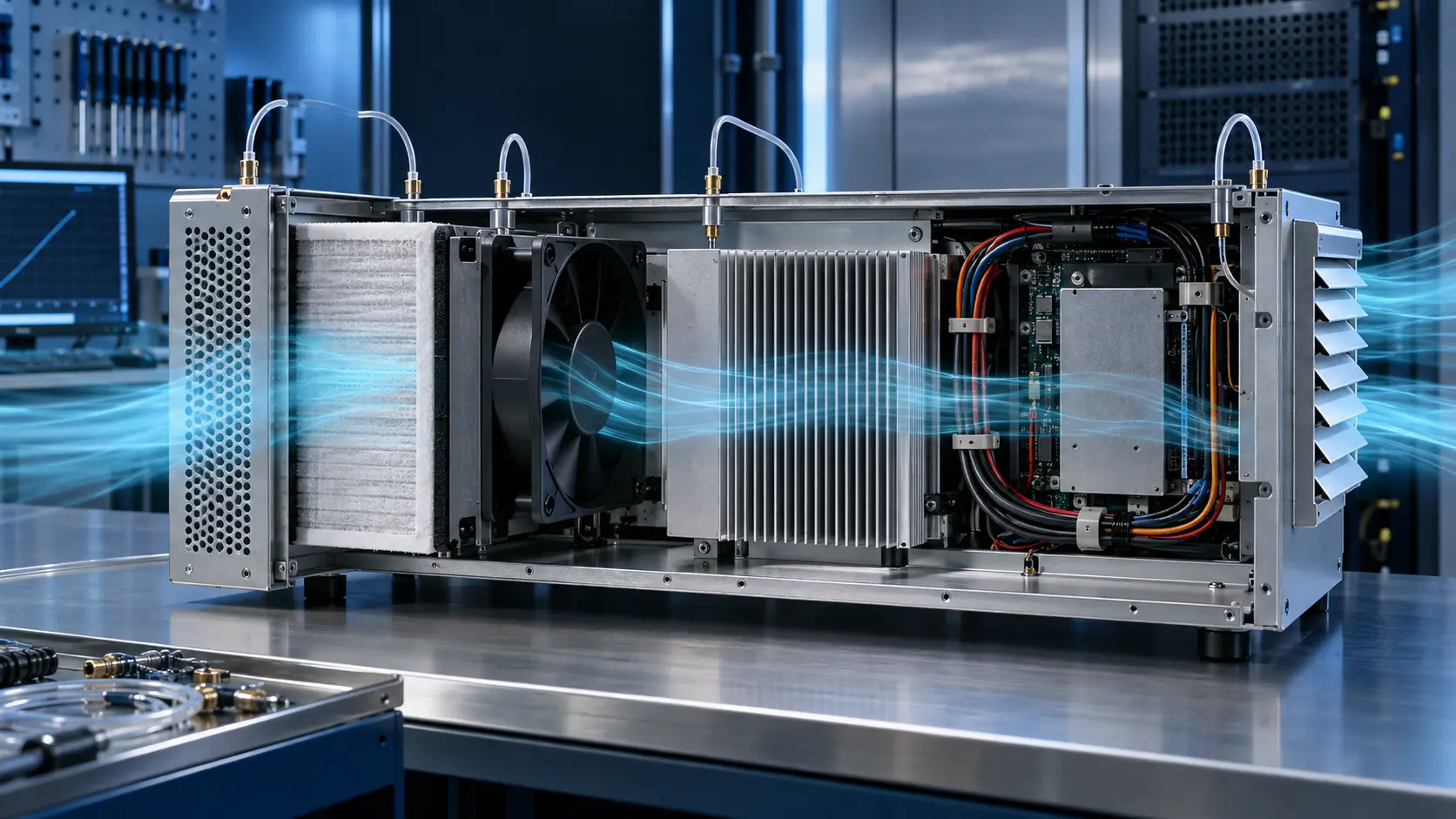
Build an electronics-enclosure pressure-drop budget for grilles, filters, heatsinks, cable routing and outlets, then decide whether geometry or fan pressure is the first fix.
Read Guide →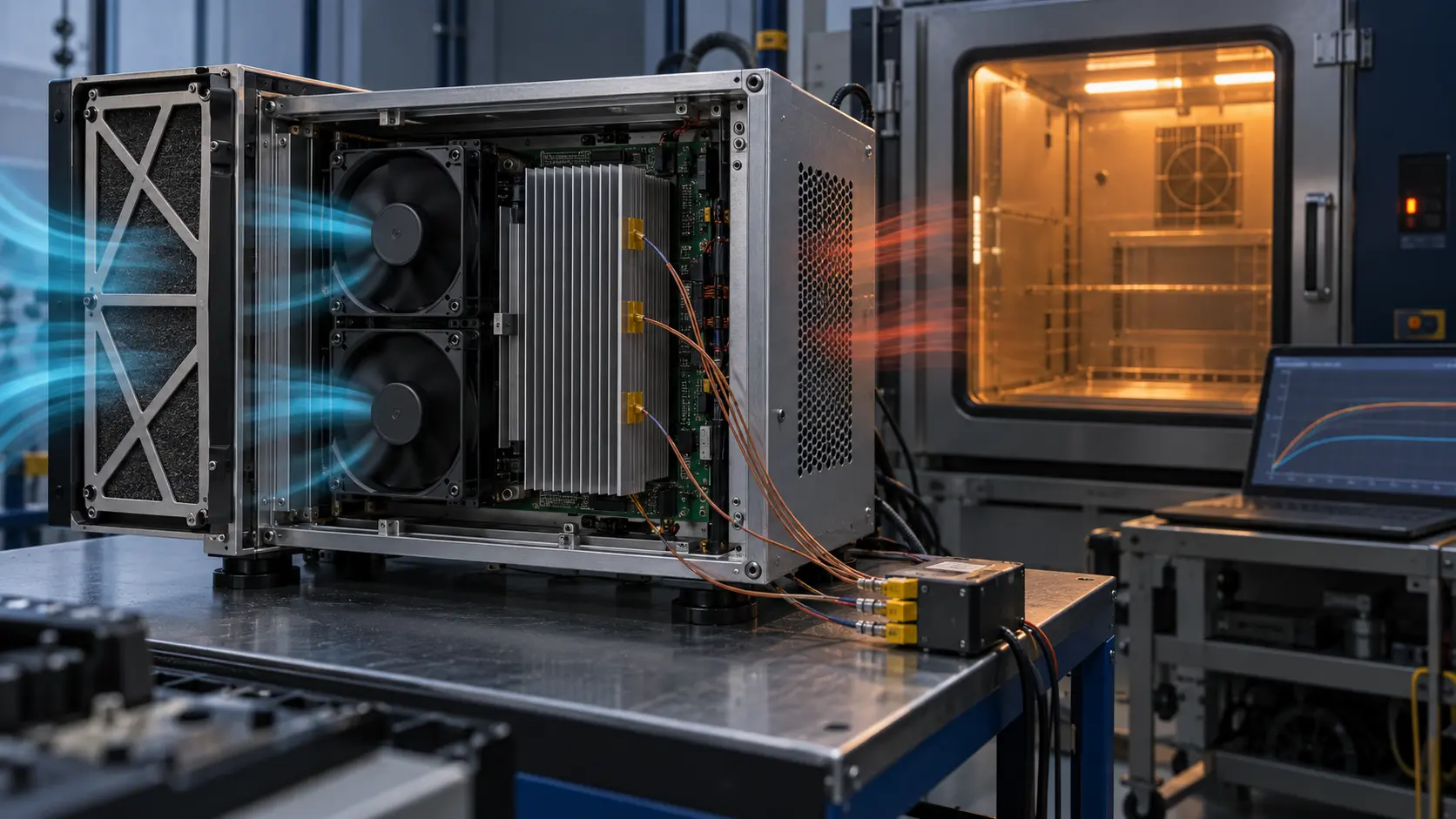
Validate cooling-fan thermal margin at high ambient, degraded filter resistance, low command and realistic heat load before approving a custom sample.
Read Guide →Target airflow and static pressure at that airflow, available space, voltage tolerance, control signal, connector, noise limit, quantity and the temperature or ingress conditions. If you have a current fan, send its label and the system context rather than relying on frame size alone.
Start fan selection →