Chamber Uniformity
Even heat prevents warping and layer issues.
 TECHCooling Solutions
Application cooling
Stable temperature control for high quality printing.
Print quality is decided by how evenly a heated chamber holds temperature and how consistently printed layers are cooled. Our fans and airflow designs give both stability and repeatability across desktop and industrial systems.
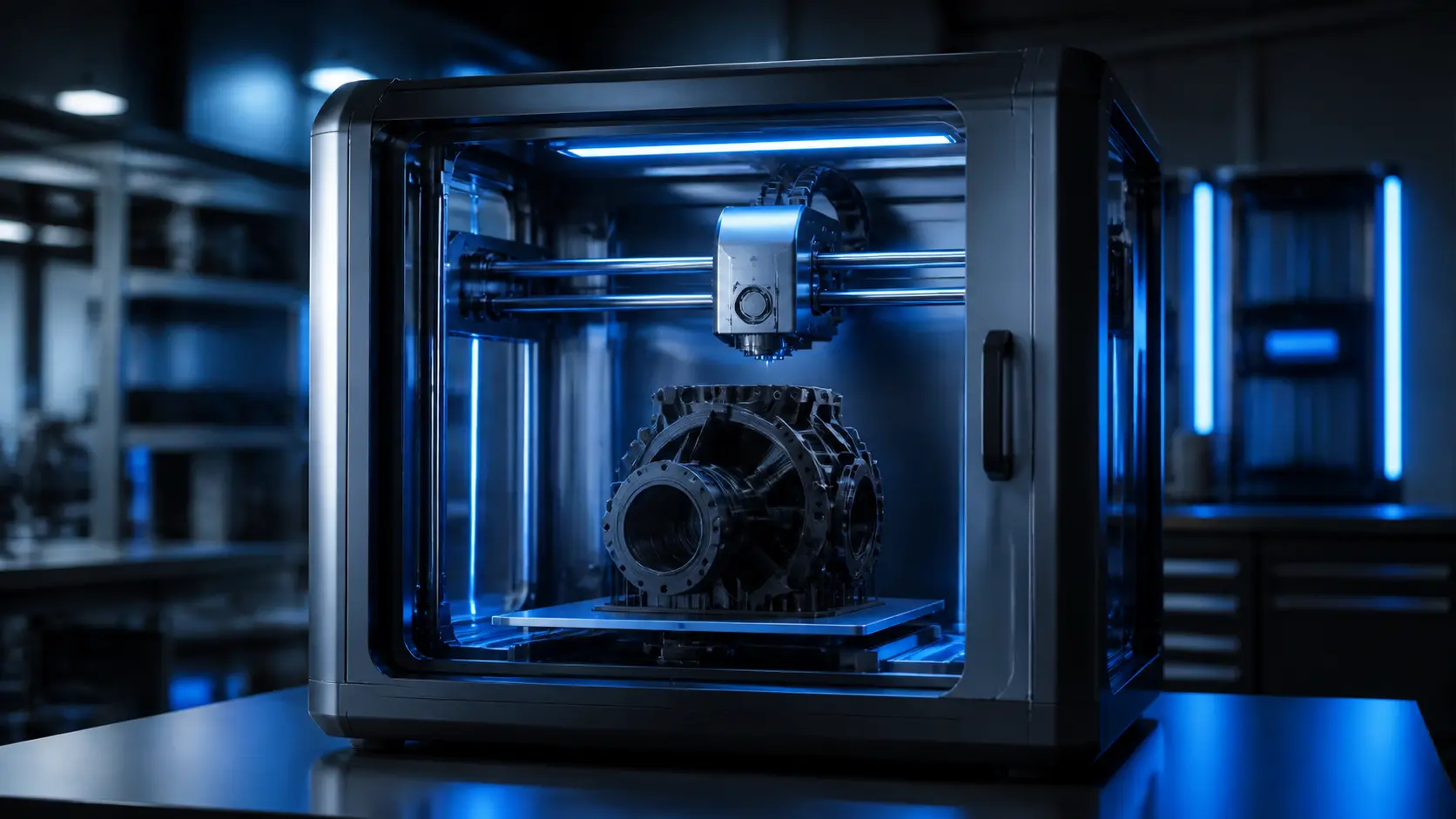
Even heat prevents warping and layer issues.
Consistent cooling for overhangs and bridges.
Filtered airflow, low fumes and stable drafts.
Reliable airflow through long batch runs.
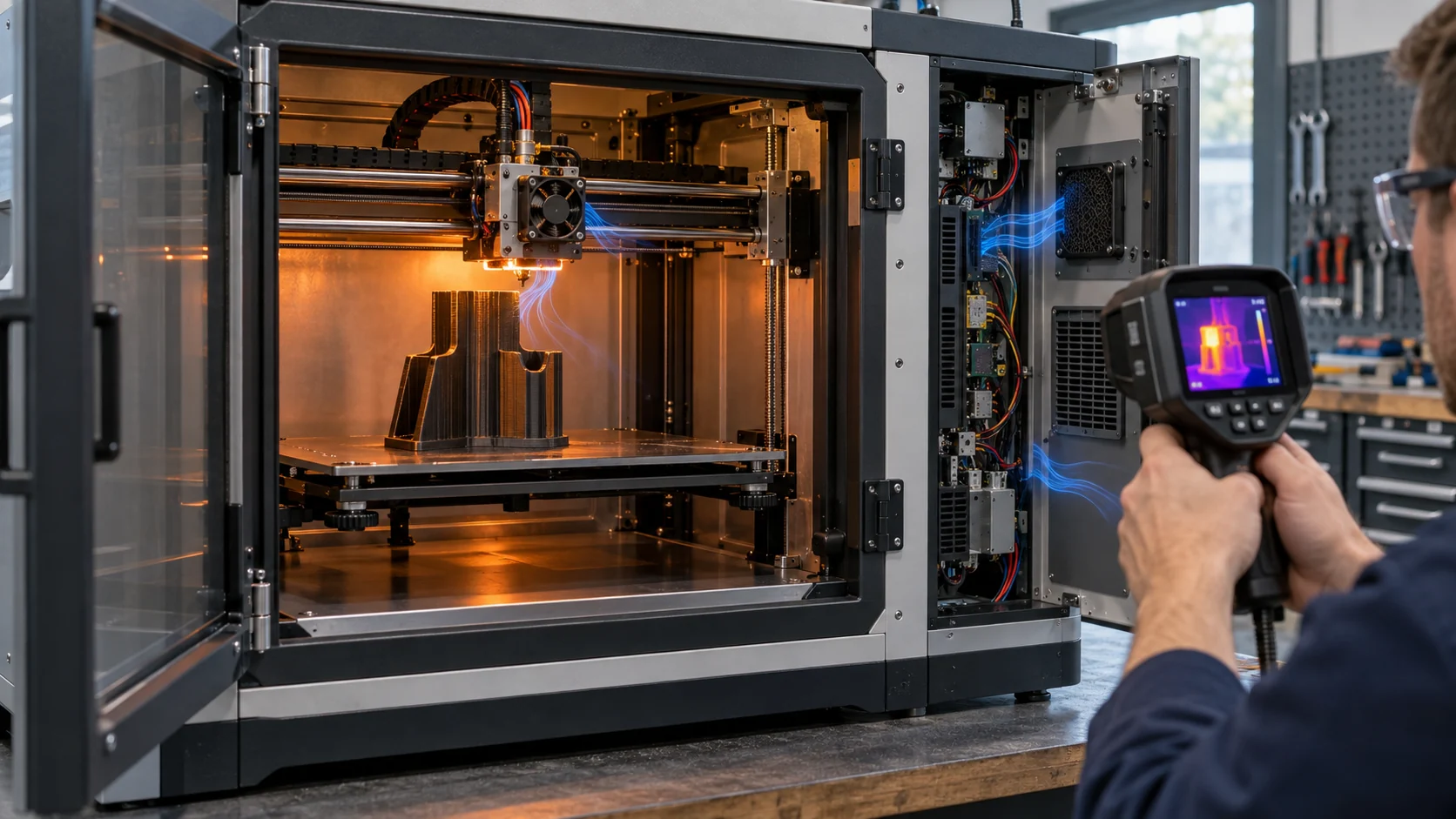
A practical engineering method for selecting and validating three cooling loops in an enclosed 3D printer: hotend heat-creep protection, part cooling and electronics-bay airflow.
Read Article →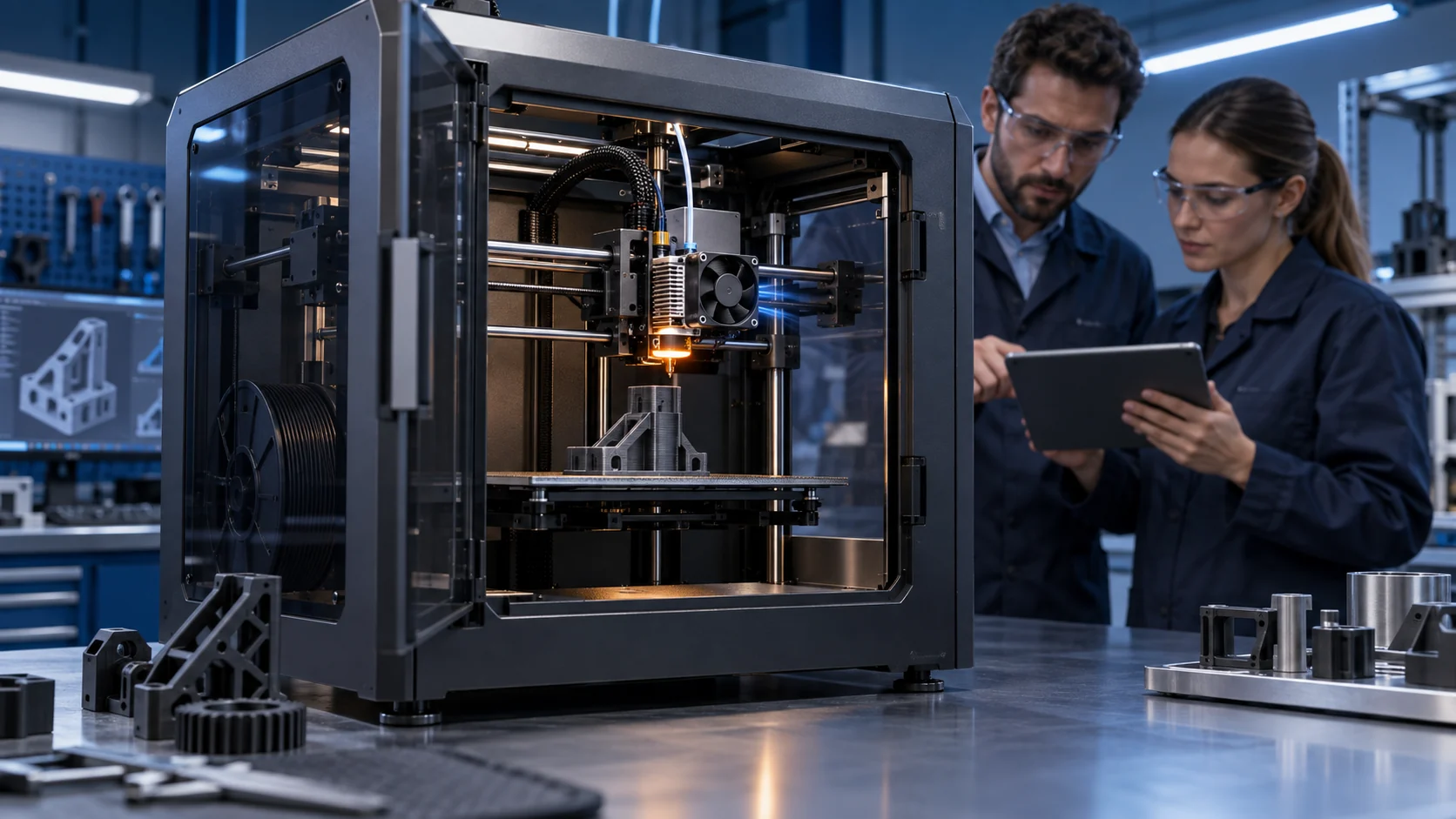
How to validate a 3D printer hotend fan for heat-creep margin, warm inlets, dust loading, low-duty startup, feedback and long-print reliability.
Read Article →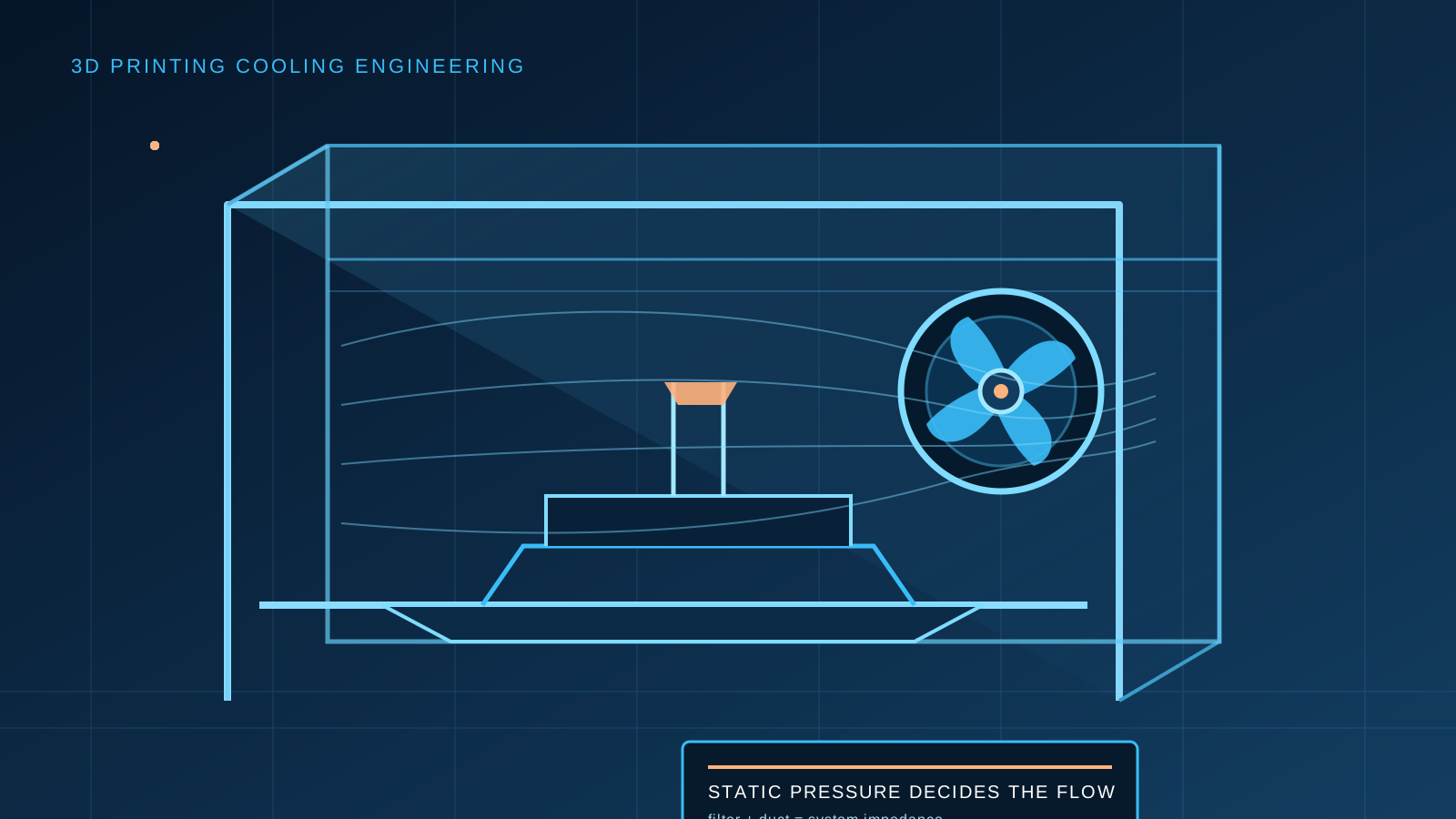
Select hotend, part-cooling and electronics fans from the installed pressure path, material process and real toolhead validation instead of free-air CFM alone.
Read Article →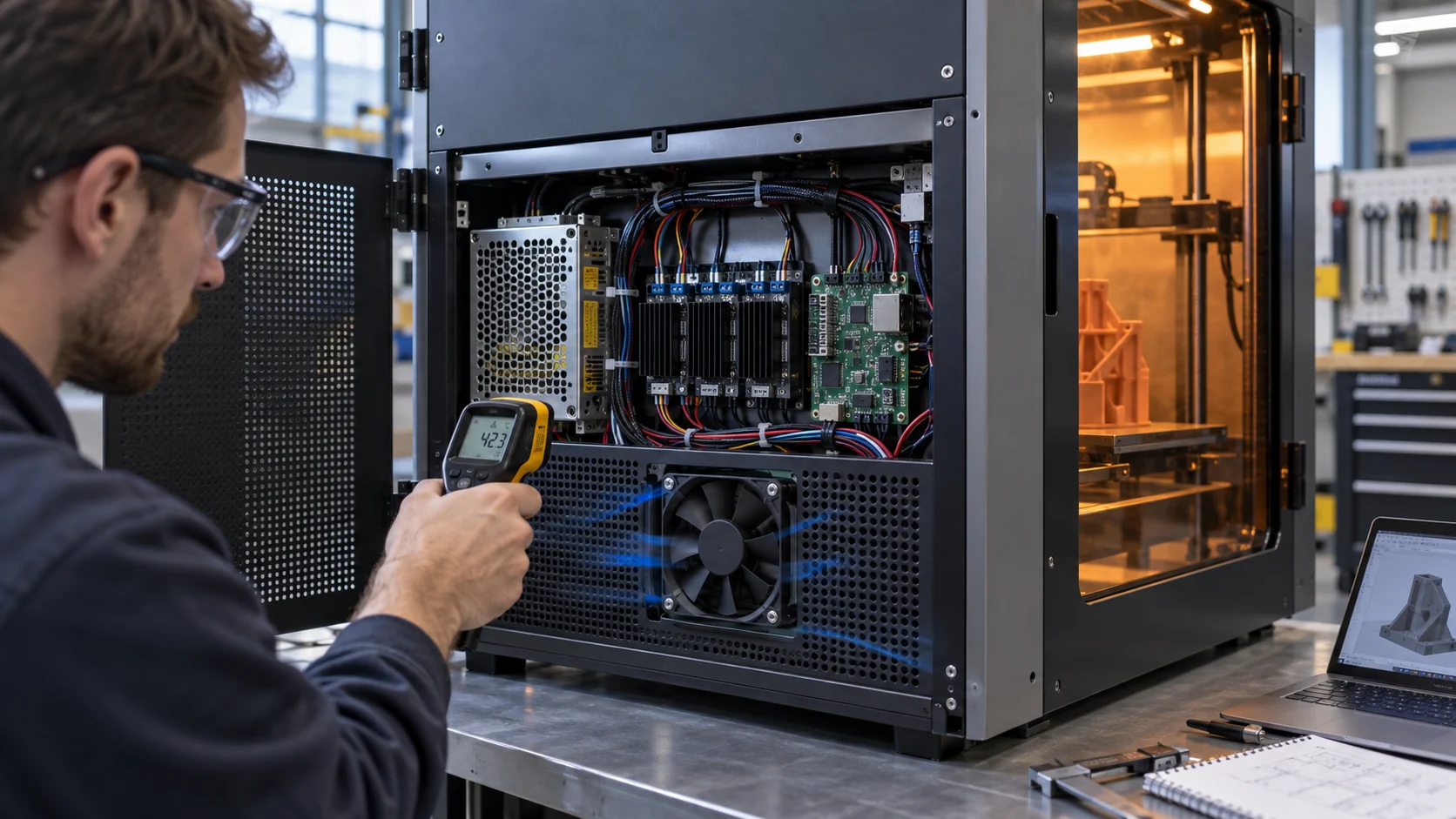
Separate chamber heat from electronics cooling with a measured fan path, pressure budget, thermal contract and service-state validation for enclosed 3D printers.
Read Article →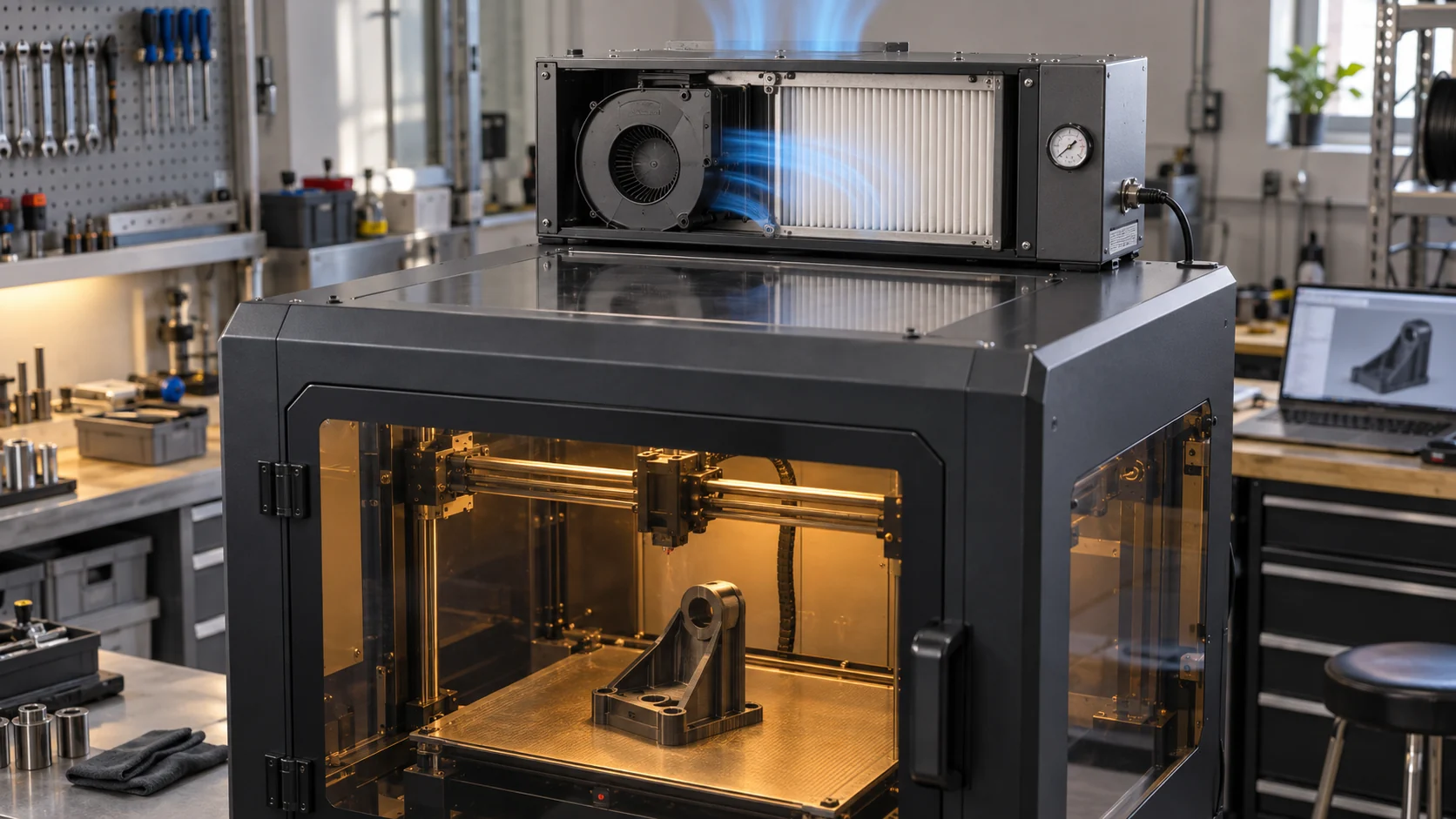
Select a 3D printer enclosure filtration fan by filter pressure, chamber temperature, bypass risk and service state rather than free-air CFM alone.
Read Article →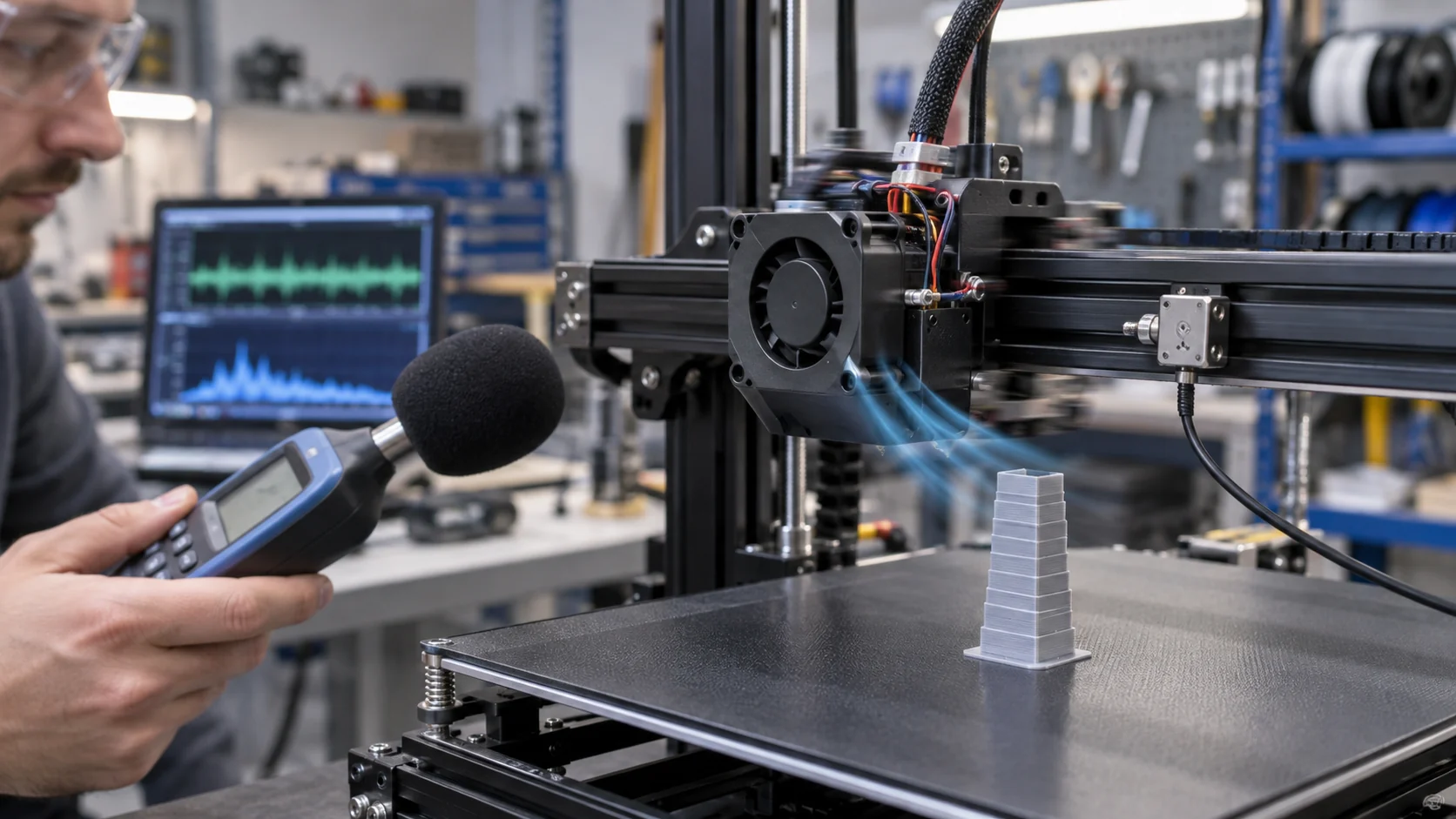
Separate aerodynamic noise, blade-pass tone, structural vibration and motion-system effects before approving a hotend, part-cooling or enclosure fan.
Read Article →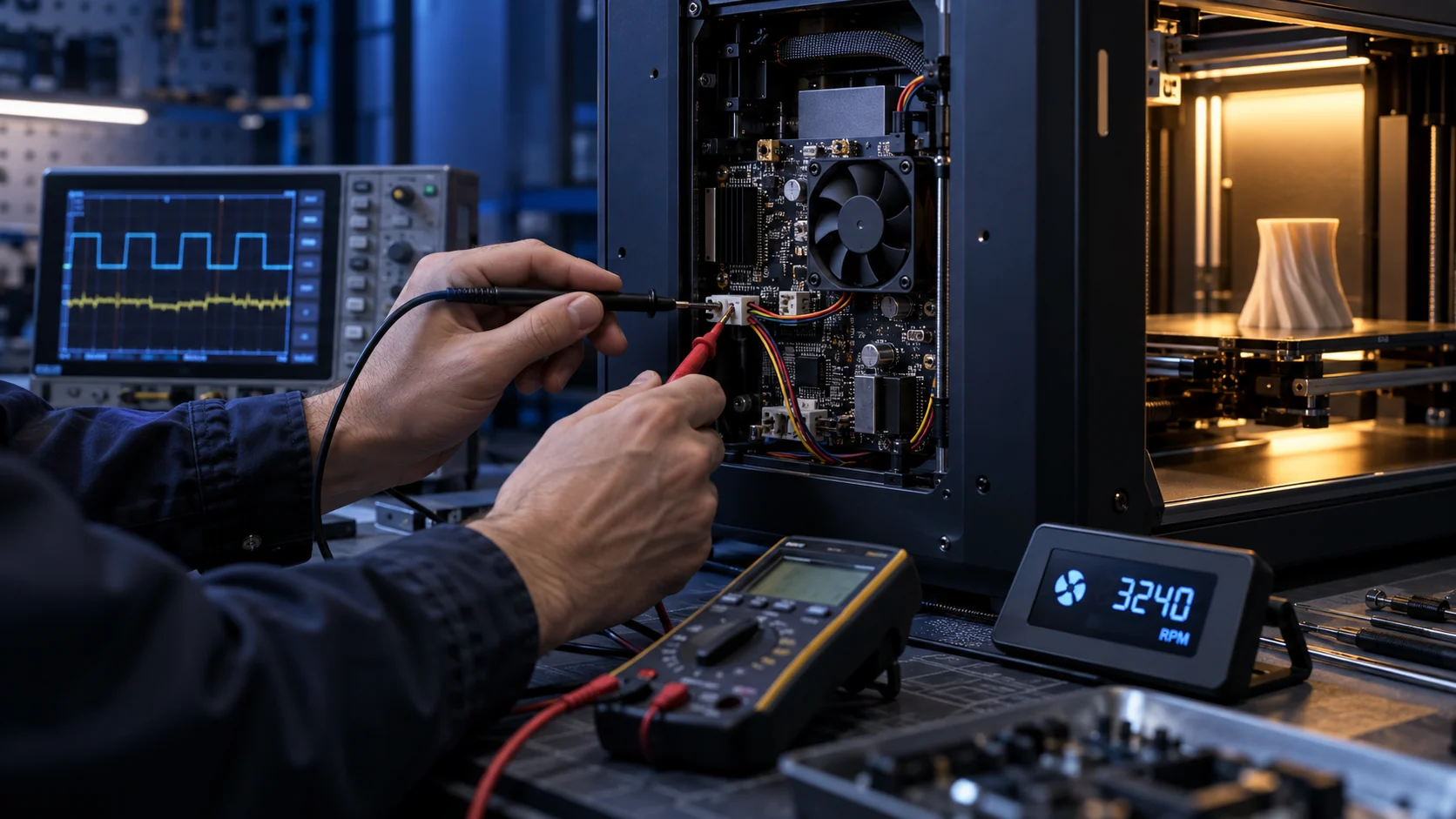
Diagnose 3D printer fan faults by separating PWM command, connector voltage, actual RPM, feedback signal, installed airflow and thermal response.
Read Article →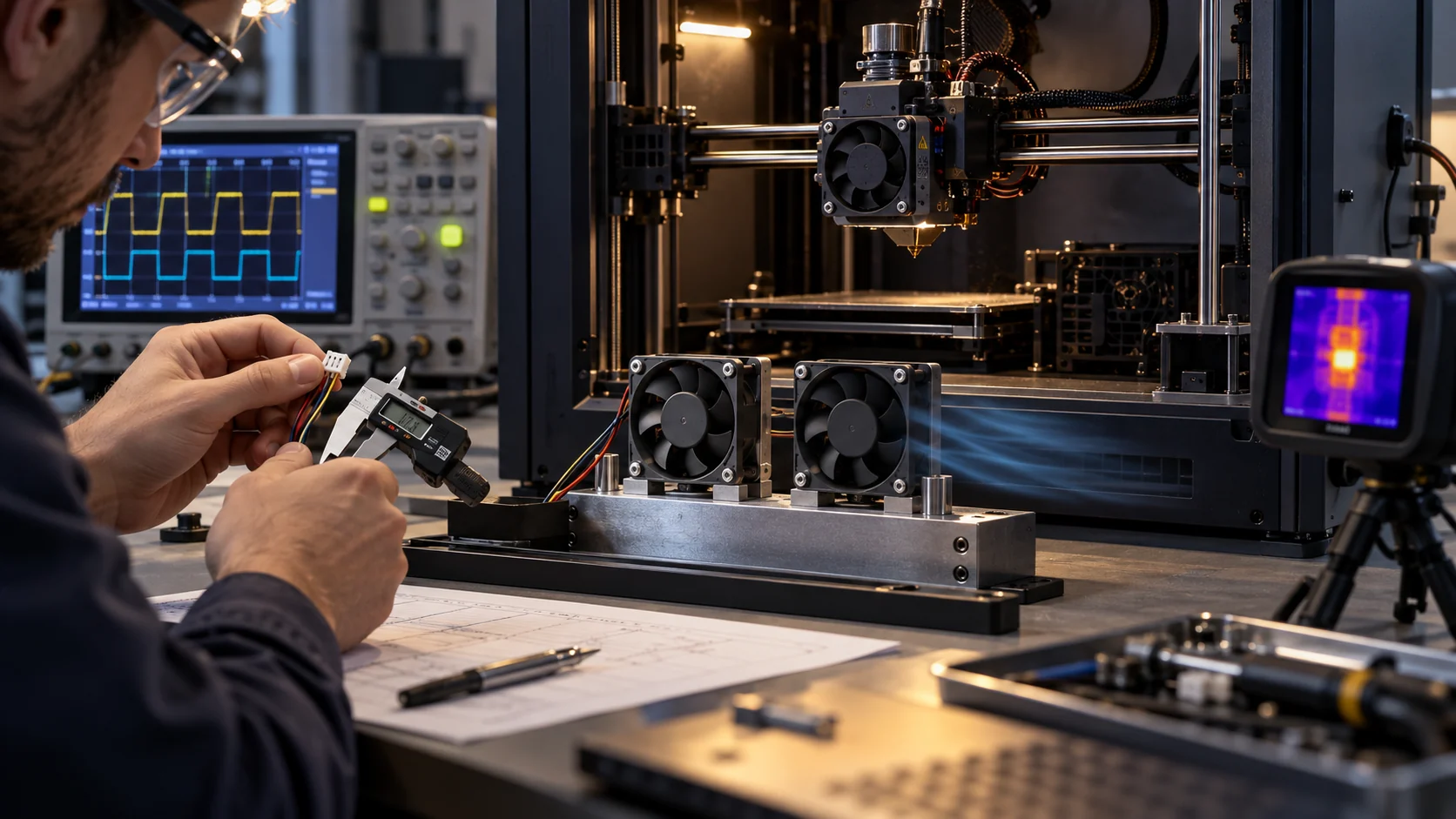
Qualify a replacement 3D printer fan by matching the installed interface, pressure, feedback, thermal margin, noise and print result.
Read Article →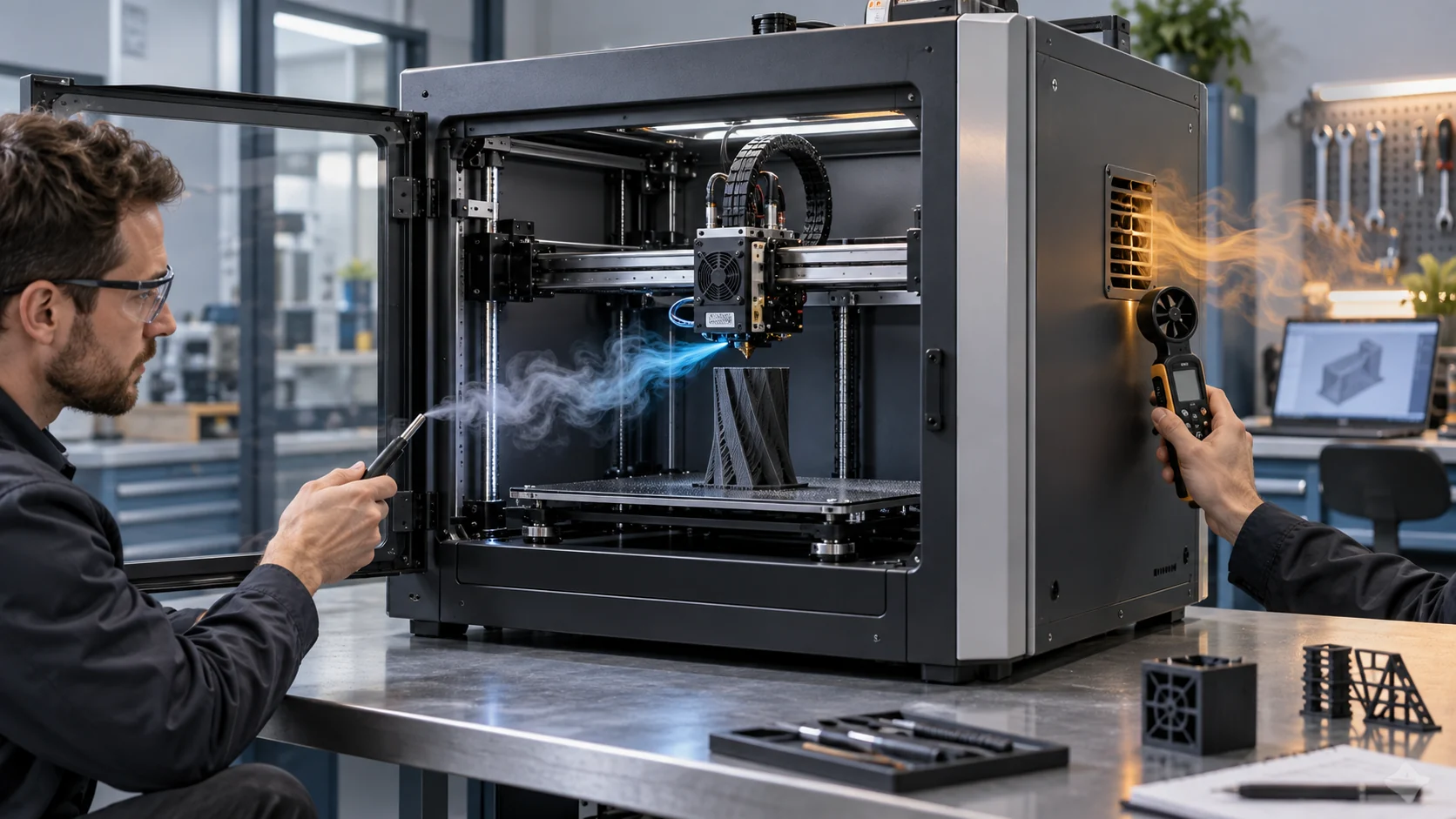
Map toolhead, part, electronics and chamber airflow to prevent hot-air recirculation, bypass and fan-on-fan interference in 3D printers.
Read Article →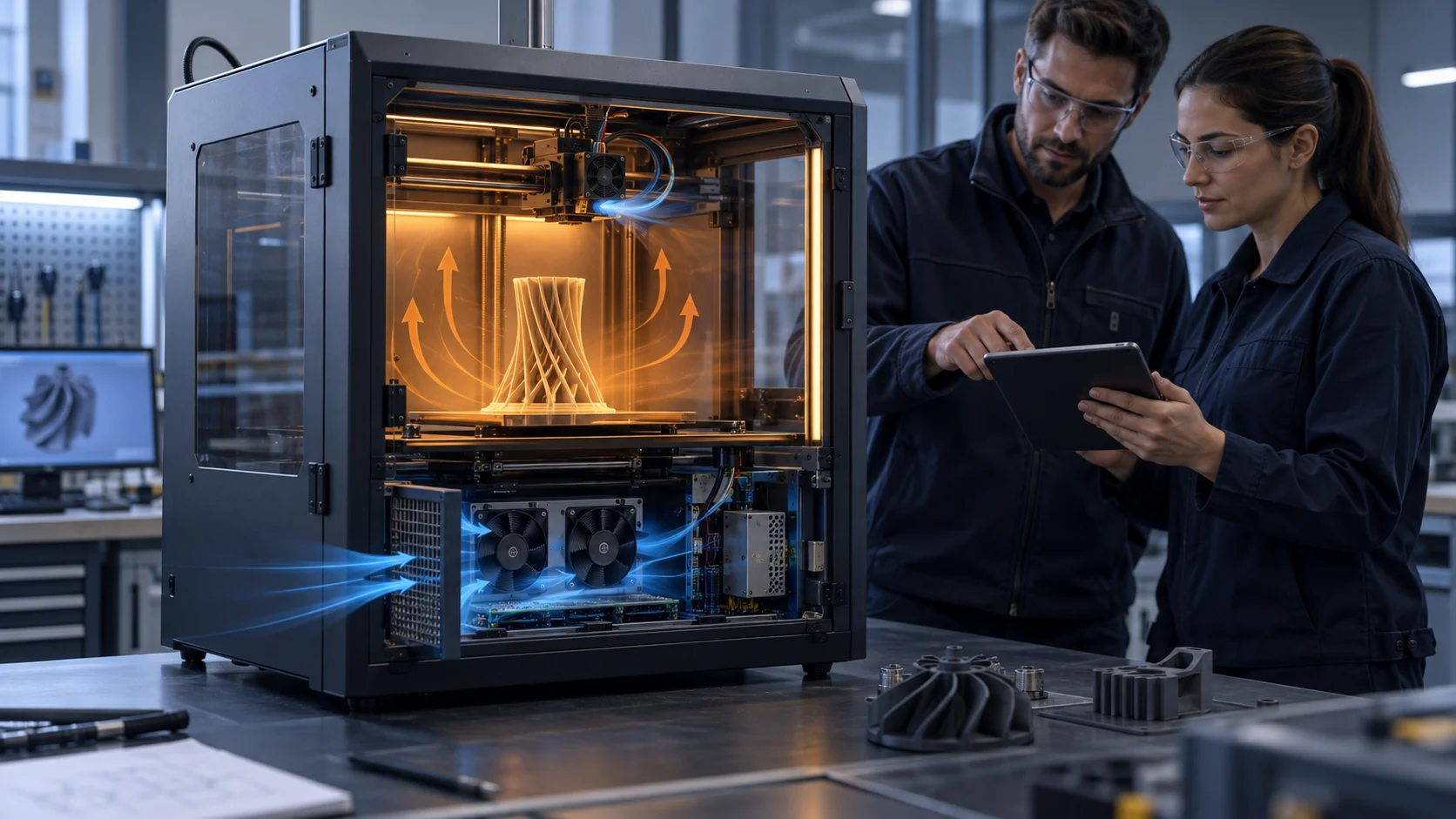
Separate chamber stability, electronics cooling and local part cooling into three validated air loops before selecting a custom fan for an enclosed FDM printer.
Read Article →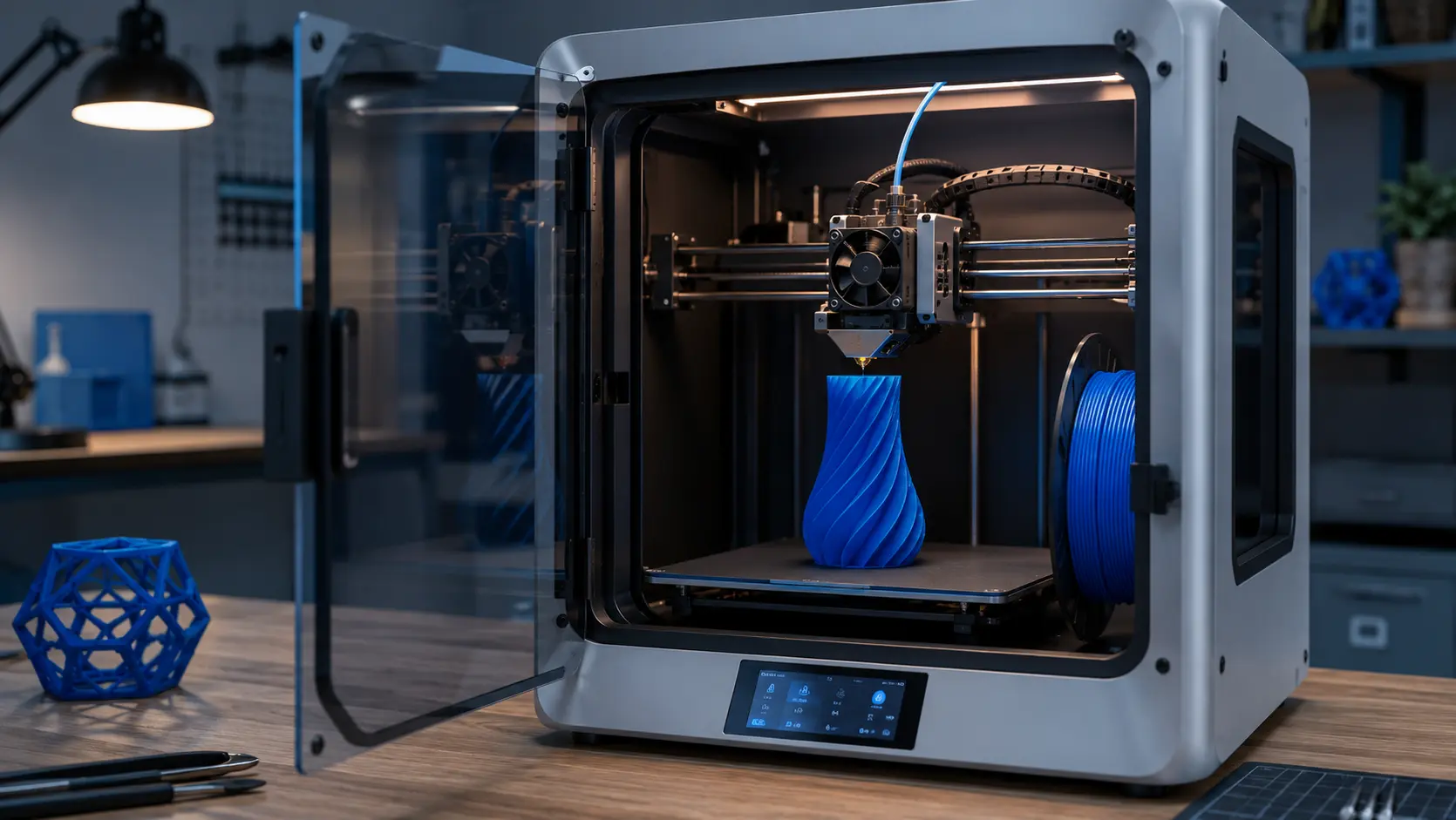
An enclosed printer must keep its chamber warm and uniform while cooling each layer fast, a balance that may need customized fans, ducts and sample testing.
Read Article →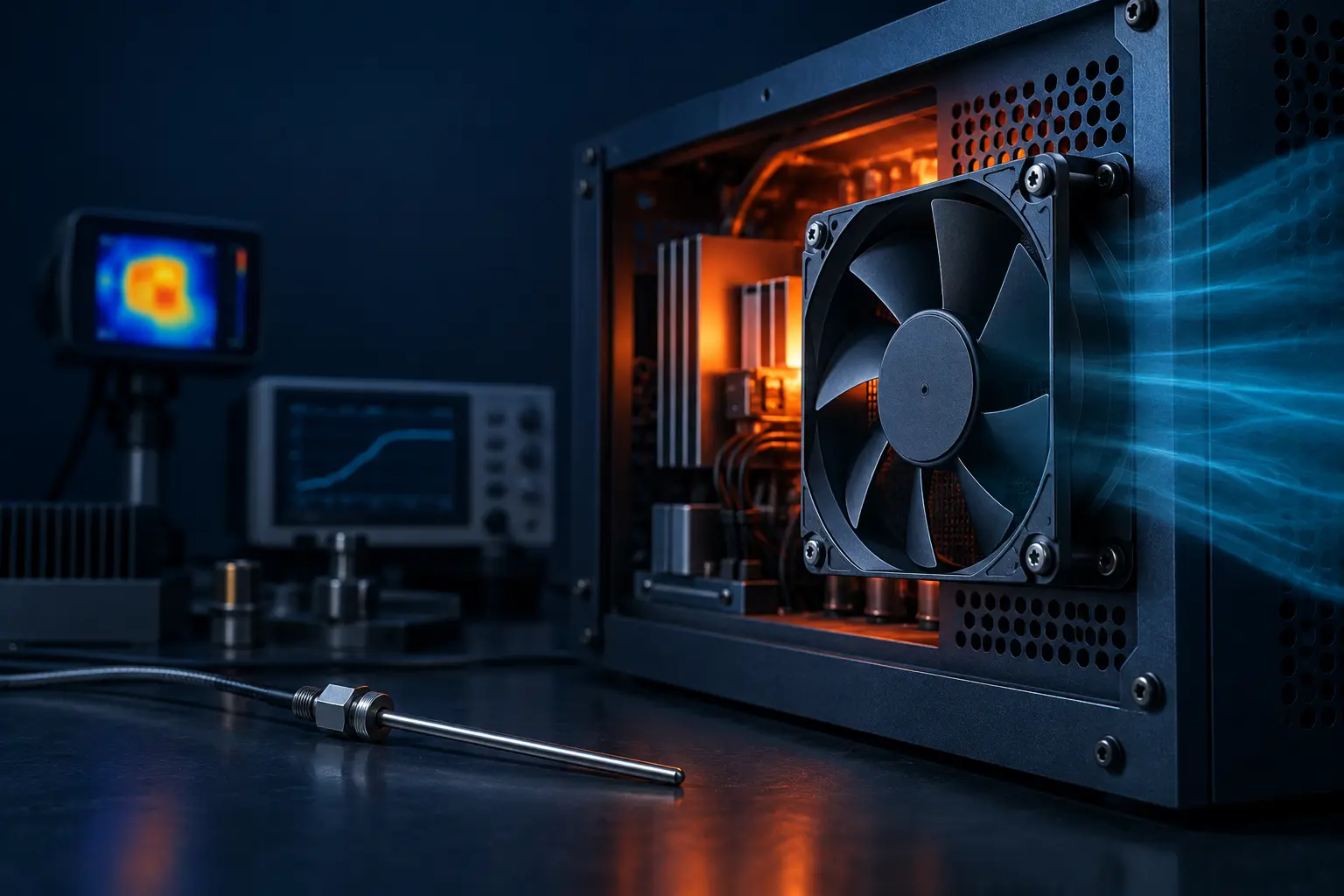
Select a cooling fan for hot or harsh environments by checking the real operating point, air density, bearing life, control interface, protection and sample validation conditions.
Read Guide →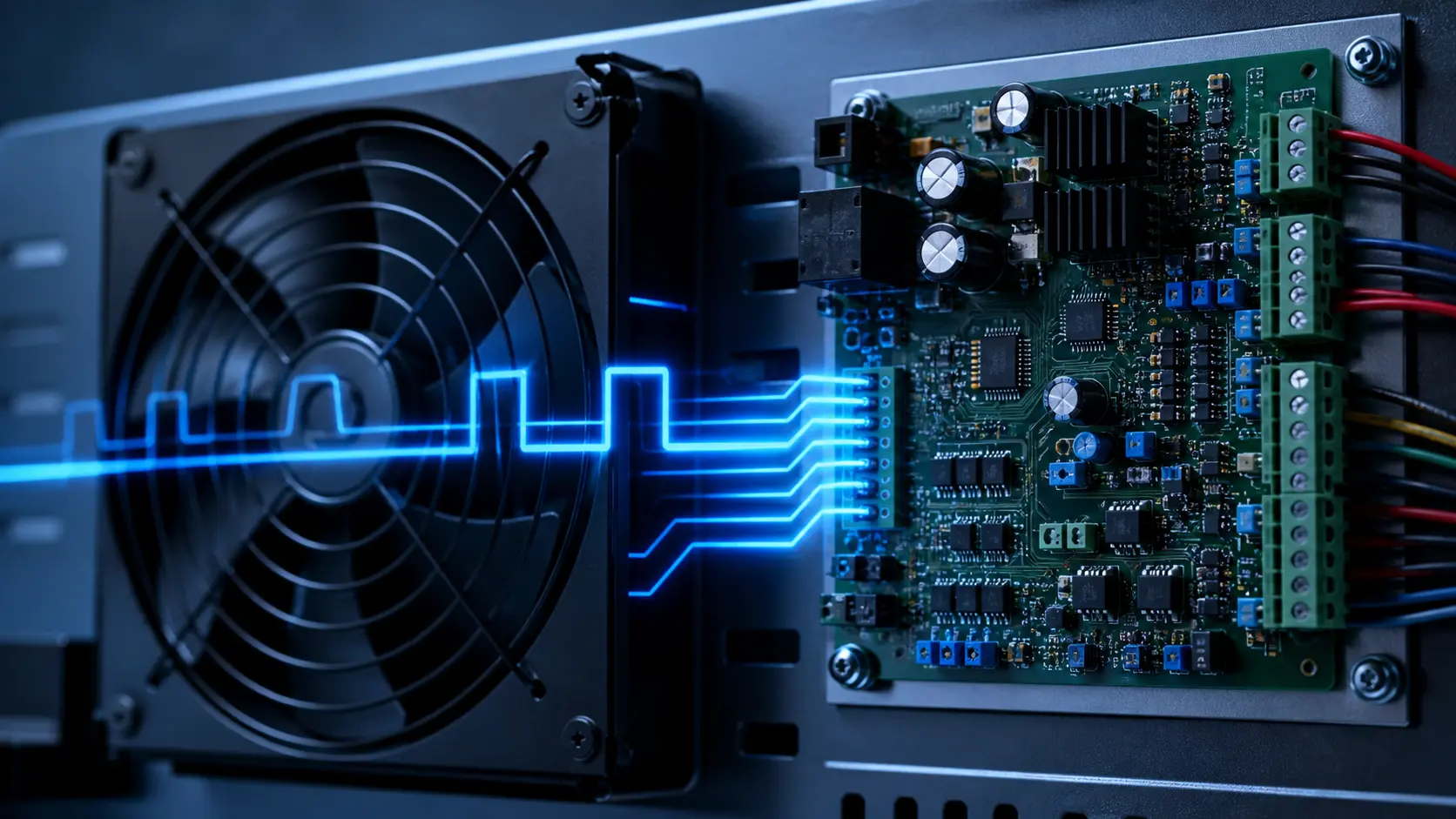
Learn how 4-wire PWM fan control, TACH feedback, startup behavior and closed-loop tuning affect airflow, noise and reliability in real products.
Read Guide →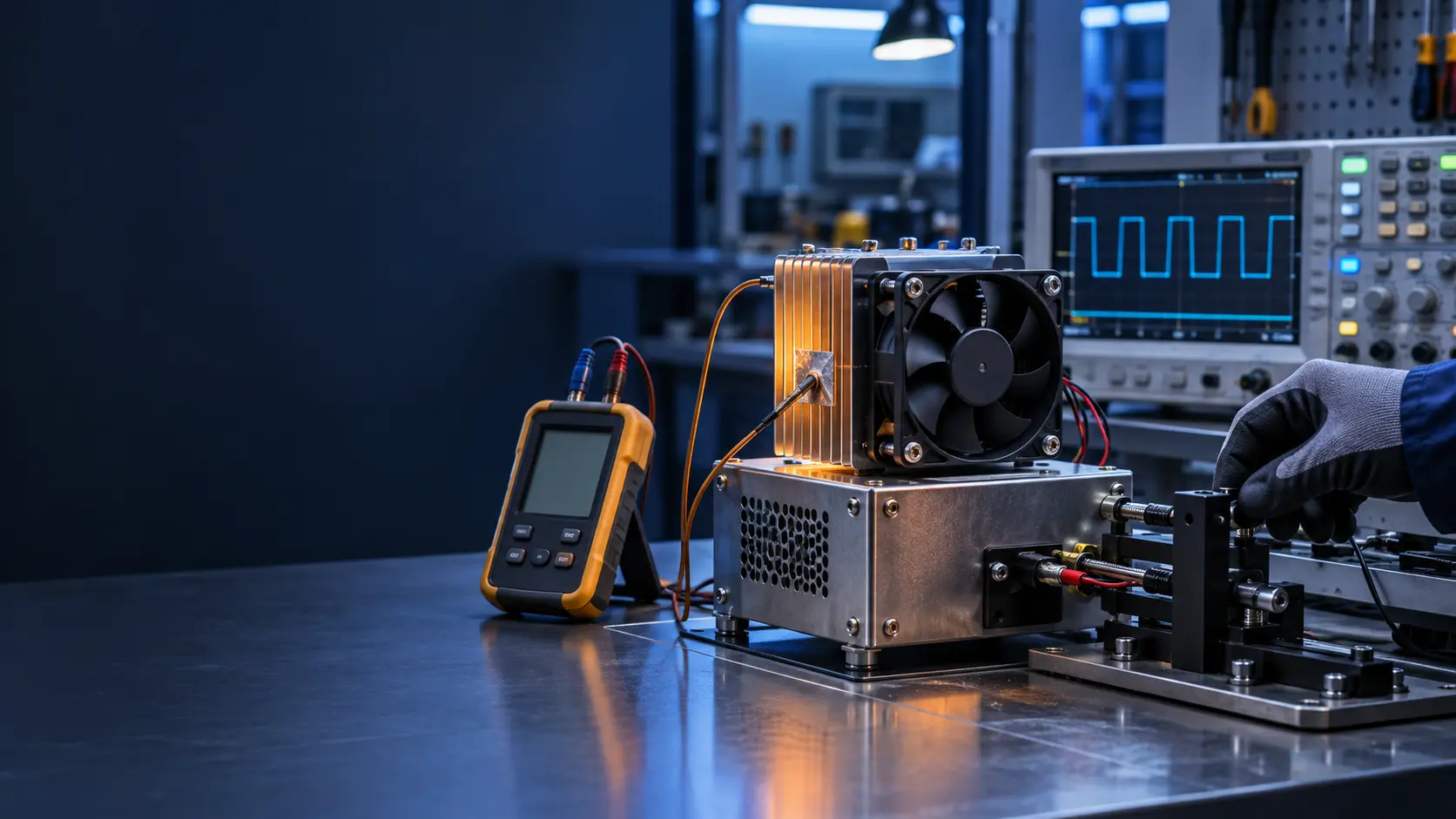
Stop cooling fans from repeatedly ramping up and down by validating sensor placement, hysteresis, PWM minimum speed, ramp response and tach feedback in the real enclosure.
Read Guide →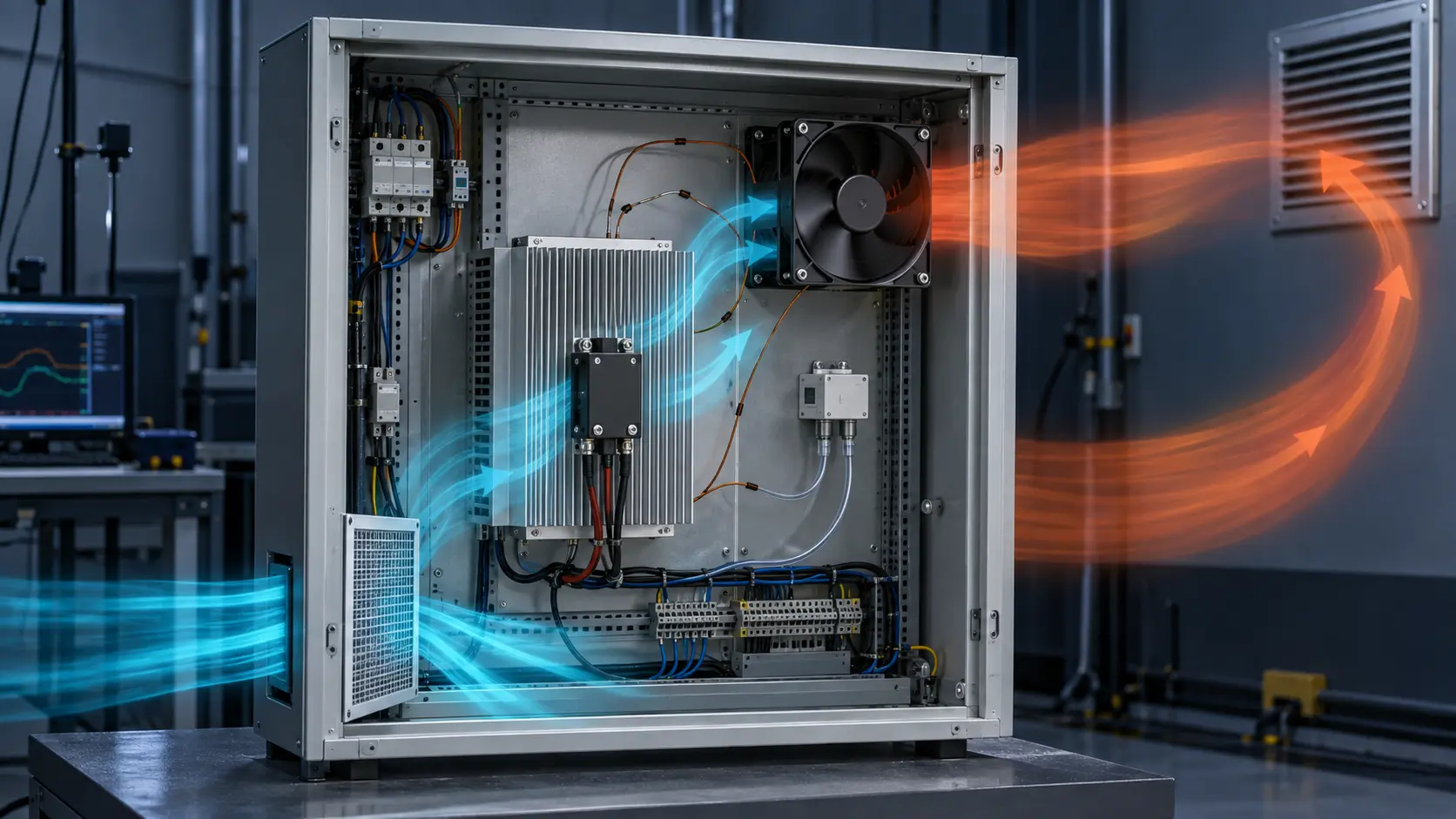
Diagnose hot-air recirculation and internal bypass in fan-cooled electronics enclosures, then validate intake, exhaust and hotspot temperatures before increasing fan speed.
Read Guide →Target airflow and static pressure at that airflow, available space, voltage tolerance, control signal, connector, noise limit, quantity and the temperature or ingress conditions. If you have a current fan, send its label and the system context rather than relying on frame size alone.
Start fan selection →