 01
Define the unknowns
Share the heat source, enclosure, available fan space, voltage and operating states. Separate measured values from assumptions.
- Output
- a reviewable requirement and first test plan.
 TECHCooling Solutions
Startup cooling fan prototyping
MEGA Tech builds custom cooling fan prototypes for early-stage hardware teams, then helps turn engineering samples into evidence from the real product before production decisions are made.
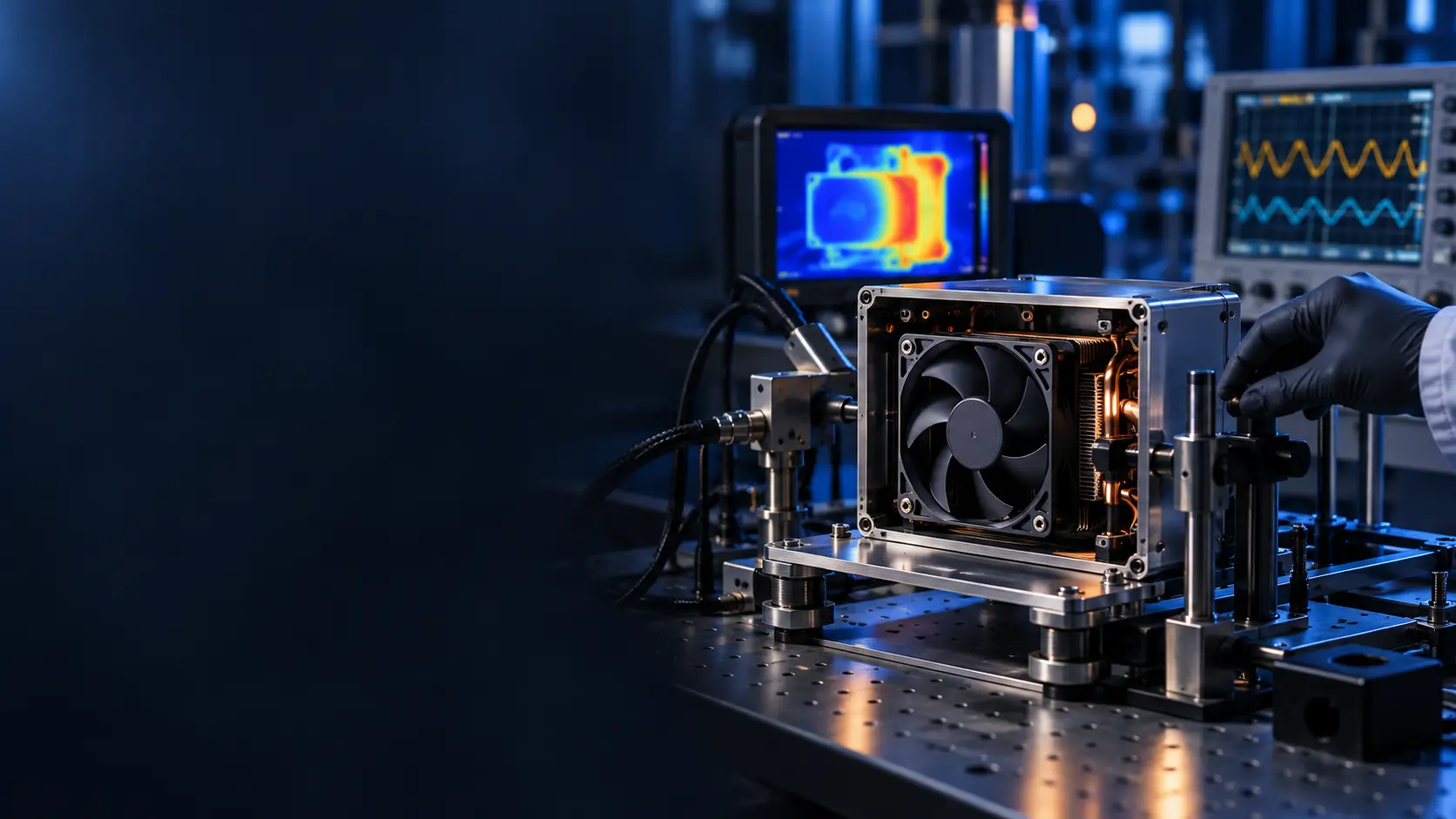
How the work becomes evidence
Startups rarely have every thermal number on day one. That is workable when assumptions are written down and the first sample is built to answer a specific product question.
01Share the heat source, enclosure, available fan space, voltage and operating states. Separate measured values from assumptions.
 02
Set the frame, thickness, airflow direction, connector, cable, mounting and control behavior around the prototype.
 03
Measure protected temperature, installed airflow or pressure evidence, current, RPM/feedback, noise and the failure mode that matters.
 04
Record the approved drawing, interface, acceptance method and change-control assumptions before a pilot or repeat build.
Engineering evidence
A current fan label, enclosure sketch, target temperature, early airflow measurement or even clear product photos can begin the review. We identify the missing inputs instead of hiding them. A useful first request states heat source and estimated heat load, fan envelope, air path, voltage, control method, target airflow or pressure, noise concern, environment and sample quantity.
Engineering evidence
An anonymised drone-equipment customer saw abnormal noise during movement and vibration. The compact centrifugal blower had a small impeller overhang beyond the housing, creating a contact risk around the frame. The response was not simply a speed change: the impeller was enclosed inside the frame and clearance, mounting, cable route and outlet restriction were reviewed together. The published case reports no abnormal noise or contact in the redesigned configuration while retaining the application requirements. It is a project result, not a universal guarantee.
Engineering evidence
For a moving product, reproduce mounting orientation, bracket stiffness, vibration direction, nearby walls, outlet transitions and cable loading. Record connector voltage, speed, current, installed airflow or pressure evidence, acoustic condition, component temperature and the event that counts as failure. For later builds, distinguish EVT function evidence, DVT environmental evidence and PVT repeatability evidence.
Engineering evidence
Once the customer approves the result, freeze the fan or custom variant, dimensions, voltage, connector and pinout, cable exit, control and feedback, airflow direction, mounting and acceptance test. The customer owns final system safety, compliance and product approval; MEGA Tech supports fan-side development, sample customization and comparative evidence.
First-sample test checklist
Cooling engineers need a defined operating condition and a recorded pass/fail rule. Startup teams need to learn before another enclosure, controller or tool revision makes the change slower. This checklist gives both groups one shared first-sample brief.
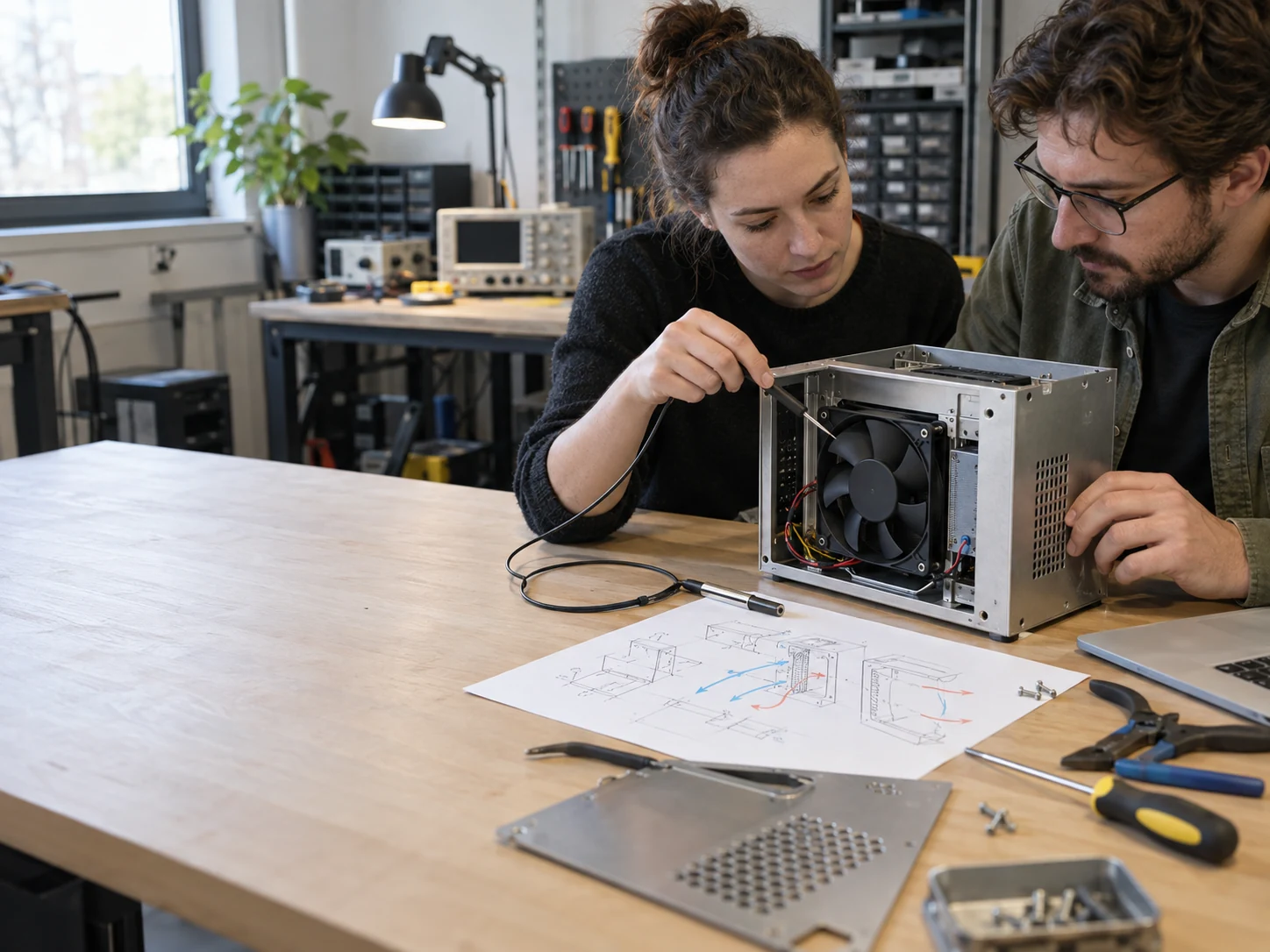
Before sending a sample request, put each item in one of three columns: measured, estimated or unknown. That distinction is more valuable than pretending the early requirement is complete.
One record, three connected facts
A useful test report connects the product condition, the fan response and the engineering decision. Separating those facts prevents a good bench result from being mistaken for a product result.
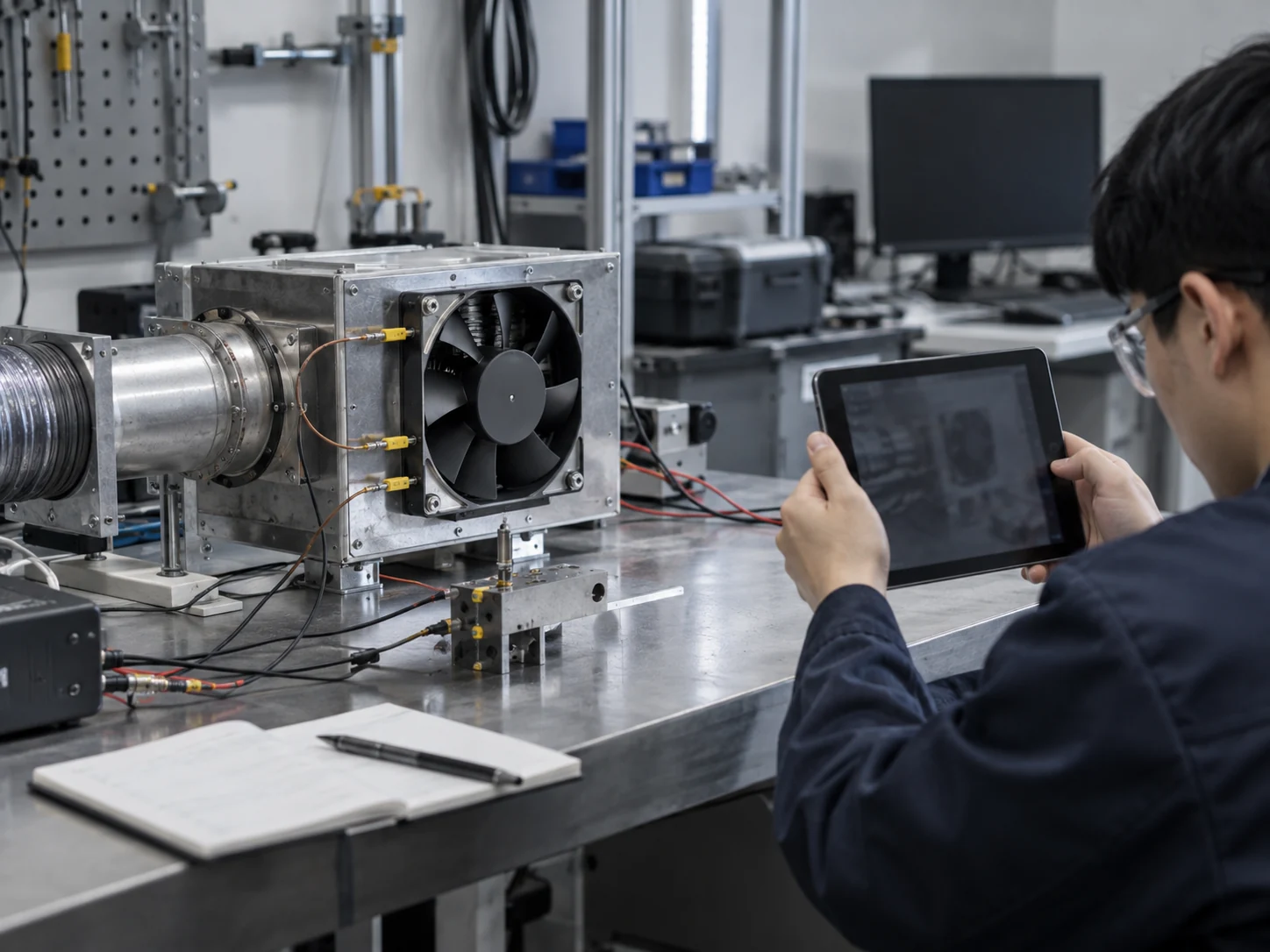
Record the enclosure state, restrictions, mounting, cable route, supply voltage, control command and ambient condition. The next build must be able to recreate it.
Record connector voltage, speed or feedback, current, installed airflow or pressure evidence, protected temperature, sound and any contact or vibration event.
Mark pass, open issue or next revision. Keep the accepted sample, drawing or interface revision and evidence together so a pilot build does not restart the investigation.
For the full product-level method, see fan sample validation in the real enclosure, the drone blower clearance case, and the MEGA Tech Lab test areas for airflow, acoustic and thermal measurement context.
From a customer sample to a controlled design
These anonymised case records are not interchangeable success stories. Each started with a physical product and a different failure risk, then used a fan sample to create evidence for the next build.
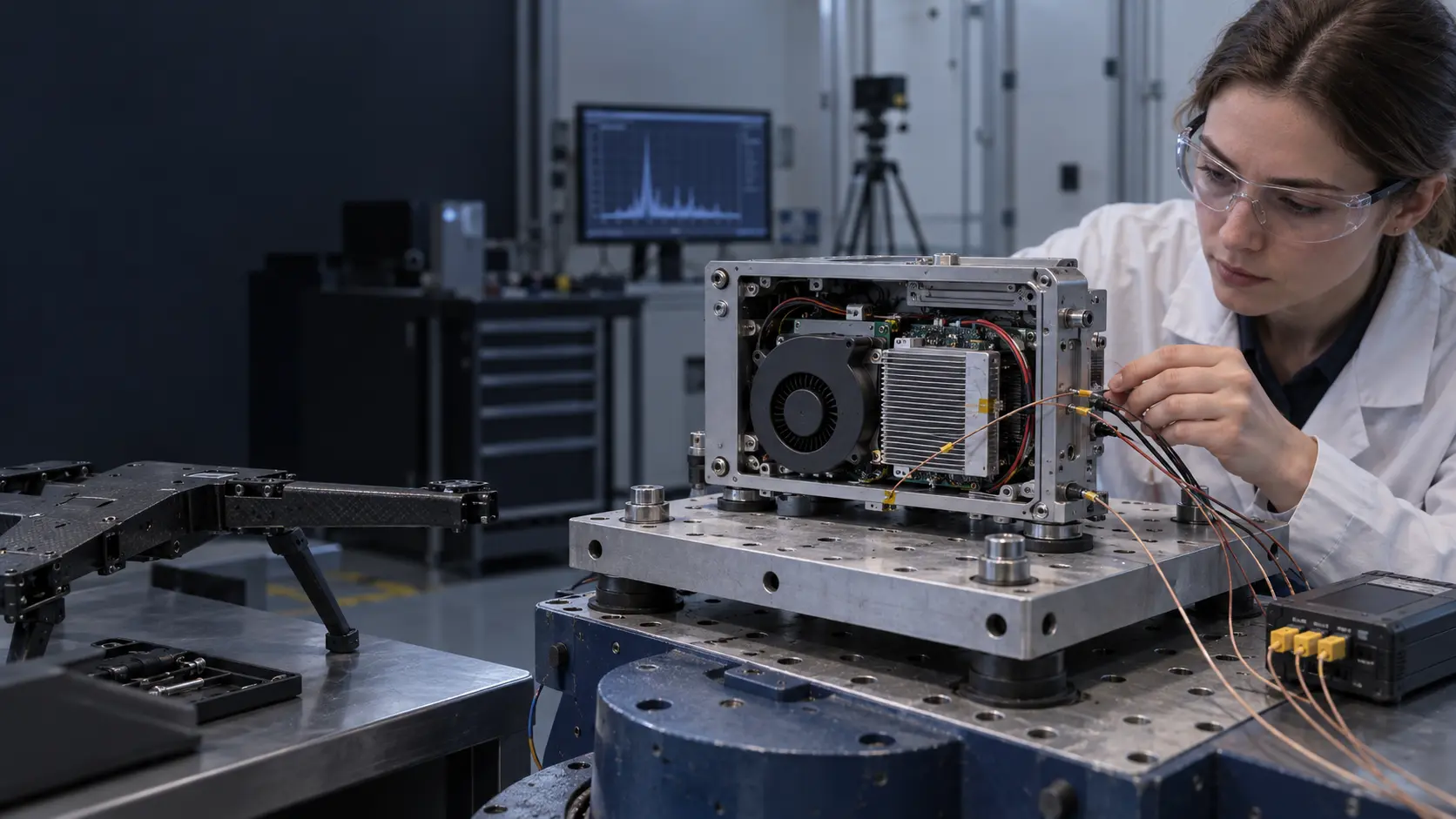
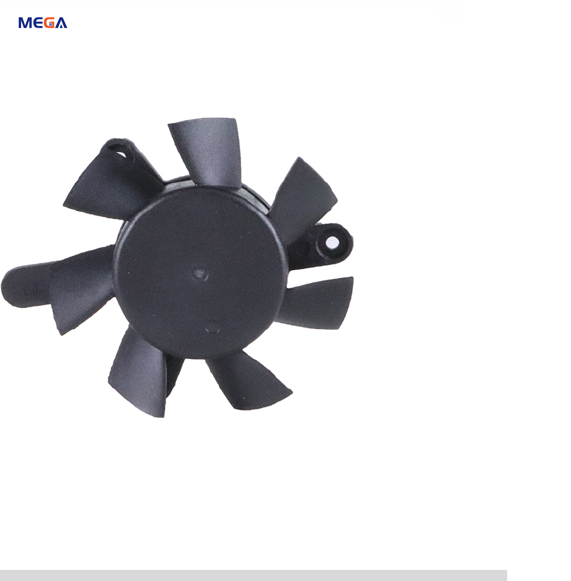
An anonymised UAV electronics project used the payload enclosure, bracket and cable route as the test fixture—notot a free-air comparison.
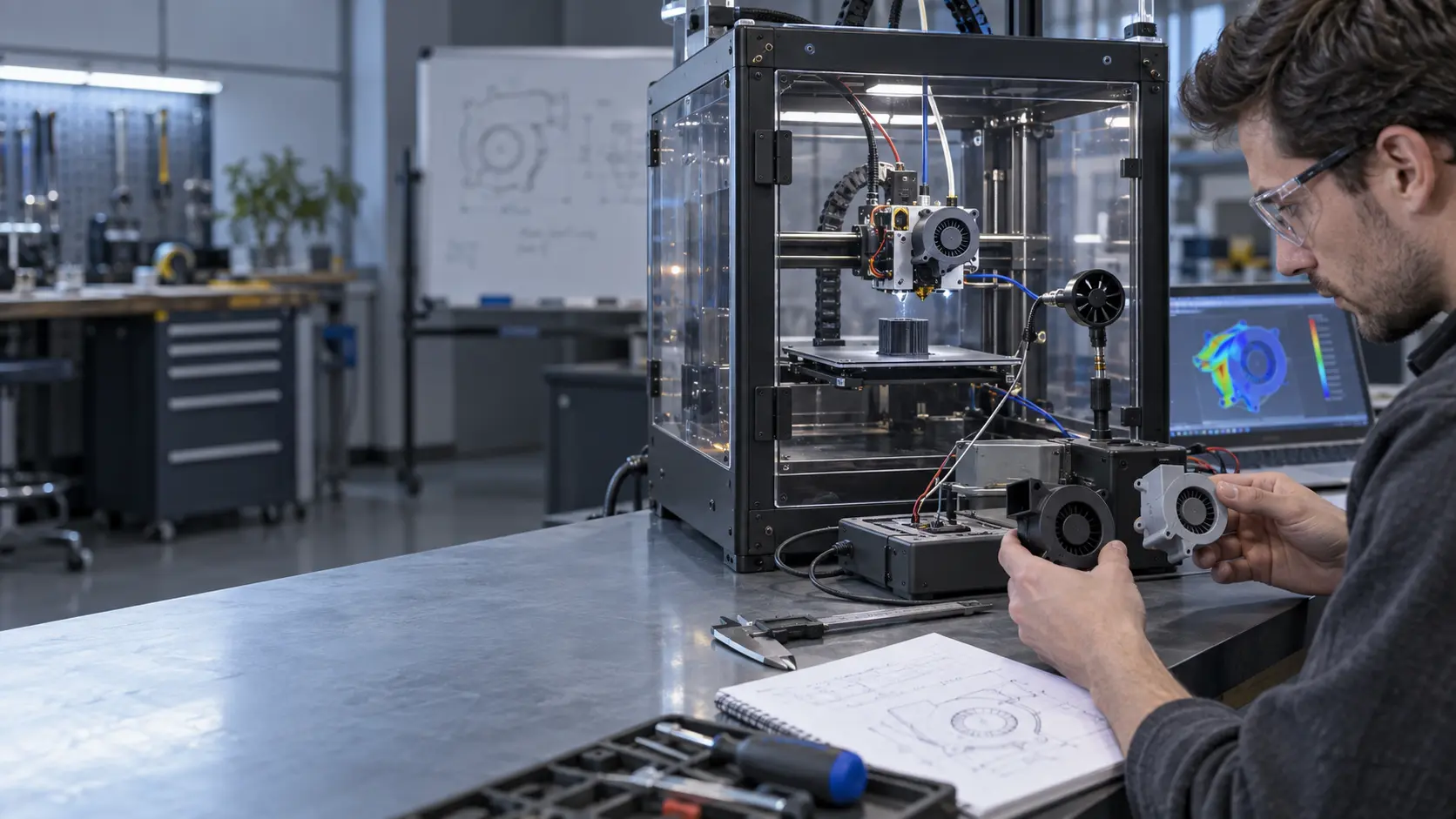
A printer prototype separated hotend protection, part cooling and chamber mixing before any fan speed or duct decision was frozen.
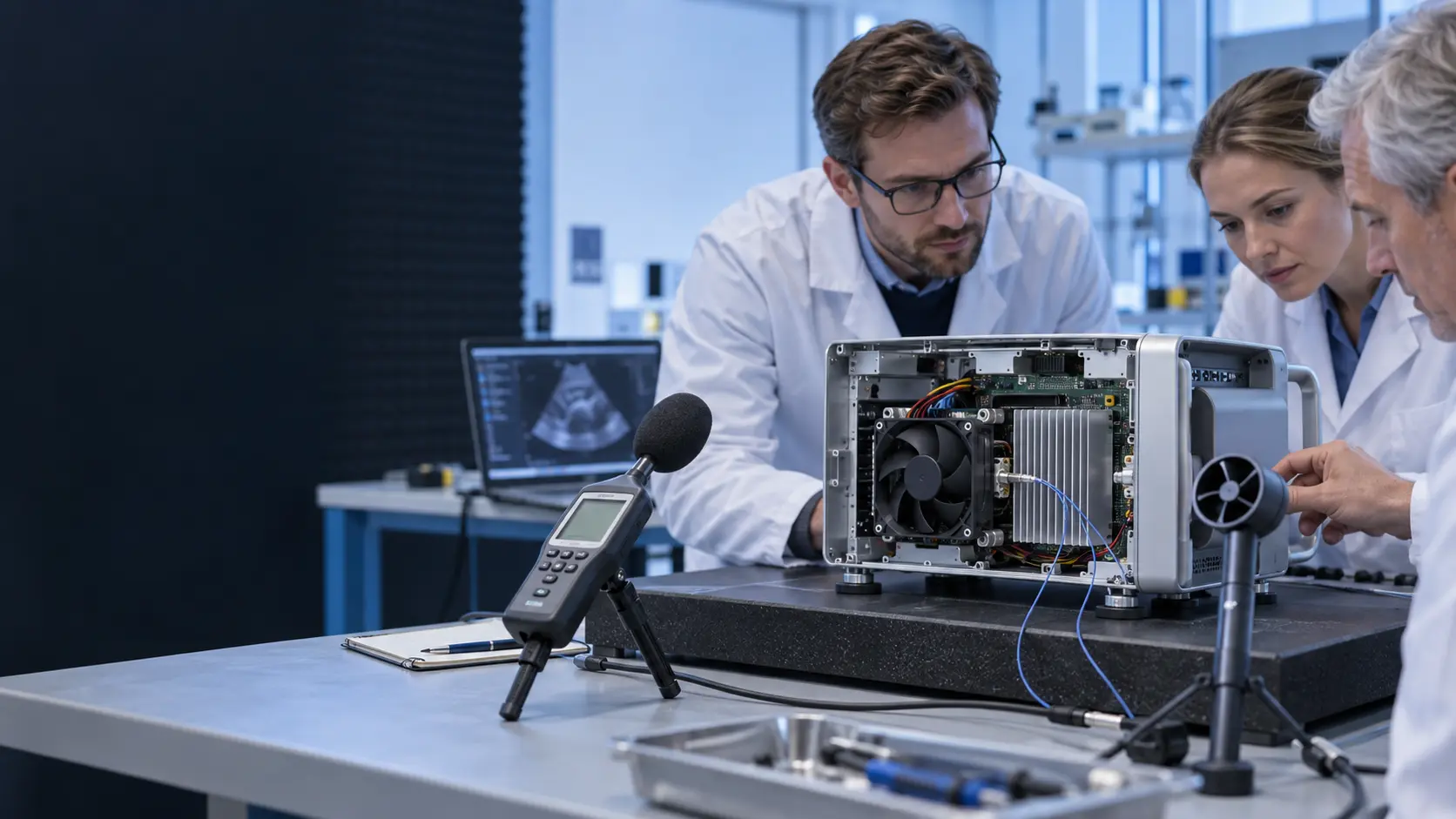
An anonymised European medical-equipment project treated tonal sound, mounting vibration and protected temperature as one installed-system decision.
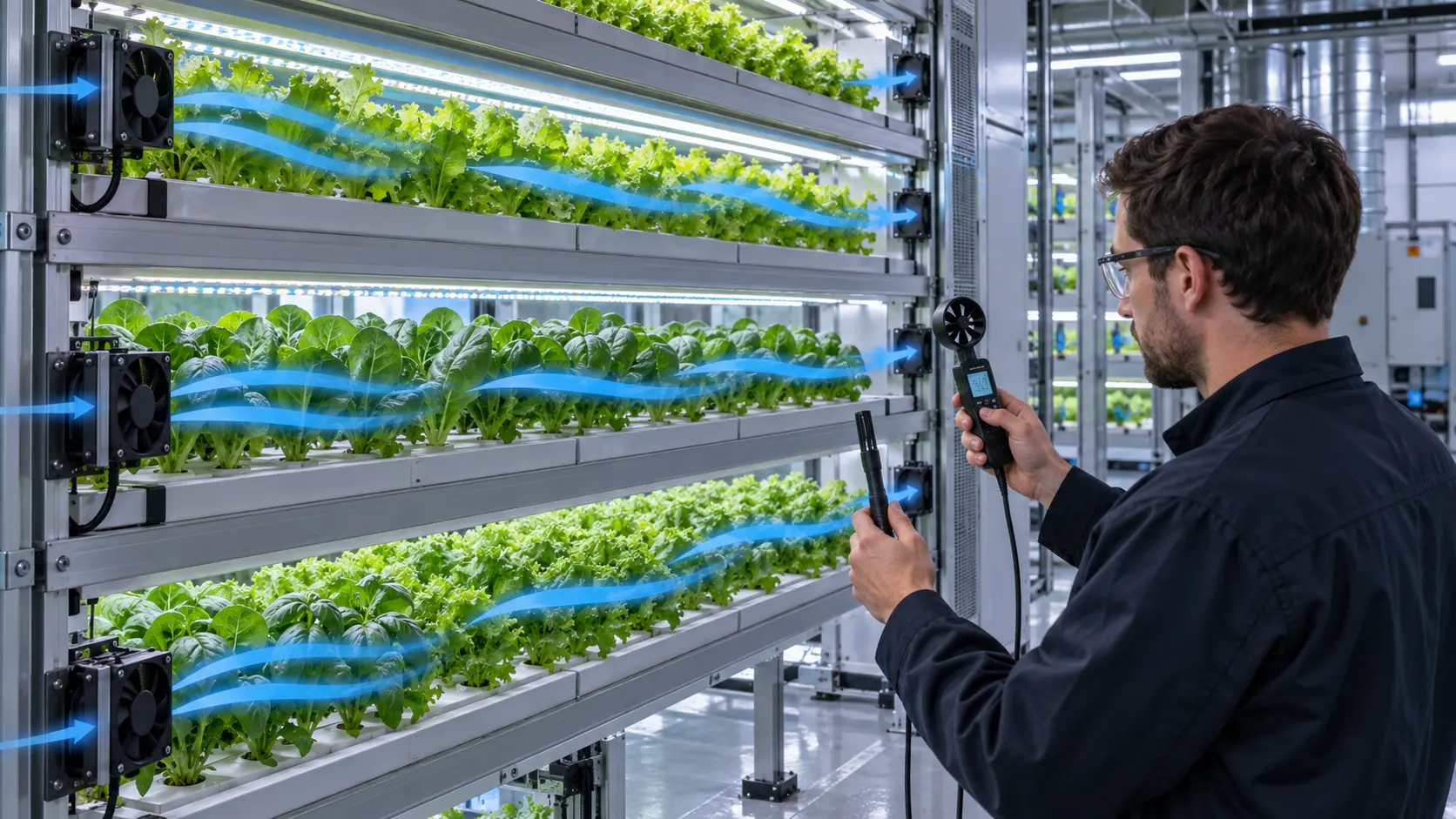
An anonymised European vertical farm tested its fan-and-baffle sample on a real rack to separate room conditioning from crop-zone mixing.
Case identities and commercial results remain confidential. The scenario cards describe recorded engineering workflows; each final fan configuration must be approved against the customer’s own product conditions.
Send the information you have
Startups rarely have every thermal number on day one. That is workable when assumptions are written down and the first sample is built to answer a specific product question.
Send the information you have →A clear engineering boundary
Clear responsibility makes an early sample more useful: the right technical questions reach the right team before a prototype becomes a production risk.
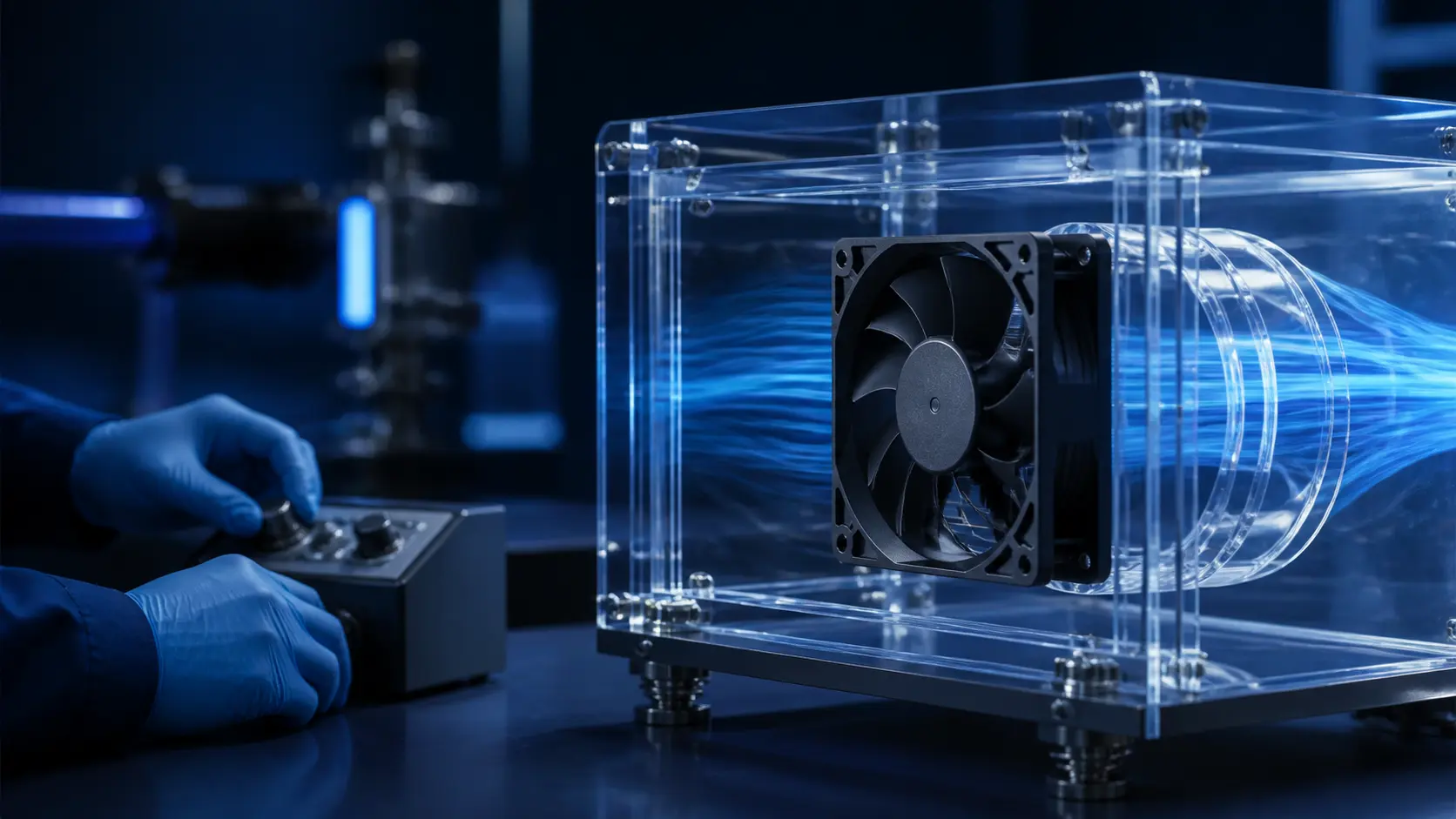
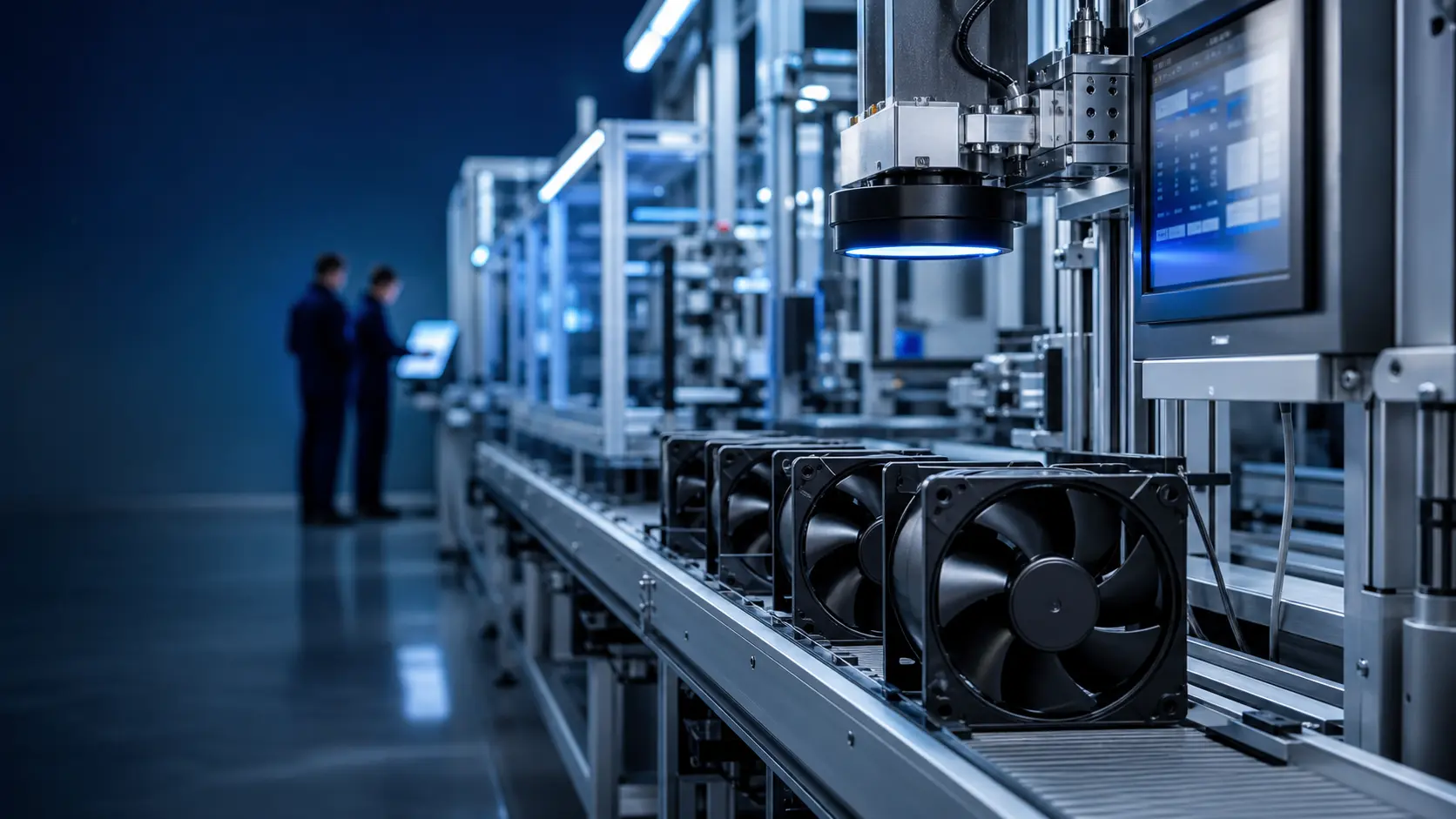
A fan sample can make a product question measurable. It does not certify the complete machine. Send the product constraints and the acceptance question; we will help define the fan-side sample and evidence needed for your team’s decision.
MEGA Tech engineering review
Send the information you have: airflow and static pressure at that airflow, temperature and altitude basis, voltage tolerance, size, quantity, control interface, connector, noise target, environment and life assumption.