The Same Fan Was Not the Same Fan at Altitude
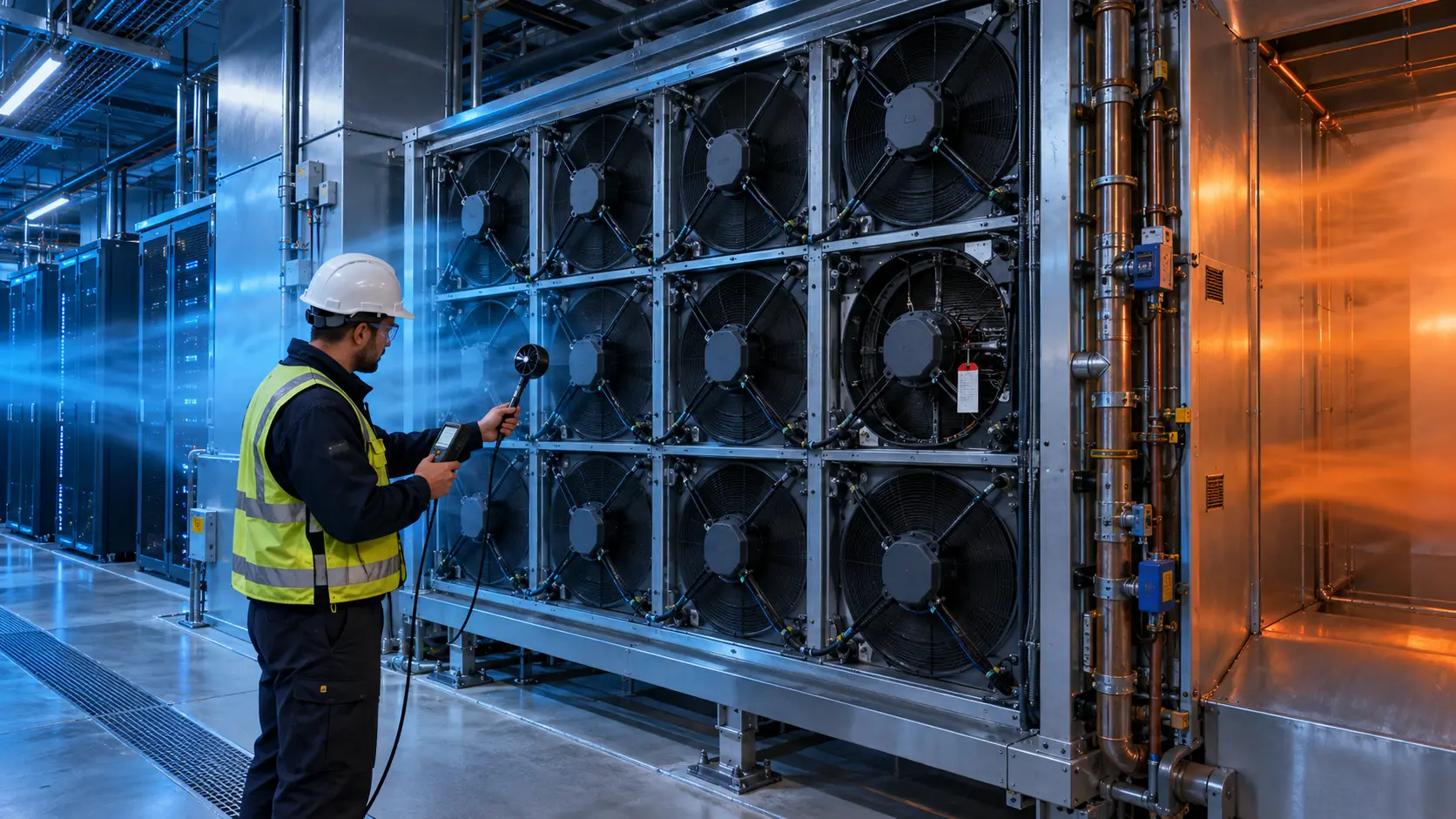
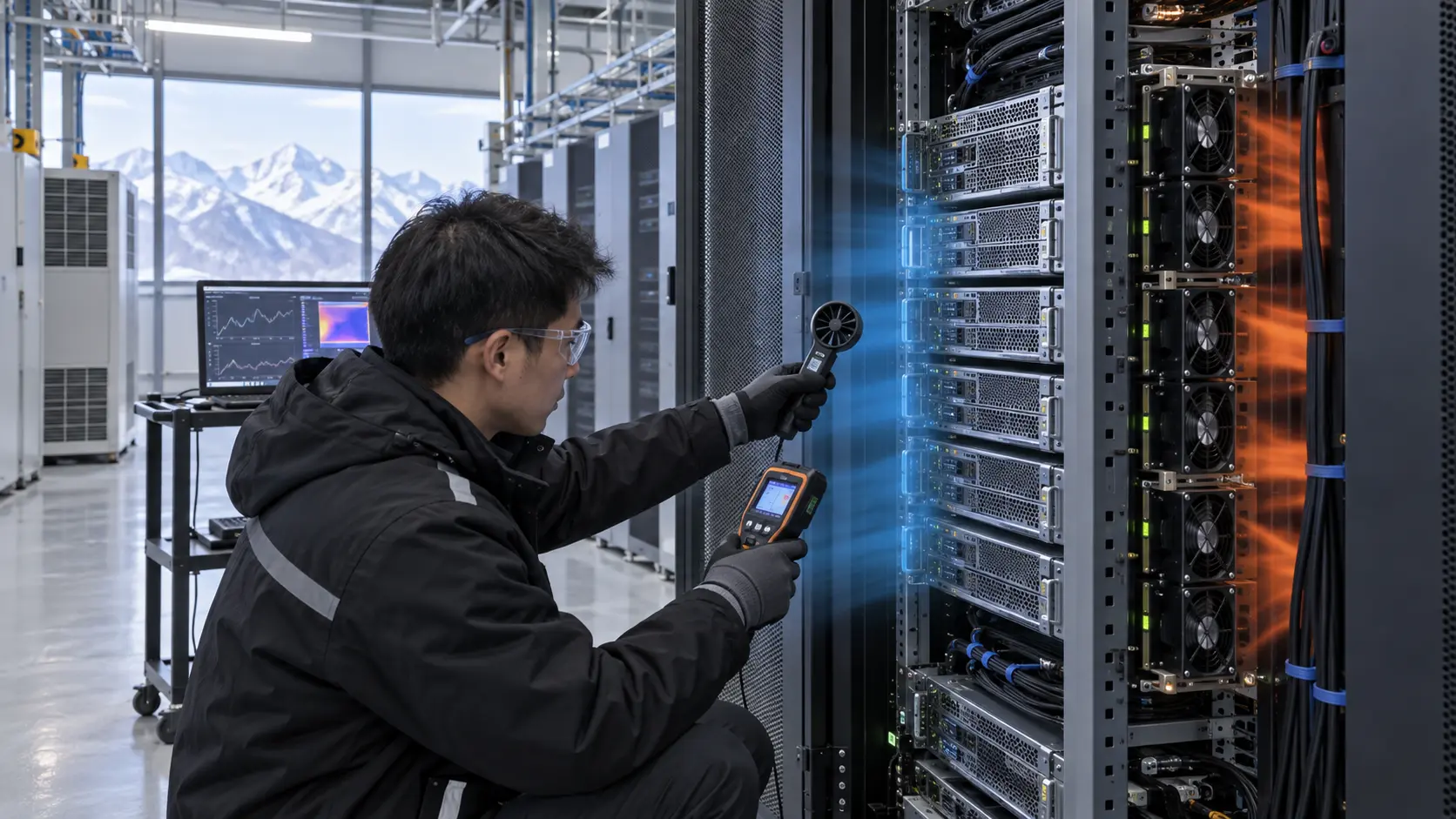
An anonymized AI-infrastructure integrator was preparing a high-density rack for a high-altitude site where lower air density and warm inlet conditions reduced the available thermal margin.
The catalogue comparison used sea-level airflow and a comfortable room temperature. The deployment site had a different air density, a different maximum inlet temperature and a narrower margin before the server control loop increased fan duty or the processor approached its limit.
MEGA Tech reviewed the rack load, fan tray, P-Q curve, altitude, inlet temperature, control interface, noise target and pressure path. The goal was to translate the environmental requirement into a measurable fan sample instead of applying a generic altitude correction to a maximum CFM number.
The customer identity and released acceptance values remain confidential. Values marked illustrative are engineering examples, not customer test results.
The Engineering Hook: Altitude Changes Both Airflow and Thermal Limits
At altitude, lower air density changes the mass flow and heat-carrying capacity of a given volumetric airflow; the equipment environmental envelope may also impose a temperature derating.
ASHRAE's datacom guidance includes altitude-related derating in its environmental tables. For example, the A3 and A4 notes use different dry-bulb derating rates above 900 m, while high-density H1 equipment has its own allowable temperature range. The exact class and equipment limit must be confirmed from the server and site design basis.
A fan P-Q curve is normally reported as volumetric flow and pressure under a stated test condition. The rack thermal balance depends on mass flow, so the engineer must document altitude, air temperature and density when comparing a sample. A sea-level CFM value cannot be copied into a high-altitude acceptance sheet without checking the basis.
The practical selection target is useful airflow at the installed pressure and site condition, with enough control and thermal margin for the warmest expected inlet and the highest workload.
The Problem in Operation: The Rack Reached Its Fan Ceiling Earlier
The site rack remained electrically healthy, but the fan command approached its upper limit sooner than it did in the sea-level reference test.
The integrator logged site altitude, inlet temperature, rack power, inlet and component temperatures, PWM, FG or RPM, current, installed pressure and acoustic condition. The same workload was repeated at the reference condition and at the site design condition.
The high-altitude run showed a smaller thermal margin at the same command. The controller responded by increasing speed, but the additional pressure and noise were not free. A fan that still has RPM headroom may have little useful airflow headroom if the tray, grille and heatsink path are already restrictive.
The acceptance record therefore used the hottest planned inlet and the highest planned rack load, not a comfortable room test. The fan sample was evaluated by its ability to preserve the required thermal state before the controller reached its defined ceiling.
Interactive: Watch Density and Temperature Consume Margin
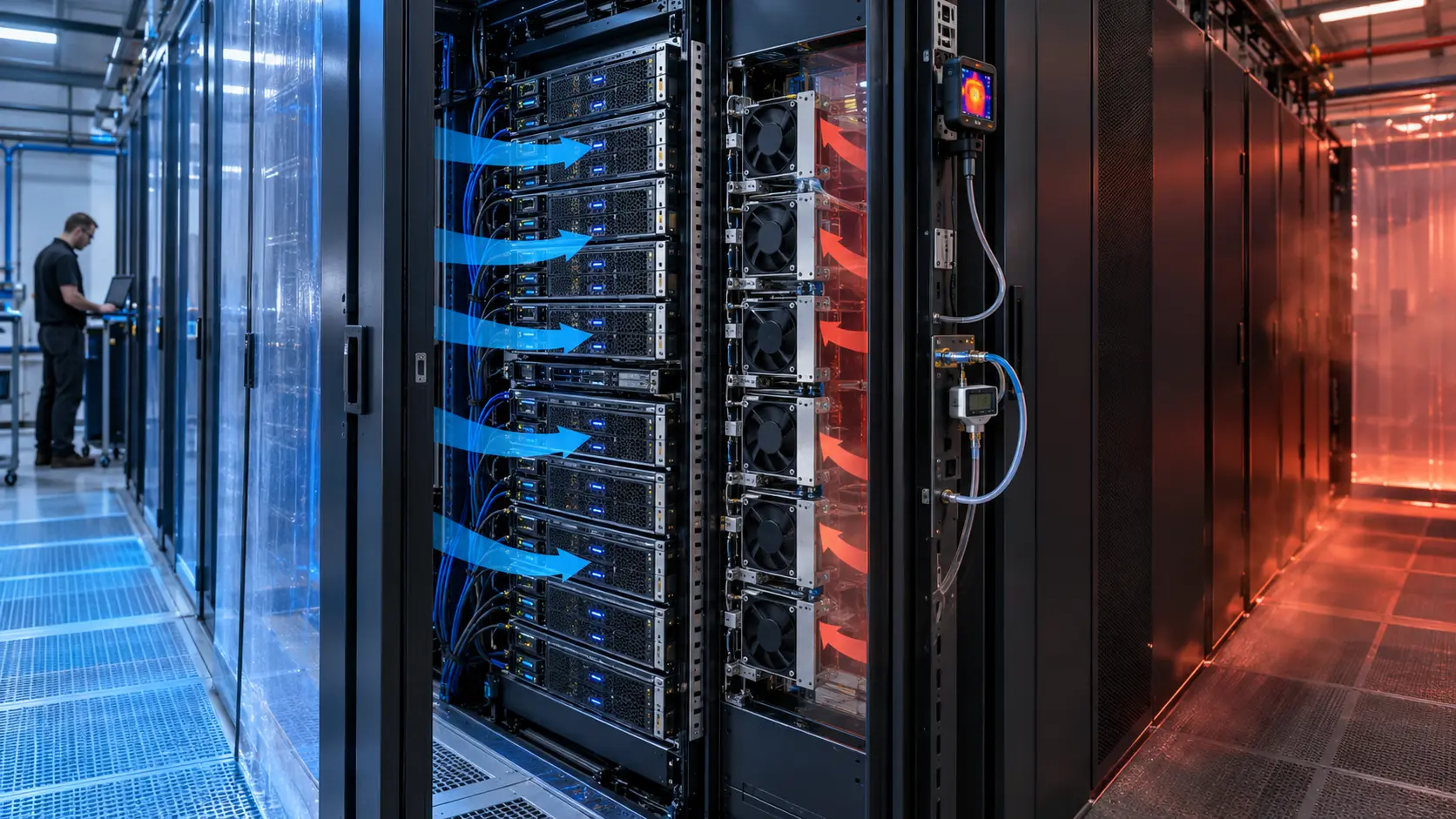
The animated schematic compares the reference air path with the high-altitude, warm-inlet condition.
The figure is qualitative, not a universal altitude multiplier or a product curve. It shows why the acceptance point must include air density, temperature, pressure and workload together. Changing only one input can give a misleading result.
The test sequence used a reference condition, site condition and hot-ambient excursion. Each state recorded the same fan command, pressure, temperature and workload data so the remaining margin could be compared fairly.

Sample 01: Freeze the Site Design Basis
The first sample step was to define the environmental numbers that the fan and rack must actually survive.
The integrator supplied site elevation, minimum and maximum inlet temperature, humidity basis, rack power, workload profile, pressure path, fan voltage tolerance, acoustic target and allowable temperature limits. The team also stated whether the value was a recommended operating point, an allowable excursion or a short-duration emergency condition.
For an illustrative estimate, a site at 2,400 m cannot be evaluated by simply copying a sea-level fan curve. The air density, heat capacity, server environmental class and pressure measurement basis must be stated. Any correction used for early sizing was labelled as an estimate and then checked by installed testing.
MEGA Tech used the design basis to select the sample's motor, impeller, bearing, control range and pressure capability. The sample was not approved from an altitude slogan or from maximum CFM alone.
Sample 02: Compare the Fan at Site Pressure and Density
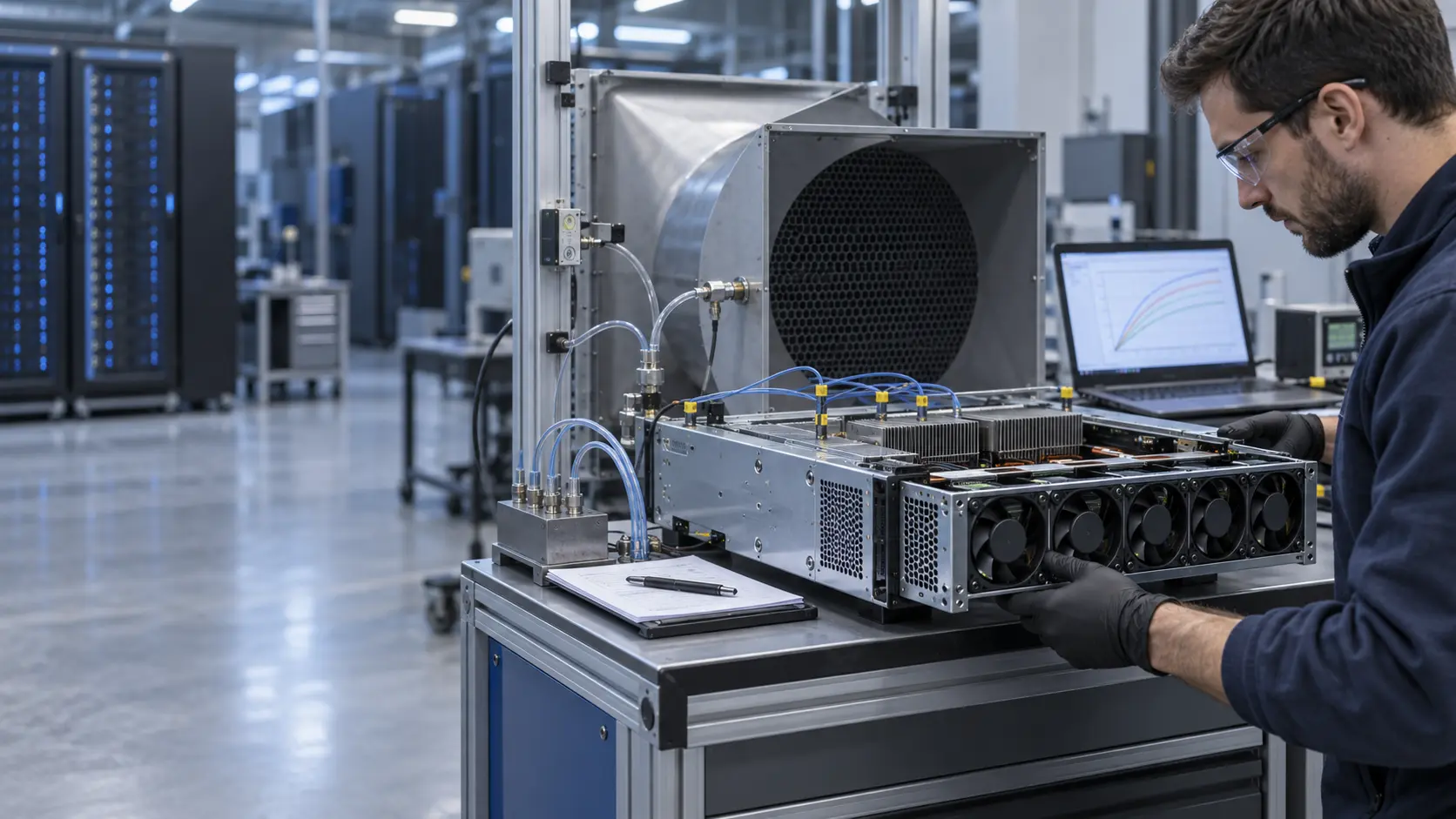
The second sample was measured with the customer tray, grille, heatsink restriction and site condition in the loop.
The test recorded static pressure, volumetric airflow where available, temperature, density basis, fan speed, current and component temperature. The pressure taps and airflow method were held consistent between the reference and site states.
As an illustrative heat-balance check, a 10 kW rack at a 10 K air rise requires about 0.85 kg/s of air mass flow using 1.005 kJ/(kg·K) specific heat. The required volumetric flow changes with density. That is why a site CFM value must be tied to the air condition rather than treated as a universal mass-flow result.
The candidate fan was compared at the loaded operating point and at the hot-ambient point. If the candidate required maximum command just to hold temperature, the design was treated as having insufficient margin even if a short steady-state test passed.
Sample 03: Validate Control Ceiling and Recovery
The final sample step checked whether the controller could protect the rack without running out of speed, current or acoustic margin.
The rack was tested at stable load, a power step and a hot-inlet excursion. The log captured the delay from temperature rise to fan command, maximum command, current, component temperature, inlet temperature and return-to-band time.
The controller used a defined ceiling and hysteresis. The team checked that the fan could start and recover at the site voltage and temperature, and that the ceiling did not hide a pressure-path problem. The exact control thresholds remained the server integrator's responsibility.
Noise was measured at the site duty rather than at the reference room condition. A fan that meets temperature only by operating at an objectionable high speed may require a different pressure design, airflow path or cooling architecture.
Validation Result: The Site Condition Became a Real Operating Point
The final sample package gave the integrator a documented margin for altitude, warm inlet, workload and installed pressure.
The release record documented site elevation, air condition, environmental class, rack load, P-Q data, pressure taps, airflow method, PWM/FG/RD response, current, inlet and component temperatures, acoustic state, ceiling and recovery behavior.
The transferable lesson is that altitude is not a single correction factor. It changes the relationship between volume flow and mass flow, while high inlet temperature changes the available thermal margin and can increase fan demand. Both must be included in the design basis.
For procurement, request P-Q data and sample validation at the actual environment. Same frame size, voltage and sea-level CFM do not prove equivalence at a high-altitude AI rack.
How MEGA Tech Supports AI Server Fan High-Altitude Customization
MEGA Tech helps server and rack integrators develop custom fans around site altitude, high ambient, installed pressure and workload control.
We can review compact DC axial fans and blowers, site air condition, tray pressure, grille and heatsink losses, PWM and FG/RD signals, connector details, vibration, acoustic limits, bearing and life targets, and small first-build quantities. We can also evaluate alternatives to Sanyo Denki, SUNON, Delta, NMB, ebm-papst and other installed brands when the operating point is defined.
Please provide altitude, minimum and maximum inlet temperature, rack heat load, airflow and static pressure at that airflow, fan size, voltage tolerance, quantity, control interface, connector, noise target, workload profile, environment and life assumption.
Our scope is fan and air-path engineering, sample customization and comparative validation. We do not supply the customer's server firmware, DCIM/BMS, CRAH/CRAC, containment, liquid loop or facility safety design.
Engineer Questions About This High-Altitude Case
Use these questions before approving an air-cooled AI server for a high-altitude or warm site.
Q: Can I use the sea-level maximum CFM value at altitude? A: Not without checking density, pressure, temperature and the equipment's environmental basis.
Q: Does altitude always mean I need a larger fan? A: Not automatically. Check the actual mass-flow need, pressure path, fan curve, control range and thermal architecture.
Q: Why can a fan reach the same RPM but deliver less useful cooling? A: The rack pressure, density and heat-carrying mass flow have changed. RPM alone is not the acceptance value.
Q: Should the fan run at maximum speed continuously at altitude? A: Use a validated control curve with margin; continuous maximum duty may increase noise, power and life stress.
Q: What should I send for a review? A: Send altitude, inlet temperature, heat load, airflow and pressure, fan size, voltage, quantity, control, noise, environment and life target.
Q: Can MEGA Tech provide a custom sample? A: Yes. We can review the site operating point and support a sample comparison before production release.
Need a High-Altitude AI Server Fan Review?
Send the site altitude, minimum and maximum inlet temperature, rack heat load, installed airflow and static pressure, fan size, voltage, control interface, noise target and environmental constraints. MEGA Tech will review the operating point before recommending a sample.
Include the current fan model, fan-tray photos, rack layout, workload profile, inlet-temperature data and any pressure, current or acoustic measurements available. This helps separate a fan problem from a density, containment, sensor or facility-airflow problem before the production BOM is locked.