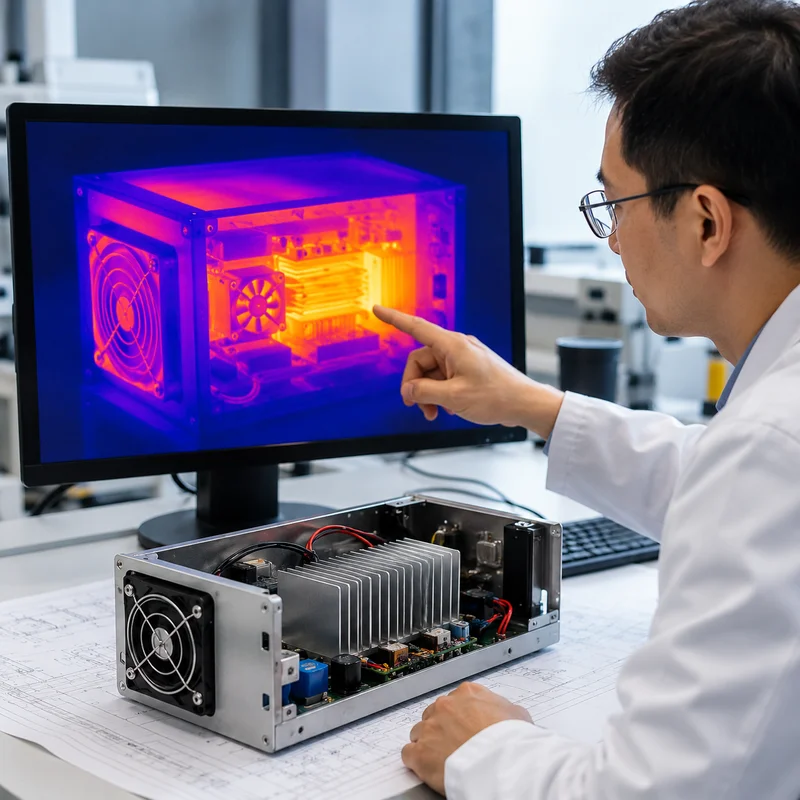
 01
Define the installed duty
Describe the heat source, target airflow at pressure, ambient range, altitude, available space, voltage, control, acoustics and service condition.
- Output
- A reviewable requirement and first fan-performance envelope.
 TECHCooling Solutions
Custom cooling fan development
MEGA Tech develops custom DC fan prototypes around your product constraints, then validates the installed path before the approved configuration moves toward repeatable production.
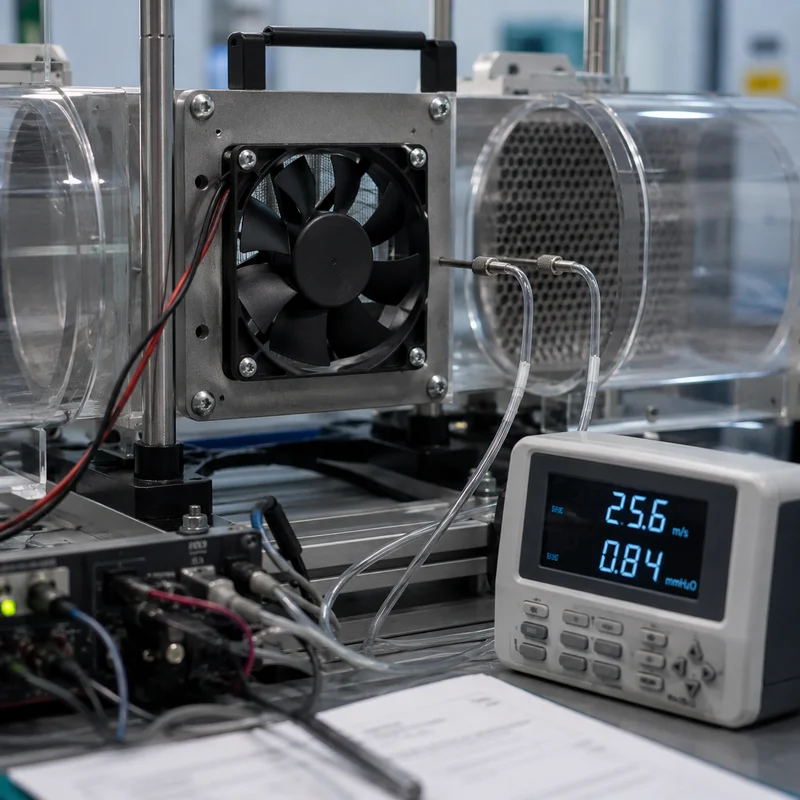
Four controlled stages
Each stage should leave a record that the next team can use. The product maker owns final system approval; MEGA Tech supports the fan-side design and evidence.
01Describe the heat source, target airflow at pressure, ambient range, altitude, available space, voltage, control, acoustics and service condition.
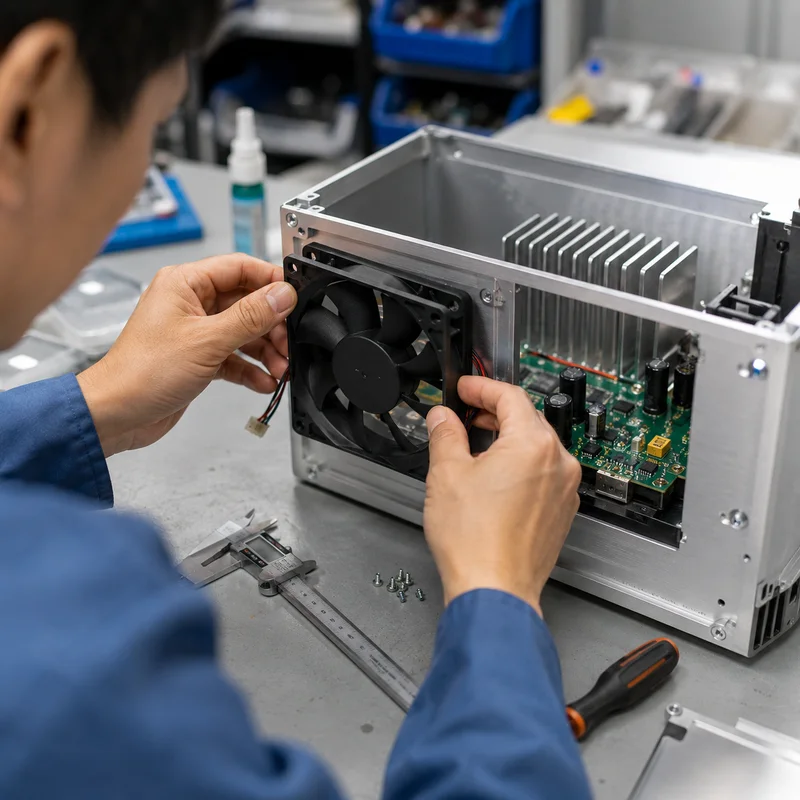 02
Align the frame, thickness, airflow direction, connector, cable, PWM or feedback behavior, bearing choice and mounting details.
03Compare fan command, RPM, pressure or airflow proxy, protected temperatures, current, noise and defined fault or service states.
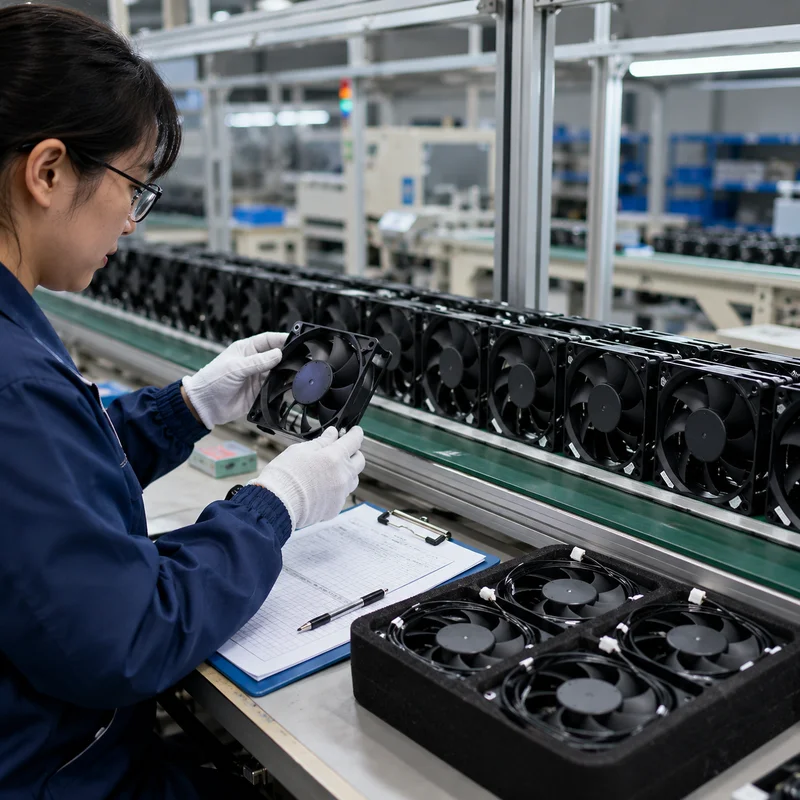 04
Approve the drawing, parts, firmware assumptions, acceptance method, critical limits, labeling and change-control record.
Before the first sample
Perfect data is not required to begin, but the unknowns should be visible. A current fan label is useful only when it is paired with the application condition.
Review common engineering questions →Installed validation
A replacement or custom sample can fit mechanically and start electrically while still missing the required operating point. Record these decisions separately.
Frame, thickness, mounting, airflow direction, cable exit, connector, guards and service access.
Voltage range, startup, current, PWM response, stable minimum speed, FG/TACH, RD and fault logic.
Installed pressure and flow, hotspot temperatures, noise spectrum, vibration, degraded states and credible filter condition.
Approved drawing, bill-of-material assumptions, test fixture, acceptance limits, inspection record and controlled changes.
Start with what you know
Send the enclosure, current fan, target operating condition and interface details. We can identify the missing inputs before a sample is built.